Tor Network Hit by Sustained DDoS Attack, Emergency DoS Defense Fix Released
The Tor Project quickly releases a defense fix against a sustained DDoS attack, highlighting the security challenges of anonymous networks.
The Tor Project quickly released a DoS defense fix amid a sustained DDoS attack, demonstrating open-source projects' emergency response capabilities when facing security threats. The article notes that DDoS attacks exhaust resources through massive requests, affecting the Tor network's availability and user trust, while rapid iterative fixes can shorten the exposure window. Anonymous networks need to seek a balance among anonymity, availability, and defensive strength; overly strict defenses may mistakenly affect legitimate users. This incident also shows the role of community-driven discussion (such as on Hacker News) in disseminating information and attracting contributors, providing an emergency response reference for other open-source projects and emphasizing the importance of critical infrastructure resilience and adaptability to user trust.
Attack Persists, Tor Project Responds Urgently
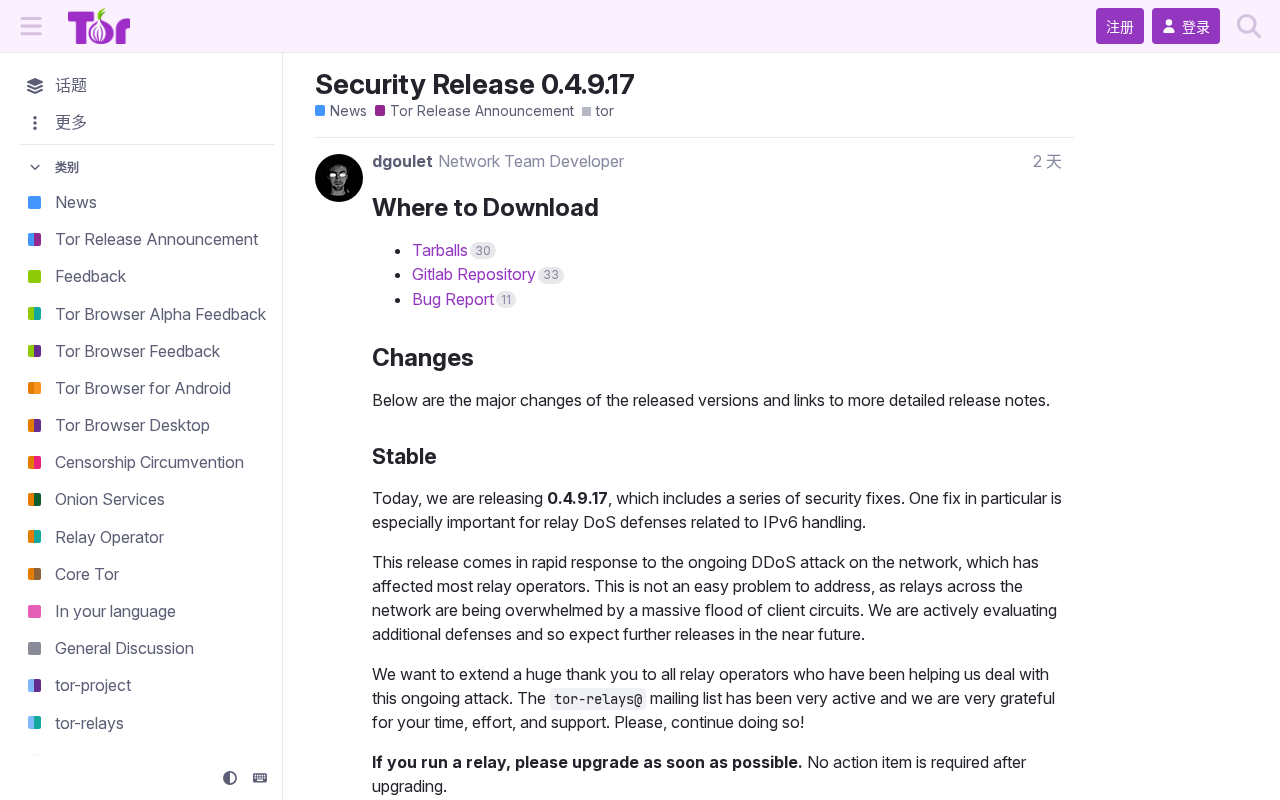
According to discussions in the Hacker News community, the Tor Project quickly released a DoS defense fix amid a sustained DDoS attack. Although the original information only contained a title and a small amount of engagement data, the event itself reflects the vulnerability of anonymous networks when facing large-scale traffic attacks and the strategies for responding to them.
The Tor network has long been plagued by DDoS attacks, and this incident shows that attackers are still looking for openings. The Tor Project's rapid response mechanism played a key role in this incident, mitigating the impact of the attack on network availability by releasing a targeted fix.
Background on the Tor Network and DDoS Attacks
Tor (The Onion Router) is a free software network designed to enable anonymous communication. It forwards traffic through multiple layers of encryption and nodes (relays) run by volunteers around the world, making users' IP addresses difficult to trace. Its core components include entry nodes, middle nodes, and exit nodes. Each time a data packet passes through a node, one layer of encryption is stripped away, like peeling an onion. While this design protects privacy, it also means that network performance depends on the bandwidth and stability of volunteer nodes. DDoS (Distributed Denial of Service) attacks take control of a large number of distributed hosts (botnets) to send massive requests to a target, exhausting bandwidth, connection counts, or computing resources and causing services to become unavailable. For public infrastructure like Tor, attackers may target directory servers, entry nodes, or specific services to disrupt network availability or damage reputation. Historically, the Tor network has suffered multiple large-scale DDoS attacks. For example, sustained attacks from late 2022 to early 2023 caused a significant drop in user connection speeds. The motivations for such attacks vary, including demonstrating attack capabilities, disrupting anonymous communication, or even extortion. Understanding the principles of DDoS attacks and the architectural characteristics of Tor helps in understanding the technical background and urgency of this defense fix.
Significance of the Rapid Response Mechanism
In distributed denial-of-service attacks, attackers exhaust target resources through massive requests, preventing normal users from accessing services. For an anonymous network like Tor, DDoS attacks not only affect access speed but may also undermine users' trust in the network's anonymity and reliability.
The Tor Project's ability to quickly release a fix shows that its maintenance team has strong emergency response capabilities. This rapid-iteration defense strategy is not common in open-source projects, especially when facing sustained attacks, where it can shorten the exposure window and reduce the actual impact of the attack.
According to discussions in the Hacker News community, the fix was described as a "rapid response" measure aimed at addressing an ongoing DDoS attack.
Emergency Response and Vulnerability Disclosure in Open-Source Projects
Emergency response in open-source projects usually follows a standardized process, including vulnerability reporting, triage and assessment, fix development, testing, and release of security advisories. For security threats, rapid iteration and continuous delivery (CD) capabilities are crucial. The Tor Project adopts an open-source development model, with its codebase publicly available in a Git repository, allowing developers worldwide to review and contribute. When facing DDoS attacks, a rapid response may involve adjusting traffic scheduling algorithms, adding rate limits, deploying protection rules, or updating node software. However, emergency fixes often require trade-offs between defensive effectiveness and compatibility, and may introduce new problems due to insufficient testing. The advantage of the open-source community lies in distributed collaboration and transparent discussion, for example coordinating responses through mailing lists, IRC, or GitHub Issues. Discussions on platforms such as Hacker News can accelerate information dissemination and attract more security researchers to participate in analysis. But rapid response also faces challenges: fixes need to be promptly upgraded by users or node operators to take effect, and the upgrade cycle for dispersed Tor nodes may be long. Therefore, the effectiveness of a rapid response mechanism depends not only on development speed but also on coordination across the ecosystem.
The Offense-Defense Game in Anonymous Networks
Tor's design goal is to provide anonymous communication while maintaining availability, but these two goals may conflict when facing DDoS attacks. Overly strict defensive measures may affect legitimate users' connections, while overly loose policies are easily exploited by attackers.
The specific technical details of this fix have not yet been disclosed in detail in the original material, but from the perspective of the offense-defense game, the Tor Project needs to find a balance between defensive effectiveness and user experience. Sustained DDoS attacks also remind us that operating and maintaining an anonymous network is a long-term and challenging endeavor.
The Inherent Contradiction Between Anonymity and Availability
The design of anonymous networks needs to strike a balance among anonymity, availability, and performance. Tor provides strong anonymity through traffic obfuscation and multi-hop routing, but this also makes it more susceptible to resource-exhaustion attacks, because attackers can generate large numbers of legitimate-format requests at low cost. Defensive measures such as proof of work (PoW), rate limiting, or CAPTCHAs may be exploited by attackers to consume legitimate users' resources or may raise the barrier for normal users. For example, if strict rate limits are imposed on connection requests, attackers may bypass them through distributed source addresses, while legitimate users may be mistakenly affected. The Tor Project has explored various anti-DDoS mechanisms, such as introducing proof-of-work-based defenses (such as Equi-X), requiring clients to complete a certain amount of computation before establishing a connection in order to increase attack costs without significantly affecting normal users. In addition, network-level protection (such as anycast and traffic scrubbing) may be difficult to deploy due to Tor's distributed nature. The essence of the offense-defense game is to raise the cost of attack while harming anonymity and user experience as little as possible. This balance requires continuous monitoring of attack patterns and dynamic strategy adjustments, and it also highlights the long-term challenges of operating an anonymous network.
Lessons for the Open-Source Community
The Tor Project's rapid response provides a reference for other open-source projects: when facing security threats, releasing fixes in a timely manner is more important than pursuing a perfect solution. At the same time, community-driven discussion and feedback mechanisms (such as discussions on Hacker News) help disseminate information and attract more contributors to participate in defense.
Although the original information is limited, this incident once again highlights the resilience and adaptability of critical infrastructure in the face of sustained attacks. For users who rely on Tor for privacy protection, the maintenance team's rapid response is an important guarantee of the network's credibility.
Related articles

Codex in Practice: From Installation and Configuration to Multi-Agent Collaboration
Based on a Bilibili Codex course overview, this guide maps the full path of AI coding assistants from installation and agents.md context design to CLI commands, MCP integration, and multi-agent collaboration.

Claude Code Installation and Model Switching Guide for Users in China
How can developers in China install Claude Code reliably? This article compiles a Bilibili creator's hands-on solution: install via NPM, skip official login, use CC Switch to configure API Keys and freely switch between DeepSeek, Kimi, and other models to avoid account bans.
AI Supply Chain Security: What Canary Tokens Reveal
Starting from a Hacker News discussion, this article analyzes the role of canary tokens in AI supply chain security: how they detect abnormal access to model weights, training data, and credentials, as well as coverage blind spots and cost constraints during implementation.