Training Large Models on a Budget: A Complete Breakdown of Building a 3.8B Model for $998
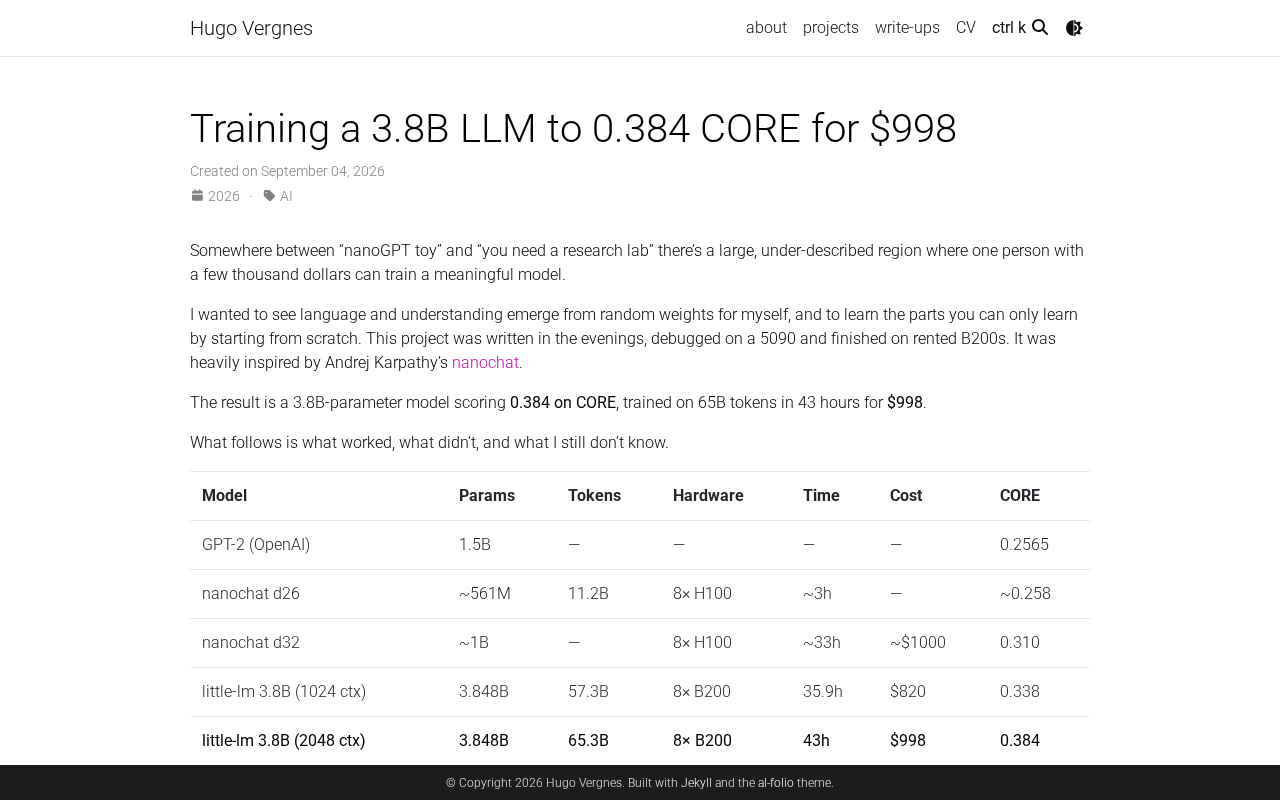
A 3.8B parameter LLM trained for just $998 proves large model training is no longer reserved for tech giants.
Developer Hugo Vergnes trained a 3.8 billion parameter language model to a CORE score of 0.384 for under $1,000, leveraging spot instances, mixed-precision training, FlashAttention, and curated high-quality datasets. This breakthrough demonstrates that large model training can be democratized, enabling individual developers and small teams to build practical, domain-specific AI models at a fraction of traditional costs.
Introduction
In an era where training large language models routinely costs millions of dollars, one surprising case has shattered industry assumptions: developer Hugo Vergnes successfully trained a 3.8 billion parameter large language model to a CORE performance level of 0.384 — for under $1,000. This groundbreaking case not only debunks the myth that "large model training inevitably requires massive budgets," but also opens up entirely new possibilities for individual developers and small teams.
A Deep Dive into the Key Results
Scale and Cost Breakthrough
The core metrics of this training run include:
- Model size: 3.8 billion parameters (3.8B), a medium-scale language model comparable to an early small variant of GPT-3
- Training cost: Just $998 — hundreds of times cheaper than commercial-grade training
- Performance: A CORE score of 0.384
What the CORE score actually means: CORE (Comprehensive Reasoning Evaluation) is an authoritative benchmark for assessing a language model's reasoning and comprehension capabilities. It integrates multi-dimensional evaluation metrics — including commonsense reasoning, logical inference, reading comprehension, code generation, and mathematical computation — into a single normalized composite score, designed to address the fragmentation problem of traditional standalone benchmarks (such as MMLU, HellaSwag, ARC, etc.). On a scale of 0 to 1, top-tier commercial models (like GPT-4 and Claude 3.5) typically score in the 0.6–0.8 range, while a score of 0.384 roughly corresponds to an upper-mid-tier open-source model. This means the model already possesses solid language understanding and generation capabilities. While a gap remains compared to leading commercial models, it is already practical enough for domain-specific applications.
3.8 Billion Parameters: The Engineering "Sweet Spot"
Within the parameter-scale spectrum of large language models, 3.8 billion parameters falls into the "small large model" category. For reference, GPT-2 has 1.5 billion parameters, the smallest LLaMA 2 version has 7 billion, and GPT-4 is rumored to exceed 1 trillion. A 3.8B model sits at an engineering "sweet spot": it's large enough to exhibit Emergent Abilities (unexpected capabilities that suddenly appear once a model reaches a certain scale, such as few-shot reasoning and instruction following), yet small enough to run inference on consumer-grade GPUs (like the RTX 4090 with 24GB VRAM). Meta specifically released a 3B version of LLaMA 3.2, signaling industry consensus on the practical value of this parameter range. Models at this scale offer unique advantages in edge deployment, low-latency inference, and privacy-preserving scenarios.
Key Technical Breakthroughs
Completing large model training within a thousand-dollar budget requires meticulous optimization across multiple dimensions:
Smart Hardware Selection and Cloud Computing Economics: Using spot instances from cloud computing platforms is the core strategy for dramatically slashing compute costs. Spot instances are a special pricing mechanism offered by cloud platforms that let users access idle compute resources — typically at just 10%–30% of on-demand pricing. On AWS, for example, an A10G GPU costs about $1.50/hour on-demand, while spot pricing can drop to $0.30–$0.50. The tradeoff is that the platform can reclaim instances at any time when resources are tight, so training jobs must support checkpoint-based resumption — saving model state at regular intervals so training can resume from the latest checkpoint after an instance is reclaimed. Choosing cost-effective hardware like V100s or RTX 4090s over top-tier A100/H100 GPUs may extend training time but keeps total costs manageable. AI-focused cloud platforms like Lambda Labs offer even more competitive GPU rental plans, further lowering the cost floor. Hugo Vergnes's thousand-dollar budget was able to cover thousands of GPU-hours precisely by leveraging this price elasticity.
Maximum Training Efficiency Optimization: Mixed-precision training is a foundational optimization technique in modern large model training. Traditional training uses FP32 (32-bit floating point), with each parameter consuming 4 bytes of VRAM. Switching to FP16 or BF16 (16-bit floating point) cuts VRAM usage in half and can boost matrix computation speed by 2–8x on NVIDIA Tensor Cores. BF16 (Brain Floating Point 16) retains the same 8-bit exponent range as FP32, providing better numerical stability than FP16 and has become the mainstream choice. Gradient accumulation enables simulating large-batch training on GPUs with limited VRAM: gradients from multiple small batches are accumulated before updating parameters, which is mathematically equivalent to training with a large batch directly. This provides the stability and convergence benefits of large-batch training without increasing VRAM requirements.
FlashAttention, proposed by Tri Dao's team at Stanford, is an IO-aware tiled computation strategy for optimizing the attention mechanism. It reduces the memory complexity of attention computation from O(N²) to O(N) while minimizing data transfers between GPU high-bandwidth memory (HBM) and on-chip SRAM. Standard attention mechanisms require storing the full N×N attention matrix in VRAM, whereas FlashAttention avoids this bottleneck through tiled computation and an online softmax trick. In practice, it can speed up Transformer training by 2–4x and is an indispensable optimization in any thousand-dollar training pipeline.
Scientific Data Engineering: Curating high-quality pretraining datasets far outweighs piling on massive volumes of low-quality data. The Pile is an 825GB open-source language modeling dataset curated by EleutherAI, comprising 22 high-quality subsets covering academic papers (PubMed, ArXiv), code (GitHub), books (Gutenberg), Wikipedia, Stack Exchange, and other diverse sources. C4 (Colossal Clean Crawled Corpus) is a dataset Google cleaned and extracted from Common Crawl, totaling approximately 750GB.
Data quality engineering is a critical lever for low-cost training. DeepMind's Chinchilla scaling law shows that model performance depends on the optimal ratio between parameter count and training tokens — for a 3.8B parameter model, the theoretically optimal training volume is approximately 76B tokens (20× the parameter count). However, by curating high-quality data, equivalent or even superior results can be achieved with fewer tokens. This is the core philosophy behind Microsoft's Phi model series: "less data, higher quality." Data deduplication (using locality-sensitive hashing algorithms such as MinHash and SimHash) eliminates the efficiency drag of duplicate samples — research shows that deduplication can improve convergence speed by 10–20%. Through carefully designed data mixing ratios (e.g., code vs. natural language, academic text vs. web content) and rigorous deduplication, better results can be achieved in fewer training steps.
Far-Reaching Industry Impact
True Democratization of AI Training
The most significant value of this case lies in its empirical proof that democratized large model training is feasible. For a long time, LLM training has been seen as the exclusive domain of well-funded tech giants, creating a structural monopoly on technology and knowledge. Take GPT-4 as an example: its single training run is estimated to have cost over $100 million, and even the smaller LLaMA 65B required millions of dollars in compute from Meta. This steep cost barrier has excluded the vast majority of researchers and developers from the core process of model training, relegating them to "downstream users" who can only access APIs or fine-tune existing models.
When training costs drop to the thousand-dollar range, the landscape fundamentally shifts. Individual researchers, startups, and academic institutions all gain equal opportunity to participate. This doesn't just mean more people can train models — more importantly, they can accumulate first-hand experience during training: understanding loss curve behavior, the effects of learning rate scheduling, and the impact of data mixing ratios. This tacit knowledge is something you can never gain from simply using an API.
Domain-Specific Custom Models
For industry-specific applications, pursuing maximum scale and the strongest general capabilities isn't always necessary. A 3.8B parameter model deeply optimized for a specific task can be more practical than a general-purpose hundred-billion-parameter model. This has been confirmed by multiple studies: in medical literature comprehension tasks, purpose-trained small models can match or even surpass GPT-4's performance; in code generation, small models focused on specific programming languages have demonstrated remarkable efficiency.
Specialized domains such as medical diagnosis, legal document processing, and financial analysis can all build dedicated domain models based on this low-cost approach. More critically, domain-specific models also offer data privacy advantages — sensitive data doesn't need to be uploaded to third-party APIs, and models can be deployed and run within enterprise infrastructure, meeting regulatory requirements like HIPAA (healthcare information security) and GDPR (EU data protection regulation).
Accelerating the Open-Source Ecosystem
Low-cost training will powerfully drive the development of the open-source AI ecosystem. When more researchers can afford to train from scratch, more experimental architectures and training methods will be proposed and validated, accelerating innovation across the entire field. The open-source community has already produced a wave of high-quality models like Mistral, Yi, and Qwen. The proliferation of low-cost training techniques will further lower the barrier to innovation, enabling more diverse architectural explorations — such as Mixture of Experts (MoE) models and state-space models like Mamba — to receive more thorough experimental validation.
Technical Implementation Path Analysis
While the original case didn't disclose full technical details, the following implementation path can be inferred based on industry best practices:
Infrastructure Architecture: Using spot instances from cloud platforms like AWS, GCP, or Lambda Labs, configured with 8–16 V100 GPUs (16GB/32GB VRAM) or equivalent, providing total compute of approximately 200–400 TFLOPS (trillion floating-point operations per second). The V100 features 640 Tensor Cores with approximately 125 TFLOPS of FP16 compute power; 8 V100s can deliver roughly 1 PFLOPS of half-precision compute — sufficient for training a 3.8B parameter model.
Training Framework Selection: Using PyTorch paired with distributed training frameworks like DeepSpeed or Megatron-LM for efficient model parallelism and data parallelism. DeepSpeed's core technology, ZeRO (Zero Redundancy Optimizer), eliminates redundant VRAM usage in data parallelism by sharding optimizer states, gradients, and model parameters across multiple GPUs. ZeRO has three stages: Stage 1 shards only optimizer states (saving ~4x VRAM), Stage 2 also shards gradients (~8x savings), and Stage 3 additionally shards model parameters, so each GPU theoretically needs only 1/N of the total memory. Megatron-LM, developed by NVIDIA, excels at tensor parallelism (splitting individual matrix operations across GPUs) and pipeline parallelism (distributing different model layers across GPUs). In practice, both are often combined into a 3D parallelism strategy (data parallelism + tensor parallelism + pipeline parallelism) to maximize hardware utilization.
Dataset Strategy: Using open-source datasets like The Pile and C4, combined with rigorous data cleaning and deduplication pipelines, with total training tokens in the 100B–300B range. The data cleaning pipeline typically includes: language identification filtering (removing non-target-language text), quality scoring (filtering low-quality content based on perplexity or classifiers), PII scrubbing (removing personally identifiable information), harmful content filtering, and both exact and near-duplicate deduplication.
Time Investment: An estimated training period of 2–4 weeks, fully leveraging cloud platform cost advantages and elastic scheduling. Calculating with 8 V100s at BF16 precision, processing 200B tokens requires approximately 500–700 GPU-hours. At an average spot instance price of $0.80/GPU-hour, this falls squarely within the thousand-dollar budget.
Future Outlook
This case is just the beginning. As training algorithms continue to improve (e.g., more efficient optimizers like SOAP, scheduling strategies like WSD), hardware costs keep declining (the price-performance leap of NVIDIA B-series GPUs, market competition from AMD MI300X), and more efficient model architectures emerge (e.g., MoE achieving stronger performance with fewer active parameters, Mamba and other state-space models offering efficiency advantages for long-sequence processing), the barrier to large model training will continue to fall. It's foreseeable that training commercial-grade models for under a thousand dollars will become the new industry norm.
For individual developers, now is the golden window to enter the large model space. Mastering efficient training techniques, accumulating domain-specific data, and deeply understanding model optimization methods will become core competencies for the next generation of AI application developers. It's worth noting that knowledge distillation (transferring knowledge from large models to small ones) and synthetic data generation (using large models to generate training data) are creating synergistic effects with low-cost training, further lowering the barrier to obtaining high-quality models.
Conclusion
Hugo Vergnes's experiment proves that large model training is no longer the exclusive game of tech giants. The $998 budget constraint was not a barrier — it was a catalyst for technical innovation. This optimization mindset born from resource constraints is a vital driving force behind technological progress, much like how early computer scientists wrote profoundly influential algorithms under extremely limited hardware conditions.
For the AI industry as a whole, this is a positive signal: when training costs are no longer the bottleneck, the value of creativity and algorithms will become even more prominent. We have every reason to expect that in the near future, more surprisingly capable low-cost, high-performance models will emerge, driving AI technology toward true accessibility.
Key Takeaways
Related articles
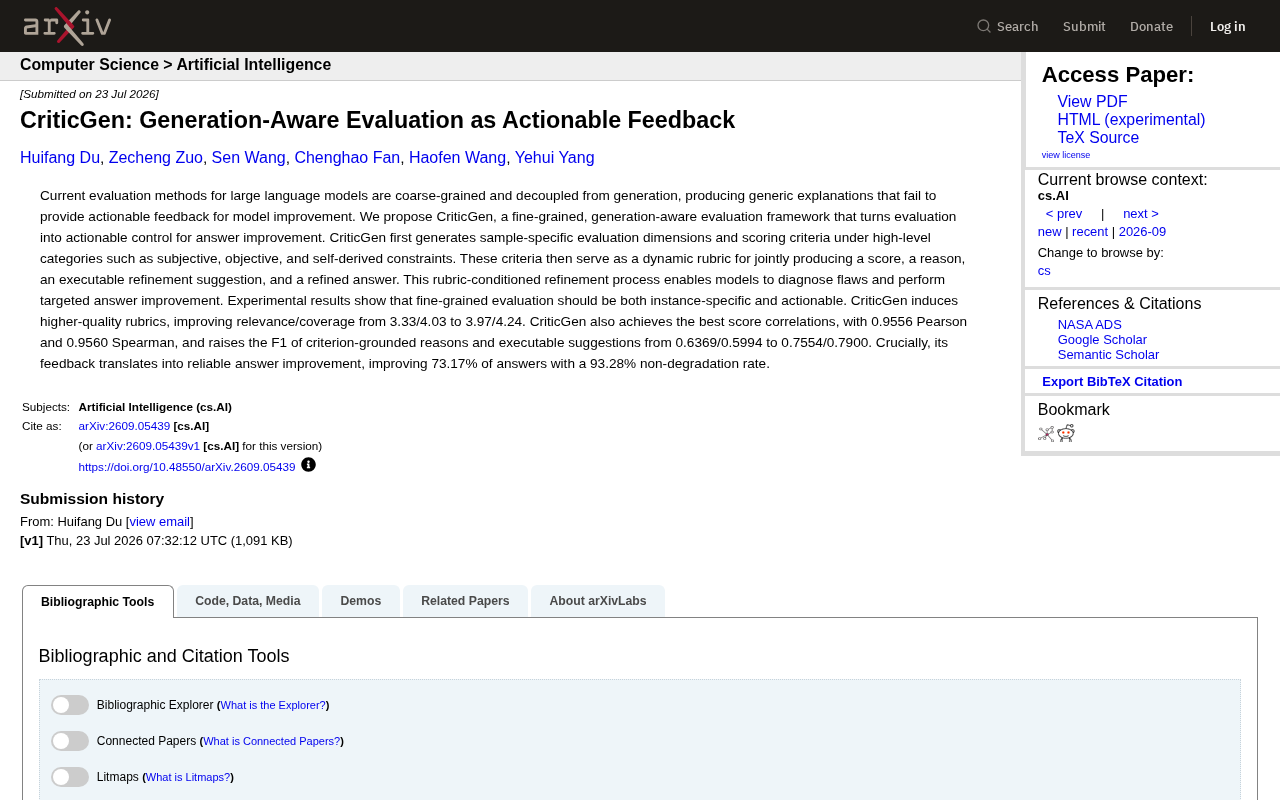
CriticGen: A New Framework That Transforms AI Evaluation into Actionable Improvement Feedback
CriticGen proposes a generation-aware evaluation framework that transforms AI assessment from passive scoring to an active optimization loop, achieving 73.17% answer improvement and 93.28% non-degradation rate.
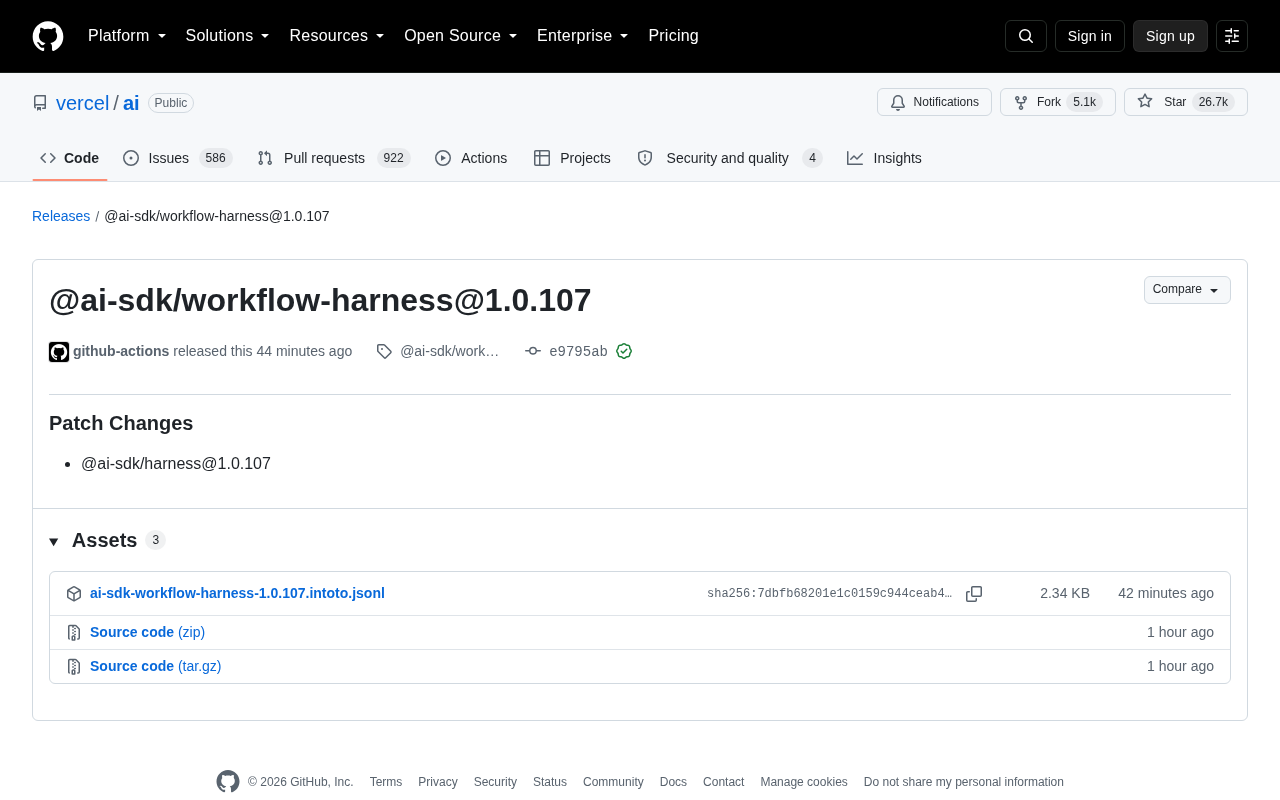
Vercel AI SDK workflow-harness Update Analysis
Deep analysis of Vercel AI SDK workflow-harness 1.0.107 update: architecture design, engineering practices, and developer value for building reliable AI apps.
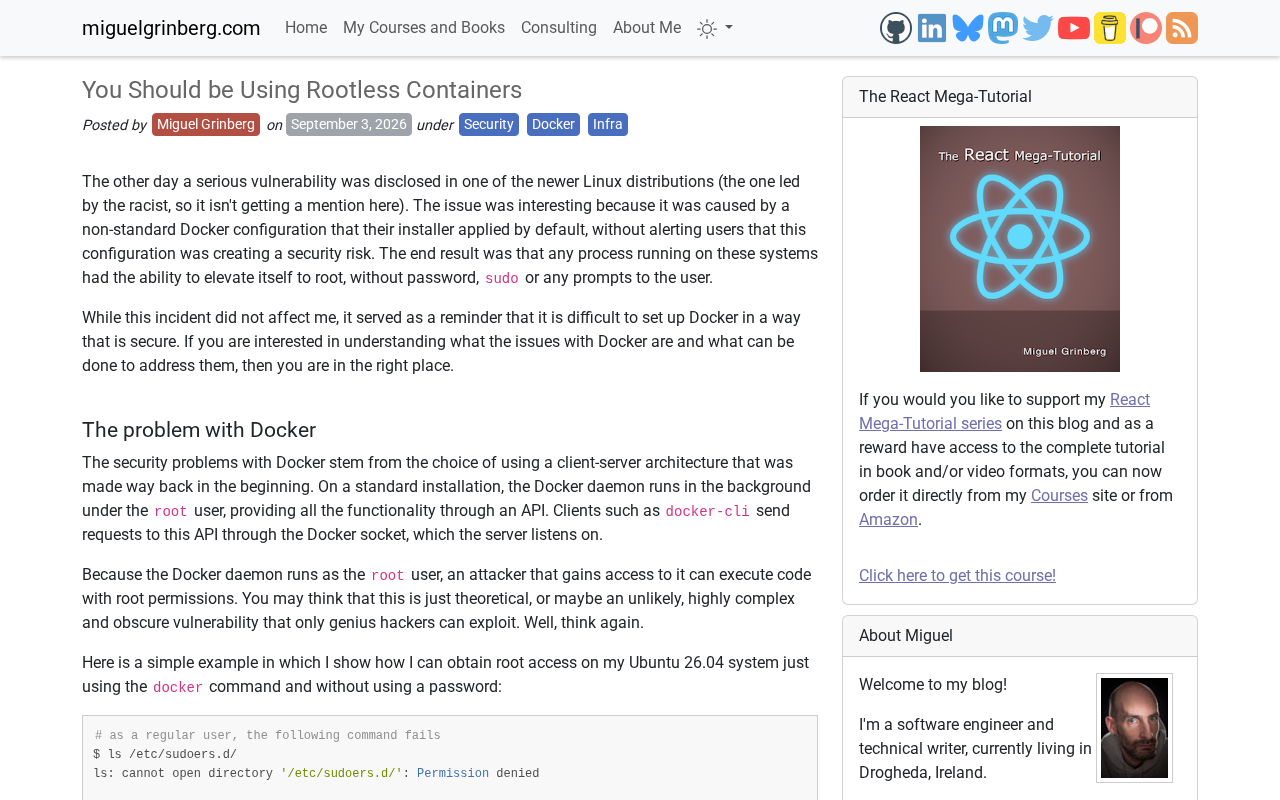
Rootless Containers Explained: Principles, Benefits, and Leading Implementation Approaches
A deep dive into rootless container principles and security benefits, comparing Podman, Docker Rootless mode, and Kubernetes integration with practical migration advice.