Truecaller Moves Into the Open Web: Anti-Scam Intelligence Expands Beyond Caller ID

Truecaller is taking its anti-scam data from caller ID into the open web to find new growth under core business pressure.
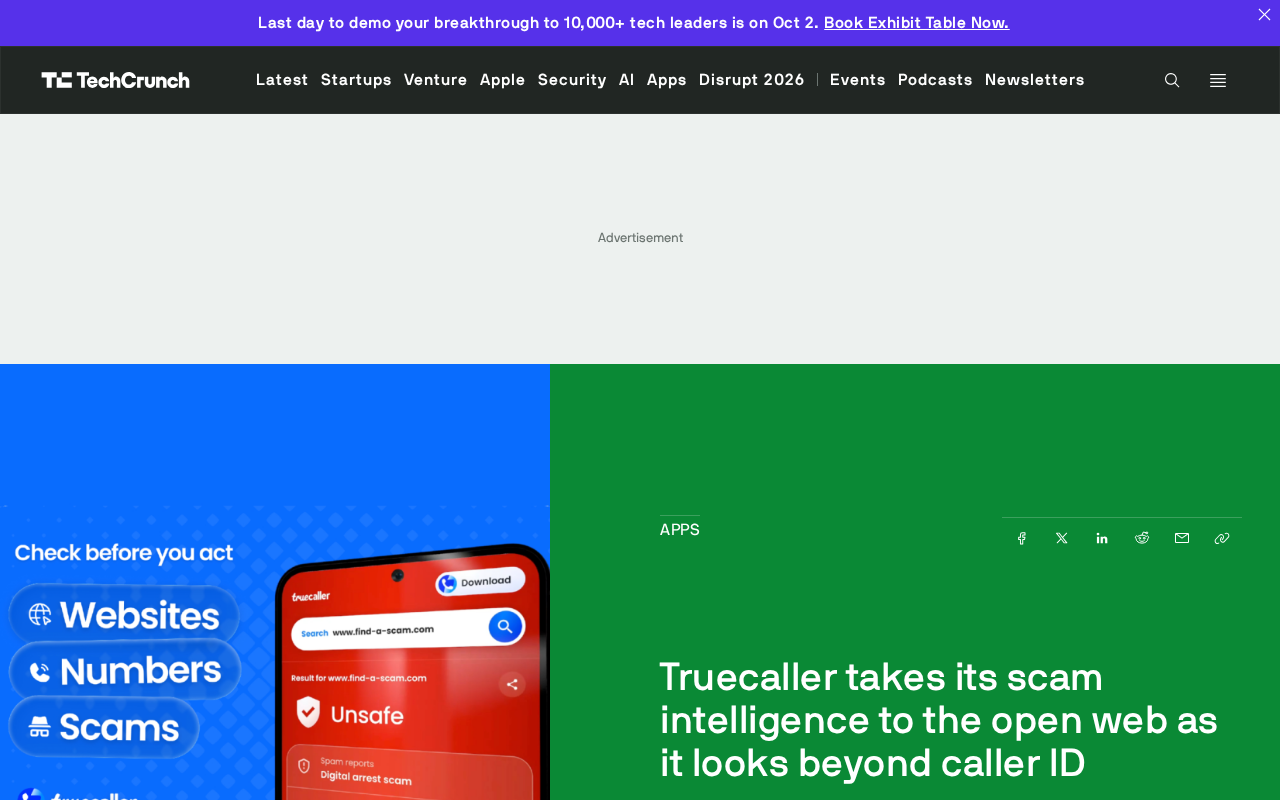
Truecaller is extending its anti-scam intelligence capabilities to the open web, responding to growth limitations and regulatory pressure facing its core caller ID business in India. As Android and iOS continue to strengthen native spam-protection features, the distinctiveness of third-party caller ID apps is being steadily eroded. Truecaller's vast database of phone numbers and scam behavior holds significant value beyond call identification — spanning phishing, fraudulent links, and online fraud — providing a foundation for its potential evolution from consumer app to web security intelligence provider. This shift also reflects a broader industry trend: scam tactics now span calls, SMS, social media, and web pages, and anti-fraud capabilities are moving from point solutions toward platform-scale, networked approaches.
Truecaller's Strategic Pivot
Truecaller is extending its anti-scam intelligence capabilities to the open web — a move that signals the company, long known for caller ID, is actively searching for growth beyond its core business. As its flagship caller ID service faces mounting competition and regulatory pressure in India, its largest market, Truecaller needs to reframe its value proposition.
For Truecaller, caller ID has always been the defining feature of its brand. Users rely on it to determine whether an unknown call is spam or a scam. But as the ceiling on that business model becomes increasingly visible, migrating years of accumulated anti-fraud data and intelligence capabilities into broader digital scenarios has emerged as a natural extension.
Why Go Beyond Caller ID
India is Truecaller's biggest market — a place where growth and pressure coexist. In a country with a massive mobile user base, Truecaller's caller ID service has become deeply embedded in daily life. Yet it also faces a convergence of challenges: local competitors, shifting platform policies, and tightening data privacy regulations.
The risks of relying solely on caller ID as a business model are becoming harder to ignore. As carriers and OS vendors — Android and Apple alike — continue to strengthen their native spam-protection features, the distinctiveness of third-party caller ID apps erodes. By pushing its anti-scam intelligence into the open web, Truecaller is essentially staking out a new territory that isn't entirely at the mercy of the telephony ecosystem.
Native anti-spam capabilities on Android and iOS have improved significantly in recent years. Google has built Call Screen and Verified Calls directly into Android, while Apple offers the option to silence unknown callers on iOS and has opened STIR/SHAKEN protocol support to carriers — an industry standard for authenticating caller numbers. As system-level protection matures, business models that depend on users actively installing third-party apps face a fundamental user acquisition challenge. For Truecaller, this means the odds of competing with OS vendors on their own turf keep getting longer. Seeking use cases that fall outside the OS's reach becomes an imperative.
The Broader Value of Anti-Scam Intelligence
Over the years, Truecaller has assembled an enormous database of phone numbers and scam behavior data. The applications for that data extend well beyond identifying a single incoming call — there is substantial value to be unlocked in combating phishing, fraudulent links, and online scams across the broader digital fraud landscape.
Positioning "scam intelligence" as a capability that can stand on its own means Truecaller could potentially evolve from a consumer app into a security intelligence provider for the wider internet. If that transformation succeeds, it would not only diversify revenue streams but also elevate Truecaller's strategic standing in the digital security space.
In this context, the "open web" refers to the general internet environment outside the telephony ecosystem — websites accessed through browsers, links shared in instant messaging, email, and social platforms. Unlike a closed phone number database, identifying scam activity on the open web requires analyzing multi-dimensional signals: URL patterns, domain registration data, page content characteristics, and network behavior. If Truecaller moves into this space, it would effectively be competing with established players like PhishTank, Google Safe Browsing, and Cloudflare. Its potential differentiator lies in the correlation between phone numbers and web-based scam behavior — many online scams ultimately rely on a phone call or SMS to complete the con, and that's precisely where Truecaller's data assets could offer unique value.
Industry Implications
Truecaller's move reflects a broader industry trend: anti-fraud and security capabilities are evolving from point solutions into platforms and networks. Scam tactics have already spread across phone calls, SMS, social media, and web pages — single-channel defenses are increasingly inadequate against end-to-end fraud campaigns.
For tech companies that have built their moats around a single core feature, Truecaller's case is a compelling example worth watching. How to convert accumulated data assets into new growth engines when the core business is under pressure is a challenge that many companies will inevitably face.
Related articles

Free Unlimited Claude Code Solution: Agnes AI + CC Switch Setup Guide
No paid subscription needed — pair the free AI platform Agnes AI with the open-source tool CC Switch to provide a backend for Claude Code, enabling unlimited free calls to text, image, and video models. This guide covers the full setup, test results, and usage boundaries.

A Complete Zero-Cost Guide to Getting Started with Claude Code for Beginners in China
A beginner's guide to Claude Code for users in China: two installation methods (command line and IDE plugin), full configuration steps for replacing the official API with the free domestic LongCat model, and a hands-on demo of building a small tool with natural language, plus tips.

When the NSA Gets Involved: The AI Supply Chain Crisis Behind Open-Source CVEs and API Key Hijacking
Multiple open-source projects disclosed severe CVEs in one day, PHP flaws alarmed the FBI, and Railway and OpenCode were breached with API keys stolen. This article breaks down the vulnerability window, AI-accelerated exploitation, and the AI supply chain crisis behind the API key black market, with a developer defense checklist.