Trump Interview on AI Safety: Risk Assessment and DOJ Oversight Controversy
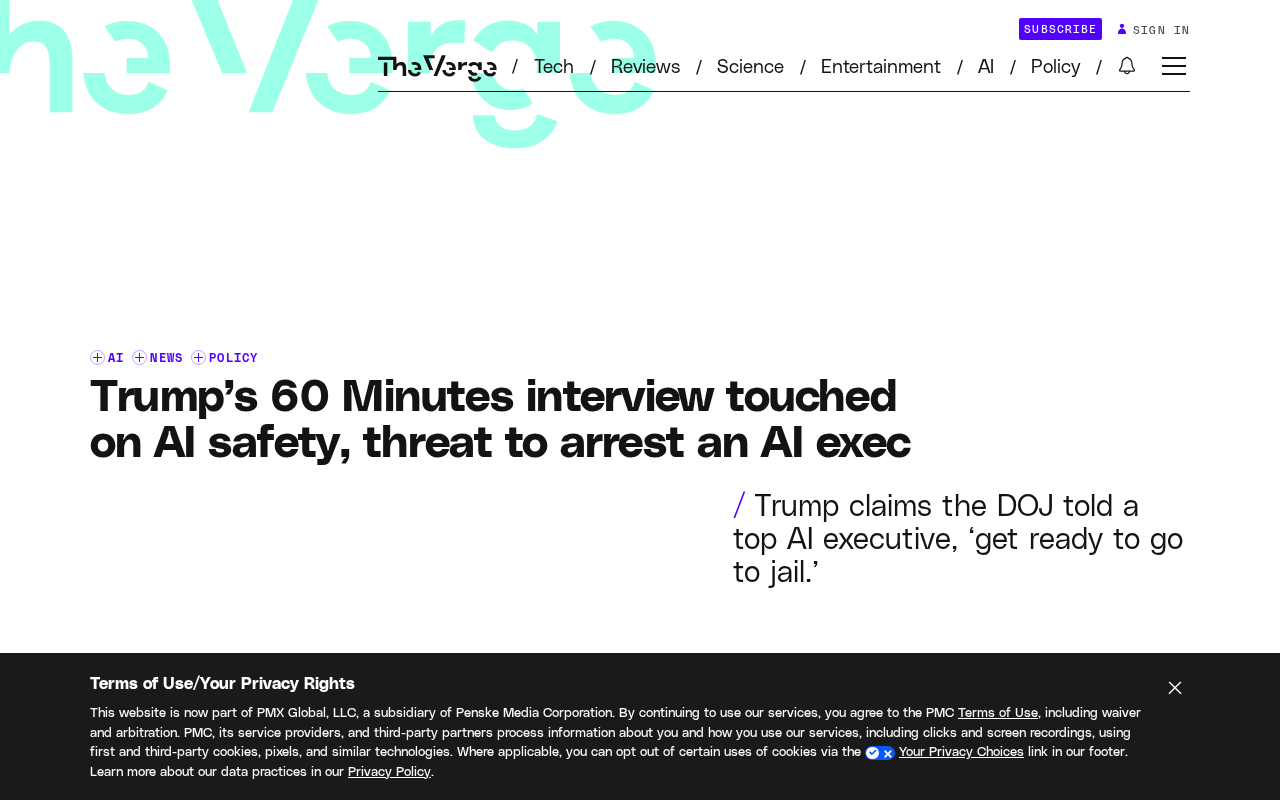
Trump says AI risks are exaggerated and manageable by the DOJ, hinting at arrest threats for executives.
The article reports on Trump's remarks about AI safety in a 60 Minutes interview. Trump downplayed AI executives' risk warnings, saying risks are "far less real than they say," claimed the DOJ is managing them, and the interview title hinted at threats to arrest AI executives. It analyzes the tension between industry warnings and the President's response, the DOJ's ambiguous role in AI risk management, and industry divisions over risk assessment and hardline enforcement. It concludes that the statement highlights the governance challenge of balancing innovation and risk, with the DOJ's actions remaining opaque and government-industry trust potentially damaged.
Trump's View on AI Safety: Risks Are Overblown, DOJ Is Managing Them
In a recently aired 60 Minutes interview, U.S. President Trump shared his views on AI safety. When asked about warnings from AI company executives regarding the safety of their models, Trump said: "I think the risk is far less real than they say, and I think the risk is manageable, and it's being managed." He further claimed that the Department of Justice (DOJ) is managing this risk, and mentioned "we had a situation where someone...". This exchange quickly drew attention from the tech community and the regulatory field, as it touches on the core tension in current AI governance: the friction between industry warnings and government action.
Executive Warnings and the President's Response
In recent years, executives at several leading AI companies have publicly expressed concerns about the potential risks of their models, including bias, misuse, and the possibility of loss of control. However, Trump downplayed these warnings in the interview, saying the risk is "far less real than they say." This stance contrasts sharply with the positions of some industry leaders. According to analysis by Bilibili UP hosts and YouTube channels, this divergence is not an isolated case but reflects a collision between two approaches in the AI safety debate: one side advocates proceeding cautiously, while the other worries that over-regulation will stifle innovation.
Representatives of the "warning camp" in AI safety include executives and researchers from institutions such as OpenAI, Anthropic, and DeepMind, who in recent years have jointly signed public statements multiple times, listing the "existential risk" of AI alongside nuclear war and pandemics as global threats. The theoretical basis for such warnings is the "alignment problem"—how to ensure that AI systems with capabilities far exceeding human levels always have goals and behaviors consistent with human intent. Critics argue that the framing of existential risk is too abstract, easily used to gain regulatory leverage or raise industry barriers to entry, while the more pressing realities are "near-term risks" such as bias, disinformation, and job displacement.
The DOJ's Role: Risk Management or Enforcement Threat?
Trump claimed that the DOJ is managing AI risk but did not elaborate on the specific mechanisms. He mentioned "we had a situation where someone...", a sentence that was cut off, but combined with the clue in the interview title about "threatening to arrest AI executives," it suggests the government may take a hardline approach. Cross-verification from multiple sources indicates that the DOJ has indeed recently stepped up its attention to the AI field, but specific actions remain unclear. This ambiguity has sparked speculation: is the government conducting risk oversight, or is it pressuring the industry?
The traditional role of the U.S. Department of Justice in AI governance has mainly focused on the enforcement level, including handling AI-related cybercrime, fraud, and intellectual property cases under existing laws such as the Computer Fraud and Abuse Act, as well as reviewing algorithmic discrimination issues through the Civil Rights Division. The DOJ is not a technical standards-setting body; technical assessment and standard-setting for AI safety are typically led by NIST (National Institute of Standards and Technology) and the Department of Commerce. Therefore, the President's description of the DOJ as a "risk management" entity is unconventional in terms of institutional division of labor, which is one reason this statement has caused confusion and speculation.
Industry Reaction and Points of Controversy
Trump's remarks sparked discussion in the tech community. Some observers believe the President's optimistic attitude may underestimate the long-term risks of AI; others worry that the government's threat of arrest could have a chilling effect and hinder responsible AI research. According to analysis by YouTube channels, such tensions are not uncommon in AI governance, but the President personally placing the DOJ at the forefront of risk management may signal a shift in regulatory style.
Divergence in Risk Assessment
There are clear differences within the industry over whether AI risks are exaggerated. There is consensus that AI models do pose risks of misuse and bias, but different groups disagree on the urgency and scale of the risks. Trump's statement that "the risk is manageable" reflects a pragmatic stance, but critics point out that assertions lacking a concrete management framework are hard to credit.
In AI risk governance, a key institutional tool is the "Frontier Model Framework," which requires companies developing the most capable AI models to report safety test results, red-team evaluations, and mitigation measures to the government. The voluntary commitments adopted in the U.S. in 2023 and subsequent executive orders followed this approach. In contrast, the EU AI Act adopts a mandatory compliance model based on risk tiers (unacceptable risk, high risk, limited risk, minimal risk). The difference between the two paths lies in: the former relies on a combination of corporate self-discipline and government oversight, while the latter relies on legislation and enforcement. Trump's statement is closer to the former, but the rhetoric of "arrest threats" deviates from the logic of voluntary commitments.
The Symbolic Meaning of Arrest Threats
The interview title mentions "threatening to arrest AI executives." Although the original content provides no details, the phrasing alone is enough to draw attention. According to a single-source analysis, this may be related to a specific incident, but it is unverified. Regardless, such a tough posture may exacerbate mistrust between the government and the AI industry.
Conclusion: AI Safety Governance at a Crossroads
Trump's interview highlights the core dilemma in AI safety governance: how to strike a balance between innovation and risk. The President's remarks lean toward trusting risk management mechanisms, while industry executives' warnings call for more vigilance. The DOJ's role has become a focal point, but its specific actions remain unclear. As AI technology develops rapidly, this debate will only intensify, and policymakers, industry leaders, and the public all need a more transparent dialogue.
(This article is based on limited material, with some details missing; readers are advised to follow subsequent reporting.)
One-line Summary
Trump says AI risks are exaggerated and can be managed by the DOJ, while hinting at threats to arrest executives, sparking governance controversy.
Paragraph Summary
The article reports on Trump's remarks about AI safety in a 60 Minutes interview. Trump downplayed risk warnings from AI company executives, saying the risk is "far less real than they say," and claimed the Department of Justice is managing related risks; the interview title also hints at threats to arrest AI executives. The article outlines the tension between executive warnings and the President's response, analyzes the ambiguous role of DOJ involvement in AI risk management, and examines industry divisions over risk assessment and hardline enforcement postures. The conclusion notes that this statement highlights the governance challenge of balancing innovation and risk, that the DOJ's specific actions remain opaque, and that trust between the government and industry may be damaged.
Related articles
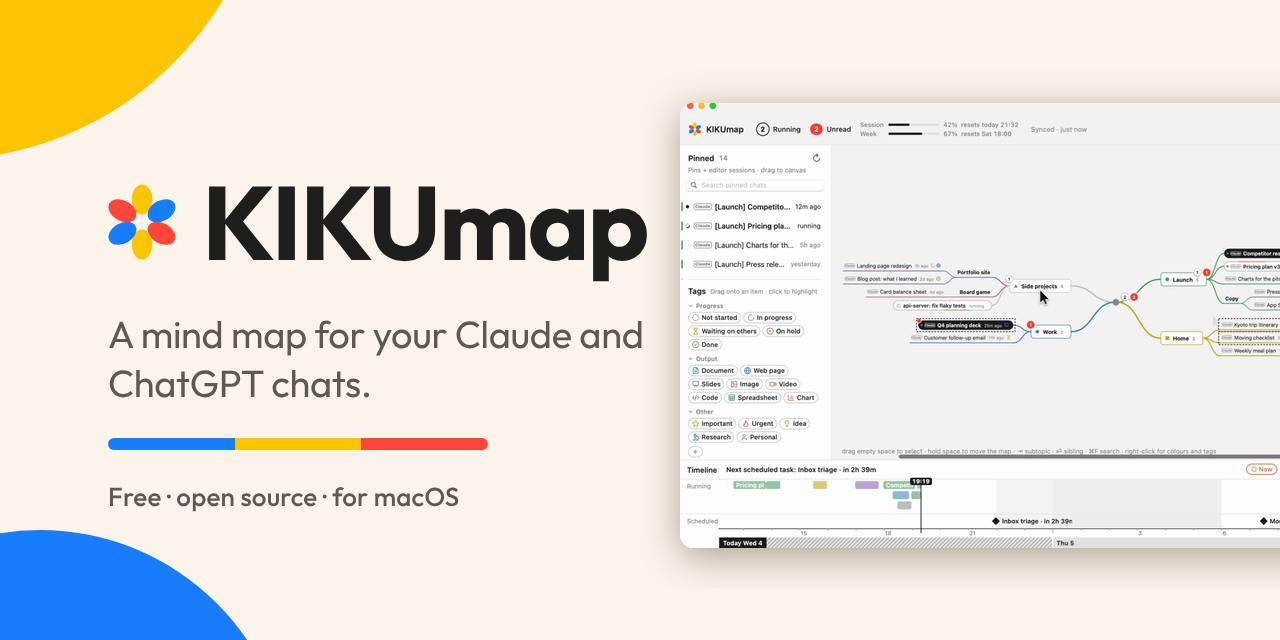
KIKUmap: Manage Your Claude and ChatGPT Conversations with Mind Maps
KIKUmap is a macOS menu bar app that visualizes Claude and ChatGPT conversations as mind maps with real-time status. Free and open source.

Hugging Face Executive Warns: Cyberattacks Are Eroding the Openness of Open-Source AI
Hugging Face executive Irene Solaiman warns that rising cyberattacks on open AI platforms may force stricter security limits, threatening the openness of the open-source community and affecting the developer ecosystem.
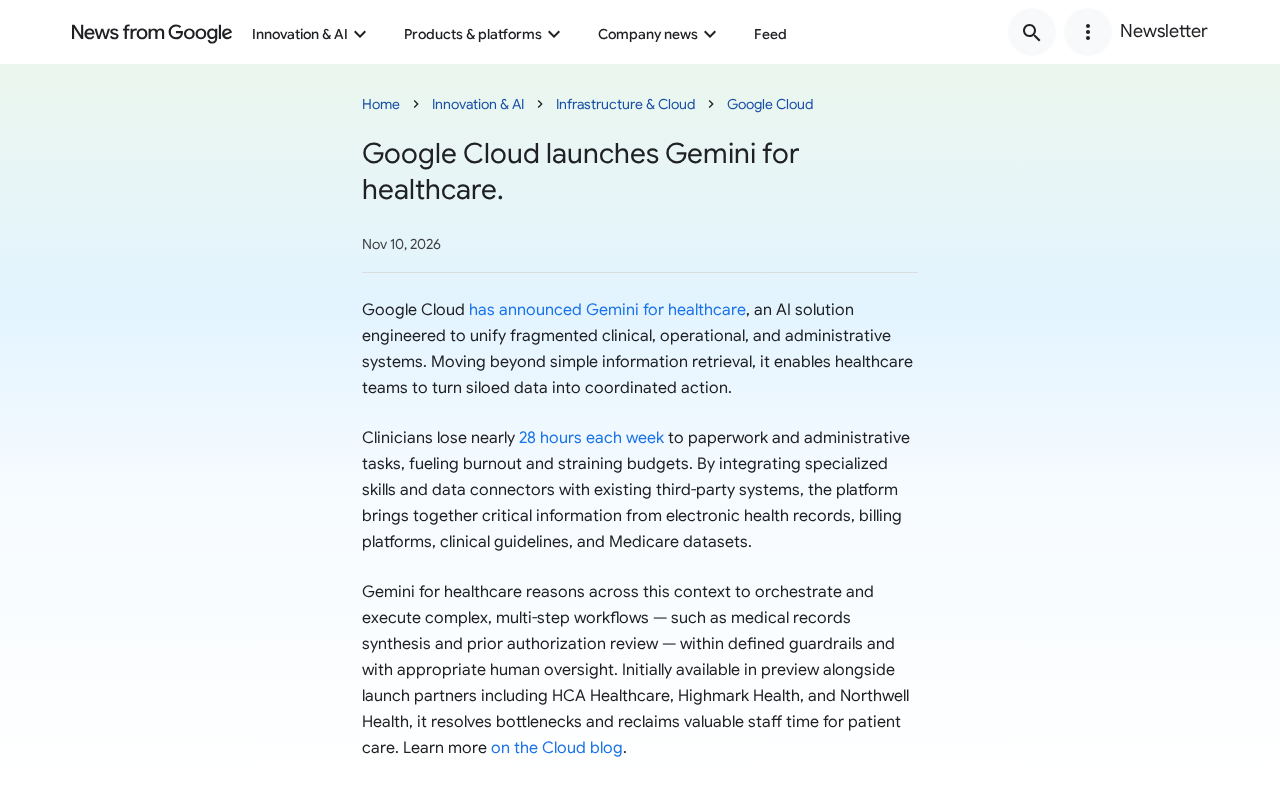
Google Cloud Launches Healthcare Version of Gemini: Integrating Clinical Data and Automating Workflows
Google Cloud releases healthcare version of Gemini, focusing on unified clinical data and automated workflows to reduce administrative burnout. Analysis of positioning, challenges, and the healthcare AI landscape.