Trump Proposes Rebranding AI and Claims He's Creating an 'AI Force'
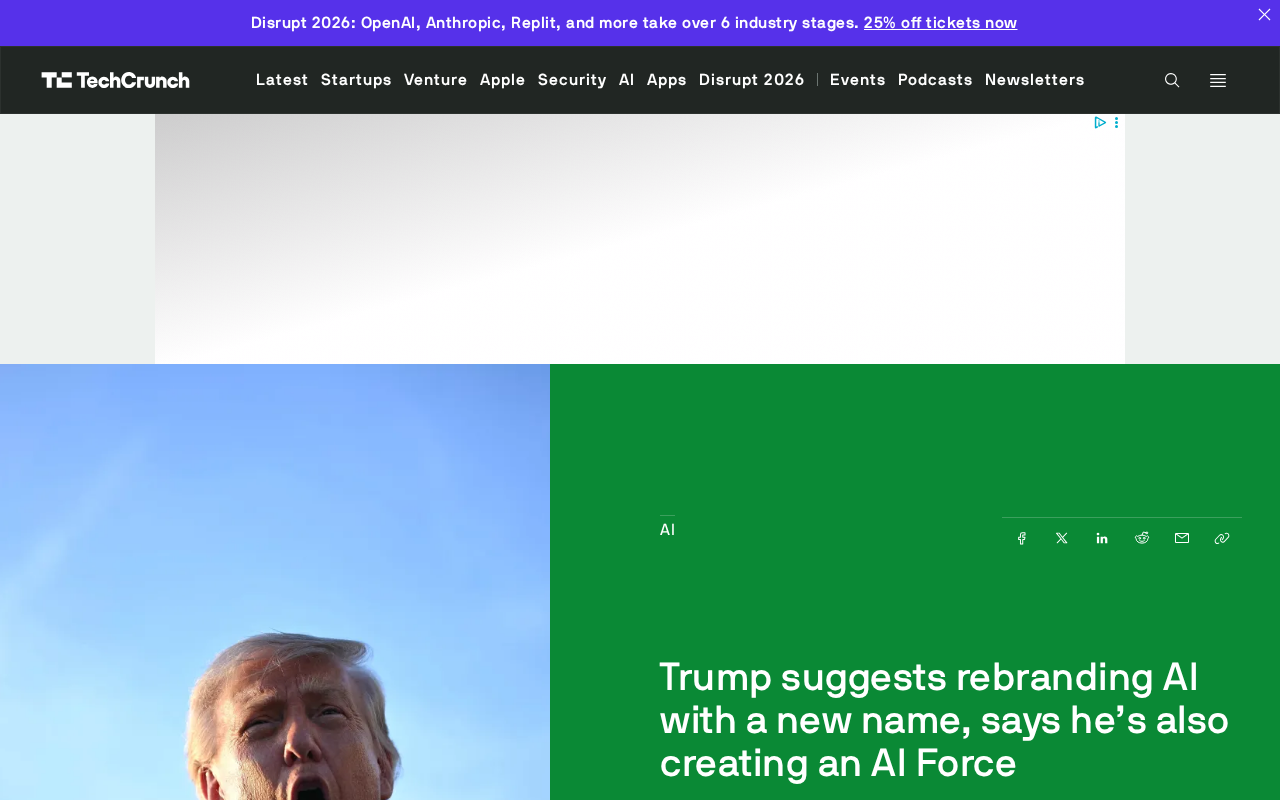
Trump wants to rename AI, build an 'AI Force,' and calls AI concerns a 'Democrat hoax' — with little detail on any of it.
Former U.S. President Donald Trump recently made several AI-related statements: proposing a new name for artificial intelligence, claiming to be building an "AI Force," and labeling public AI concerns a "Democrat hoax" without evidence. The article argues these remarks are vague and policy-light — more political rhetoric than substance. Concerns about AI-driven job loss, deepfakes, and privacy are globally recognized issues, not partisan fabrications. If the "AI Force" involves military AI deployment, it raises serious questions around autonomous weapons ethics and algorithmic accountability that demand real policy detail, not slogans.
Overview
According to foreign media reports, former U.S. President Donald Trump recently made statements proposing a new name for artificial intelligence (AI), while claiming he is working to establish a so-called "AI Force." Without providing any evidence, he also labeled public concerns and opposition surrounding AI technology as a "Democrat hoax."
These remarks quickly drew attention. Given the limited information available from the original reports, it remains unclear what specific new name Trump has in mind for AI, or what the organizational structure, functional role, or implementation path of the so-called "AI Force" might look like.
The Political Context Behind the Remarks
Politicizing technology issues has become a common feature of U.S. public discourse in recent years. By framing public concerns about AI as a "Democrat hoax," Trump is essentially pulling a cross-partisan technology governance issue into a partisan narrative.
What's worth noting is that concerns about AI — including job displacement, copyright disputes, deepfakes, and privacy risks — are real issues recognized by technologists, academics, and regulators worldwide. They are not manufactured by any single political party. Dismissing them as a "hoax" risks undermining public awareness of genuine risks and makes it harder to build rational regulatory consensus.
AI governance has already produced substantive policy frameworks globally, demonstrating that these concerns are far from partisan theater. The EU formally passed the EU AI Act in 2024 — the world's first comprehensive AI regulatory legislation — classifying AI applications by risk level, and widely regarded as a landmark in international AI governance. The Biden administration also issued an Executive Order on Safe, Secure, and Trustworthy Artificial Intelligence in 2023, requiring safety assessments for high-risk AI systems. These policy actions were driven by bipartisan governments or multinational institutions, with broad participation from industry, academia, and civil society. Their core concerns — algorithmic bias, deepfake abuse, systemic unemployment risk — are backed by extensive empirical research and have nothing to do with party affiliation.
What Does "Rebranding AI" Actually Mean?
The proposal to give AI a new name lacks any technical necessity. "Artificial intelligence" is a widely accepted term whose definition and meaning are already deeply embedded in industry and public discourse. Rebranding it is more of a rhetorical or political gesture than a substantive technical or policy move.
From a communications standpoint, statements like this are often designed to generate buzz and project a "tech leader" image. But for observers who genuinely care about AI governance, a naming debate does nothing to address core issues like compute competition, data security, or talent development.
Many Unknowns Surround the "AI Force"
The concept of an "AI Force" is equally vague. Whether it refers to a government AI task force, a militarized AI application unit, or some symbolic institution remains entirely unclear.
If this genuinely involves deploying AI in defense or security contexts, it would touch on a range of sensitive issues — including the ethical boundaries of autonomous weapons systems, accountability mechanisms for algorithmic decision-making, and transparency requirements under international arms control frameworks. These demand serious discussion grounded in detailed policy documents, not slogan-like proclamations.
Autonomous Weapon Systems (AWS) are among the most contested AI military issues in the international community today. These systems can identify targets and make attack decisions without direct human control, raising fundamental ethical questions about whether lethal autonomous weapons should be permitted at all. Expert groups under the UN's Convention on Certain Conventional Weapons (CCW) have held multiple rounds of consultations on this since 2014, yet major powers have yet to reach a binding international agreement. The United States, China, Russia, and other military powers are all actively advancing AI applications in defense while remaining cautious about international control rules. If Trump's "AI Force" truly involves the systematic deployment of military AI, it will inevitably intersect with these unresolved global governance questions — and its trajectory deserves close monitoring.
Viewing the Intersection of Technology and Politics Rationally
As AI becomes a key variable in national competitiveness, the political maneuvering around it will only intensify. It's not unusual for politicians to use AI topics to attract attention, but the public and media need to distinguish between substantive policy proposals and rhetorical packaging.
For this particular episode, in the absence of further official details, maintaining cautious observation is the more responsible approach. What's really worth tracking is whether any concrete policy documents, institutional structures, or legislative actions follow.
Note: This article is based on limited original reporting, and some details remain to be confirmed by additional sources.
Related articles
Qwen Image 2.1 Early Testing: How Good Is Image Generation from a 7B Model?
A Reddit user tested Qwen Image 2.1 early access, generating 200+ portrait images. We break down this 7B model's image quality, noise issues, and editing capabilities.

Meta Muse Review: A Powerful Yet Unsettling AI Assistant
Meta's AI assistant Muse is powerful but unsettling. Its Mac app accesses Messages, Calendar, and Notes, raising privacy concerns — and it can't even describe itself.
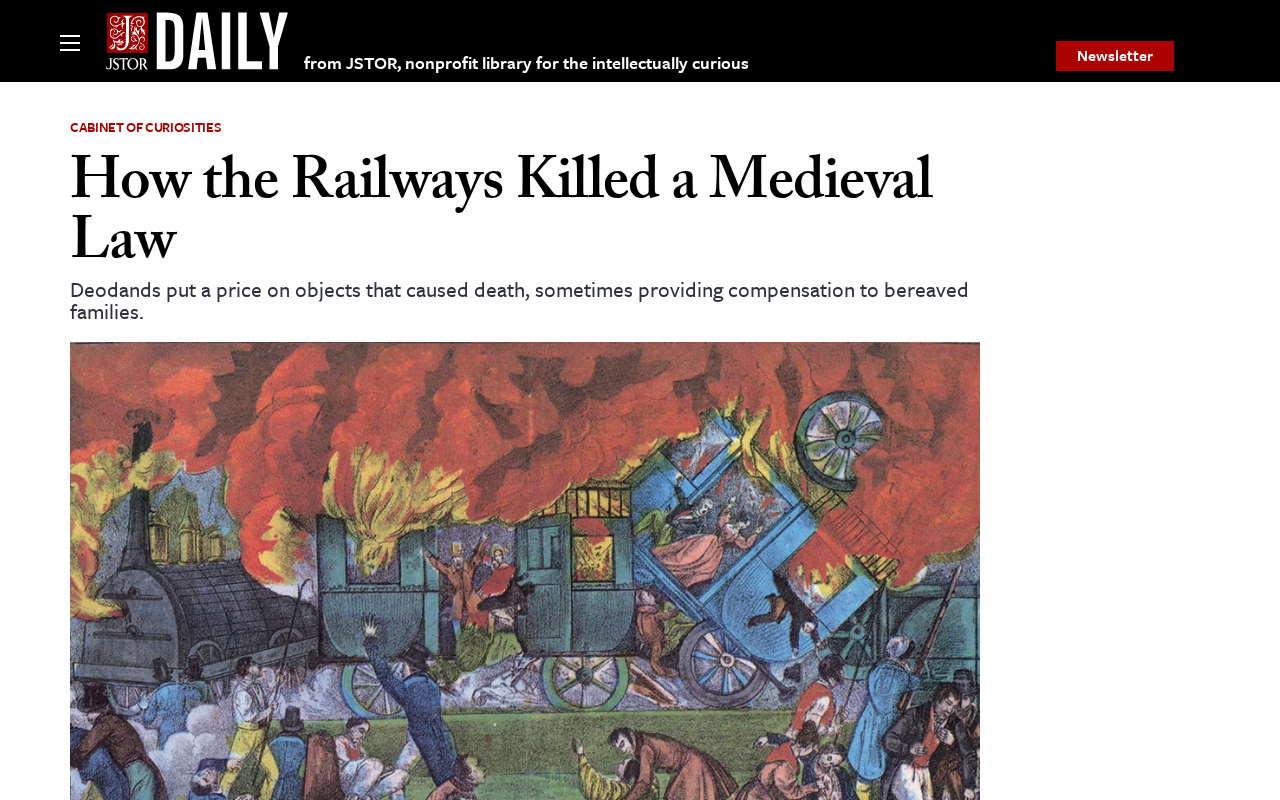
Deodand: The Ancient English Law That Put a Price on Deadly Objects
Deodand was an English common law doctrine that valued and forfeited deadly objects. This article examines its legal logic, evolution from religious rite to fiscal tool, and its relevance to AI and autonomous vehicle liability today.