Trump Responds to Jensen Huang Rumors: White House Briefing Remarks and the Limits of Information
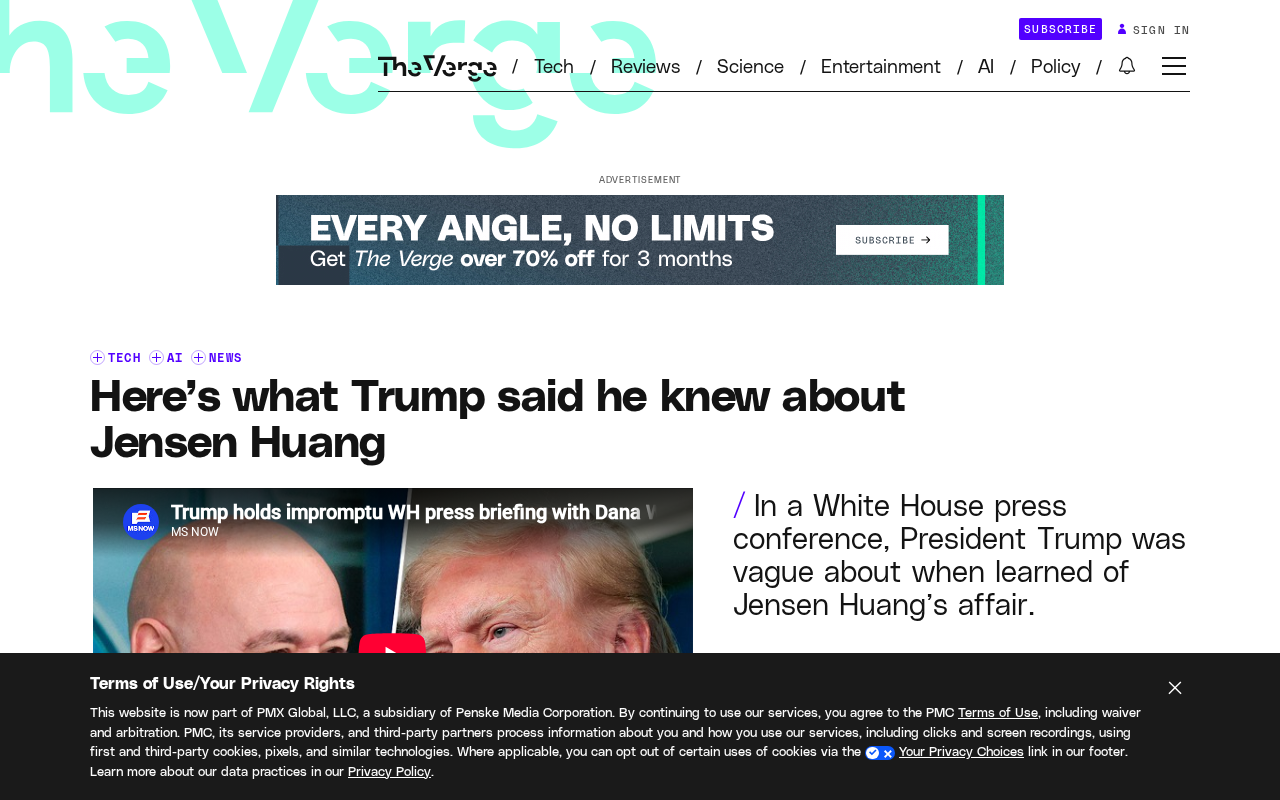
Trump responds to Jensen Huang rumors, while NVIDIA launches an internal investigation after its CEO admits being unfaithful.
The article reports that U.S. President Donald Trump was asked at a White House briefing about rumors concerning NVIDIA CEO Jensen Huang and responded, though the original material lacks the full Q&A transcript. Huang admitted being unfaithful, and NVIDIA has launched an internal investigation; some reports linked the matter to an alleged Chinese spy, but the claim lacks independently verifiable details. The article stresses distinguishing admitted facts from unverified allegations and following official statements.
At a recent White House press briefing, U.S. President Donald Trump was asked about his level of knowledge regarding rumors surrounding NVIDIA CEO Jensen Huang and responded to the question. The episode pushed the head of the world's most valuable semiconductor company to the intersection of politics and public opinion, and sparked discussion about the boundary between tech leaders' private affairs and their public roles.
Background: Huang Admits Being 'Unfaithful,' Company Launches Investigation
According to the original report, Huang admitted over the weekend that he had been "unfaithful" to his wife, and NVIDIA subsequently launched an internal investigation into the company. The report also mentioned that an article linked the matter to an individual described as a Chinese spy. To be clear, in currently public information, the "Chinese spy" allegation appears only in descriptions in some media reports; the original material does not provide independently verifiable details.
From a corporate governance perspective, once a CEO's personal conduct becomes tied to company reputation and compliance risk, it is common procedure for the board to launch an investigation. As a core supplier in the AI chip sector, NVIDIA's management stability directly affects market sentiment.
Internal Investigation typically refers to an independent review initiated by a company's board of directors or a special committee (such as an audit committee) to determine whether executive conduct violates the company's code of conduct, employment agreements, or securities regulations. Under the corporate governance framework for U.S.-listed companies, if a CEO's personal conduct could affect the company's reputation, stock price, or compliance status, the board has a fiduciary duty to assess it. The investigation may be led by an outside law firm, and its conclusions may include disciplinary action, termination, or exoneration, and may trigger disclosure obligations. For a company of NVIDIA's enormous market value, even if the investigation concludes there is "no material impact," the very launch of the investigation signals to the market that governance mechanisms are functioning normally.
Trump's Remarks: What He Knows and What He Doesn't
At the White House briefing, Trump responded to reporters' questions about what he knew regarding Huang's situation. Based on the original report's summary, his remarks centered on "known information" and "information he does not possess," but the source material itself does not provide the full Q&A transcript or specific wording.
This style of response fits the usual strategy of political figures handling corporate-related rumors: neither binding themselves to specific allegations nor fully avoiding the question. For those following the AI industry, what is truly noteworthy is that personal controversies involving tech executives are increasingly being brought into the political discourse.
Why the Tech World Should Pay Attention
NVIDIA sits at the center of the AI computing supply chain, and any negative news about its CEO can be amplified in interpretation. From chip export controls to supply chain security, NVIDIA has long been at the center of geopolitical issues. The phrase "Chinese spy" that appeared in these rumors, even without evidence, is enough for public opinion to link a private matter to a national security narrative.
For companies, the lesson from such episodes is that managing the risk of executives' personal conduct has become part of corporate governance at tech companies. For readers, when information is still incomplete, distinguishing between "admitted facts" (Huang acknowledged being unfaithful, the company launched an investigation) and "unverified allegations" (the spy connection) is basic information literacy.
Export controls and supply chain security are key background for understanding NVIDIA's geopolitical position. Since 2022, the United States has imposed export restrictions on advanced AI chips to China (such as A100/H100 and subsequent models) and has repeatedly tightened the rules, forcing NVIDIA to launch compliant "downgraded" special versions. In this process, NVIDIA faces multiple pressures simultaneously from the U.S. government (export licenses), Chinese regulators (antitrust and cybersecurity reviews), and global customers. For this reason, any rumor related to "China"—even if it is only a phrase in media reports—may be interpreted by the market as a signal of supply chain or compliance risk, thereby amplifying the impact of the event.
Information Gaps and Follow-up Watch Points
The original material is limited in length. There are currently no further details on what exactly Trump said, whether the White House provided further clarification, or the scope and conclusions of NVIDIA's investigation. It is advisable to continue following NVIDIA's official statements and subsequent verification reporting by mainstream media, and to avoid excessive inference based on fragmentary information.
One-line Summary
Trump responds to Jensen Huang rumors as NVIDIA launches an internal investigation after its CEO admits being unfaithful.
Paragraph Summary
The article reports that U.S. President Donald Trump was asked at a White House briefing about rumors concerning NVIDIA CEO Jensen Huang and responded, but the original material does not provide the full Q&A transcript. The background is that Huang admitted being unfaithful to his wife and NVIDIA has launched an internal investigation; some reports also linked the matter to an individual described as a Chinese spy, but the allegation lacks independently verifiable public details. The article notes that NVIDIA sits at the center of the AI computing supply chain and has long been a focus of geopolitical issues, making the CEO's personal controversy easy to link to a national security narrative. It emphasizes distinguishing admitted facts from unverified allegations and recommends following NVIDIA's official statements and subsequent verification reporting.
Related articles
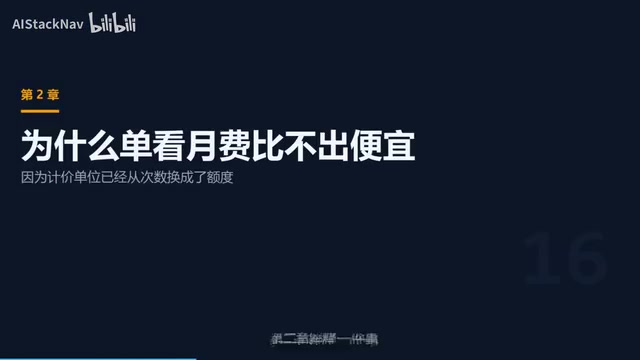
How Do Cursor, Devin, TRAE, and Copilot Compare on Price? Calculate Your Credits Before You Compare Monthly Fees
Side-by-side comparison of individual and team pricing for Cursor, Devin Desktop, TRAE, and Copilot, breaking down credit rules, third-party model inclusion, overage billing, and practical methods for measuring usage before paying, setting spending caps, and choosing the right tool.
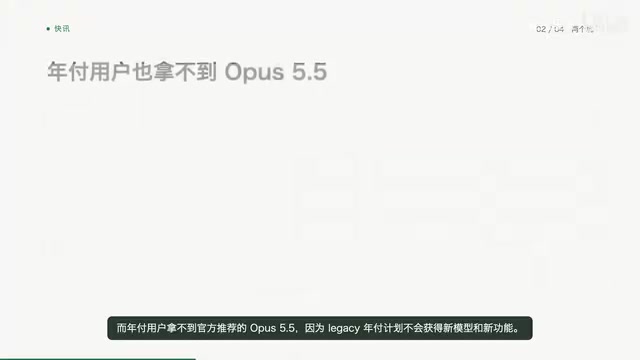
Copilot Retires Three Models: Pro Users Left With Only One Alternative
GitHub Copilot retires Claude Opus 4.8, Claude Opus 5, and GPT-5.6 Tera on Nov 16 across Chat, code completion, and Agent mode. Pro users have only GPT-6 Luna left; Legacy annual plans miss Opus 5.5; admins must enable replacements manually.
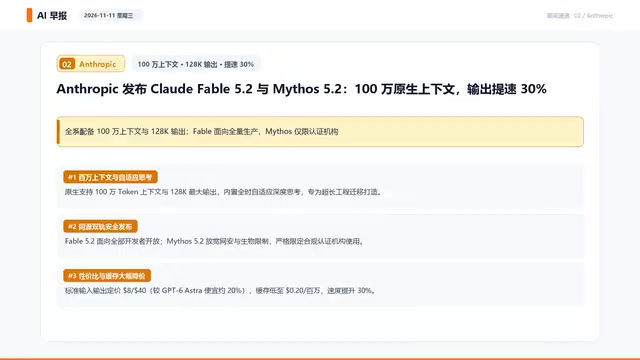
Gemini 4 Carbon Arrives: The LLM Race Enters the Era of Million-Token Context and Trillion-Parameter Open Source
Google launches Gemini 4 Carbon and multi-agent tool Swarm; Anthropic debuts million-context Fable 5.2 and Mythos 5.2; OpenAI releases security-focused GPT-6 Cyber; Mistral and Kimi open-source trillion-parameter models — the LLM race accelerates across the board.