Turning a Startup Book into Claude Code Skills: The Minimalist Entrepreneur Playbook Goes Open Source
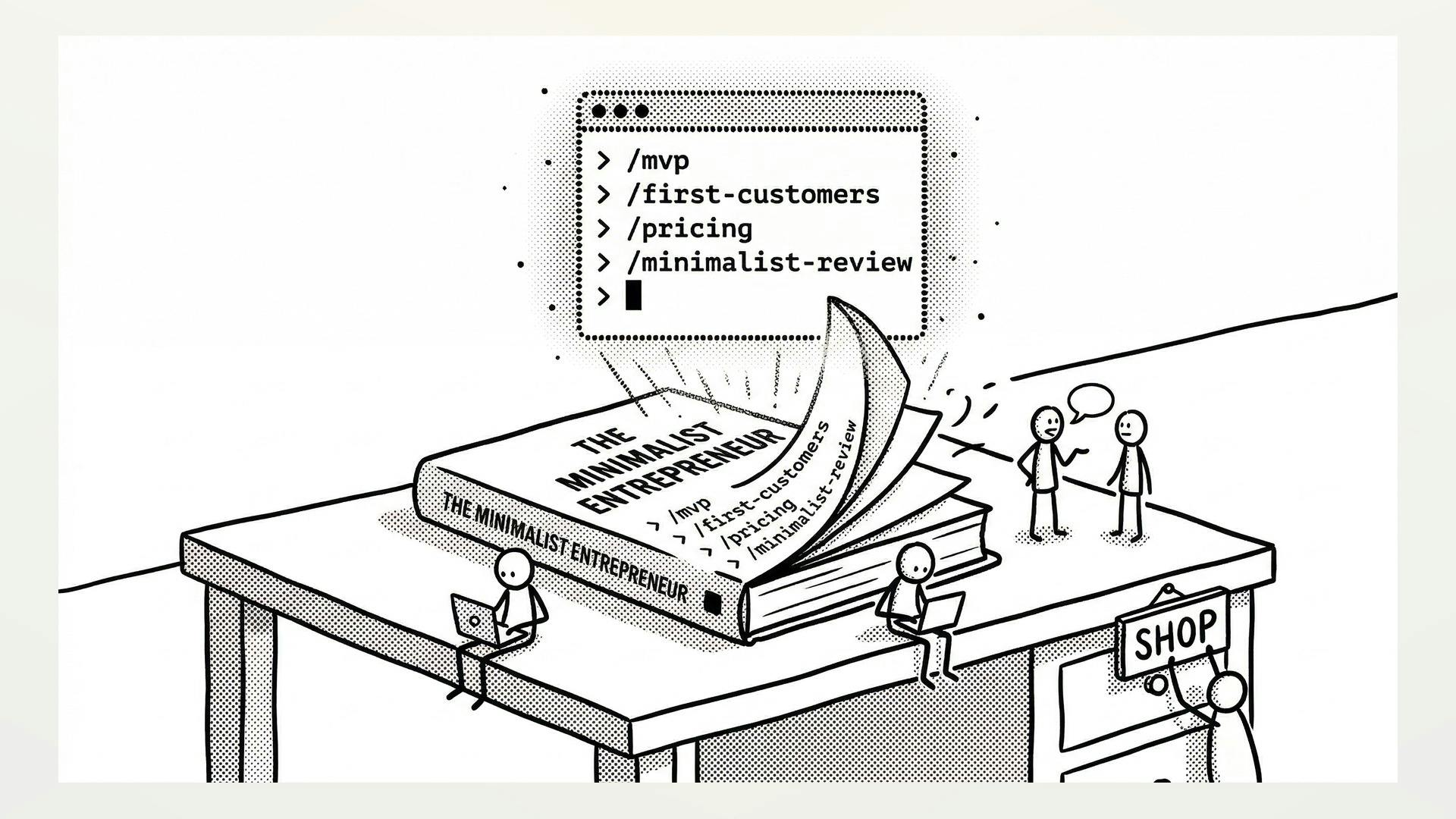
Gumroad founder turns The Minimalist Entrepreneur into 10 open-source Claude Code slash commands for startup workflows.
Gumroad founder Sahil Lavingia has packaged the methodology from his bestselling book *The Minimalist Entrepreneur* into 10 open-source Claude Code skills. Commands like `/validate-idea`, `/mvp`, and `/pricing` let developers invoke the book's startup frameworks directly from the command line. Released under the MIT license with 70 Product Hunt upvotes, the project's real value lies not in technical sophistication but in embedding static knowledge into actionable decision-making tools — and hinting at a future where AI coding assistants become execution layers for all kinds of domain expertise.
When a Startup Book Becomes Executable AI Commands
Gumroad founder Sahil Lavingia has broken down his bestselling book The Minimalist Entrepreneur into 10 open-source Claude Code skills. This means the book's methodology around validating ideas, building MVPs, and pricing strategy is no longer just theory sitting on a page — it's now a set of slash commands you can call directly inside a developer workflow.
The project launched on Product Hunt and received 70 upvotes, ranking 20th on its launch day across categories including Productivity, Developer Tools, and Artificial Intelligence. The entire project is released under the MIT license and is completely free and open source on GitHub.
How It Actually Works
The usage is refreshingly straightforward: after installing the plugin, you can run a series of slash commands inside Claude Code to apply the book's frameworks to your own business. The publicly documented commands include:
/validate-idea— validate whether your startup idea holds up/mvp— guidance on building a minimum viable product/pricing— help crafting a pricing strategy/minimalist-review— review your project through the lens of minimalist entrepreneurship
These four are just highlights — the full skill set contains 10 modules, covering the key decision points from idea to execution. Rather than reading a book and then figuring out how to apply it yourself, this format embeds knowledge directly into an execution tool, triggering the methodology at the exact moment you're making a real decision.
Claude Code is a developer-focused AI coding assistant from Anthropic that runs in the command-line environment and supports extending its capabilities through "skills" or plugins. Slash commands are one of Claude Code's core interaction patterns — users type
/command-namein the terminal to trigger pre-defined workflows or prompt templates, directing the AI to execute tasks within a specific framework. This differs from conversational AI: a skill essentially pre-compiles a structured set of reasoning logic and judgment frameworks into a command. When invoked, users don't need to manually provide context — execution begins immediately.
Why This Approach Is Worth Paying Attention To
The most interesting thing about this project isn't its technical complexity — it's what it reveals about a new form of knowledge product. Traditionally, authors sell books, courses, and consulting, leaving readers to bridge the gap between reading and practice on their own. Turning a book into AI skills essentially packages the author's mental framework into a reusable "decision assistant."
For independent developers and small teams already using Claude Code, this format fits naturally — they're already working in a command-line environment, and a /pricing command is right at their fingertips, far more accessible than flipping through a book to find the relevant chapter. This also echoes the core philosophy of The Minimalist Entrepreneur itself: launching and running a business with minimal cost and maximum simplicity.
It's worth noting that Sahil Lavingia personally embodies this philosophy. As Gumroad's founder, he has long championed the small-but-beautiful model of entrepreneurship and pushed back against the obsession with hyper-growth. Converting his own book into an open-source tool is itself a kind of "minimalist" experiment in knowledge distribution.
The Thinking Behind Open Source and Free Access
The MIT license means anyone can freely use, modify, and distribute these skills — even build on top of them. This lowers the barrier to entry and gives the community an opportunity to contribute and iterate on the command content.
From a broader perspective, projects like this signal that AI coding assistants are expanding their role. They're no longer just tools for writing code — they're increasingly becoming vehicles for carrying domain knowledge and methodologies. As more and more "playbooks" get packaged into skills, platforms like Claude Code could evolve into something like an operating system for executing knowledge.
The MIT license is one of the most permissive licenses in open-source software. It allows users to freely use, copy, modify, merge, publish, and even commercialize the work, as long as the original copyright notice is preserved. Compared to "copyleft" licenses like the GPL, MIT imposes almost no obligations on derivative works, meaning developers can integrate these skills into private or commercial projects without legal concerns. Choosing MIT typically signals that the author cares more about broad distribution and community participation than building a moat through copyright protection — consistent with Sahil Lavingia's longstanding ethos of openness and simplicity.
Takeaway
The Minimalist Entrepreneur Skills is a lightweight experiment in converting static knowledge into dynamic tooling. It's modest in scale and unflashy in technology, but it clearly points in a direction: books, methodologies, and expert frameworks can all be packaged into AI-callable modules. For independent developers, it's a practical attempt to embed startup guidance directly into everyday workflows. For content creators, it offers a new model for knowledge products. The project is free and open source — anyone interested can install and try it directly on GitHub.
Related articles
Building a Local AI Video Generator with GPT and Grok — Does It Actually Work?
A non-engineer blogger used GPT, Grok, and Cursor to build a local AI video generator from scratch — and actually ran the Will Smith spaghetti test. Here's what worked, what didn't, and why compute still wins.
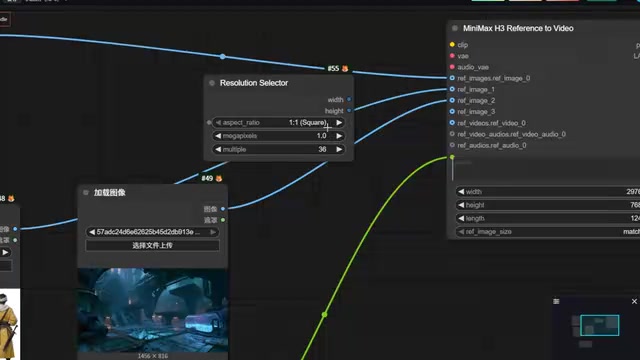
MiniMax H3 Local Deployment Guide: Running an Open-Source Video Model on 8GB VRAM
Step-by-step guide to deploying MiniMax H3 locally with ComfyUI: three-image input, int8 model loading, dual-path VAE, and lowvram/chunking optimizations for 8GB VRAM GPUs.

Running Hermes with Qwen3-8B Local Deployment: Automated Workflows on Low-Spec Hardware
How to deploy Qwen3-8B distilled model on a 16GB RAM PC and integrate it into Hermes workflows. Covers OpenAI-compatible API, Ollama, and llama.cpp setup methods.