Tutorial: Installing Tailscale on a Jailbroken Kindle to Create a Private Network Node

Turn a jailbroken Kindle into a Tailscale-connected private network node with this technical guide.
This guide explores how to install Tailscale on a jailbroken Kindle, transforming an idle e-reader into a functional private network node. It covers the technical implementation including cross-compilation for ARM architecture, power management strategies, and practical use cases like home dashboards and document terminals, along with important risk warnings.
When an E-Reader Meets a Private Network
In most people's minds, a Kindle is simply a dedicated e-ink reading device. But in the geek community, a jailbroken Kindle has long ceased to be just a reader—it can run a terminal, execute scripts, and even connect to modern networking tools. Recently, the practice of deploying Tailscale on a jailbroken Kindle has breathed new life into this old device.
Tailscale is a zero-configuration VPN tool based on the WireGuard protocol. It uses a mesh network approach to make devices distributed across different network environments appear as if they're on the same local network. WireGuard itself is an extremely lightweight modern VPN protocol, developed by Jason A. Donenfeld and officially merged into the Linux kernel mainline in 2020. Compared to traditional IPsec and OpenVPN implementations with tens of thousands of lines of code, WireGuard has only about 4,000 lines, making it easier to audit, more performant, and presenting a smaller attack surface. Tailscale builds a complete control plane on top of WireGuard, handling key distribution, node discovery, and NAT traversal, allowing users to achieve point-to-point encrypted communication between devices without manually configuring tunnels and routing tables. Installing it on a Kindle means this device can securely join your private network, enabling remote access, file synchronization, and even more complex automation scenarios.
Why Install Tailscale on a Jailbroken Kindle
Breaking Down Device Silos
Traditionally, Kindle can only receive content through Amazon's official channels or via email document delivery. Once connected to Tailscale, however, the Kindle becomes a full-fledged node in your private network. In Tailscale's mesh network topology, every node can communicate directly with any other node without traffic being funneled through a central gateway, significantly reducing latency and eliminating single points of failure. Tailscale uses DERP (Designated Encrypted Relay for Packets) relay servers as a fallback channel, while employing STUN protocols and port prediction techniques to establish direct peer-to-peer connections, ensuring that even when a Kindle sits behind a home router's NAT, other devices can still access it smoothly.
You can push e-books directly from any device on the same network, sync reading notes, or even remotely log in via SSH for management—completely bypassing manufacturer restrictions.
Repurposing an Idle Kindle
Many people have old Kindles sitting idle. E Ink displays use microcapsule electrophoretic technology—the screen contains millions of tiny capsules filled with electrically charged black and white particles, and an electric field controls particle positions to form images. The key characteristic is bistability: once an image is formed, it persists even without power, consuming energy only when refreshing content. This makes e-ink screens extremely power-efficient when displaying static or infrequently updated content, lasting weeks on a single charge. Combined with Tailscale's networking capabilities, a jailbroken Kindle can be transformed into:
- A home dashboard: displaying calendars, weather, and to-do lists
- A status monitoring screen: showing server loads and smart home states
- A portable document terminal: pulling files from your private cloud storage at any time
This "turning waste into treasure" mindset is one of the most fascinating aspects of geek culture.
Core Technical Implementation
Jailbreaking Is a Prerequisite
To run Tailscale on a Kindle, you first need to jailbreak it to gain root access and the ability to freely install software. A jailbroken Kindle is essentially a stripped-down Linux system—its operating system is customized based on the Linux kernel, with earlier models using ARM11 architecture processors and later models upgrading to the Cortex-A series. The userspace is highly minimized, with most components found in standard Linux distributions removed, retaining only a Java virtual machine (for running the reading interface), a basic network stack, and a minimal set of system tools. The root shell obtained after jailbreaking is typically based on BusyBox—a compact solution that bundles multiple Unix utilities (ls, cp, grep, awk, etc.) into a single executable, which is standard practice for embedded Linux devices. This provides the foundation for porting various command-line tools.
Cross-Compilation and Dependency Management
Tailscale officially releases binaries primarily for mainstream platforms, while Kindle uses a custom ARM architecture system. In practice, cross-compilation targeting the Kindle's specific architecture is often required. Cross-compilation refers to compiling binary programs on one platform (the host machine, such as an x86_64 PC) that can run on a different platform (the target machine, such as the ARM-based Kindle). Since the Kindle's computing resources are extremely limited (typically only 256MB-512MB of RAM and a single low-frequency processor core), compiling large projects directly on the device is nearly impossible.
Go—Tailscale's development language—natively supports cross-compilation by setting the GOOS=linux and GOARCH=arm environment variables to generate executables for the target platform, though you still need to watch out for libc compatibility (static linking vs. dynamic linking with musl/glibc) and system call version differences. Some community members have already packaged adapted versions, lowering the barrier to entry.
Additionally, you need to handle system dependencies and persistent background daemon execution—for example, ensuring that the Tailscale service automatically reconnects after the device reboots or wakes from sleep. Since Kindle doesn't use mainstream init systems like systemd, you'll typically need to write custom startup scripts and hook them into the system's initialization process.
Balancing Power Consumption and Stability
The Kindle was designed for extreme power efficiency, and continuously running a network daemon introduces additional battery drain. Tailscale needs to maintain heartbeat connections with the control server and periodically refresh keys, while the WiFi module consumes far more power in its active state than in sleep mode. Therefore, in actual deployment, a trade-off must be made between "staying online" and "battery life." A common approach is to use scripts that wake the network connection only on demand—for example, using a cron job to periodically start WiFi and Tailscale, pull the latest data, render it to the screen, and then shut down the network again to enter a low-power state, rather than maintaining a connection around the clock.
The Continuation of the Geek Spirit: Unlocking Device Potential
This kind of "tinkering" may seem niche, but it reflects the enduring spirit of the open-source community: refusing to accept the boundaries that manufacturers preset for devices. When a device's hardware remains functional, the community always finds ways to extend its lifecycle and uncover uses the manufacturer never envisioned.
From a technical perspective, porting a modern networking tool like Tailscale to a resource-constrained embedded device is a valuable exercise in itself. It validates WireGuard's lightweight nature—the entire protocol implementation requires minimal memory and CPU resources, running smoothly even on a Kindle with a sub-1GHz clock speed and only a few hundred MB of RAM. It also demonstrates the universality of Tailscale's networking solution—from high-performance servers to an e-ink reader, the same network logic runs seamlessly, and all devices within the same tailnet can communicate with each other without distinction.
This practice also echoes the broader "Right to Repair" movement: users should have complete control over their own devices, including the freedom to run any software on them.
Risk Warnings for Jailbreaking a Kindle
It's important to note that jailbreaking a Kindle carries certain risks:
- Warranty void: Jailbreaking typically voids the device's official warranty
- Bricking risk: Improper operations may render the device unbootable (especially when modifying the bootloader or partition table)
- Security considerations: Devices connected to a private network need proper access control configuration to avoid becoming a security weak point. Tailscale itself provides ACL (Access Control List) functionality—it's recommended to configure the Kindle node with the principle of least privilege, only opening necessary ports and service access
- Firmware update conflicts: Amazon's OTA updates may overwrite jailbreak modifications or even patch the jailbreak entry point
For those who want to try, it's recommended to experiment on an old device first and create system backups (including a complete partition image).
Conclusion
Installing Tailscale on a jailbroken Kindle is a quintessential "tinkering for the love of it" project. It may never become mainstream, but for tech enthusiasts who enjoy exploring device potential, this practice is both fun and educational. It reminds us that the value of hardware should not be unilaterally defined by manufacturers—a device considered "obsolete" can still shine with renewed vitality given the right tools and imagination.
Key Takeaways
Related articles

Altman: Taking OpenAI Public This Year Would Be 'Ill-Advised'
OpenAI CEO Sam Altman says going public this year would be 'ill-advised,' even as the company has confidentially filed IPO paperwork. Here's what it means for AI.
An Open Letter to Dario: If AI Safety Is Real, Open the Model Weights
Developer Jacob's open letter to Anthropic CEO Dario Amodei went viral on Hacker News, challenging the contradiction between AI safety rhetoric and closed-source models: if safety truly matters, why not open the weights?
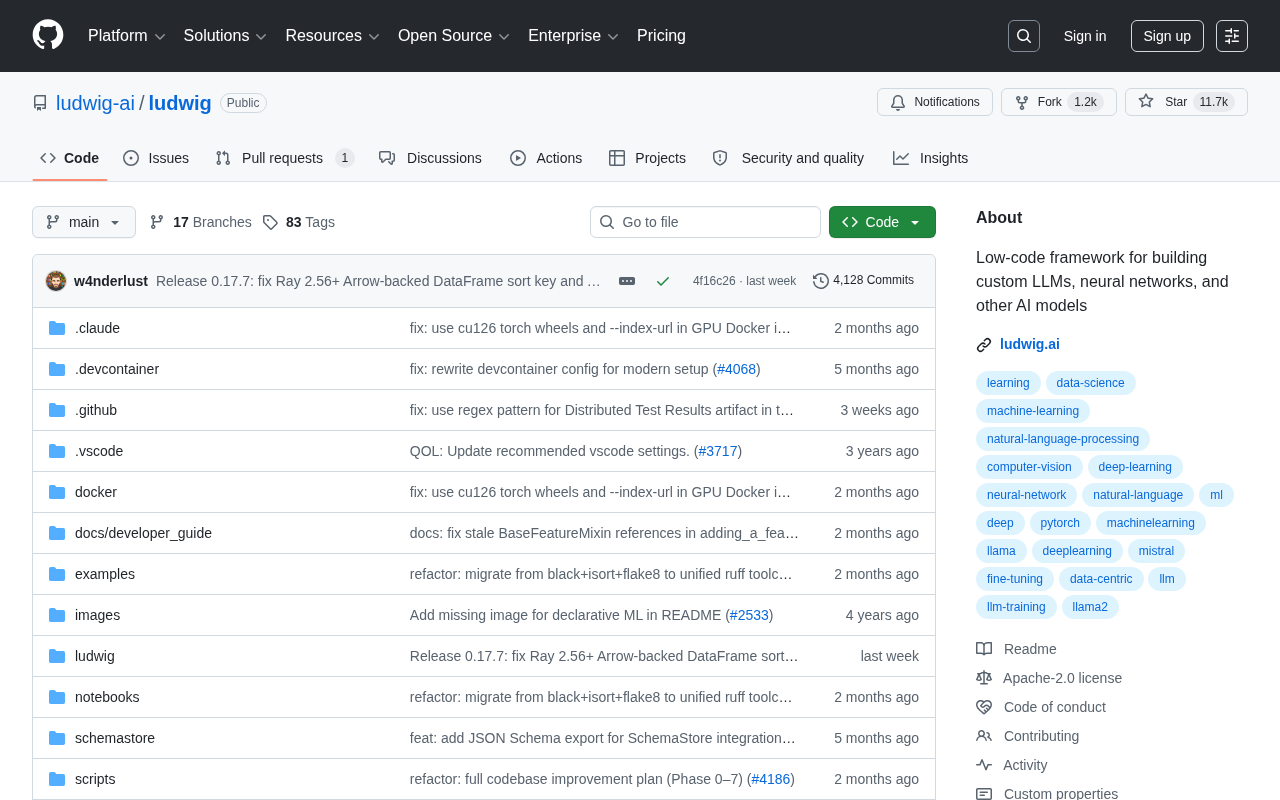
Ludwig: Building Custom LLMs and Neural Networks with Declarative Low-Code Configuration
Ludwig is an open-source low-code ML framework that builds custom LLMs and neural networks via declarative YAML config — no boilerplate training code required.