U.S. Military Urgently Disables Ad Tracking: How Location Data Became a Military Threat

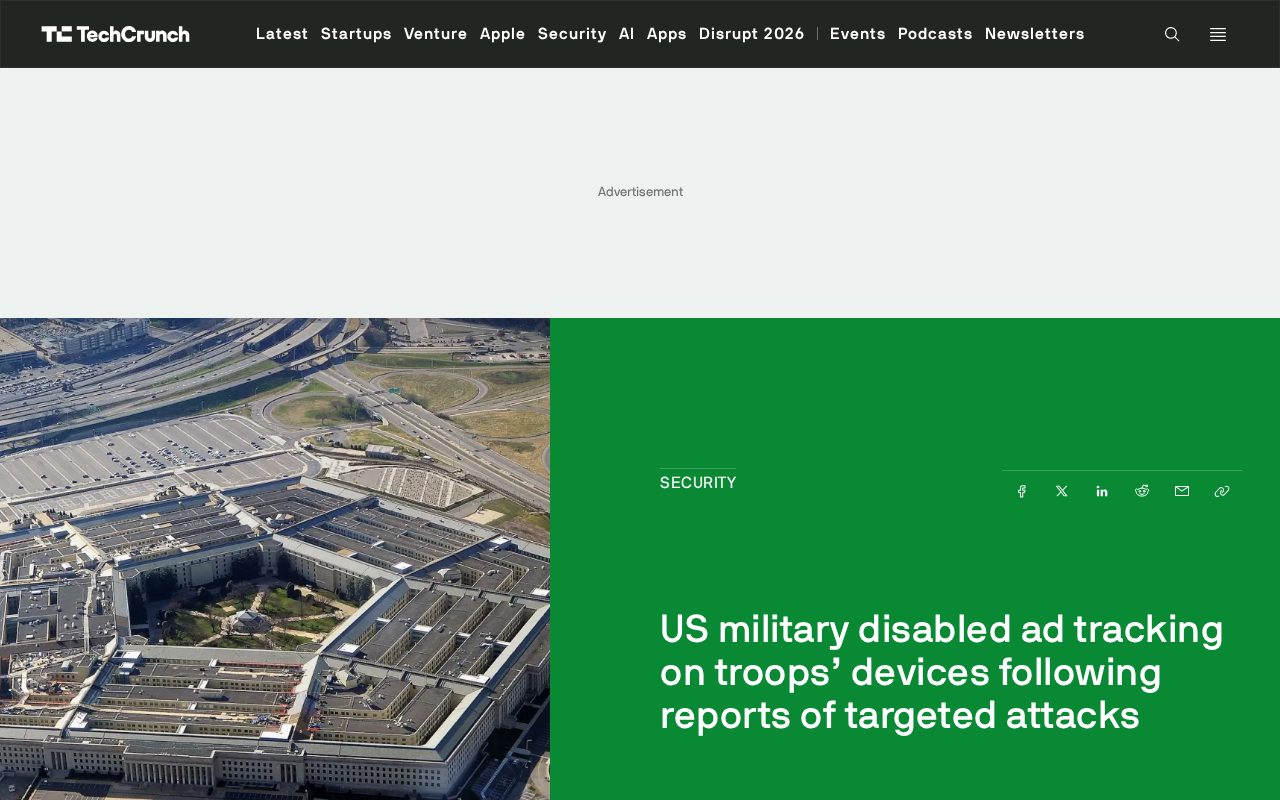
U.S. military disables ad tracking after adversaries weaponize commercial location data to target soldiers.
The U.S. military has disabled advertising tracking on deployed personnel's devices after discovering foreign adversaries are using commercial location data to precisely target soldiers. This incident exposes how ad SDKs, data brokers, and RTB systems leak sensitive military positions through routine app activity—far surpassing the 2018 Strava incident in scale. While MDM-based disabling offers immediate mitigation, deeper challenges remain: diversified tracking methods, BYOD management gaps, and the absence of federal privacy legislation leave systemic vulnerabilities unresolved.
Background: Why Ad Tracking Has Become a National Security Threat
According to a public letter from a U.S. senator, the American military has taken measures to disable ad tracking features on devices used by deployed personnel. This move is not driven by routine privacy considerations, but rather stems from a more severe reality—foreign adversaries are using location data leaked from the commercial advertising ecosystem to precisely target U.S. soldiers and even launch targeted attacks.
This incident reveals a long-underestimated risk: in an era where mobile applications are ubiquitous, seemingly harmless ad tracking technology can actually become a channel for hostile forces to obtain sensitive military intelligence. When a soldier's smartphone collects and transmits location data at military bases, frontline deployment sites, or covert operation areas, this information can flow into the wrong hands through the trading networks of data brokers. Data brokers are companies that specialize in collecting, aggregating, analyzing, and reselling personal data. They aggregate data from various sources—app developers, ad networks, public records, social media—to build detailed profile databases containing billions of devices. In the United States, companies like Gravy Analytics (recently scrutinized for data breach incidents) and X-Mode Social (later renamed Outlogic) have been exposed for selling precise location data to government contractors and other buyers. These transactions typically do not require direct informed consent from end users, and buyers can query historical trajectories of all devices within a specific area by geofence.
In fact, location data exposing military information is not a first-time occurrence. In 2018, the fitness tracking app Strava published a global heat map of user exercise routes, and researchers immediately discovered it clearly revealed multiple undisclosed U.S. military bases and patrol routes—particularly evident in conflict zones like Afghanistan, Syria, and Somalia, where almost only deployed foreign military personnel were using such apps. This incident first made the public aware that aggregated location data can expose highly sensitive military activity patterns. The risk posed by ad tracking today far exceeds the Strava incident in scale and stealth.
The Technical Chain of Ad Tracking and Intelligence Risks
How Location Data is Collected
Modern mobile applications commonly embed advertising SDKs (Software Development Kits), tools that continuously collect the device's geographic location, device identifiers (such as advertising IDs), network information, and other data while users use the app. An advertising SDK is a code library provided by ad networks to app developers, which they integrate into apps to display ads and generate revenue. When a user opens an app containing an ad SDK, the SDK triggers a process called RTB (Real-Time Bidding): the user's device information, location coordinates, advertising identifier, and other data are packaged into a "bid request" and sent to dozens or even hundreds of ad exchanges and demand-side platforms within milliseconds. This means that every ad impression opportunity is accompanied by broadcast-style transmission of the user's precise location data to numerous third parties, and these data recipients are not all subject to strict scrutiny. This data is ostensibly meant to serve targeted advertising, but due to lack of effective regulation, it is often packaged and sold to third-party data brokers.
Here it is necessary to explain the technical principles of advertising identifiers. An advertising identifier (Advertising ID) is a unique string assigned by the mobile operating system to each device—called IDFA (Identifier for Advertisers) on iOS and GAID (Google Advertising ID) on Android. Its original design intent was to track ad effectiveness without exposing the user's true identity, but in actual practice, by cross-correlating the appearance records of the same advertising ID at different times and locations, analysts can reconstruct the device holder's home address, workplace, social relationships, and even true identity. Apple introduced the ATT (App Tracking Transparency) framework in iOS 14.5, requiring apps to obtain explicit user permission before tracking, which caused IDFA availability to plummet from nearly 70% to about 25%. However, in the Android ecosystem, advertising IDs are still relatively easy to obtain.
For ordinary users, this may only be a privacy-level concern; but for military personnel, it constitutes a tangible operational security threat. By analyzing the aggregation and movement patterns of devices within a specific area, adversaries can infer the location of military facilities, troop movement patterns, and even identify specific high-value targets.
From Data Leakage to Targeted Attacks
The senator's letter mentions a key piece of information—foreign adversaries have already "used location data to target soldiers." This means the risk has shifted from the theoretical level to an actual threat. When a soldier's device continuously exposes their precise location, hostile forces can not only track their movements but may also plan ambushes, conduct surveillance, or launch other forms of targeted strikes based on this information.
This attack method is highly covert: it does not require breaching military network firewalls or rely on sophisticated hacking techniques. Simply by purchasing commercial location data on open or semi-open data markets, continuous tracking of military targets can be achieved. From a technical perspective, this is essentially a commercialized upgrade of OSINT (Open Source Intelligence) methods—attackers do not need to conduct any illegal cyber intrusions; they can obtain highly sensitive military location information through legitimate data trading channels alone.
Military Response Measures and Their Limitations
The military's choice to disable ad tracking features on devices is a direct and effective damage control measure. By turning off advertising IDs and restricting apps' location data collection permissions, this data leakage chain can be cut off at the source. At the implementation level, the military typically employs MDM (Mobile Device Management) solutions to achieve centralized control. MDM allows IT administrators to remotely configure device policies, including forcibly disabling location services, prohibiting specific app installations, encrypting device data, and remotely wiping devices when lost.
However, this measure also exposes deeper systemic issues:
- Diversified leakage channels: Ad tracking is just one channel for data leakage; carrier data, Wi-Fi probes, Bluetooth beacons, and other technologies can equally become sources of positioning. Wi-Fi probe technology exploits the characteristic that smartphones actively send probe requests even when not connected to Wi-Fi, capturing the phone's MAC address and signal strength through receiving devices deployed in specific areas, thereby achieving passive positioning of devices. Bluetooth beacons broadcast signals through the BLE (Bluetooth Low Energy) protocol, and when nearby phones receive the signal, related apps can precisely determine the distance between the device and the beacon. These two technologies do not rely on GPS or cellular networks, and indoor positioning accuracy can reach 1-3 meters. Users are often completely unaware of their existence, thus constituting another covert location leakage path beyond ad tracking.
- Implementation-level challenges: Disabling tracking features depends on strict enforcement of device management policies; once soldiers use personal devices or uncontrolled apps, risks re-emerge. The effectiveness of MDM depends on whether devices are included in the management scope—soldiers' personal phones (BYOD, or bring your own device) are typically outside MDM control, creating a huge management blind spot in practice. Moreover, even when devices are under management, certain deep system-level data transmissions (such as signaling data at the carrier level) remain difficult to completely block through MDM.
- Deep contradictions of regulatory absence: The United States currently lacks unified federal data privacy legislation, and the data broker industry is largely in a regulatory vacuum. To date, although bills such as the ADPPA (American Data Privacy and Protection Act) have made progress in Congress, they have never been finally passed due to interest group conflicts. Legislative progress across states varies widely: California's CCPA/CPRA, Virginia's VCDPA, and others grant consumers certain data control rights, but these state-level laws differ significantly in enforcement strength and coverage, and cannot constrain federal government contractors or interstate data transactions. In contrast, the EU's GDPR imposes strict restrictions on the collection and cross-border transmission of location data and is viewed as a more mature privacy protection framework. This regulatory vacuum has directly led to the wild growth of the data broker industry. The military's passive response is essentially paying the price for the disorder of the entire data ecosystem.
Broader Implications: Data Sovereignty and National Security
The Militarization Risk of Commercial Data
This incident sounds an alarm for countries worldwide: in an era where data has become a strategic resource, the boundary between commercial data flows and national security is becoming increasingly blurred. Citizens or military personnel of any country, as long as their devices connect to the global advertising ecosystem, may have their location information become a bargaining chip in geopolitical competition. It is worth noting that bid requests in the RTB ecosystem generate hundreds of billions of data transmissions daily, involving hundreds of advertising technology companies worldwide, many of which are registered in different jurisdictions. This complexity of cross-border data flows makes it difficult for any single country to completely curb the leakage of sensitive location data through domestic laws alone.
Warning for Ordinary Users
Although the focus of this incident is military personnel, the underlying operational mechanisms apply equally to every ordinary user. Excessive collection and free trading of location data means that anyone's whereabouts can be tracked, analyzed, and exploited. Research shows that with just 4 spatiotemporal data points (i.e., records of appearing at specific locations at specific times), a person's identity can be uniquely identified with 95% probability—meaning that so-called "anonymized" location data has virtually no true anonymity in actual practice. This reminds us to:
- Regularly check and manage location access permissions for phone apps
- Turn off unnecessary ad tracking identifiers (on iOS, go to Settings - Privacy & Security - Tracking; on Android, go to Settings - Privacy - Ads to reset or delete the advertising ID)
- Be cautious with apps requesting location information
- Pay attention to and support the advancement of stricter data privacy legislation
Conclusion
The U.S. military's move to disable ad tracking is a direct response to the increasingly severe threat of location data security. It reveals the deep tension between the commercial data economy and national security, and shows how seemingly ordinary technology can evolve into security vulnerabilities in the absence of effective regulation.
As data plays an increasingly important role in modern conflicts, how to safeguard location information security in the digital age—whether for military institutions or ordinary citizens—will be a core issue urgently needing resolution. This requires not only defense-in-depth at the technical level but also comprehensive legislative and regulatory follow-through. From the military's emergency response to institutional construction at the legislative level, from technical details of device management to the macroscopic framework of global data governance, every link is indispensable.
Related articles

OpenAI Declares the AGI Era Has Arrived: Conceptual Controversies and Technical Realities
OpenAI launches GPT-6 Astra claiming the AGI era has arrived, sparking controversy. Deep analysis of AGI definition ambiguity, technical progress realities, industry standards battle, and practical impacts on users and developers.
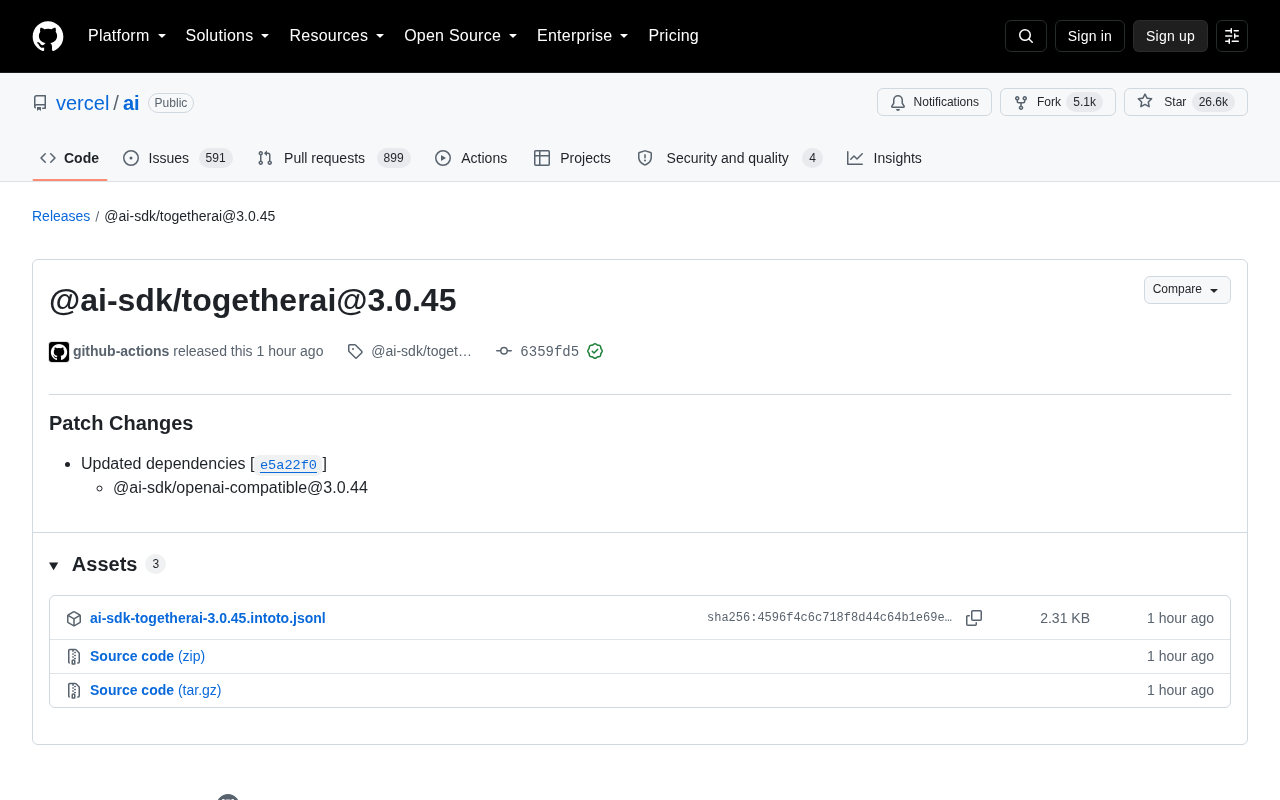
Vercel AI SDK TogetherAI Adapter 3.0.45 Update Analysis
Analysis of @ai-sdk/togetherai 3.0.45 patch update covering dependency sync, OpenAI compatibility layer architecture, and semantic versioning strategy in Vercel AI SDK.
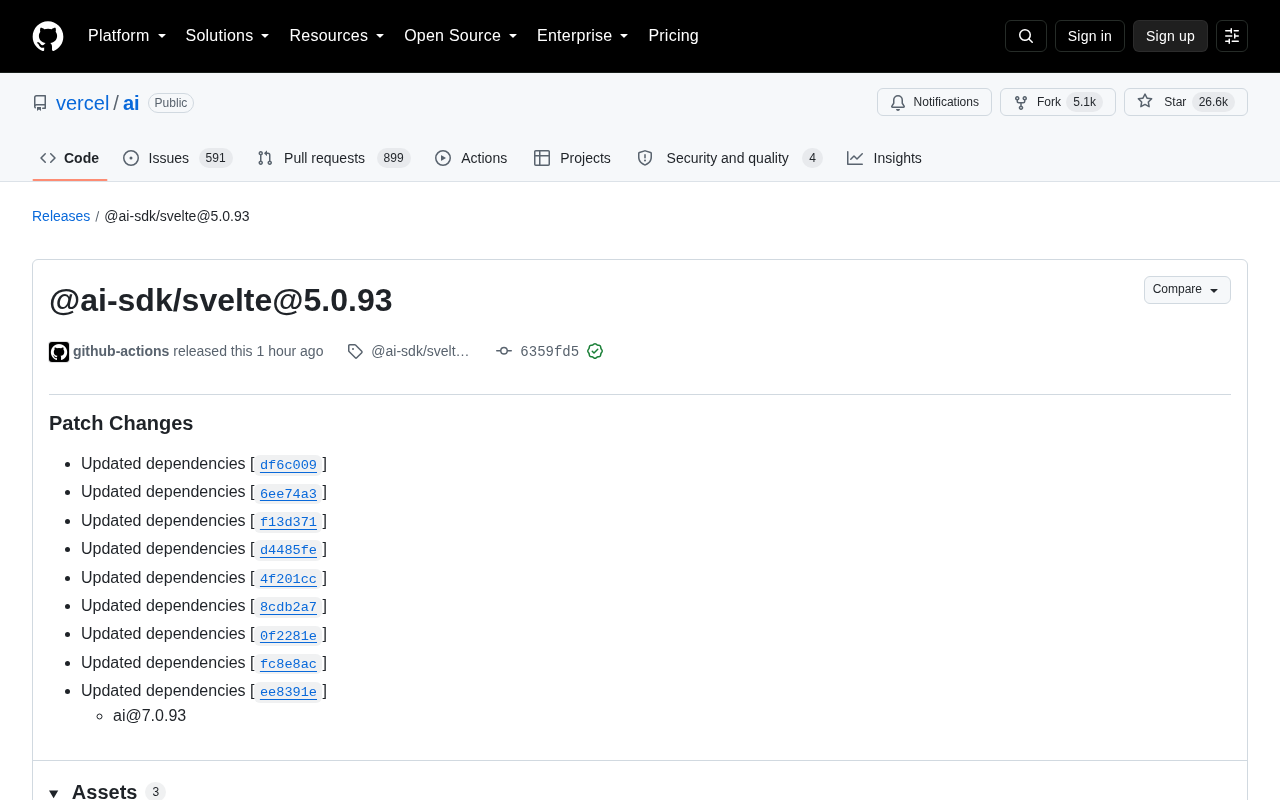
Deep Dive into Vercel AI SDK Svelte 5.0.93 Release Update
In-depth analysis of Vercel AI SDK Svelte 5.0.93 patch update, covering multi-framework adaptation, dependency sync, and automated release pipelines for Svelte AI app development.