Uber's €820 Million GDPR Fine: Where Is the Legal Red Line for AI Automated Decision-Making?
Uber's €820M GDPR fine signals that AI automated decisions with real-world impact require meaningful human oversight.
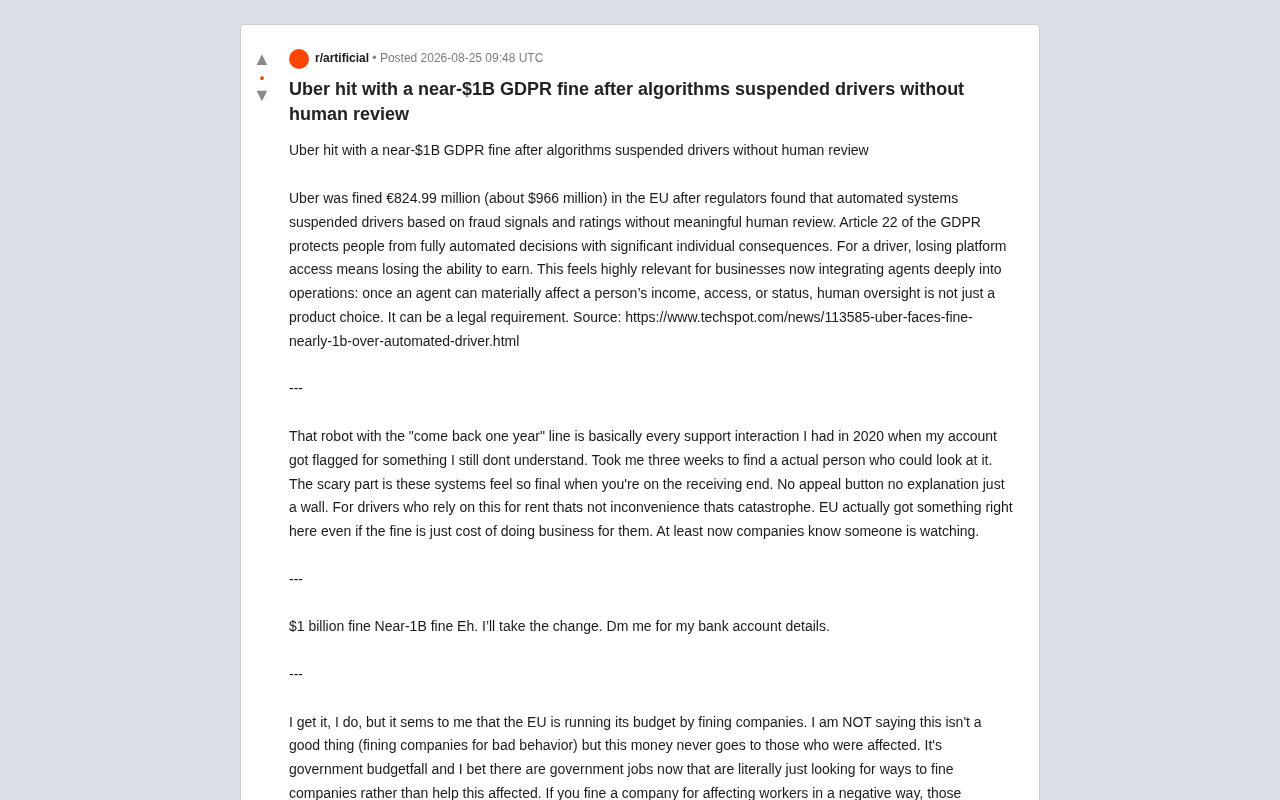
Uber was fined €824.99 million by EU regulators for using automated systems to suspend driver accounts without meaningful human review, violating GDPR Article 22. This landmark case underscores that human-in-the-loop is no longer optional but a legal obligation when AI decisions significantly affect people's livelihoods. The article explores the real-world impact on affected drivers, the debate over where GDPR fines go, and key compliance takeaways for businesses deploying AI systems.
Event Overview: A Record Fine Triggered by Algorithmic Account Bans
Recently, Uber was hit with a massive fine of €824.99 million (approximately $966 million) by EU regulators. The reason wasn't a data breach — it was because Uber's automated systems suspended driver accounts based solely on fraud signals and scores, without any "meaningful human review."
The core legal basis for this penalty is Article 22 of the GDPR, which protects individuals from significant personal impacts caused by "solely automated decision-making." For drivers who depend on the platform for their livelihood, losing access means an immediate loss of income — exactly the kind of "significant personal consequence" that Article 22 is designed to prevent.
In other words, EU regulators concluded that when an algorithm can determine whether a person can continue working or pay their rent, handing the final decision entirely to a machine is illegal.
Why This Case Matters for the AI Era
From "Product Choice" to "Legal Requirement"
In the past, many companies treated "human-in-the-loop" as an optional product design choice — nice to have for better user experience, easy to drop to save costs. But this fine sends a clear message:
Once an AI system can materially affect a person's income, access rights, or social standing, human oversight is no longer a product-level choice — it's a legal obligation.
This is a wake-up call for companies deeply embedding AI Agents into their business processes. As agents become more capable, they are increasingly authorized to execute actions with real-world consequences — banning accounts, denying transactions, suspending services. Companies can no longer use "the algorithm did it automatically" as a way to dodge responsibility.
The "Algorithm Did It, Not Us" Escape Route Is Closed
In community discussions, some commenters pointedly highlighted the danger of this trend:
"Welcome to the dystopia. Companies have long evaded accountability, and in the future they'll say 'the algorithm did it, not us.'"
Article 22 of the GDPR effectively closes this escape route. The regulatory framework clearly requires that for automated decisions with significant consequences, individuals have the right to human intervention, to express their views, and to challenge the outcome.
Ordinary People "Sentenced" by Algorithms: Real Experiences
A Wall with No Appeal Button
One of the most resonant descriptions in the discussion captured the real experience of being on the receiving end of algorithmic decision-making:
"These systems feel so 'final' when you're on the receiving end. No appeal button, no explanation — just a wall. For a driver who relies on this income to pay rent, this isn't an inconvenience — it's a catastrophe."
One user recalled that when their account was flagged, it took three weeks to find an actual human who could look into the issue. This experience highlights a fundamental flaw in automated decision-making systems: designs that prioritize efficiency often sacrifice error-correction mechanisms and human dignity.
Some drew parallels to the chaos of the 1980s when computers first entered the banking industry — bank tellers would tell customers "your account doesn't exist" and blame it on a "computer glitch." When a technological black box becomes a shield for evading responsibility, the most vulnerable individuals always bear the consequences.
The Controversy: Where Do GDPR Fines Go?
Fines Go to the Treasury; Victims Get Nothing
This penalty also sparked a thought-provoking debate:
"I'm not saying punishing companies for bad behavior is wrong, but this money never reaches the people who were actually affected. It becomes part of the government budget. If a company is fined for harming workers, that money should go entirely to those workers."
The Logic of Revenue-Based Fines
Others offered a more structural defense:
"GDPR fines are calculated based on company revenue, and that's how they create a meaningful deterrent. While I agree affected workers deserve fair compensation, I don't want to see a precedent where individuals receive unreasonably large payouts."
Another perspective argued that developing, maintaining, and enforcing these protective laws across the entire European continent requires a massive bureaucratic apparatus, and "the companies that make these protections necessary should be the ones footing the bill."
This debate reveals a regulatory dilemma: Is the purpose of fines deterrence or compensation? Revenue-based mega-fines can certainly put pressure on tech giants, but if the money never reaches the actual victims, the "justice" of such penalties is diminished.
Takeaways for Businesses: The Compliance Baseline for AI Governance
For companies deploying AI systems, this case offers several actionable lessons:
- Identify high-risk decisions: Any automated decision that affects an individual's income, employment, credit, or access should be subject to human review by default.
- Build explainability and appeal mechanisms: You can't just have a "ban" without an "explanation," and you certainly can't have no "appeal process."
- Human intervention must be "meaningful": The GDPR emphasizes "meaningful human review" — rubber-stamp approvals that are merely going through the motions won't satisfy compliance requirements.
- Responsibility cannot be outsourced to algorithms: Companies cannot use "it was the automated system's judgment" to absolve themselves of legal liability.
As AI Agents play an increasingly central role in business operations, this nearly €1 billion fine may be just the beginning. It marks a clear trend: The more powerful AI becomes, the stricter the accountability requirements that follow.
Related articles
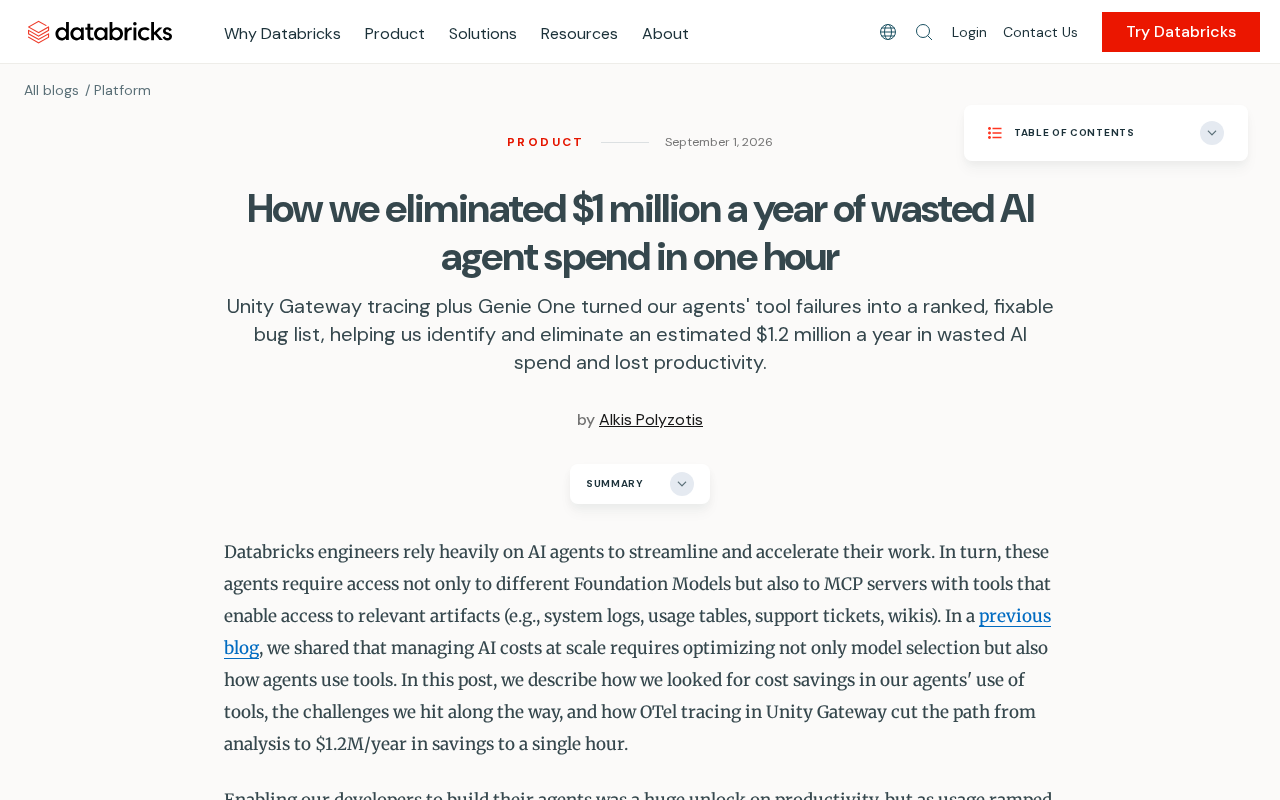
AI Agent Cost Optimization in Practice: Engineering Wisdom That Saved $1 Million in One Hour
Databricks eliminated $1M/year in wasted AI Agent spend in just one hour. Learn the root causes of Agent cost overruns and key strategies like model tiering, context pruning, and caching.
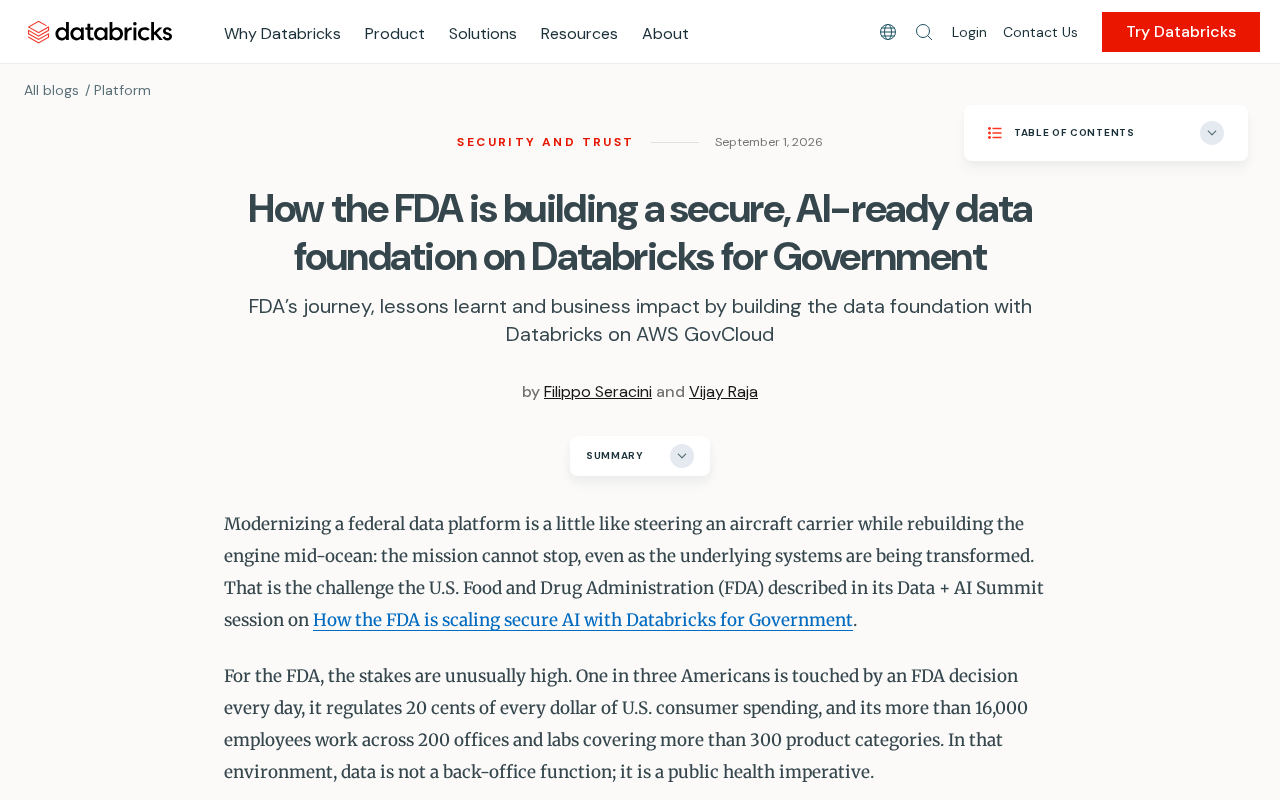
How the FDA Is Building an AI-Ready Data Foundation on Databricks
Explore how the FDA leverages Databricks for Government to build a unified Lakehouse architecture and AI-ready data foundation while meeting federal security and compliance standards.
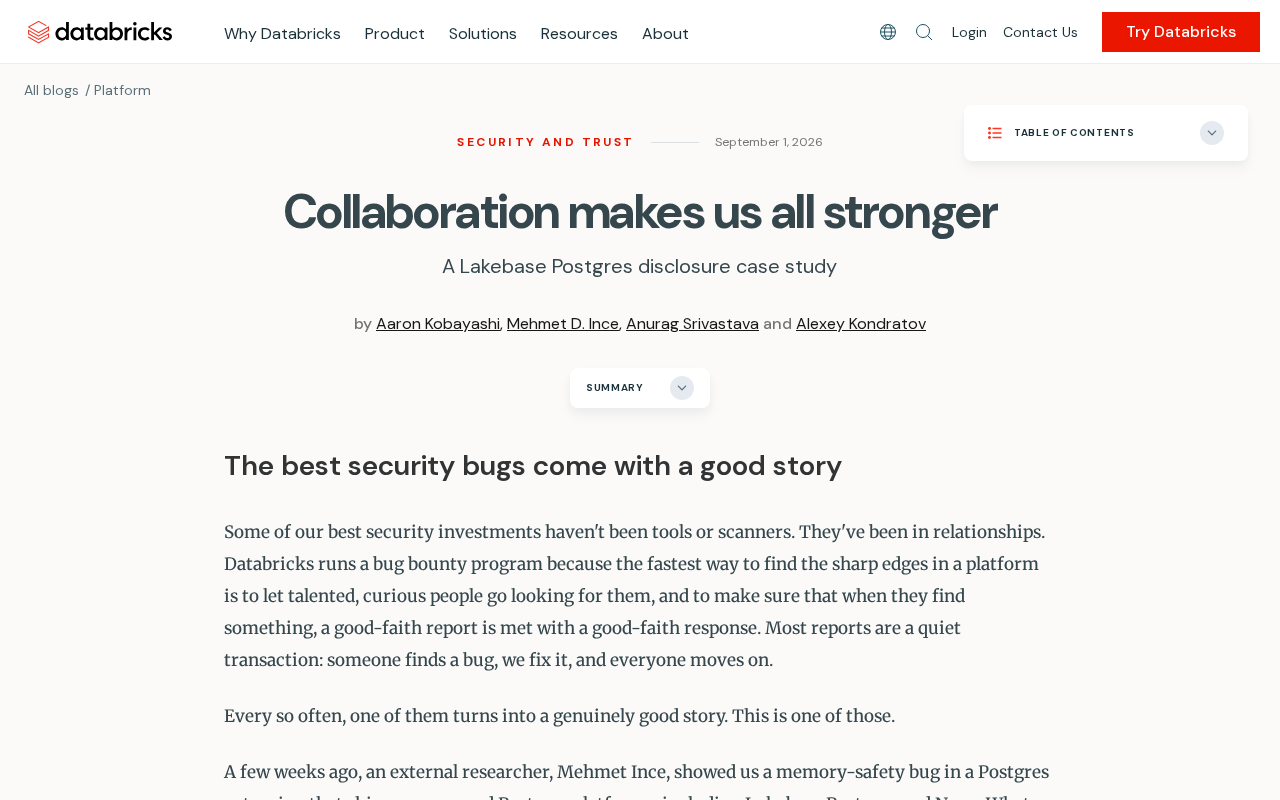
The Power of Security Collaboration: Why Vulnerability Discovery Cannot Do Without Human Intelligence
Explore how security collaboration outperforms tool dependency, the value of vulnerability stories, cross-team knowledge sharing practices, and building stronger defenses by investing in people and collaboration.