Ugreen Launches HomeAgent Smart Home Platform: Emphasizing Local AI and Privacy Protection

Ugreen launches HomeAgent platform, bringing local AI and privacy-first approach to smart home market
At IFA, Ugreen launched HomeAgent, a smart home platform built on its NAS expertise. It combines local security video storage, on-device edge AI for facial recognition and object detection, and unified device control—all emphasizing data privacy by keeping information local. This positions Ugreen against cloud-reliant giants with a differentiated local-first, open architecture strategy.
Ugreen Moves from Accessories Manufacturer to Smart Home Arena
Ugreen, known for its power banks, chargers, and NAS storage solutions, officially launched its HomeAgent smart home platform at IFA this week, announcing its entry into the smart home sector. IFA (Internationale Funkausstellung Berlin) is one of the world's oldest and largest consumer electronics and home appliance exhibitions, held annually in Berlin, Germany. Founded in 1924, it has long been an important stage for major tech brands to unveil new products and showcase their technological roadmaps. Choosing to debut the HomeAgent platform at such a top-tier international exhibition is both a strategic declaration to the global market and a way to attract attention from international partners and developers. This move marks Ugreen's strategic upgrade from a traditional hardware accessories manufacturer to a smart home ecosystem provider.
This transformation follows clear market logic. As the smart home market grows rapidly, more consumers are gravitating toward processing data on local devices rather than relying entirely on cloud services. Ugreen's accumulated technical capabilities in NAS storage align perfectly with this trend. NAS (Network Attached Storage) is a dedicated data storage device that provides centralized file storage and access services for home or business users over a network. Unlike traditional external hard drives, NAS devices have their own operating systems and processors, capable of serving multiple devices simultaneously. In recent years, the consumer NAS market has grown quickly, with Synology and QNAP as traditionally dominant brands. Ugreen emerged rapidly after launching its NASync series in 2023, capturing market share with friendlier industrial design and highly competitive pricing. The technical foundation of NAS—including RAID disk array management, file system optimization, and low-power long-term operation capabilities—forms the hardware basis for a localized smart home platform.
Analysis of HomeAgent Platform's Three Core Functions
The HomeAgent platform is designed to integrate multiple smart home capabilities into a unified system, primarily covering three functional modules:
Local Security Monitoring Storage
The platform provides a localized security video storage solution, where camera footage is saved directly on local devices without cloud uploads. This approach both enhances data privacy protection and avoids the ongoing subscription fees associated with cloud storage. In the current security camera market, mainstream brands like Ring and Nest generally adopt cloud subscription models, requiring users to pay monthly or annually to review historical footage—a model that has triggered growing consumer dissatisfaction. Ugreen's local storage solution directly utilizes the large-capacity hard drives of NAS to store video data, allowing users to enjoy long-term use after a one-time hardware purchase, fundamentally changing the cost structure of security monitoring.
On-Device AI Smart Analysis
HomeAgent integrates edge AI capabilities, supporting intelligent analysis tasks such as facial recognition and object detection directly on local devices. Edge AI refers to running artificial intelligence algorithms on devices close to the data source, rather than uploading data to remote cloud servers for processing. In smart home scenarios, this means tasks like facial recognition and abnormal behavior detection are completed by the local device's NPU (Neural Processing Unit) or GPU. Current mainstream edge AI chips include Intel's Movidius series, Google's Coral TPU, and AI acceleration units integrated in various ARM architecture processors. Compared to cloud processing, this on-device AI solution reduces inference latency to millisecond levels (cloud solutions typically require hundreds of milliseconds to several seconds), eliminates privacy risks during transmission by keeping data within the local network, and significantly reduces dependence on network bandwidth.
Whole-Home Smart Device Control Hub
The platform also serves as a smart home control center, allowing users to manage and control various smart devices in their home through a single interface. In practical applications, this means HomeAgent needs to support multiple smart device communication protocols. Notably, the smart home industry has been promoting the Matter protocol in recent years—a unified standard jointly developed by tech giants including Apple, Google, Amazon, and Samsung. Based on IP network protocols and supporting multiple connection methods such as Wi-Fi, Thread, and Ethernet, Matter aims to enable seamless collaboration between smart home devices from different brands. The Matter protocol officially released version 1.0 in 2022, and over a thousand devices have now been certified. For the HomeAgent platform, whether it fully supports the Matter protocol will directly impact its ecosystem openness and device compatibility range, and is also a key technical milestone for whether Ugreen's "open architecture" strategy can be implemented.
What Advantages Does Local Smart Home Solution Offer?
The HomeAgent platform reflects a noteworthy trend in smart home development—returning from cloud to local. Multiple driving forces lie behind this trend: global data privacy regulations are becoming increasingly strict, with the EU's GDPR and various U.S. state privacy laws imposing higher requirements on user data collection and storage; consumer fatigue with cloud service subscriptions continues to intensify; and the continuous improvement in edge computing chip performance has enabled local devices to run complex AI models. Compared to traditional cloud solutions, local processing advantages manifest in multiple dimensions:
Data Privacy is Guaranteed: Sensitive information such as home surveillance footage and daily usage habits all remain local, never passing through vendor cloud servers, fundamentally reducing data breach risks. Globally, smart home device data breaches occur frequently, from Amazon Ring employees illegally viewing user videos to various cloud database leak incidents, all continuously reinforcing consumer demand for localized data storage.
Faster Response Speed: Local processing eliminates network round-trip time, delivering more immediate feedback for both device control and AI analysis. For example, in smart door lock scenarios, cloud-based facial recognition might require 1-3 seconds of waiting, while local edge AI can complete the judgment in hundreds of milliseconds—a significant difference in actual user experience.
Offline Operation Remains Functional: Independence from internet connection means core functions remain available even during network outages, significantly improving system reliability. This is especially important in areas with unstable network infrastructure or during special situations like natural disasters—precisely when security monitoring needs to operate reliably.
Lower Long-Term Cost: No need to pay monthly or annual cloud storage fees; for long-term household users, the economic advantage grows over time. Based on mainstream cloud storage subscription pricing, a household deploying 3-4 cameras might face annual cloud storage costs of 500-1,500 yuan, while local NAS hard drives of equivalent capacity can recoup the cost difference within 2-3 years.
Market Competition and Challenges Facing Ugreen
Entering the smart home arena, Ugreen cannot avoid competition with existing players. Tech giants like Apple HomeKit, Google Home, and Amazon Alexa have established mature ecosystems, and domestic manufacturers like Xiaomi and Huawei are also deeply positioned. These platforms have developed over many years, each possessing thousands of compatible devices and hundreds of millions of active users, with extremely deep ecosystem barriers.
However, Ugreen's differentiation strategy is very clear: local-first, open architecture. Compared to closed ecosystems, an open platform based on NAS holds greater appeal for tech enthusiasts and privacy-conscious users. This positioning shares similarities with the philosophy of the open-source smart home platform Home Assistant—which currently has millions of active users globally, proving substantial market demand for localized, open smart home solutions. Ugreen's deep accumulation in storage hardware also constitutes a unique competitive barrier that pure software platforms or pure internet companies cannot easily replicate.
Of course, challenges cannot be ignored. One of the core competitive strengths in smart home is device compatibility and ecosystem richness, which requires sustained time and resource investment to build. Ugreen needs support from numerous third-party device manufacturers and active participation from the developer community to enrich platform functions and application scenarios. Additionally, while maintaining platform openness, how to create a sufficiently simple and friendly user experience is also a key challenge Ugreen needs to overcome—the balance between openness and usability has always been one of the most challenging problems in technical platform design.
Prospects and Industry Significance of HomeAgent
The launch of the HomeAgent platform demonstrates Ugreen's long-term ambitions in the smart home field. If it can fully leverage its accumulated expertise in hardware and storage technology and gradually establish an open and active ecosystem, Ugreen has the opportunity to carve out its own niche in the fiercely competitive market.
From a more macro perspective, the rise of localized smart home solutions reflects consumers' growing emphasis on data privacy. The smart home industry is evolving from early "full cloud" to a "local-first, cloud-assisted" hybrid architecture—where local devices handle real-time processing, privacy-sensitive data storage, and offline operation as core functions, while the cloud is responsible for auxiliary capabilities like remote access, cross-device synchronization, and large-scale model updates. This hybrid model is likely to become the industry mainstream, and Ugreen is one of the noteworthy promoters of this trend.
Key Takeaways
- Ugreen officially launched its HomeAgent smart home platform at IFA, transitioning from a hardware accessories manufacturer to an ecosystem provider
- HomeAgent integrates three core functions: local security storage, edge AI analysis, and smart device control hub
- The local-first approach offers advantages in privacy protection, response speed, offline capability, and long-term cost
- The platform faces ecosystem building challenges but differentiates through open architecture and NAS hardware foundation
- Reflects the industry trend toward hybrid architecture of local-first with cloud assistance
Related articles

OpenAI Declares the AGI Era Has Arrived: Conceptual Controversies and Technical Realities
OpenAI launches GPT-6 Astra claiming the AGI era has arrived, sparking controversy. Deep analysis of AGI definition ambiguity, technical progress realities, industry standards battle, and practical impacts on users and developers.
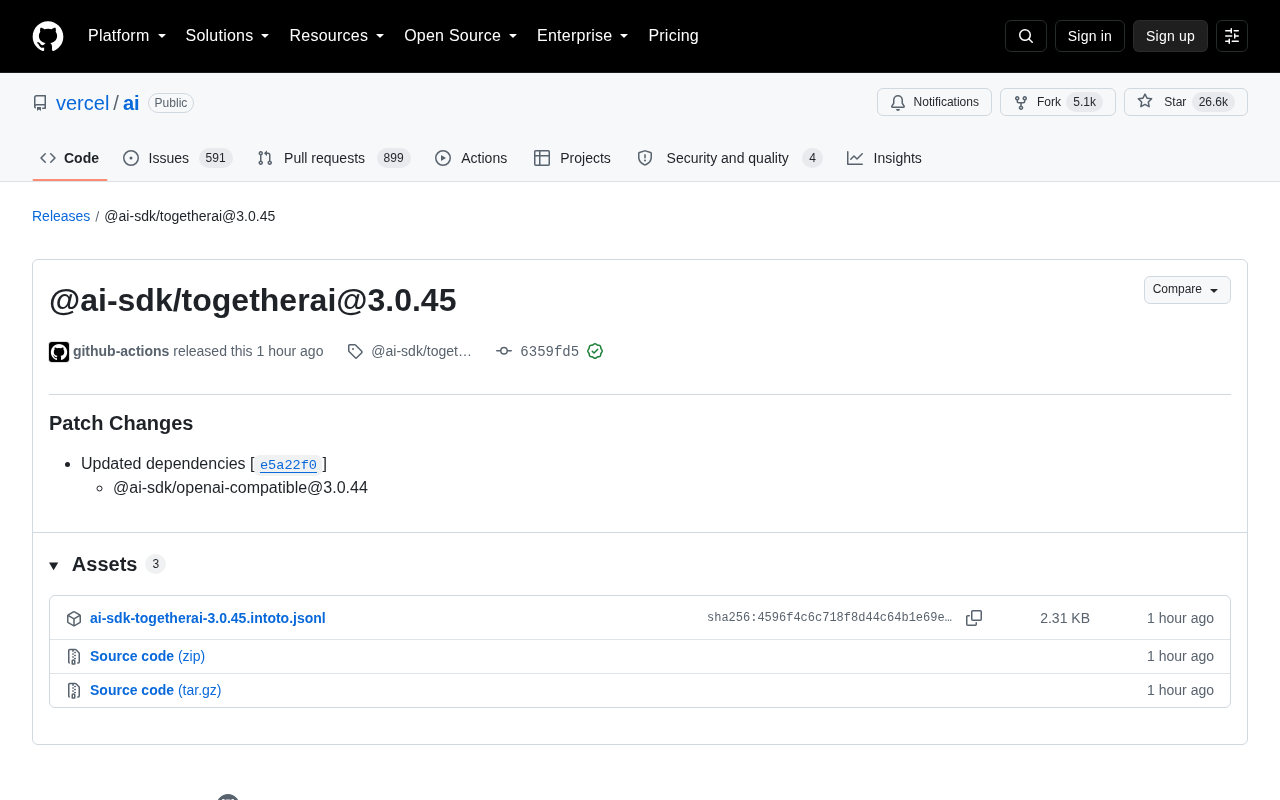
Vercel AI SDK TogetherAI Adapter 3.0.45 Update Analysis
Analysis of @ai-sdk/togetherai 3.0.45 patch update covering dependency sync, OpenAI compatibility layer architecture, and semantic versioning strategy in Vercel AI SDK.
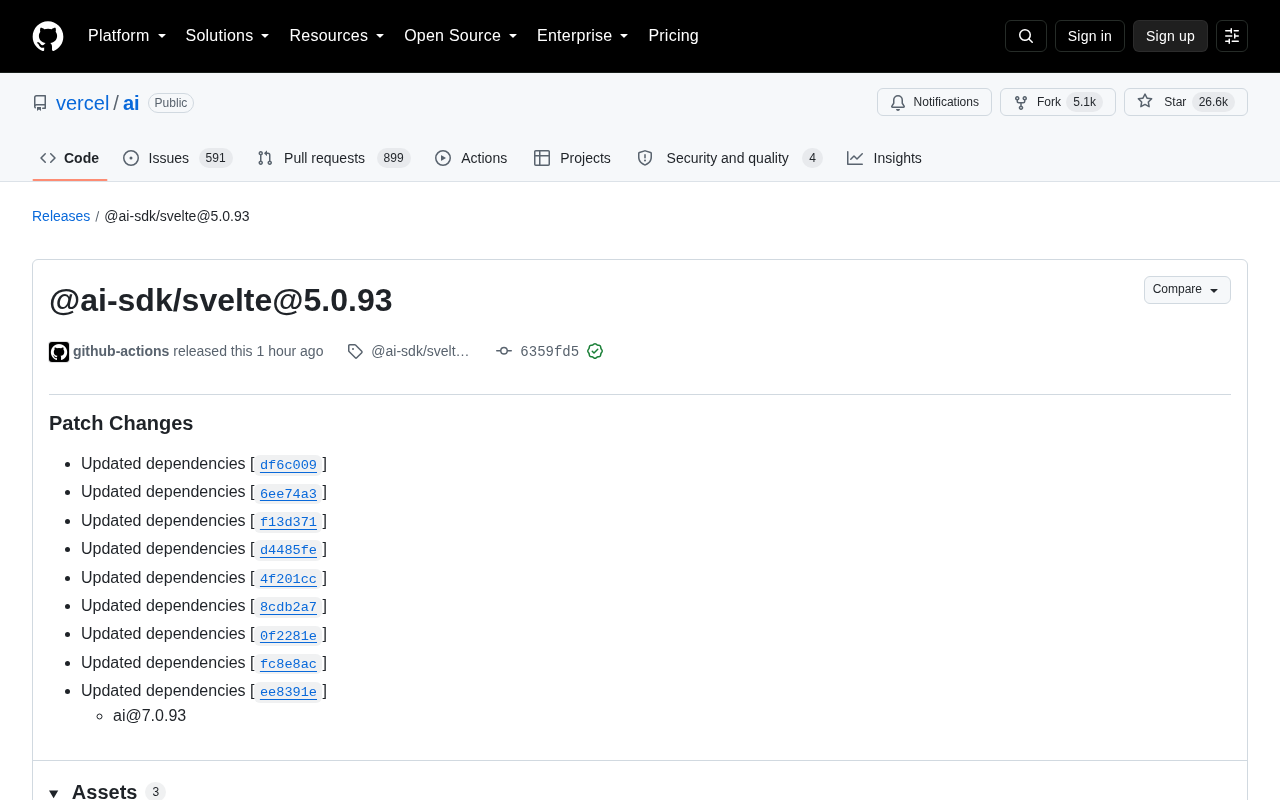
Deep Dive into Vercel AI SDK Svelte 5.0.93 Release Update
In-depth analysis of Vercel AI SDK Svelte 5.0.93 patch update, covering multi-framework adaptation, dependency sync, and automated release pipelines for Svelte AI app development.