Una Watch: A $199 Open-Source GPS Sports Watch Built for Modularity and Repairability
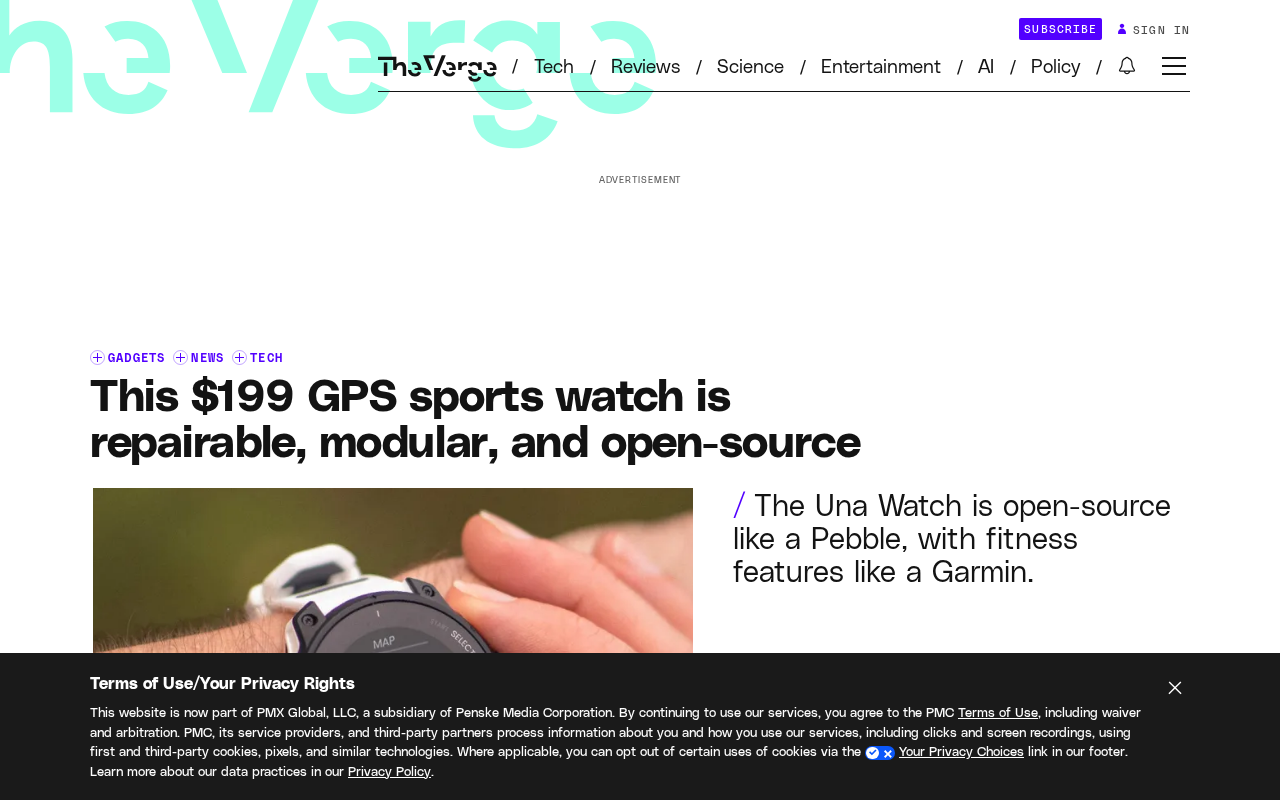
Una Watch offers a $199 open-source, modular, and repairable GPS sports watch as an alternative to closed-ecosystem wearables.
Una Watch is a $199 open-source GPS sports watch, down from its $350 Kickstarter price, targeting the mid-to-entry-level Garmin Forerunner market. Its hardware — a low-power MIP LCD and 10-day battery life — is competitive at this price point, but its real differentiation is a three-part philosophy: modular design for user-replaceable parts, repairability aligned with the global Right to Repair movement, and open-source firmware for developer customization. It may not surpass Garmin in feature breadth, but for users who value device sovereignty and open ecosystems, it's a meaningful alternative in an industry trending toward closure.
At a time when most smart wearables are trending toward closed, non-repairable designs, a GPS sports watch called Una Watch offers a different approach. Priced at $199 — down from its $350 Kickstarter early-bird price — it leads with three core values: modularity, repairability, and open source, positioning itself as a direct alternative to Garmin's mid-to-entry-level lineup.
Dropping to $199, Taking Aim at Garmin
Una Watch originally launched on Kickstarter at $350. Its official retail price has since dropped to $199, undercutting most Garmin watches on the market. This price point squarely targets the entry-to-mid-range segment occupied by the Garmin Forerunner series.
For users who want a full GPS sports tracking experience without breaking the bank, $199 is a compelling ask. It's no longer a crowdfunding concept — it's a finished product you can actually buy, which significantly lowers the barrier to entry.
Hardware: MIP Display and 10-Day Battery Life
On the hardware side, Una Watch features a 1.2-inch MIP LCD (Memory-in-Pixel) display. This type of screen excels at low power consumption and outdoor readability in bright sunlight — a common choice for sports watches, and the same technology used across several Garmin devices.
For battery life, Una Watch claims up to 10 days, putting it on par with the Garmin Forerunner 70. For a sports watch, long battery life means less charging anxiety, especially during multi-day outdoor activities or for users who simply don't want to plug in frequently.
What is MIP LCD? Memory-in-Pixel is a reflective display technology developed by Sharp. Each pixel contains a built-in memory cell that holds the image even when unpowered, eliminating the need for continuous refresh current. This is fundamentally different from the AMOLED or IPS LCD panels common in smartphones, which require constant power to maintain a display. MIP screens can consume as little as one-hundredth the power of conventional LCDs, and because they use ambient light reflection to form images, they actually get clearer in direct sunlight — no tradeoff between brightness and battery. This is why mainstream sports watch brands like Garmin and Polar have widely adopted the technology. The downsides are limited color reproduction (typically monochrome or restricted palette), low refresh rates, and reduced contrast in dim or indoor environments compared to emissive displays. Una Watch's choice of MIP firmly establishes its product positioning: battery life first, optimized for outdoor use.
The Real Story: Modular and Repairable Design
Beyond price and specs, Una Watch's most notable feature is its modular, repairable design. In a landscape where mainstream wearables are almost universally built with integrated, glued, non-replaceable components, a device that empowers users to repair and swap out parts is genuinely rare.
Modular design means that when a component wears out or breaks, users can theoretically replace just that part instead of discarding the entire device. This extends the product's lifespan and, in an era of growing e-waste concerns, offers a more sustainable path forward. Repairability is becoming an increasingly important issue in consumer electronics, and Una Watch is ahead of the curve.
The Right to Repair movement has grown into a global consumer rights cause. Communities like iFixit have long maintained repairability scorecards for consumer electronics, while the EU began rolling out "right to repair" regulations in 2021, requiring appliance manufacturers to supply spare parts for at least 10 years. In the wearables space, products like Apple Watch and Fitbit have motherboards and batteries deeply glued in place — official repair costs can approach the price of a new device, effectively accelerating the disposal cycle. The challenge with modular design is that removable interfaces often add thickness, reduce water resistance, or compromise structural integrity, which is why most manufacturers have abandoned this direction. Whether Una Watch can strike a balance between modularity and waterproofing and durability is perhaps the most important engineering question worth validating.
Open Source: Room for Imagination
Una Watch's open-source nature adds another layer of value. Open source typically means firmware, hardware designs, and software ecosystems are accessible to developers and enthusiasts — leaving room for community-driven customization, algorithm improvements, and third-party app development.
For tinkerers, geeks, and developers, an open-source sports watch means no vendor lock-in, no unilateral feature restrictions, and no risk of being abandoned when support ends. The community can keep it alive. This open ecosystem stands in sharp contrast to closed platforms like Garmin's, and it's at the heart of Una Watch's differentiation strategy.
Una Watch isn't the first open-source sports watch. The ESP32-based Open-Smartwatch project and the PineTime watch running the open-source InfiniTime firmware have both built active developer communities. The PineTime from PINE64 sells for around $26, though with more limited functionality. The core value of open-source firmware lies in transparency and autonomy: users can audit data collection behavior, remove unwanted features, and developers can port heart rate algorithms or integrate third-party platforms like Strava alternatives or OpenTracks. However, the health of an open-source ecosystem depends heavily on community size and ongoing commercial investment. Many crowdfunded open-source hardware projects fall into maintenance limbo after shipping. Whether Una Watch can sustain an actively iterating developer community will determine whether its open-source promise actually holds.
Verdict: A Differentiated Product for a Specific Audience
Una Watch delivers a solid baseline experience with its $199 price tag, 10-day battery life, and MIP display — but its real value proposition lies in the combination of repairability, modularity, and open source. It may not outclass Garmin across the board in terms of feature depth, but it offers a compelling alternative for users who care about device longevity, the right to repair, and open ecosystems.
In an industry where wearables are becoming increasingly difficult to repair, the direction that products like Una Watch represent may be worth more discussion than their sales numbers alone would suggest.
Related articles

AI Compute Is the New Oil, But the Market Mechanism Has Yet to Take Shape
Hacker News compares AI compute to the new oil, noting the lack of price discovery, concentrated supply, and no hedging tools. The article analyzes structural issues in compute trading and explores a possible three-tier market of spot, contracts, and derivatives, plus the real impact on AI practitioners' cost management.

Running Full iOS 16.5 Firmware on Android Devices: Technical Demo or Marketing Gimmick?
A Hacker News post claims full iOS 16.5 firmware can run on Android, with 315 upvotes. This analysis argues it is more likely a web UI simulation than a true firmware port, and explores the value and risks of such projects.

Etsy Cracks Down on AI Slop: Addressing Buyer and Seller Anxieties
Etsy introduces stricter rules limiting AI-generated content in listings, addressing buyer confusion over AI products and seller fears of original work being diluted by AI slop.