United Airlines System Outage Causes Flight Delays, Less Than a Week After Nationwide Ground Stop

United Airlines departure system outage marks the second major aviation disruption in a week.
Less than a week after the FAA ordered a nationwide ground stop over air traffic control communications and radar issues, United Airlines' departing flights were disrupted by a system outage. United has not disclosed the root cause, scope, or recovery time, and the information vacuum has worsened passenger confusion and airport chaos. Modern airline departure systems involve coordinated check-in, baggage, load control, and crew scheduling subsystems, and any failure can halt the entire process.
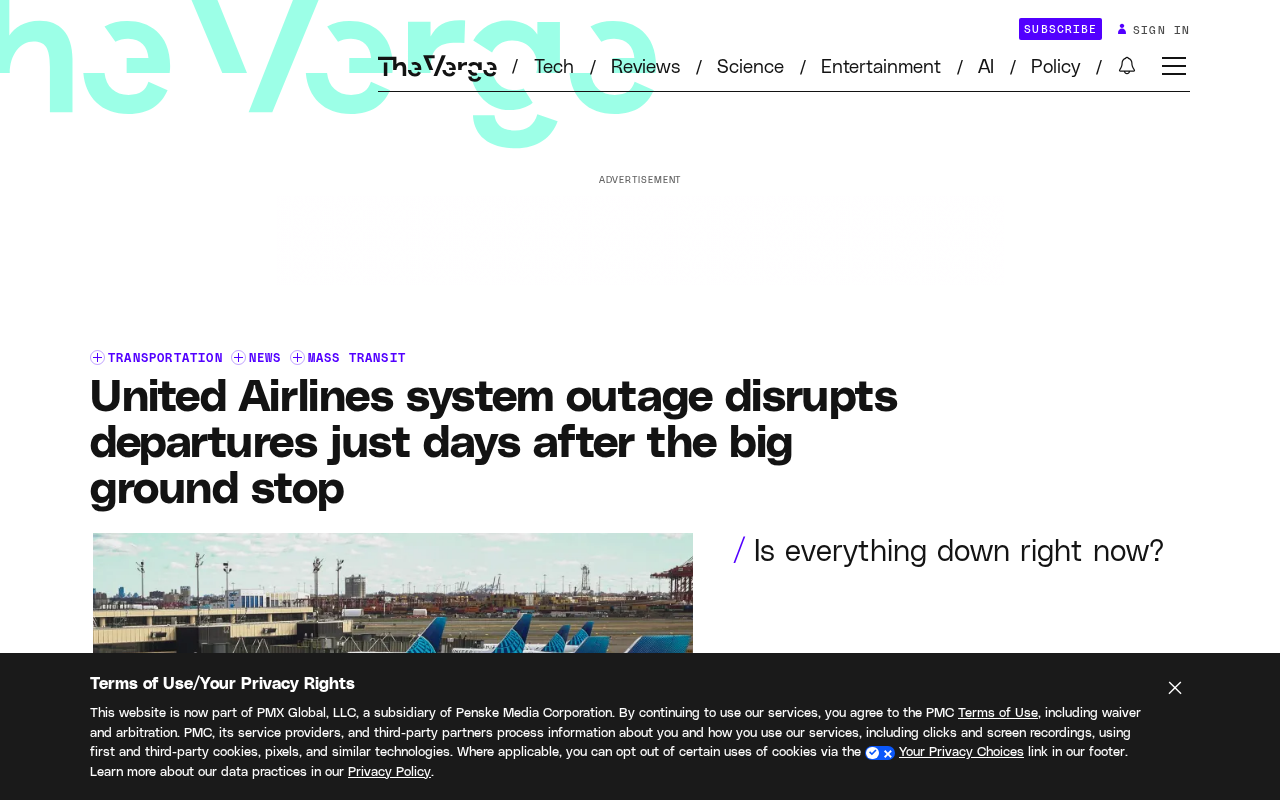
Less than a week after the Federal Aviation Administration (FAA) ordered a nationwide ground stop due to air traffic control communications and radar issues, United Airlines' departing flights have again descended into chaos due to a system outage. The airline says it is working to restore operations as quickly as possible but has not disclosed specific details about the failure.
Incident Recap: The Second Aviation System Shock in a Week
According to RSS source reports, United Airlines' departing flights are being disrupted by a system outage. This is the second major operational disruption to hit the aviation industry in a short period, following last week's nationwide ground stop ordered by the FAA over air traffic control communications and radar problems.
United's statement was brief, saying only that it is "working to restore the system as quickly as possible," without specifying the root cause, scope of impact, or estimated recovery time. For passengers, this information vacuum is often more anxiety-inducing than the outage itself—they cannot determine whether their flights will be canceled or plan alternatives.
Chain Reactions Caused by Information Opacity
The airline's silence on the details of the system failure quickly translates into passenger confusion and airport chaos at the operational level. Lines at check-in counters, flight information screens that refresh endlessly without updates, scattered help-seeking posts on social media—these scenes have become almost a fixed script whenever a major airline's systems go down.
From a technical perspective, a modern airline's departure system involves the coordination of multiple subsystems including check-in, baggage handling, load control, and crew scheduling. A failure in any one link can block the entire departure process. United has not disclosed which specific component failed, making it difficult for outsiders to assess the severity of the outage and the recovery timeline.
Load Control is one of the most technically demanding and least error-tolerant steps in the departure process. It refers to calculating the center of gravity based on aircraft type, passenger count, baggage and cargo weight and distribution, and ensuring it falls within the safe envelope. If load data is wrong, the consequences range from flight delays requiring re-balancing to affecting takeoff performance calculations and flight safety. Modern airlines typically use dedicated load control systems to perform calculations automatically and link them in real time with check-in and baggage systems. Therefore, when the departure system fails as a whole, load control often cannot operate independently—even after boarding is complete, the aircraft cannot obtain the weight and balance sheet required for clearance. This is precisely the technical reason why a single system failure can halt the entire departure process.
Consecutive Failures Expose Systemic Fragility
Within less than a week, first the FAA's air traffic control communications and radar issues triggered a nationwide ground stop, and then United's own departure system failed. Although the two incidents are different in nature, they point to the same problem: the air transport system is extremely dependent on technical systems, and the redundancy and fault tolerance of critical systems remain insufficient when faced with sudden failures.
The FAA's earlier ground stop decision had nationwide impact and represented the highest level of operational disruption; United's outage, while limited to the company's departing flights, had equally concrete direct effects on passengers. With the two events combined, public attention to the reliability of the aviation system is bound to rise.
System redundancy and fault tolerance are two core metrics for evaluating the reliability of critical infrastructure. Redundancy refers to backup systems, alternate links, or multi-node deployment that ensure alternative paths remain available when a component fails; fault tolerance refers to a system's ability to continue operating in a degraded mode rather than collapsing entirely when some components malfunction. The aviation industry has traditionally applied extremely high redundancy standards to flight hardware (such as multiple hydraulic and power systems), but ground IT systems—especially airlines' legacy departure and scheduling platforms—often lack sufficient redundancy due to cost and legacy issues, creating a gap where "the sky is very safe, but the ground is fragile." This is also why a single software or network-level failure can bring the entire departure chain to a halt.
Practical Impact on Passengers and the Industry
For passengers planning to fly United in the near future, the most practical approach is to monitor flight status closely, allow more time at the airport, and familiarize themselves with rebooking and refund policies in advance. During airline system outages, customer service channels are typically congested, and online self-service is often more efficient than waiting on the phone.
For the industry, consecutive system failures will increase regulatory pressure. The FAA's investment in air traffic control modernization and airlines' redundancy building in IT infrastructure may both become focal points in subsequent discussions. United's failure to disclose details this time also means there are limited entry points for public oversight—until the next outage occurs, the problem may remain fundamentally unresolved.
The reliability of the aviation system is built on the stable operation of countless subsystems, and every failure is a stress test of this complex system. Two disruptions within a week remind us that the cascading effects of technical failures deserve far more vigilance than a single system outage.
FAA air traffic control modernization is a long-debated issue in the U.S. aviation industry. U.S. air traffic control still relies heavily on ground-based radar and voice communication links designed in the mid-20th century. The FAA's NextGen modernization program attempts to replace the old system with satellite navigation (ADS-B) and digital communications, but progress has been repeatedly delayed and costs have continued to climb. Once radar and communications fail, controllers cannot reliably track aircraft positions and separation, leaving the FAA with only the most conservative option, such as a nationwide ground stop. This also explains why the impact of air traffic control failures covers the entire country, while an airline's own departure system failure usually affects only that company's flights.
One-line Summary
United Airlines departure system outage marks the aviation industry's second major operational disruption in a week.
Paragraph Summary
Less than a week after the FAA ordered a nationwide ground stop due to air traffic control communications and radar issues, United Airlines' departing flights have again fallen into chaos due to a system outage. United said only that it is working to restore operations as quickly as possible, without disclosing the root cause, scope of impact, or recovery time, and the information vacuum has worsened passenger confusion and airport chaos. A modern airline's departure system involves coordination among multiple subsystems including check-in, baggage handling, load control, and crew scheduling, and a failure in any link can block the entire process. United has not specified which component failed, making it difficult for outsiders to assess severity. The two incidents, different in nature, jointly point to the aviation transport system's heavy dependence on technical systems and insufficient redundancy and fault tolerance, and also signal rising regulatory pressure. For passengers, closely monitoring flight status, allowing ample time, and prioritizing online self-service are more practical responses.
Related articles

Zed Editor Releases v1.29.2: Observations on a Routine Version Iteration
Zed editor releases patch v1.29.2, version bump by @JosephTLyons, commit verified via GitHub signature. This article covers the release's basic info, what a patch version means, and practical upgrade advice for users.

Anthropic IPO Questioned: Hacker News Debates Timing of Going Public
A Hacker News post titled "Just say no to Anthropic's IPO" sparks debate on the timing of Anthropic's public listing and AI capitalization, touching on valuation bubbles and mission independence.

Hands-On with the Genie 4 World Model: Directing Worlds in Real Time Like a Puppeteer
Google DeepMind's Genie 4 world model in depth: Special Guest X's hands-on demo of real-time scene direction via prompts, custom interactive apps in Project Genie, and prompts-as-seeds reproducibility.