Unsloth Releases Windows ARM64 Binaries: Another Milestone for Local LLM Training
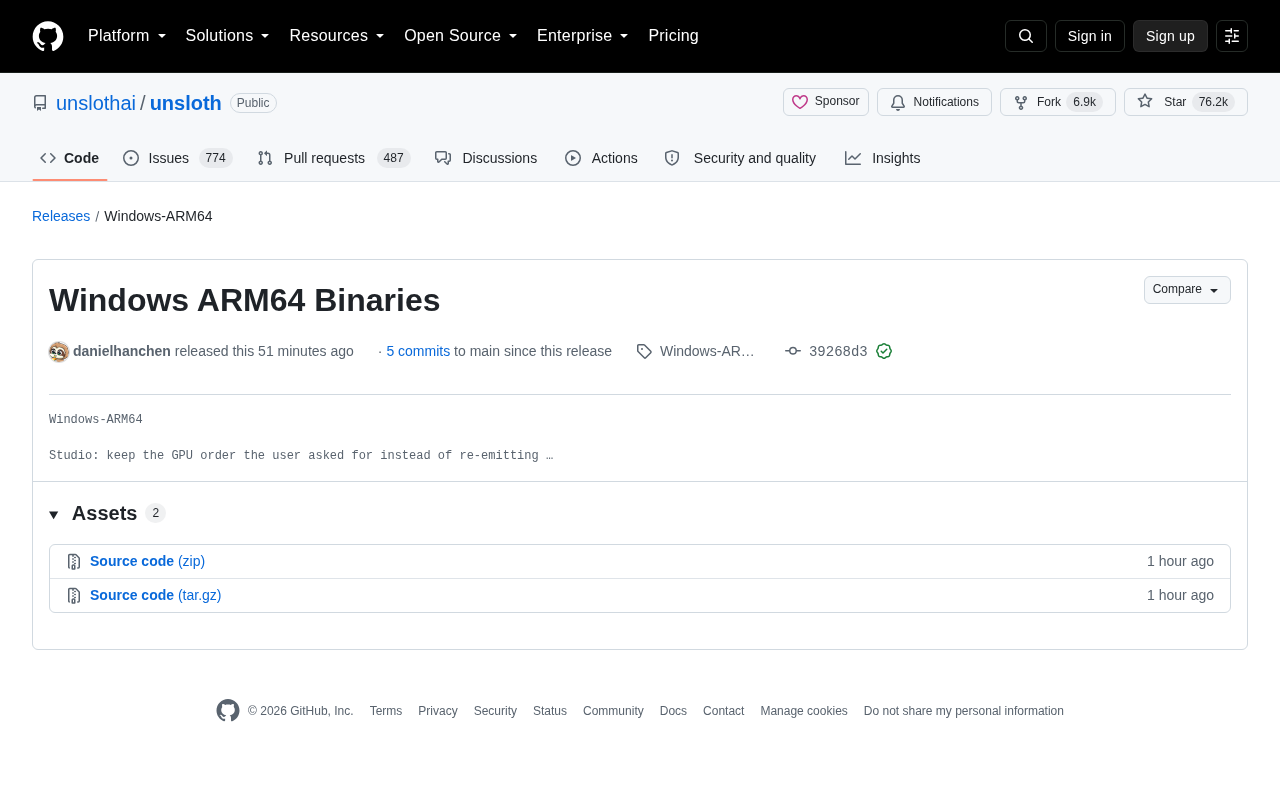
Unsloth releases prebuilt Windows ARM64 binaries, making local LLM fine-tuning easier on ARM-powered devices.
Open-source LLM fine-tuning tool Unsloth has officially released precompiled binaries for Windows ARM64, allowing users on Qualcomm Snapdragon and other ARM-based Windows devices to get started without building from source. Known for its significant speed gains and reduced VRAM usage, Unsloth has surpassed 76,000 GitHub stars. The release, made by core maintainer danielhanchen and verified via GitHub GPG signature, also includes an improvement to Studio's GPU ordering behavior in multi-GPU setups. Overall, this update reflects the growing trend toward on-device AI and expands Unsloth's hardware compatibility further.
The open-source LLM fine-tuning tool Unsloth has released official binaries for the Windows ARM64 architecture, marking a further expansion of platform coverage for this widely popular project in the developer community. The release was made by core maintainer danielhanchen and verified through GitHub's GPG signature mechanism to ensure authenticity.
What Is Unsloth
Unsloth is an open-source tool focused on accelerating large language model (LLM) fine-tuning and training. Thanks to its significant speed improvements and memory optimization, it has accumulated over 76,000 stars and nearly 6,900 forks on GitHub, placing it among the top tools in its category.
Its core value lies in enabling researchers and developers to complete model fine-tuning at lower hardware costs and faster speeds. For individual developers and small-to-medium teams, this kind of efficiency optimization directly lowers the barrier to entry for customizing large models.
One of the key technologies behind Unsloth's efficiency gains is its hand-written optimization kernels for backpropagation during model training, along with deep integration with the LoRA (Low-Rank Adaptation) fine-tuning method. LoRA is a parameter-efficient fine-tuning technique that adapts models by adding low-rank matrices alongside the original weights — without updating all parameters — significantly reducing VRAM requirements. On top of this, Unsloth uses custom CUDA kernels and gradient checkpointing strategies, claiming more than 2x speed improvements over native Hugging Face training pipelines while reducing VRAM usage by approximately 60%. This makes it feasible to fine-tune models ranging from 7B to 70B parameters on consumer-grade GPUs or even CPU/NPU setups.
What Windows ARM64 Support Means
The centerpiece of this release is the Windows ARM64 platform binaries. The ARM64 architecture has rapidly gained traction in personal computing devices in recent years — from Windows PCs powered by Qualcomm Snapdragon chips to an increasing number of mobile workstations emphasizing energy efficiency. The ARM ecosystem's presence on the desktop continues to grow.
Previously, most AI training and inference toolchains were built primarily for x86_64 architectures, leaving ARM64 users to either compile from source or deal with compatibility issues. By providing official precompiled ARM64 binaries, Unsloth allows these users to simply download and get started, eliminating the need for a cumbersome local build process.
Lowering the Bar for Local Deployment
For users looking to fine-tune models locally on ARM64 Windows devices, the availability of official binaries greatly simplifies environment setup. This move aligns with the growing trend toward "on-device AI" and "local model" workflows, as more developers prefer running model experiments on their own hardware rather than relying entirely on cloud compute.
The Windows on ARM ecosystem has gone through a lengthy maturation period. Early ARM Windows devices (such as those preceding the Surface Pro X, based on the Snapdragon 835) were constrained by application compatibility and primarily ran x86 apps through emulation, incurring significant performance overhead. Since the launch of the Qualcomm Snapdragon X Elite/X Plus series (featuring the custom Oryon CPU cores), native ARM64 application performance has become competitive with mainstream x86 laptops, and Microsoft has simultaneously strengthened its toolchain support for ARM64EC (ARM64 Compatibility Extension). However, deep learning toolchains that rely on CUDA remain tightly bound to NVIDIA GPUs. Windows ARM devices typically feature Qualcomm Adreno GPUs or integrated NPUs, with their AI acceleration capabilities exposed through frameworks like DirectML or Qualcomm QNN. Unsloth's provision of native ARM64 binaries signals that it is actively adapting to this non-CUDA inference and fine-tuning path.
Release Details
According to the release information, this version was published by danielhanchen on September 16, corresponding to commit hash 39268d3, with 4 commits merged into the main branch since the previous release. The release is signed and verified via GitHub's official GPG key (ID: B5690EEEBB952194) with a "Verified" status, allowing users to confidently verify the source's authenticity.
The release notes also mention a related improvement: the Studio component now preserves user-specified GPU ordering rather than rearranging the output. This detail has practical significance for multi-GPU training setups — consistent GPU ordering prevents unexpected behavior caused by device ID mismatches, improving tool reliability in complex hardware configurations.
The GPG signature verification mentioned in the GitHub release is an important practice in software supply chain security. GPG (GNU Privacy Guard) is an encryption tool based on the OpenPGP standard. Developers sign release artifacts with their private key, and users can verify the signature's authenticity using the corresponding public key — confirming that the release content has not been tampered with and genuinely comes from the claimed publisher. GitHub provides a mechanism for organizations and repository maintainers to associate GPG keys with their accounts, and verified commits and releases display a "Verified" badge. For AI tools that may handle sensitive data or execute code locally, verifying release signatures is a recommended baseline security measure.
Impact on the Developer Ecosystem
Unsloth's expansion to Windows ARM64 reflects the broader trend of open-source AI toolchains actively adapting to diverse hardware environments. As the ARM architecture gains market share in desktop and laptop markets, native ARM64 support for AI tools will gradually shift from a "nice-to-have" to a "must-have."
For developers focused on local LLM training, this update means a wider range of supported devices. Whether driven by data privacy concerns, offline availability needs, or simply the convenience of experimentation, a fine-tuning tool that works out of the box across multiple hardware platforms has genuine appeal.
It's worth noting that the original release information is fairly brief. For specifics on performance characteristics, dependency requirements, and functional differences compared to the x86 version, users are encouraged to consult the official Unsloth repository documentation and release page for authoritative details.
Related articles

AI Agent Fundamentals: The Three Core Components — Brain, Memory, and Tools
A beginner's guide to AI Agents: covering the three core components (brain, memory, tools), four stages of LLM deployment, and why Agents matter for real business use cases.

Boycotting Software That Doesn't Support Linux: One Developer's Philosophy of Choice
A Linux-only developer shares his philosophy of boycotting non-Linux software — without sacrificing productivity — and explains how coding agents like Claude Code are closing the gap with commercial tools.
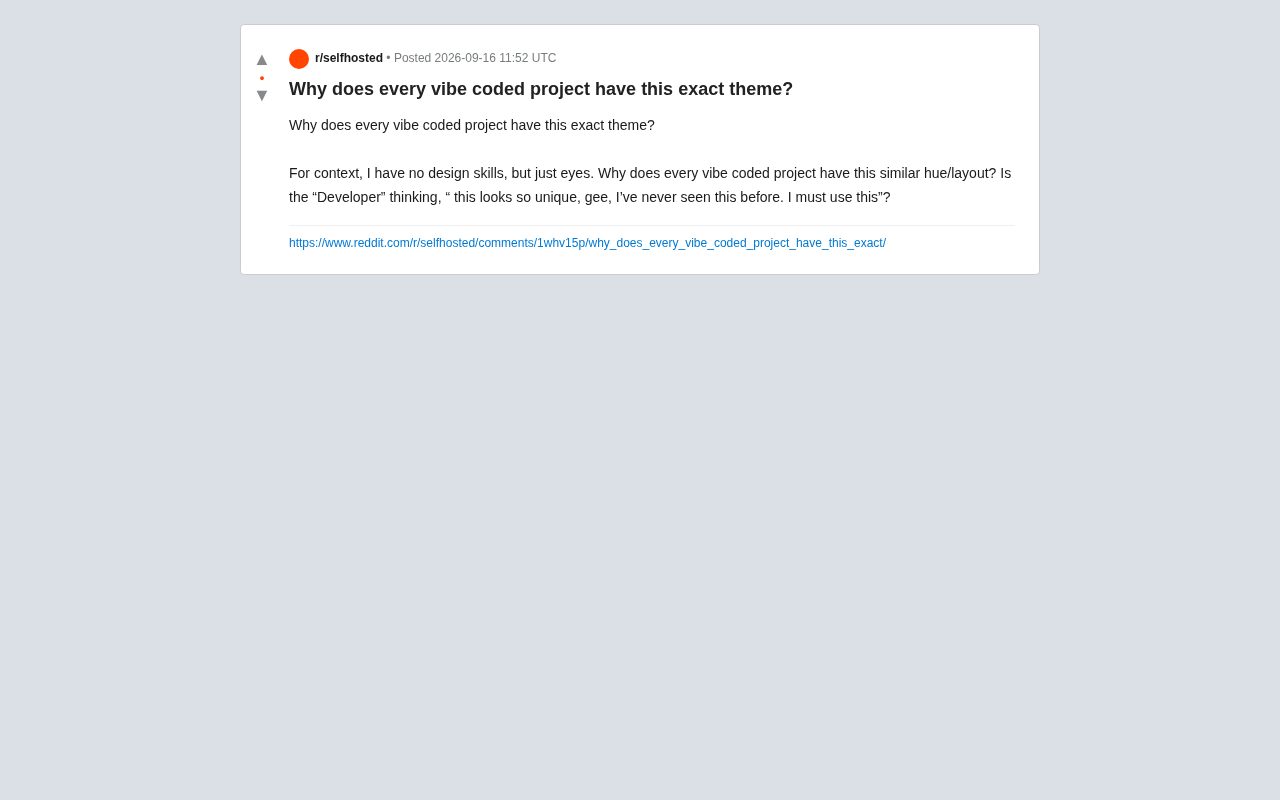
Why Do All AI-Generated Projects Look the Same? The Aesthetic Homogenization Problem in Vibe Coding
Why do vibe coding projects all use purple gradients and dark glassmorphism? We break down the technical roots of AI aesthetic homogenization and how to escape it.