US Revokes Power Plant Climate Pollution Limits — Why the Tech Community Is Paying Attention

The US revoked power plant emission limits, sparking cross-sector climate and energy debate in the tech community.
A Human Rights Watch report on the US revoking power plant climate pollution limits generated 174 upvotes and 144 comments on Hacker News, signaling strong tech-community interest. The piece contextualizes the policy shift — federal deregulation threatens US climate commitments and disproportionately harms vulnerable communities — and explains why tech is paying attention: surging AI and data center energy demand has tightly coupled the industry to grid carbon intensity and power sector regulation, making net-zero pledges harder to fulfill when emission standards are rolled back.
A Policy Shift Sparks Widespread Debate
A report from Human Rights Watch titled US Revokes Limits on Power Plants' Climate Pollution recently sparked heated discussion on Hacker News, the tech-focused community platform. The post garnered 174 upvotes and 144 comments — a clear signal that environmental policy topics resonate well beyond traditional advocacy circles, reaching deep into the tech world.
It's worth being upfront about the limitations of this piece: the source material is sparse, containing only the headline, a link, and community engagement metrics — no full article text. As a result, this piece focuses on contextualizing the topic and exploring its discussion value, rather than diving into specific policy details.
Background: Why Power Plant Pollution Limits Matter
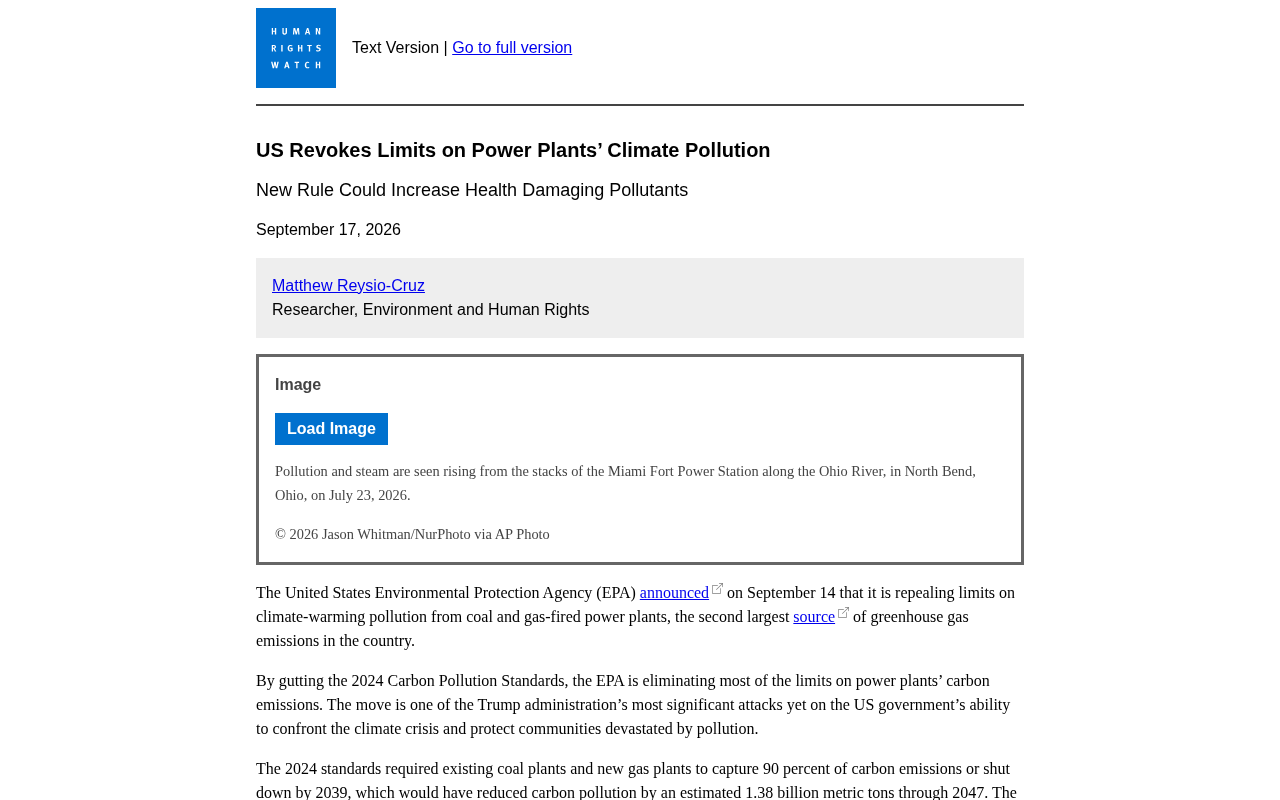
Power plants — particularly coal- and gas-fired facilities — have long been among the largest sources of greenhouse gas emissions. In many countries, carbon dioxide from electricity generation represents a substantial share of total national emissions. Pollution limits on power plants therefore tend to be a cornerstone of any serious climate policy framework.
Revoking such limits means loosening regulatory constraints on the electricity sector's carbon output. These decisions typically involve complex trade-offs between energy costs, employment, grid stability, and climate commitments. Proponents of deregulation usually emphasize economic and energy security concerns, while critics worry about the long-term consequences for climate goals and public health.
The fact that Human Rights Watch covered this story is itself telling — it reflects a broader trend of framing climate policy through a human rights and public health lens, where air pollution and climate change are understood as disproportionately harming vulnerable communities.
In the United States, federal regulation of power plant carbon emissions relies primarily on EPA authority under the Clean Air Act. The Obama administration's Clean Power Plan was the first national standard targeting carbon emissions from existing power plants. The Biden administration subsequently introduced a stricter power plant emissions rule, requiring coal and gas plants to significantly cut CO₂ emissions by the 2030s, with compliance pathways including carbon capture and storage (CCS). Revoking such rules generally means the federal government no longer mandates specific emission caps for power plants, widening the gap between states with strong and weak regulatory frameworks. Since the electricity sector accounts for roughly 25% of total U.S. greenhouse gas emissions, federal deregulation is widely considered a material obstacle to meeting U.S. commitments under the Paris Agreement.
Why the Tech Community Is Watching
The fact that this story appeared on Hacker News — a platform dominated by technology discussion — and attracted significant engagement is itself worth noting. The tech industry's ties to energy policy are growing tighter:
- Data center energy pressure: The explosion in AI model training and inference has driven data center power consumption sharply higher. The carbon intensity of that electricity directly affects tech companies' carbon footprints and ESG commitments.
- Corporate climate targets: Many major tech companies have made public net-zero pledges. The regulatory environment governing the power sector has a direct bearing on whether those targets are achievable.
- Policy uncertainty: Regulatory reversals create uncertainty for long-term energy and infrastructure investments — a practical concern for anyone in the tech industry.
The 144-comment discussion suggests this topic touched a nerve around the intersection of energy, climate, and the technology industry.
The scale of data center electricity consumption is hard to ignore. The International Energy Agency (IEA) estimates that global data centers account for 1–2% of total electricity use worldwide — a share that continues to climb as large language model training becomes more intensive. A single training run for a large AI model can consume millions of watt-hours, equivalent to the annual electricity use of hundreds of typical households. Tech companies routinely sign Power Purchase Agreements (PPAs) to source renewable energy directly, underpinning their net-zero commitments. But the actual effectiveness of those efforts is bounded by the overall carbon intensity of the grid. When regulatory policy allows power plants to continue relying on high-carbon fuels, the average emissions factor of regional grids can remain stubbornly high — making it increasingly difficult for tech companies to credibly claim carbon neutrality, even as their share of green power procurement rises.
Discussion Value and Information Gaps
Based on the available material, this is closer to a widely discussed news item than a primary source suitable for deep technical analysis. Meaningful analysis would require the full text of the original report — specific policy provisions, implementation timelines, and industry response data.
For readers who want to go deeper, we recommend going directly to Human Rights Watch's original report and the Hacker News discussion thread, which often surfaces diverse perspectives from professionals across a wide range of backgrounds.
Human Rights Watch (HRW) is an international non-governmental organization founded in 1978 and headquartered in New York, best known for documenting human rights abuses. Its decision to frame climate policy coverage through a human rights lens reflects the rise of the "climate justice" concept in recent years — a perspective that emphasizes how climate change and air pollution disproportionately harm low-income communities, people of color, and populations in developing countries, directly linking environmental issues to civil and health rights. HRW reports of this kind are typically designed to drive international attention and create public pressure. The organization's editorial stance is fairly clear, and readers are well advised to consult perspectives from government agencies, the energy industry, and independent research institutions to form a well-rounded view.
Takeaway
Changes in environmental regulation ripple far beyond the environmental sector, touching energy markets, the broader economy, and the technology industry alike. The fact that this story sparked discussion in a tech community is itself a meaningful indicator: climate and energy have become shared concerns that cut across disciplinary boundaries. In the absence of complete information, tracking authoritative sources and maintaining a critical, balanced perspective is the most reasonable approach to navigating policy shifts like this one.
Related articles

Cursor AI Programming in Practice: Build a Student Management System from Scratch in 30 Minutes
A Bilibili creator demonstrates Cursor AI programming: generating a student management system in 30 minutes with natural language. Details on Agent mode, Claude selection, prompt techniques, and thresholds.

Top 20 AI Coding Tools Ranking: From Rock-Solid to Lackluster, a Scored Matrix
Bilibili creator releases top 20 AI coding tools ranking, tiered T0–T4 from rock-solid to lackluster, with Claude Code and Codex tied at T0. This article details the scoring dimensions (capability, reliability, robustness, durability, cost, domestic availability) and tool performances to help developers choose the right AI coding assistant.

Vibe Coding Systematic Tutorial: Master AI-Assisted Programming from Zero
A three-month Vibe Coding tutorial from a Bilibili creator covering Codex, ClaudeCode, and Cursor, from core logic to commercial project practice for beginners.