Use MCP to Let AI Build n8n Automation Workflows Directly (For Free)

Use MCP to let AI generate, validate, and fix n8n workflows from plain natural language descriptions.
This article introduces a new paradigm for deeply integrating AI with n8n workflow automation via the MCP (Model Context Protocol). AI clients can connect directly to an n8n instance, allowing users to describe their needs in natural language and have AI automatically generate fully runnable workflows — including triggers, data storage, and email nodes. AI can also validate and auto-fix workflows, creating a generate→validate→fix loop. The setup takes just three steps, and n8n's self-hosted community edition is completely free, making this "describe-to-build" approach extremely low-cost for developers and small teams.
From Manual Building to AI-Generated Workflows
In traditional automation practice, n8n workflows require developers to manually drag and drop nodes, configure triggers, and connect various services — a tedious process that isn't particularly beginner-friendly. With the MCP (Model Context Protocol), this process is being redefined. You no longer need to build workflows by hand; just describe what you want to automate in natural language, and AI can generate a complete workflow directly inside n8n.
At the heart of this is n8n's MCP server, which acts as a bridge between AI and your n8n instance — allowing AI to directly operate the n8n environment rather than simply offering suggestions or code snippets.
MCP (Model Context Protocol) is an open standard proposed by Anthropic in late 2024, designed to give AI models a unified way to connect with external tools, data sources, and services. Its core idea is to standardize the integration between AI clients (such as Claude, Cursor, etc.) and external systems — any MCP-compatible service simply needs to expose a standard interface (an MCP server), and AI clients can discover and invoke that service's capabilities through a unified mechanism, without needing custom integration logic for each tool. This is fundamentally different from traditional API integration: MCP doesn't just have AI generate code that calls an API — it lets AI directly "control" the tool itself, as if giving AI a pair of hands that can operate software. n8n, as an open-source workflow automation platform (similar to Zapier but self-hostable), has a built-in MCP server, meaning AI can directly execute operations like creating, modifying, and validating workflows within your n8n instance — rather than just outputting configuration suggestions for humans to review.
The Setup Is Surprisingly Simple
Deploying this setup has a low barrier to entry and can be broken down into roughly three steps:
- Enable instance-level MCP in n8n;
- Copy the generated connection details;
- Add that information to your AI client's (the example uses anti-gravity) MCP server settings.
Once connected, the AI client has a direct channel to your n8n instance. Compared to integrations that typically require writing API calls or handling complex authentication, MCP's standardized connection approach significantly reduces configuration complexity — which is a big reason the protocol has gained rapid traction in the developer community recently.
Generate a Complete Workflow From a Single Prompt
The most striking moment in the demo is this: the author gives AI a single instruction — "Create a workflow that receives a form submission, saves the data to Google Sheets, and sends a confirmation email." AI then immediately starts building the workflow inside n8n, automatically configuring the trigger, Google Sheets node, email node, and everything else.

This dramatically shrinks the gap between describing a requirement and having a runnable workflow. For users who understand business logic but aren't familiar with n8n's node ecosystem, this interaction style is especially valuable — you only need to know what you want, not how to wire it together.
Not Just Generation — It Can Validate and Fix Too
An even more notable capability is that AI doesn't just build workflows — it can also validate them. If a workflow has issues, AI can identify and attempt to fix them.

This elevates the MCP approach from a "code generator" to a "collaborative automation assistant." The generate → validate → fix loop forms a closed cycle, reducing the need for manual debugging. That said, given the demo context, the reliability of this auto-repair capability when faced with complex business logic or edge cases still needs to be validated in real-world projects.
A Completely Free Way to Get Started
This setup is very accessible for those wanting to experiment: n8n's self-hosted community edition is free. In other words, you don't need to pay for n8n itself to fully experience AI-driven workflow building. Combined with the open-source MCP ecosystem, the cost of experimentation is extremely low — making it ideal for individual developers and small teams looking to validate ideas.

n8n's self-hosted community edition can be deployed on a local machine or cloud server. The official Docker image lets you spin up an instance with a single command. For individual developers, running it locally has virtually no additional cost; for an always-online service, platforms like Railway or Render offer free tiers or low-cost plans. It's worth noting that MCP functionality does have some version requirements in n8n — using a recent stable release is recommended to ensure full support for instance-level MCP. On the AI client side, beyond anti-gravity mentioned in the demo, other MCP-compatible clients include Claude Desktop, Cursor, Windsurf, and more — and the options continue to grow as the MCP ecosystem expands.
Conclusion
The combination of MCP and n8n illustrates a broader trend: AI moving from "assisting with code" to "directly operating tools." By connecting AI to automation platforms via a standardized protocol, users can accomplish tasks that once required extensive manual configuration using nothing but natural language. While the demo scenarios are relatively straightforward and the auto-repair capability in complex situations still warrants observation, the "describe it to build it" paradigm undeniably lowers the barrier to automation — and is well worth exploring.
Related articles
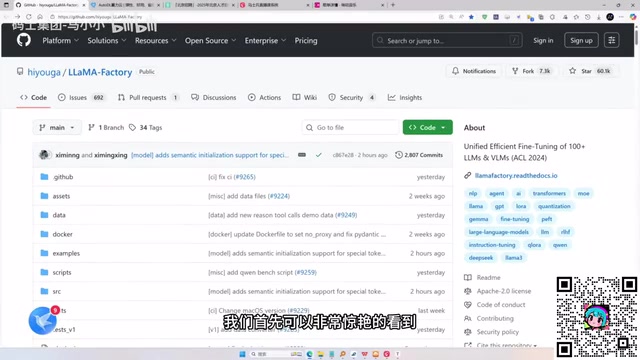
LLaMA-Factory in Practice: A Complete No-Code Guide to Fine-Tuning Large Models
An introduction to LLaMA-Factory, the open-source fine-tuning tool: its 60.1K-star background, supported models and algorithms, local vs. cloud deployment, and CUDA setup steps.

Zeng Ming's Deep Retrospective: Why OpenAI May Not Be the Ultimate Winner — and Why the Corporate System Will Disappear
Zeng Ming's deep retrospective on the AI endgame: model companies are just infrastructure, OpenAI and Anthropic won't be the final winners; the next battle is the Agent entry point standard; the corporate system will disappear as AI restructures collaboration, and only mission-driven companies can survive the cycle.

OpenHands v1.28.0: OpenCode and PI Added as Built-in Agents, API Keys Requestable In-Conversation
OpenHands ships 5 releases in 21 days: v1.27.0 adds OpenCode and PI as built-in agents, v1.28.0 enables in-chat key requests. ACP integration, credential reuse, model list changes, and upgrade advice.