v0 Introduces Permission Modes: Enhanced Security Controls for the AI Code Assistant

v0 adds three permission modes to give developers fine-grained control over AI coding actions.
Vercel's AI coding tool v0 has introduced a Permission Modes feature offering three levels of control: Ask Every Time, Smart Judgment, and Free Execution. These modes let developers balance coding efficiency with security by choosing how much autonomy the AI has when executing commands, from full manual approval to unrestricted operation.
v0 Permission Modes Now Available
v0, the AI programming tool from Vercel, has recently launched a new Permission Modes feature that allows users to fine-tune the level of authority granted to the AI when executing commands. This update marks a significant step forward in security and user control for AI coding assistants.
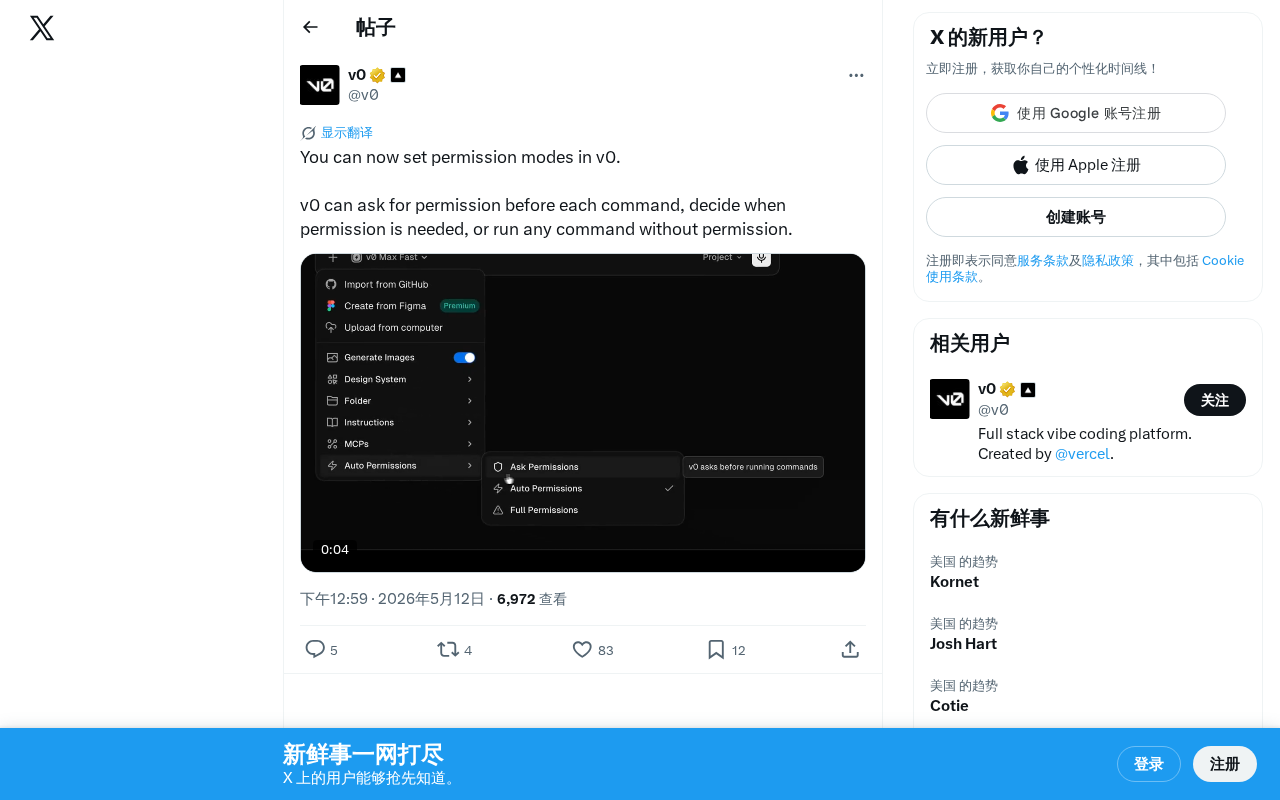
The Three Permission Modes Explained
According to the official announcement, v0 now offers three distinct permission control modes:
1. Ask Every Time Mode
v0 requests user permission before executing each and every command. This is the most conservative mode, ideal for scenarios with strict security requirements or when users want complete control over the AI's behavior. Every action requires manual confirmation, ensuring no unexpected file modifications or system operations occur.
2. Smart Judgment Mode
v0 decides on its own when permission is needed. This is a balanced middle ground between efficiency and security — for routine, low-risk operations (such as reading files or generating code snippets), the AI can act autonomously, while for operations that could have significant impact (such as deleting files, modifying configurations, or executing system commands), it pauses and asks for user consent.
3. Free Execution Mode
v0 can run any command without requesting any permissions. This mode is suited for developers who place a high degree of trust in the AI, or for rapid prototyping in sandboxed environments. It delivers maximum productivity but comes with correspondingly greater risk.
Why Permission Controls Matter
As AI coding assistants grow increasingly capable, they are no longer just code completion tools — they are intelligent agents that can execute terminal commands, modify file systems, and even interact with external services. In this context, permission controls become critical:
- Security: Prevents AI missteps from causing data loss or system damage
- Auditability: In Ask Every Time mode, users can clearly track every action the AI takes
- Flexibility: Different scenarios call for different levels of control granularity, balancing efficiency with safety
Industry Trend Observations
This feature aligns with the broader trend across the AI coding tool landscape. Whether it's Cursor, Claude Code, or other AI programming assistants, the industry is exploring how to grant AI greater autonomy while maintaining human control over critical operations. v0's three-tier permission model provides a clear framework that lets users choose flexibly based on their trust level and use case.
For developers, the recommended approach is to use Ask Every Time mode for production-related operations, Smart Judgment mode for everyday development, and reserve Free Execution mode for isolated experimental environments. This layered strategy maximizes the efficiency of AI-assisted programming while safeguarding security.
Related articles

Altman: Taking OpenAI Public This Year Would Be 'Ill-Advised'
OpenAI CEO Sam Altman says going public this year would be 'ill-advised,' even as the company has confidentially filed IPO paperwork. Here's what it means for AI.

An Open Letter to Dario: If AI Safety Is Real, Open the Model Weights
Developer Jacob's open letter to Anthropic CEO Dario Amodei went viral on Hacker News, challenging the contradiction between AI safety rhetoric and closed-source models: if safety truly matters, why not open the weights?
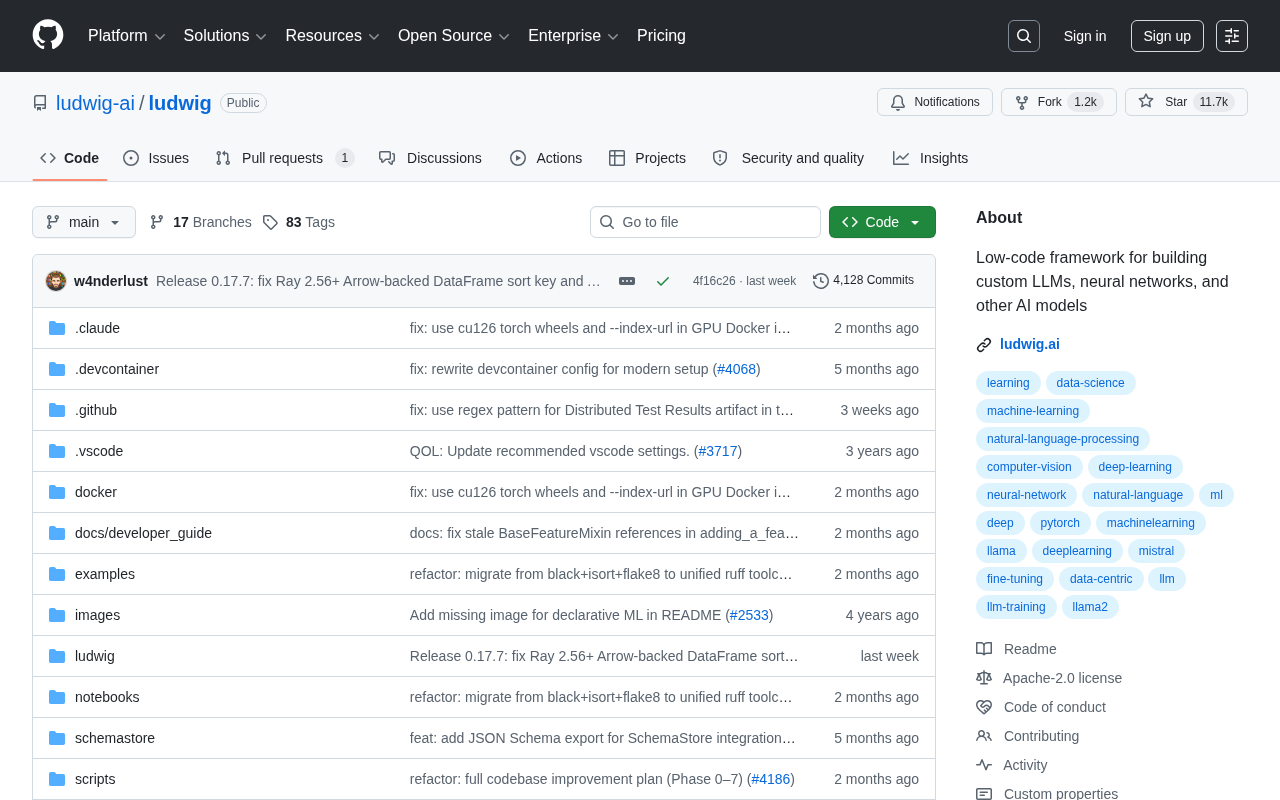
Ludwig: Building Custom LLMs and Neural Networks with Declarative Low-Code Configuration
Ludwig is an open-source low-code ML framework that builds custom LLMs and neural networks via declarative YAML config — no boilerplate training code required.