Vercel AI SDK Releases Patch Update for @ai-sdk/tui
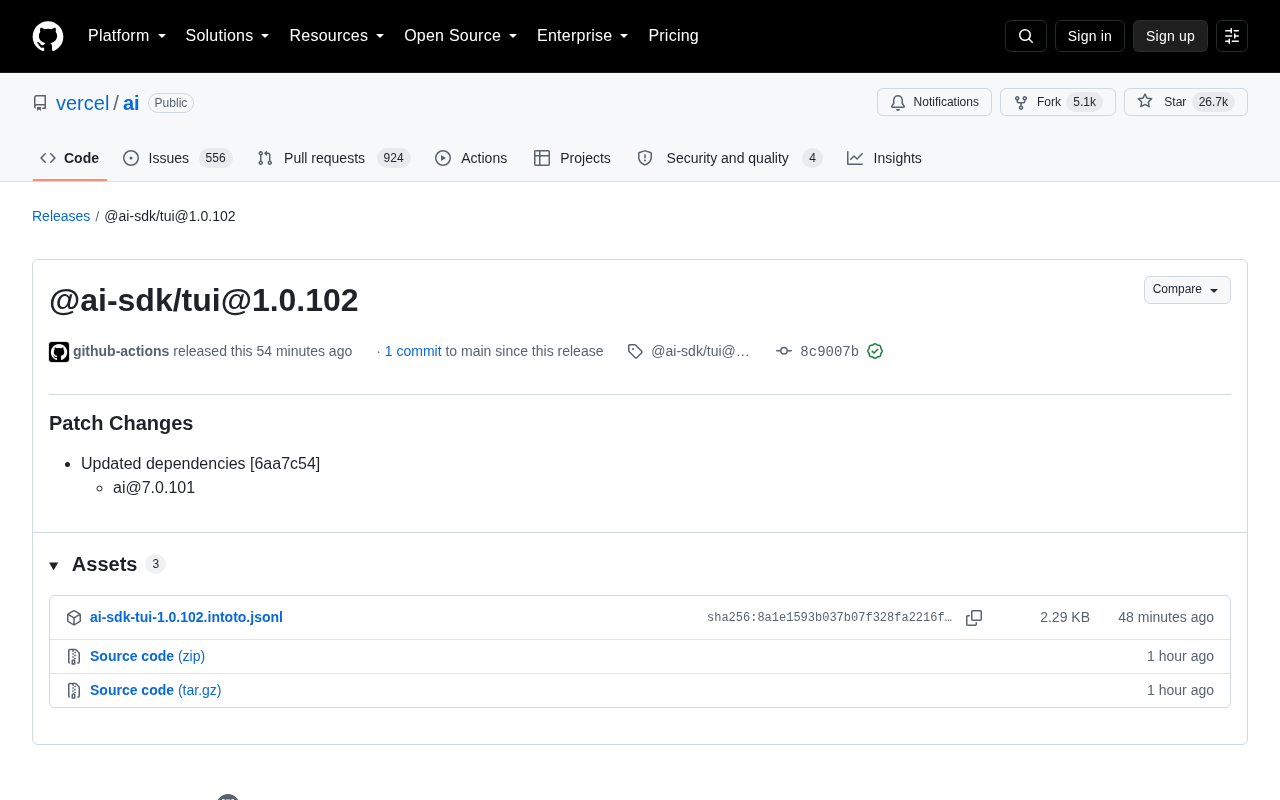
Vercel AI SDK releases @ai-sdk/tui v1.0.102, a patch update syncing the ai@7.0.101 dependency.
@ai-sdk/tui@1.0.102 is a routine patch update in the Vercel AI SDK ecosystem. The sole change is syncing the core `ai` dependency to version 7.0.101 — no new features or breaking changes are introduced, making it safe to upgrade. The `@ai-sdk/tui` sub-package targets Terminal User Interface (TUI) scenarios for building AI experiences in command-line environments. The Vercel AI SDK repository has surpassed 27,000 GitHub Stars, reflecting strong community adoption. This release follows SemVer conventions and was automatically published via GitHub Actions with signature verification.
Vercel's AI SDK project recently released @ai-sdk/tui@1.0.102. This is a patch-level update focused primarily on dependency synchronization. While the changes are minor, they reflect the project's consistently active development cadence — something worth noting for developers following the Vercel AI ecosystem.
Update Overview
According to the GitHub Release page, @ai-sdk/tui@1.0.102 falls under Patch Changes, with its core change being an internal dependency update. The release notes explicitly list:
- Updated dependencies [6aa7c54]
ai@7.0.101
This means the update introduces no new features or breaking changes — it simply bumps the underlying ai package to version 7.0.101 to maintain version consistency across the SDK family. The release was automated via GitHub Actions and signed with a verified GitHub signature, ensuring the trustworthiness of the release source.
About the Vercel AI SDK Project
Vercel's ai repository is one of the most influential open-source projects in the AI application development space, having accumulated over 27,000 Stars and 5,100+ Forks on GitHub — a clear sign of widespread community adoption.
@ai-sdk/tui is a sub-package within the AI SDK family. Based on its name, it targets Terminal User Interface (TUI) scenarios, providing developers with the tools to build AI-powered interactive experiences in command-line environments. As part of the broader SDK ecosystem, it maintains close version alignment with the core ai package.
A TUI (Terminal User Interface) is an interactive, text-based interface that runs in a command-line or terminal environment. Unlike traditional CLI tools, TUI applications typically support keyboard navigation, cursor positioning, and dynamic screen refreshing — delivering a relatively intuitive user experience without relying on a graphical interface (GUI). Well-known TUI frameworks include Python's Textual and Rust's Ratatui. @ai-sdk/tui brings this paradigm to AI interaction scenarios, enabling developers to build terminal-based AI applications with features like real-time streaming output and multi-turn conversations. It's especially well-suited for CLI tools, development helper scripts, or AI integrations in headless server environments.
The Significance of Patch Updates
Following Semantic Versioning (SemVer), a patch increment like 1.0.102 typically represents backward-compatible bug fixes or dependency synchronization. For projects running in production, these updates are generally safe to apply with minimal risk.
Frequent dependency sync updates are a normal part of modern SDK maintenance. When a core library (such as ai@7.0.101) is updated, surrounding sub-packages need to follow suit promptly to avoid compatibility issues caused by version mismatches. Automating releases through GitHub Actions further reduces maintenance overhead while improving release efficiency and consistency.
For teams actively using the Vercel AI SDK, it's advisable to monitor its Release history and periodically assess how dependency upgrades might affect your existing projects. While a single patch update may carry limited information, consistently tracking version changes helps you stay aligned with the broader ecosystem's direction.
Semantic Versioning (SemVer) is a widely adopted versioning convention in the software industry, using the format MAJOR.MINOR.PATCH. A MAJOR version change indicates breaking API changes; a MINOR version change indicates new backward-compatible features; and a PATCH version change represents only backward-compatible bug fixes or internal adjustments (such as dependency syncs). Projects that follow SemVer allow users to assess upgrade risk directly from the version number, and package managers like npm leverage this convention to implement smart dependency version range locking. The patch increment in 1.0.102 means users can upgrade safely without modifying any code or worrying about API incompatibilities.
Related articles
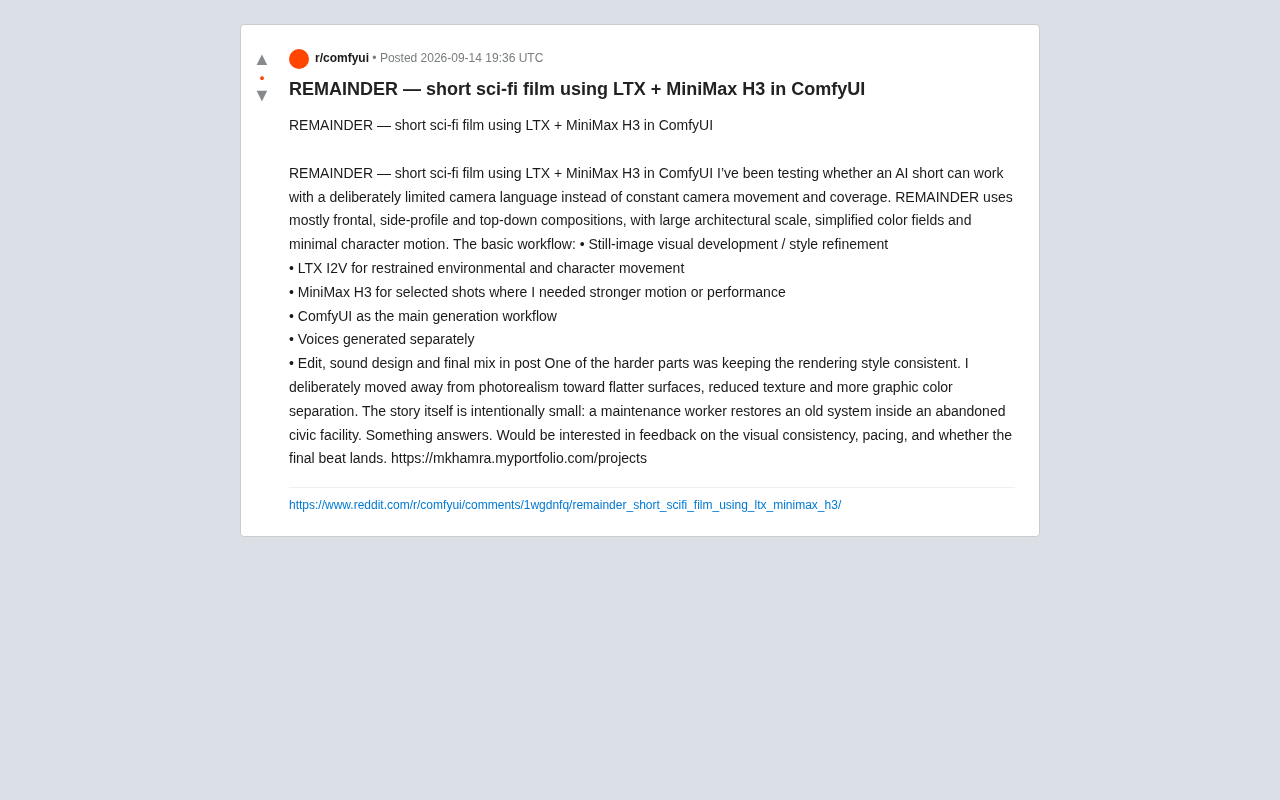
Building an AI Sci-Fi Short with LTX + MiniMax H3: Restrained Cinematography in ComfyUI
Sci-fi short REMAINDER uses LTX, MiniMax H3, and ComfyUI with restrained cinematography and flat aesthetics to solve visual consistency in AI filmmaking.
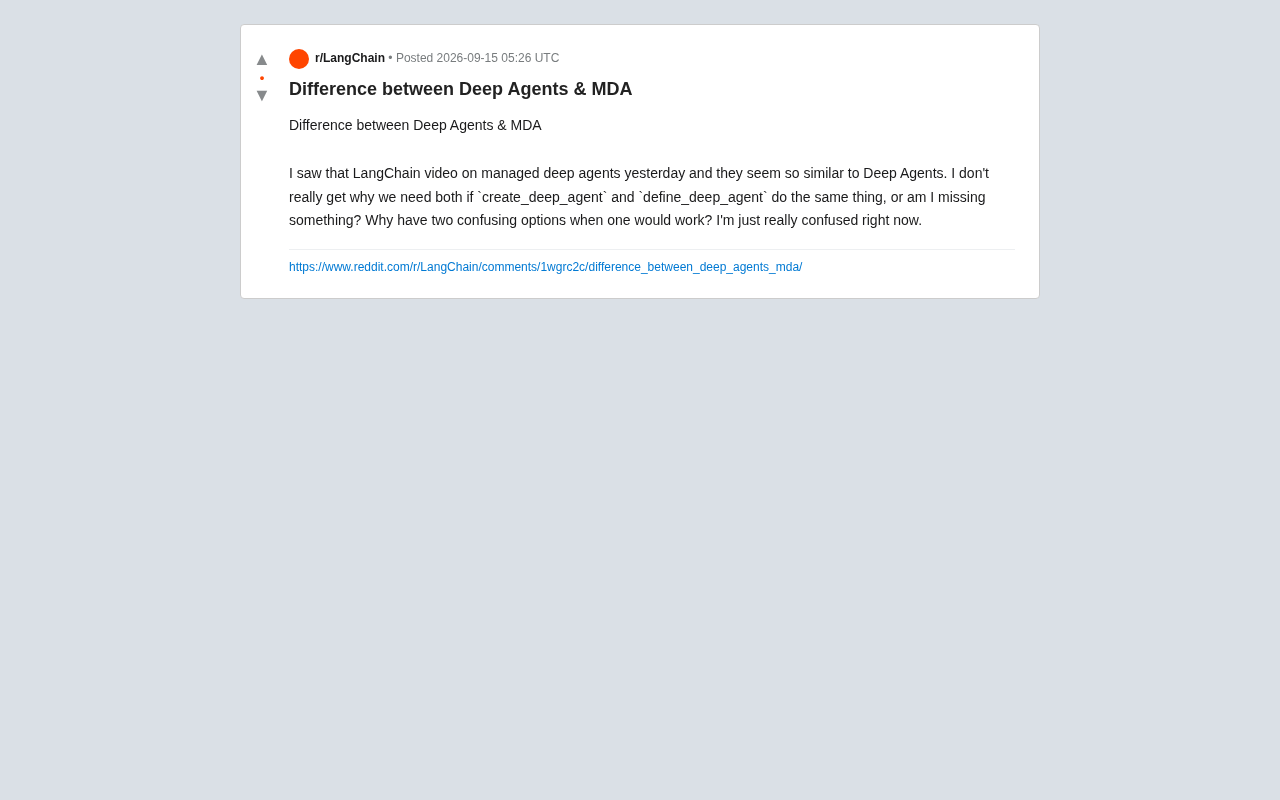
LangChain Deep Agents vs. MDA: Clearing Up the Confusion for Developers
What's the difference between LangChain's Deep Agents and MDA (Managed Deep Agents)? We break down create_deep_agent vs. define_deep_agent and help developers choose.
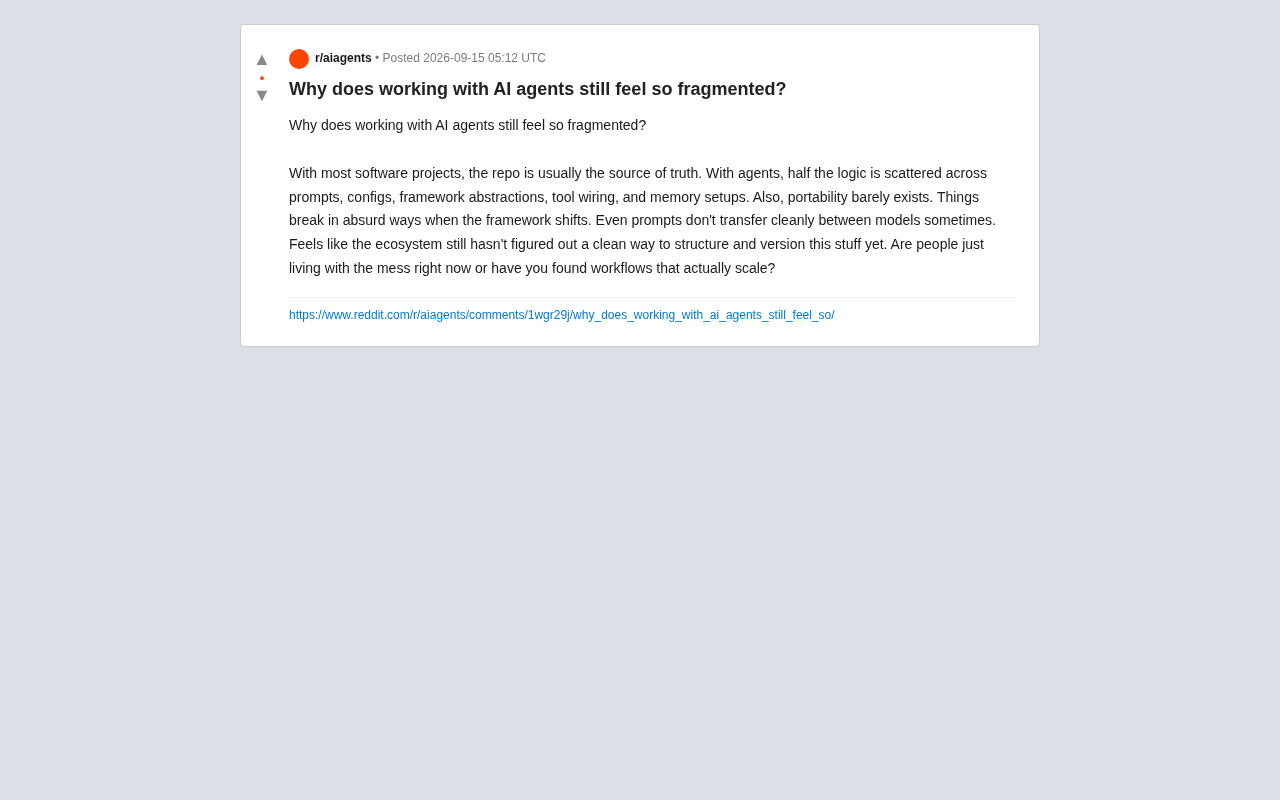
Why Is AI Agent Development So Fragmented? The Real Causes and How to Work Around Them
Why does AI Agent development feel so fragmented? Logic scattered across prompts, configs, and frameworks makes portability nearly impossible. Here's why — and how to cope.