Vercel AI SDK Update: Alibaba Cloud Module Now Preserves Multi-Turn Reasoning Context by Default
Vercel AI SDK's Alibaba Cloud module v2.0.49 now preserves reasoning chains across multi-turn conversations by default.
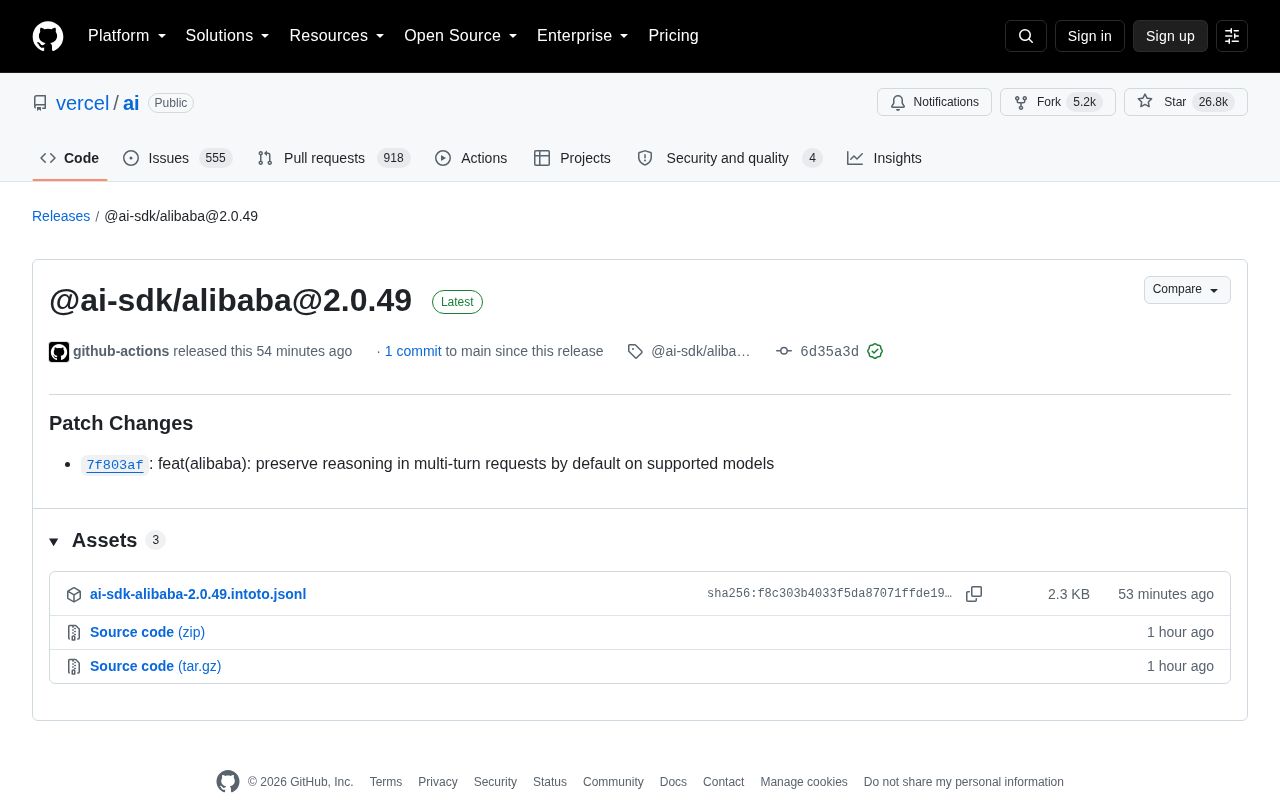
The `@ai-sdk/alibaba` module for Vercel AI SDK released patch version 2.0.49, with the core change being that chain-of-thought reasoning content is now automatically carried into subsequent turns of multi-turn conversations on supported models. Previously, developers had to configure this manually. The update enables reasoning models to maintain thinking context across complex sequential tasks like code debugging and math reasoning. Developers should note two potential impacts after upgrading: existing logic that relies on reasoning not being passed forward may need to explicitly disable this behavior, and preserving reasoning increases token usage per request, which affects costs in long conversations.
The Alibaba Cloud integration module @ai-sdk/alibaba for Vercel AI SDK has released patch version 2.0.49. While this update may appear minor, it addresses a critical pain point in AI application development — preserving the reasoning chain across multi-turn conversations.
What's New: Reasoning Preserved by Default
According to the GitHub Release notes, version 2.0.49 is a Patch-level update with the following core change:
feat(alibaba): preserve reasoning in multi-turn requests by default on supported models
In practice, this means that when developers use Alibaba Cloud's reasoning-capable models (such as enhanced reasoning versions of Qwen) for multi-turn interactions, the reasoning process generated in previous turns will now be automatically included in subsequent requests — no manual configuration required.
This change was introduced via commit 7f803af and published through GitHub's verified signature mechanism, ensuring the authenticity of the release.
Why "Preserving Reasoning" Matters
In recent years, models with explicit reasoning capabilities — known as reasoning models — have become mainstream. These models generate an internal chain-of-thought before producing a final answer. In single-turn conversations, this reasoning helps the model arrive at more accurate conclusions. In multi-turn scenarios, however, handling this reasoning content has always involved tradeoffs.
If prior reasoning is discarded between turns, the model may lose critical thinking context in subsequent rounds, leading to reduced logical coherence, redundant re-derivation, or even contradictions. Conversely, preserving reasoning by default allows the model to build on its previous thinking, leading to more stable performance in complex tasks such as multi-step code debugging, mathematical reasoning, and long-horizon planning.
Making "preserve reasoning" the default behavior reflects the Vercel AI SDK team's understanding of how reasoning models are actually used — most tasks that require reasoning are inherently sequential and stateful, so preserving reasoning by default aligns with developer expectations.
From an API implementation perspective, reasoning models typically return a separate reasoning or thinking field in the response (distinct from the final answer field) to record the model's intermediate thought process. When constructing requests for multi-turn conversations, developers must decide whether to include this content in the message history. Some providers (such as Anthropic Claude's Extended Thinking feature) explicitly require reasoning content to be passed back in multi-turn conversations, returning an error otherwise; others leave the choice to the developer. Prior to this update, Vercel AI SDK left this decision to developers to handle manually. Version 2.0.49 makes "pass back reasoning" the default behavior in the Alibaba Cloud adapter, eliminating this common configuration burden. It's worth noting that reasoning tokens are typically billed the same as regular text tokens, which means the decision to preserve or discard reasoning has direct cost implications beyond just functionality.
Practical Impact for Developers
For teams building applications with @ai-sdk/alibaba, there are a few things to keep in mind after upgrading to 2.0.49:
- Default behavior change: Reasoning content is now preserved by default in multi-turn requests. If your existing application logic relies on reasoning NOT being carried over, you may need to explicitly disable this behavior.
- Context length and cost: Preserving reasoning increases the number of tokens included in each request, which affects context window usage and API costs. This overhead should be evaluated carefully in long-conversation scenarios.
- Supported models only: This feature only takes effect on models that support reasoning output. Standard conversational models are unaffected.
As a Patch release, this update is generally backward-compatible and carries low upgrade risk. That said, since it involves a change to default behavior, developers are still advised to validate in a test environment before deploying to production.
Vercel AI SDK's Ecosystem Role
Vercel AI SDK is one of the more popular AI application development toolkits in the TypeScript/JavaScript ecosystem, with over 26,000 stars and 5,200+ forks on GitHub. Through a unified interface abstraction, it allows developers to integrate with multiple model providers — including OpenAI, Anthropic, Google, and Alibaba Cloud — using a consistent API.
@ai-sdk/alibaba serves as the Alibaba Cloud adapter module, continuously tracking the evolving capabilities of the Qwen model family. This optimization around reasoning preservation is a textbook example of how the SDK layer smoothly exposes underlying model capabilities to higher-level developers — without requiring developers to dive into each provider's API-specific handling of reasoning fields, they get sensible out-of-the-box defaults.
For teams focused on AI application engineering, these seemingly small changes to default behavior often have a more direct impact on day-to-day development experience than major version updates.
The core design philosophy of Vercel AI SDK is "Provider Agnostic" — by defining a unified LanguageModelV1 interface specification, each model adapter (provider package) only needs to implement that interface, allowing upper-level business code to switch between different models seamlessly. @ai-sdk/alibaba is built following this specification and internally handles the field mapping between the Qwen API and the standard interface, streaming response parsing, reasoning field extraction, and more. This layered architecture means that when an underlying model API changes or gains new capabilities, only the corresponding provider package needs to be updated — not every user's business logic. The default behavior change for reasoning preservation is a direct embodiment of this mechanism.
Related articles
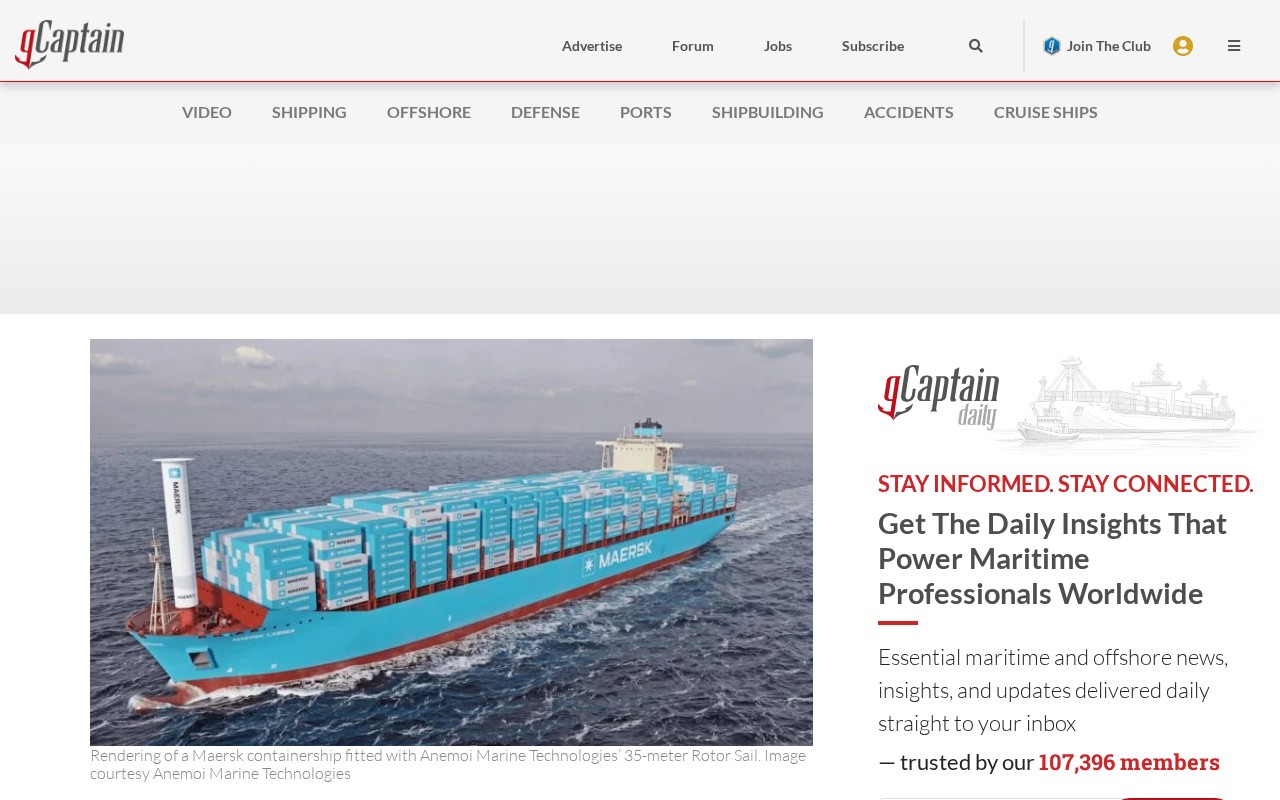
The Return of Wind Power: How Cargo Ships Are Embracing Wind Energy to Cut Emissions
Why are cargo ships embracing wind power again? Explore rotor sails, hard wing sails, and other modern wind-assisted technologies driving shipping's emission-cutting comeback.
Scarier Than AI Agents Taking Over the Internet: A CEO Cartel Monopolizing AI
A Hacker News piece argues that a CEO cartel monopolizing AI is scarier than agents taking over the internet. This article examines AI concentration, open source, and governance.
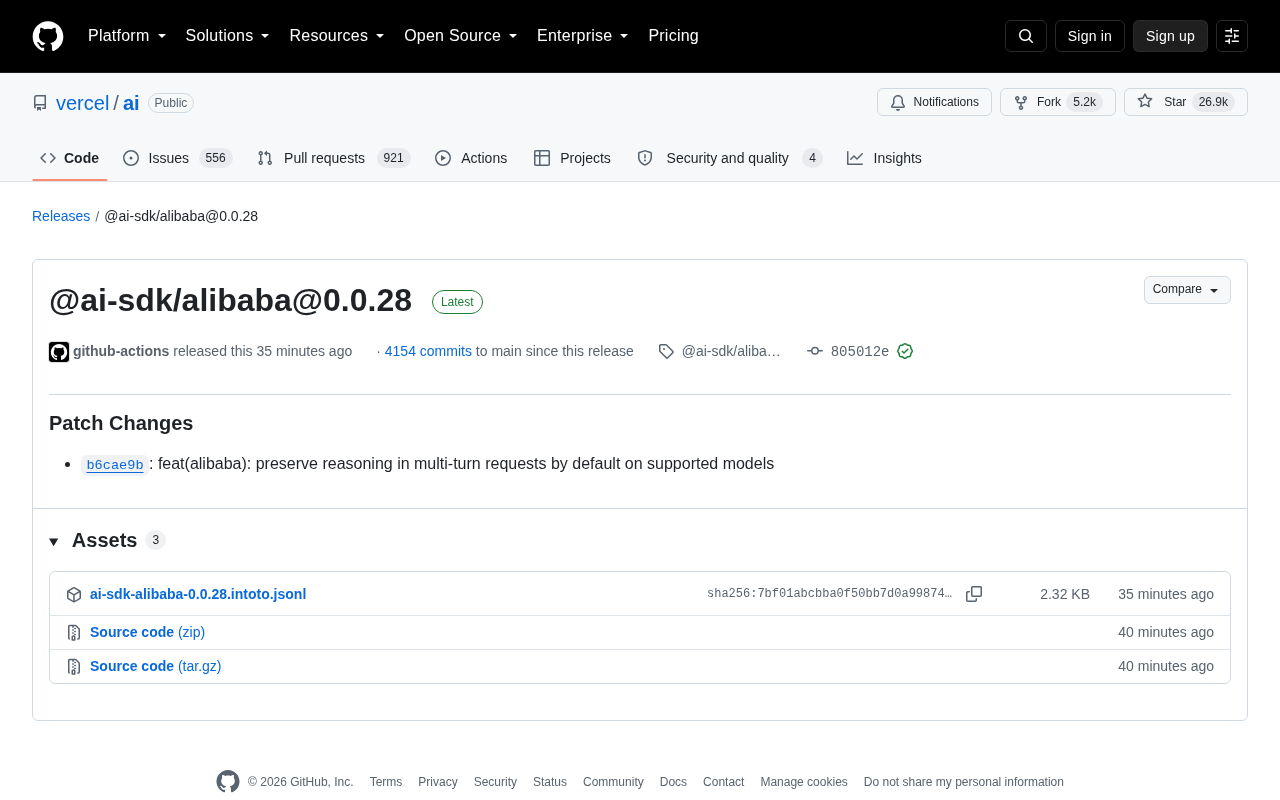
Vercel AI SDK Alibaba Adapter Update: Multi-Turn Conversations Now Preserve Reasoning Chain by Default
Vercel AI SDK's @ai-sdk/alibaba adapter v0.0.28 now preserves reasoning chain by default in multi-turn conversations on supported models, improving coherence.