Vercel AI SDK Vue Version 3.0.283 Released: A Patch Update Breakdown
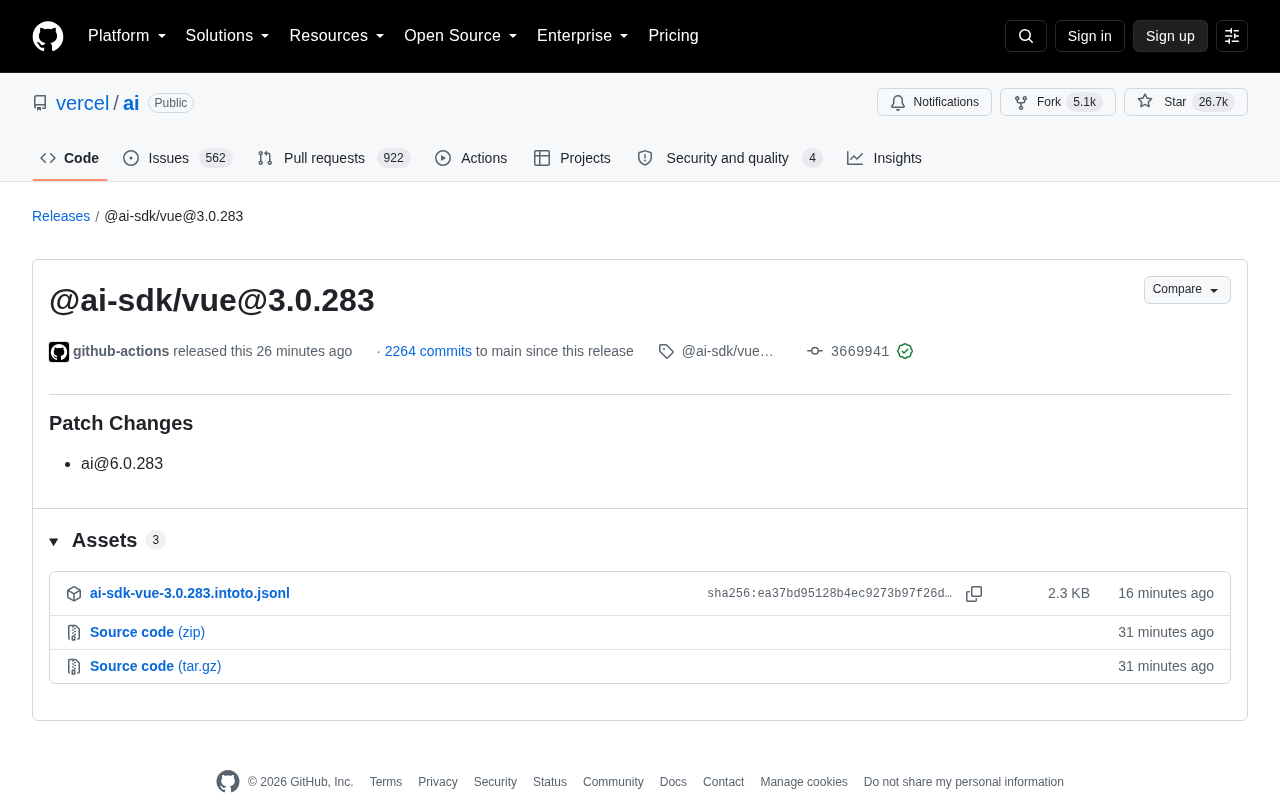
Vercel AI SDK releases Vue adapter patch 3.0.283, primarily syncing dependency to ai@6.0.283.
`@ai-sdk/vue@3.0.283` is a routine patch update from Vercel's official AI SDK, with the primary change being alignment of the underlying dependency to `ai@6.0.283` — no new features introduced. The SDK uses a monorepo multi-package strategy where React, Vue, and Svelte adapters maintain independent version lines but sync patch increments with the core library. With ~26.7k GitHub stars and active maintenance, the SDK offers unified streaming, chat state management, and tool calling for frontend frameworks. For production developers, reviewing the core changelog before upgrading is advised; breaking change risk is low, but a disciplined dependency update process remains best practice.
Vercel's officially maintained AI SDK recently released @ai-sdk/vue@3.0.283. This is a patch-level update, published automatically via GitHub Actions with a verified GPG signature to ensure the trustworthiness of the release source.
What's in This Release
Based on the release notes, the primary change in @ai-sdk/vue@3.0.283 is syncing the dependency to ai@6.0.283. In other words, this update is a cascading release driven by an upstream core package upgrade, rather than the introduction of any standalone new features.
For developers building AI applications within the Vue ecosystem, patch releases like this typically indicate bug fixes, dependency alignment, or stability improvements — making it generally safe to follow along with the upgrade.
The version numbers themselves are worth noting: the Vue adapter package sits at 3.0.x, while the core ai package has already reached 6.0.x. This reflects Vercel AI SDK's monorepo multi-package management strategy — each sub-package (framework adapters for React, Vue, Svelte, etc.) maintains its own independent major version line, while patch versions increment in sync with the core library.
Monorepo is a management strategy where multiple related packages or projects are housed in a single code repository, typically used alongside tools like pnpm workspaces, Turborepo, or Nx. Vercel AI SDK adopts this structure, meaning
@ai-sdk/vue,@ai-sdk/react,@ai-sdk/svelte, and other framework adapter packages share the same repository as the coreaipackage. When the core package fixes a bug or adjusts an internal API, the CI/CD pipeline can trigger a unified version sync release across all dependent packages, ensuring consistency throughout the SDK ecosystem. The design of independently incrementing version numbers allows framework adapters to introduce breaking changes at their own pace, without being forcibly tied to major version bumps in the core package.
Vercel AI SDK's Position in the Ecosystem
Vercel AI SDK is one of the more mainstream tooling libraries in the frontend and full-stack AI development space. As of this release, its GitHub repository has accumulated approximately 26.7k stars and 5.1k forks, with over 2,264 commits on the main branch up to this release — reflecting a highly active community.
The SDK's core value lies in providing a unified way to integrate AI capabilities across different frontend frameworks, including streaming responses, chat state management, and tool calling. @ai-sdk/vue is its official adapter package for Vue developers, enabling Vue projects to interface with large model APIs in a near-native experience.
The SDK's streaming response capability is built on the Web Streams API and Server-Sent Events (SSE), allowing generated content from large models to be pushed to the frontend incrementally in real time, without waiting for a complete response. Tool Calling enables the model to trigger predefined functions or external APIs during generation, commonly used in scenarios requiring structured output such as search, computation, and database queries.
@ai-sdk/vuewraps these capabilities as Vue Composables (such asuseChatanduseCompletion), allowing developers to call them directly inside<script setup>. Reactive state automatically binds to the template, aligning naturally with Vue's development conventions.
What Developers Should Do
For production projects, it's recommended to review the changelog for ai@6.0.283 before upgrading to confirm whether the patch touches any features you're actively using. Since this is a patch release, the likelihood of breaking changes is low — but keeping dependencies aligned remains a sound practice for maintaining project health.
For teams currently evaluating their tech stack, the high release cadence of Vercel AI SDK (evident from its commit and version iteration frequency) demonstrates active maintenance, while also signaling that developers should establish a stable dependency update process to avoid version fragmentation.
Summary
@ai-sdk/vue@3.0.283 is a routine patch update whose core change is syncing to ai@6.0.283. It doesn't introduce any significant new functionality, but it reflects the continuous, stable maintenance state of Vercel AI SDK. For developers working with Vue and AI, staying in sync with official releases is a prudent choice for ensuring stability and the assurance of verified release signatures.
Related articles

RTX 5090 Stock Crisis: Why Third-Party Sellers Are Charging $9,500
NVIDIA's RTX 5090 has vanished from U.S. online retail, with third-party sellers asking up to $9,500. Here's how AI compute demand is driving GPU prices to extremes.
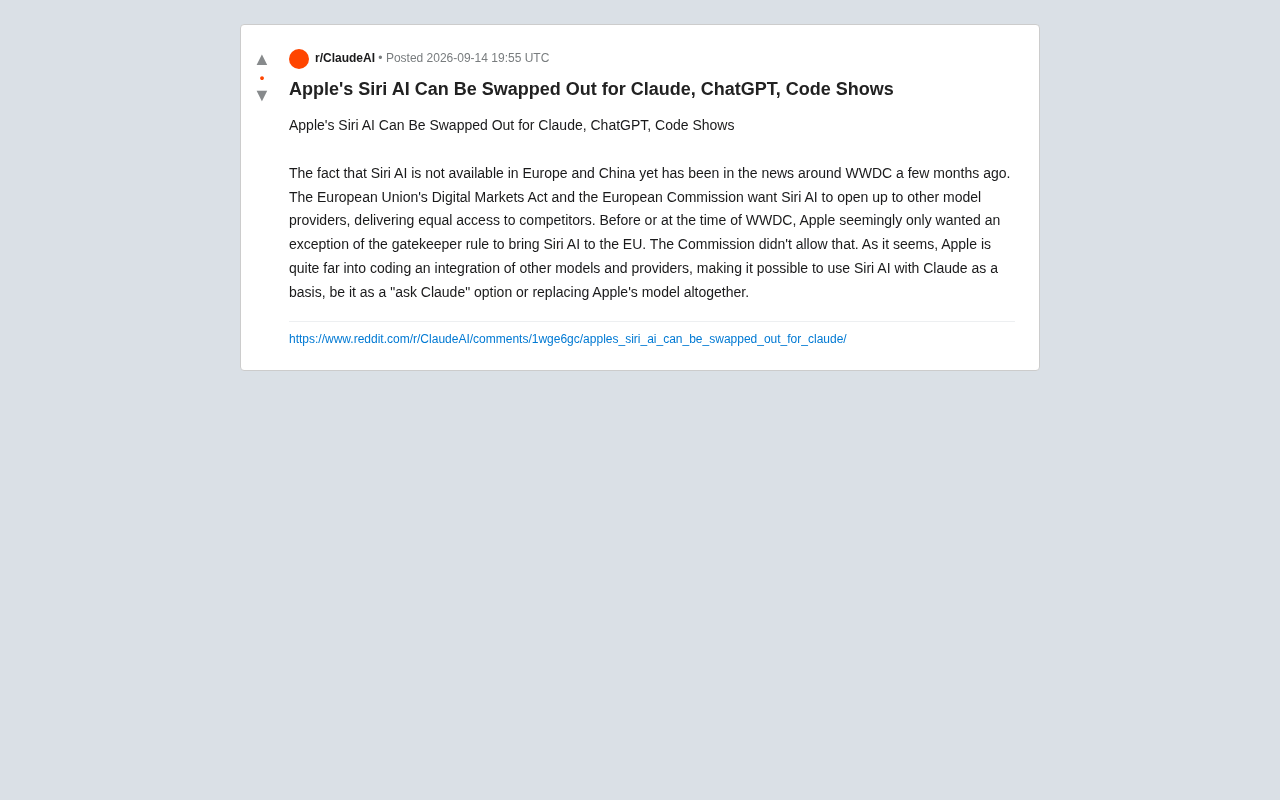
Apple Siri May Support Swapping in Claude and ChatGPT — Code Already Shows Signs
Leaked code shows Apple is developing third-party AI model integration for Siri, potentially allowing users to swap in Claude or ChatGPT under EU DMA pressure.
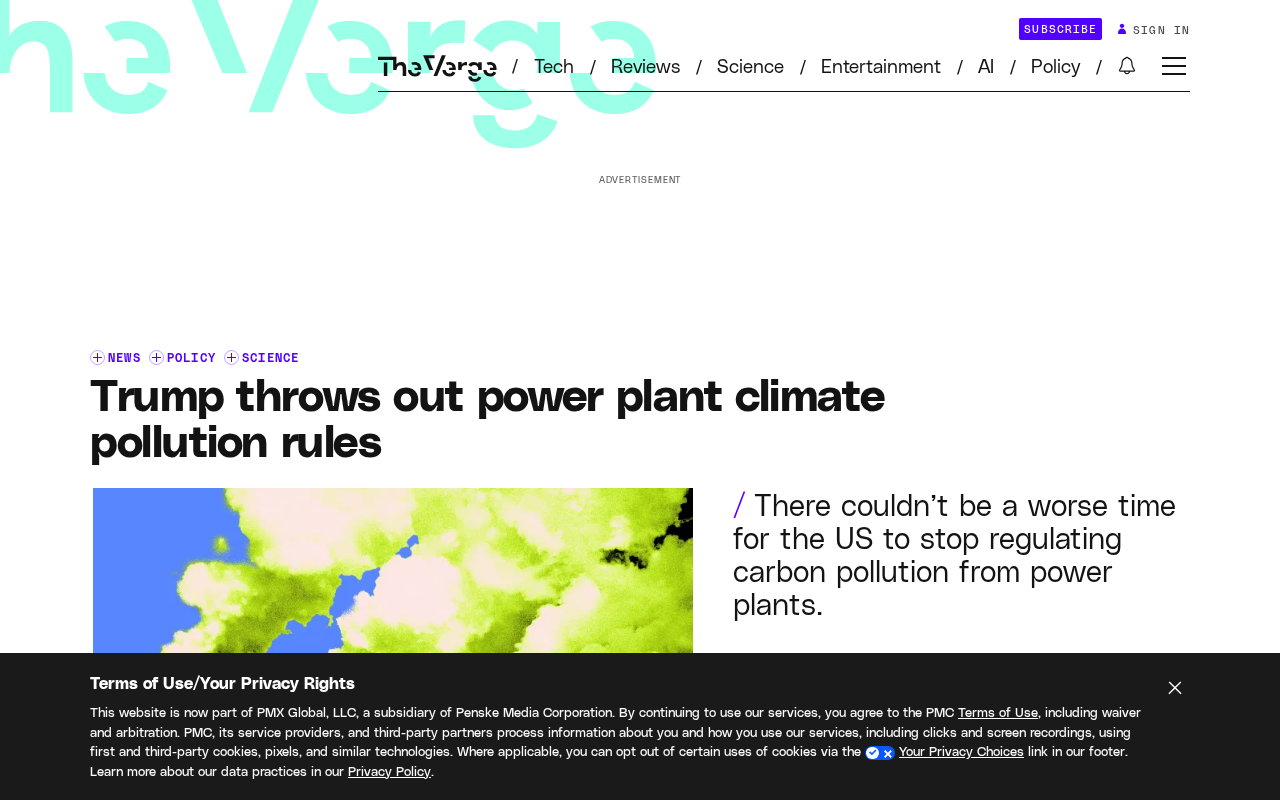
EPA Moves to Scrap Power Plant Greenhouse Gas Emission Standards Amid Surging AI Energy Demand
The EPA plans to eliminate all power plant greenhouse gas emission standards, just as AI, EVs, and manufacturing drive electricity demand higher — making U.S. power potentially far dirtier.