Vercel Makes Sandbox Egress Firewall Free for All: Network Boundaries Become the New AI Security Battleground
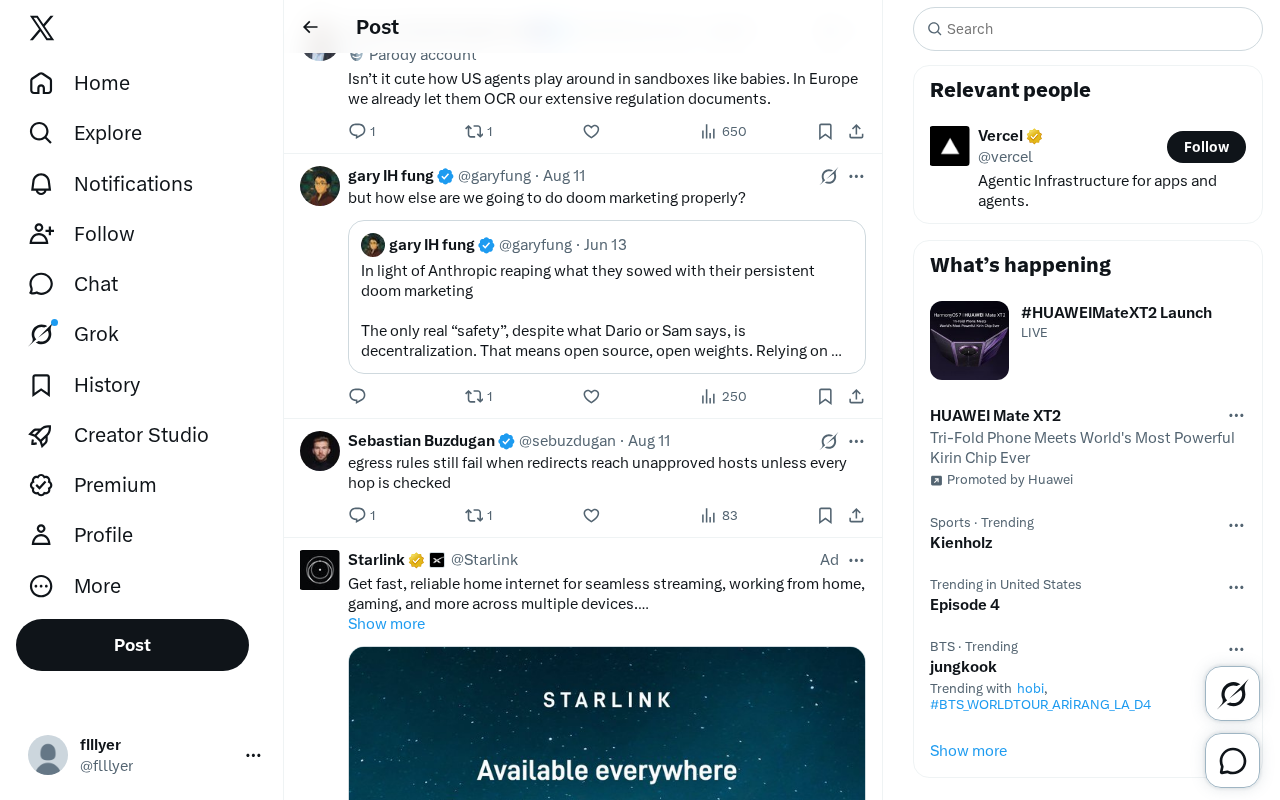
Vercel's free egress firewall signals that network boundaries are the new frontline in AI-era security.
Vercel has made its Sandbox egress firewall free for all plans, reflecting a critical shift in AI-era security. As untrusted and AI-generated code becomes the norm, runtime isolation alone can't prevent data exfiltration or lateral movement. Egress firewalls add a vital second layer of defense by controlling outbound network access. This move lowers the security bar for all developers building code execution environments.
Vercel's New Security Move
Vercel recently announced that its Sandbox Egress Firewall feature is now free for users on all subscription plans. While this may appear to be a simple product update, it reflects a deeper shift in infrastructure security for the AI era — when untrusted code floods execution environments at scale, runtime isolation alone is no longer enough. Network boundary control has become an indispensable layer of defense.
As Vercel put it in their announcement: "Vercel Sandbox goes beyond compute isolation. Recent security research has shown why: untrusted code must be contained at the network boundary, not just at the runtime level." This statement captures the core logic behind the entire update.
Why Runtime Isolation Is No Longer Enough
The Traditional Sandbox Approach: Compute Isolation
Historically, the core principle of sandbox technology has been compute isolation: using containers, virtual machines, or microkernels to separate untrusted code execution environments from the host system, restricting access to the file system, memory, and processes. This approach has been highly effective in traditional scenarios.
Sandbox technology has evolved through several stages. Early chroot jails simply changed a process's root directory, offering very limited isolation. Later, Linux containers (LXC/Docker) leveraged kernel namespace and cgroup mechanisms to achieve isolation across processes, networking, file systems, and more. Higher-security solutions like gVisor (Google's open-source application kernel) intercept system calls in user space to reduce the attack surface, while Firecracker (AWS's lightweight virtual machine monitor) provides near-bare-metal VM isolation via microVMs while maintaining millisecond-level startup times. Vercel Sandbox is built on similar lightweight isolation technology, creating independent isolated environments for each code execution. These technologies are quite mature when it comes to "defending inward," but they were primarily designed to prevent malicious code from escaping to the host system — not to control the code's outbound communication.
However, with the rise of AI Agents, code execution platforms, and online compilers, more and more scenarios require directly running untrusted code provided by users or even generated by AI. The typical risk with such code isn't about what local resources it can read or write — it's about what requests it can make to external networks.
The Network Boundary Is the Real Risk Point
Consider this scenario: a piece of code injected with malicious logic is locked inside a sandbox and can't damage the host system, but it can silently send requests to an attacker-controlled server, exfiltrating stolen API keys, environment variables, or user data. Alternatively, it might use your compute resources to launch outbound attacks, mine cryptocurrency, or send spam requests.
This is far from a theoretical concern. Egress-based attacks have been increasingly common in recent security incidents. In the 2021 Codecov supply chain attack, attackers tampered with scripts in CI/CD pipelines, silently sending customers' environment variables and secrets to external servers via HTTP requests — going undetected for months. In 2023, multiple NPM packages were found to contain malicious code that automatically exfiltrated users' SSH keys and AWS credentials upon installation. In AI code execution scenarios, these risks are further amplified — large language models may generate code containing data exfiltration logic due to Prompt Injection, and developers in automated pipelines rarely review every line of AI-generated scripts. Recent research reports from security firms like Trail of Bits and Wiz have specifically highlighted this attack vector.
This is the risk of egress traffic. Isolating compute resources alone cannot prevent code from "talking outward." Multiple recent security studies point to the same conclusion: data exfiltration and lateral movement typically occur at the network boundary, not within the runtime itself. This is precisely why Vercel emphasizes that untrusted code "must be contained at the network boundary."
What the Egress Firewall Solves
An egress firewall acts as a controlled checkpoint between the sandbox and the external network, governing which external addresses, ports, and protocols code inside the sandbox can access.
From a technical implementation perspective, the core mechanism of an Egress Firewall is to intercept and policy-match all TCP/UDP connections originating from the sandbox at the network layer. In Linux environments, this is typically achieved through iptables/nftables rules, eBPF programs, or transparent proxies. In allowlist mode, the firewall denies all outbound connections by default, only permitting traffic that matches predefined rules (destination IP/CIDR, port, protocol, or even domain name). More advanced implementations also support application-layer awareness — for example, allowing only HTTPS requests to specific domains while blocking covert channels like DNS tunneling. Unlike traditional Ingress Firewalls (which prevent external attacks from entering), egress firewalls focus on "inside-to-outside" data flow — the primary pathway for data exfiltration and C2 (Command and Control) communication.
For developers running AI-generated code or third-party untrusted code, this means:
- Default-deny posture: You can set up an allowlist mechanism that only permits code to access explicitly approved external services, blocking everything else;
- Data exfiltration prevention: Even if the code itself is compromised or contains malicious logic, it cannot transmit sensitive data to unauthorized destinations;
- Lateral movement containment: Prevents a compromised sandbox from becoming a stepping stone for attackers to infiltrate internal networks or other services.
Making what was previously an enterprise-grade security feature free for all plans effectively lowers the barrier for small teams and individual developers to build secure code execution environments.
The Security Logic Shift in the AI Era
From "Trusted Code" to "Untrusted Code" as the Default Assumption
The most noteworthy aspect of this update is the industry mindset shift it reflects. In an era where AI Agents can autonomously write and execute code, the assumption that "code is trusted by default" is collapsing. When your application allows a large language model to generate and run code, or accepts user-uploaded scripts, you are essentially executing a program of unknown origin on your own infrastructure.
Under this premise, security must follow the principle of defense in depth: compute isolation is the first layer, network egress control is the second, and neither can be omitted. Defense in depth is a security strategy originating from the military domain, promoted in the information security field by the U.S. National Security Agency (NSA). Its core philosophy is that no single security measure is foolproof, so independent protective mechanisms must be deployed at multiple levels, ensuring that even if an attacker breaches one layer, they'll be stopped by the next. In cloud-native security architectures, this typically manifests as multiple lines of defense: code auditing (development phase) → image scanning (build phase) → runtime isolation (execution phase) → network policies (communication phase) → log monitoring (detection phase). Zero Trust Architecture further advances this philosophy, advocating "never trust, always verify" regardless of whether requests originate internally or externally. By bundling the egress firewall with the sandbox, Vercel is delivering a textbook implementation of defense in depth on a PaaS platform — rather than only doing half the job.
Platforms Taking on Greater Security Responsibility
Making security features free also signals a competitive trend among cloud and developer platforms. As AI applications drive surging demand for security infrastructure, platform providers increasingly tend to offer critical security capabilities as default features rather than paid add-ons — reducing users' security incident risk while enhancing the platform's attractiveness and trustworthiness.
This trend is clearly visible across the industry. Cloudflare made DDoS protection free for all users in 2023; GitHub has offered Dependabot security alerts and code scanning to all public repositories for free since 2023; and AWS has gradually built GuardDuty's basic threat detection capabilities into more services. Multiple forces drive this trend: first, the externality of security incidents — a single user's vulnerability can damage the entire platform's reputation and infrastructure stability; second, regulatory pressure, with legislation like the EU's Cyber Resilience Act requiring platforms to assume more "secure by default" responsibility; and third, competitive business logic, as democratizing security capabilities has become a key differentiator for platform competition and user retention.
For developers, this is undeniably a positive development — security shouldn't be a luxury reserved only for paying customers.
Practical Advice for Developers
If you're building an AI product that involves code execution — whether it's a code assistant, an automated Agent, or an online IDE — you should take the following points seriously:
- Don't assume isolation equals security: Containers or sandboxes only solve half the problem. Outbound traffic requires equally strict control.
- Use allowlists, not blocklists: Explicitly defining which external access is permitted is far more reliable than trying to enumerate every possible dangerous behavior.
- Watch the exposure surface of sensitive credentials: Once environment variables, secrets, and tokens fall into the hands of malicious code inside a sandbox, the egress firewall may be your last line of defense.
- Leverage platform capabilities: Solutions like Vercel Sandbox that already bundle compute isolation with network firewalling can significantly reduce the cost of building your own security infrastructure.
Conclusion
Vercel making its Sandbox egress firewall free for all users is, on the surface, a move to democratize a product feature. At a deeper level, it's a clear statement about the security paradigm of the AI era: in a world where untrusted code is the norm, network boundary control is just as important as runtime isolation. For every team integrating AI capabilities into production environments, this is a reminder worth remembering — the center of gravity in security is shifting from "what code can do" to "where code can connect."
Related articles
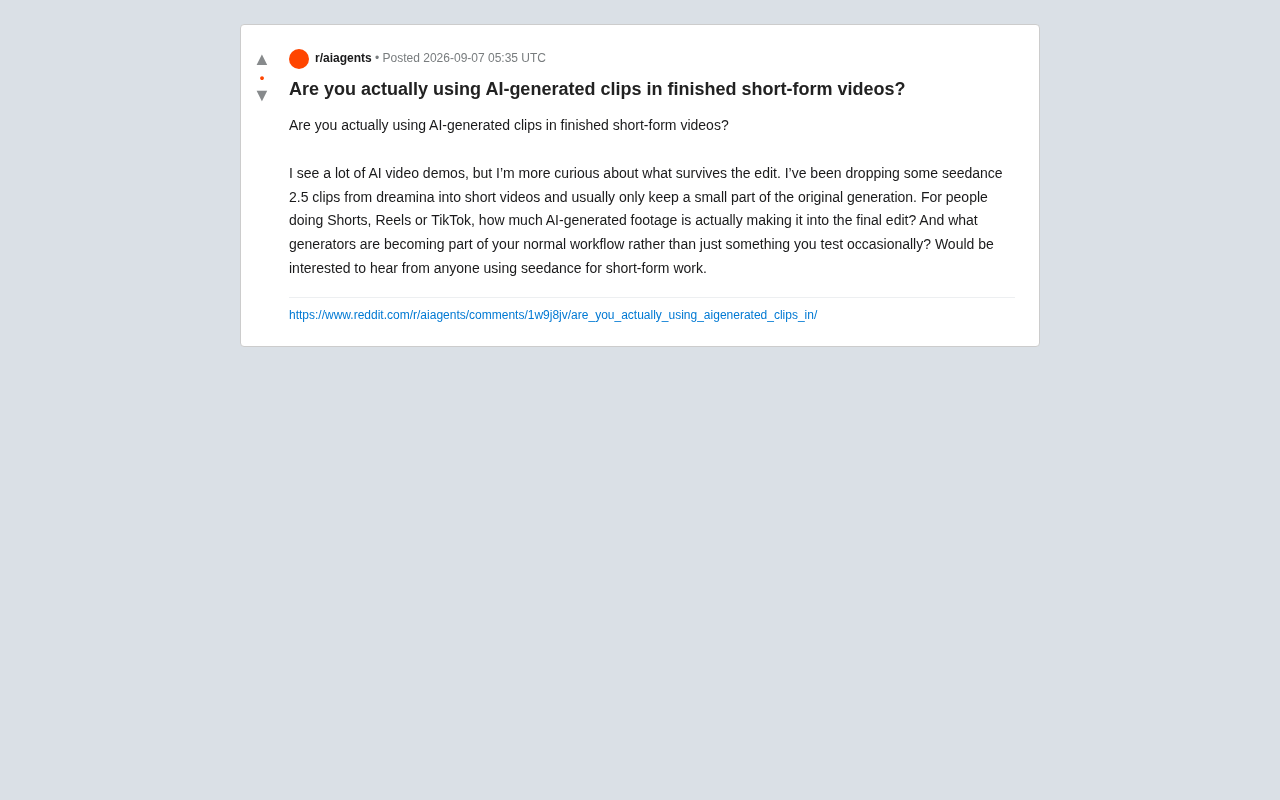
How Short-Form Video Creators Are Using AI Video Generation Tools
Exploring the real-world application of AI video generation tools in short-form video creation. From Seedance to Runway, how do creators integrate AI assets? Revealing the gap between demos and production use.

Home Data Center Setup Guide: A Complete Self-Hosted Private Cloud Implementation
Deep dive into building a home data center: hardware selection, software architecture, cost analysis, and operational challenges. From data sovereignty to technical implementation, build your private cloud infrastructure and control your digital assets.
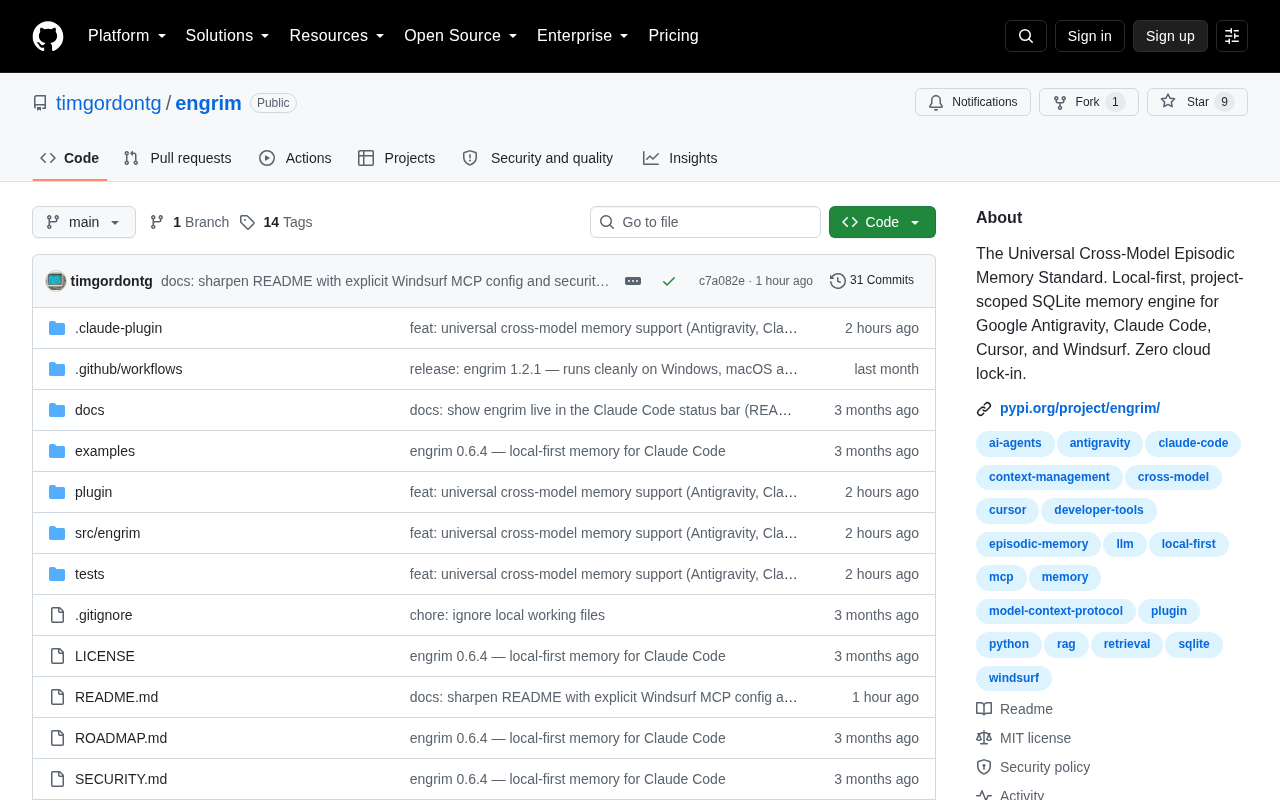
Engrim: A Local Memory Engine Solution for AI CLI Tools
Engrim is an open-source, local-first SQLite memory engine built for AI CLI tools like Claude Code and Aider, solving context loss while keeping data private.