Verus: Building Provably Correct Rust Code with Formal Verification
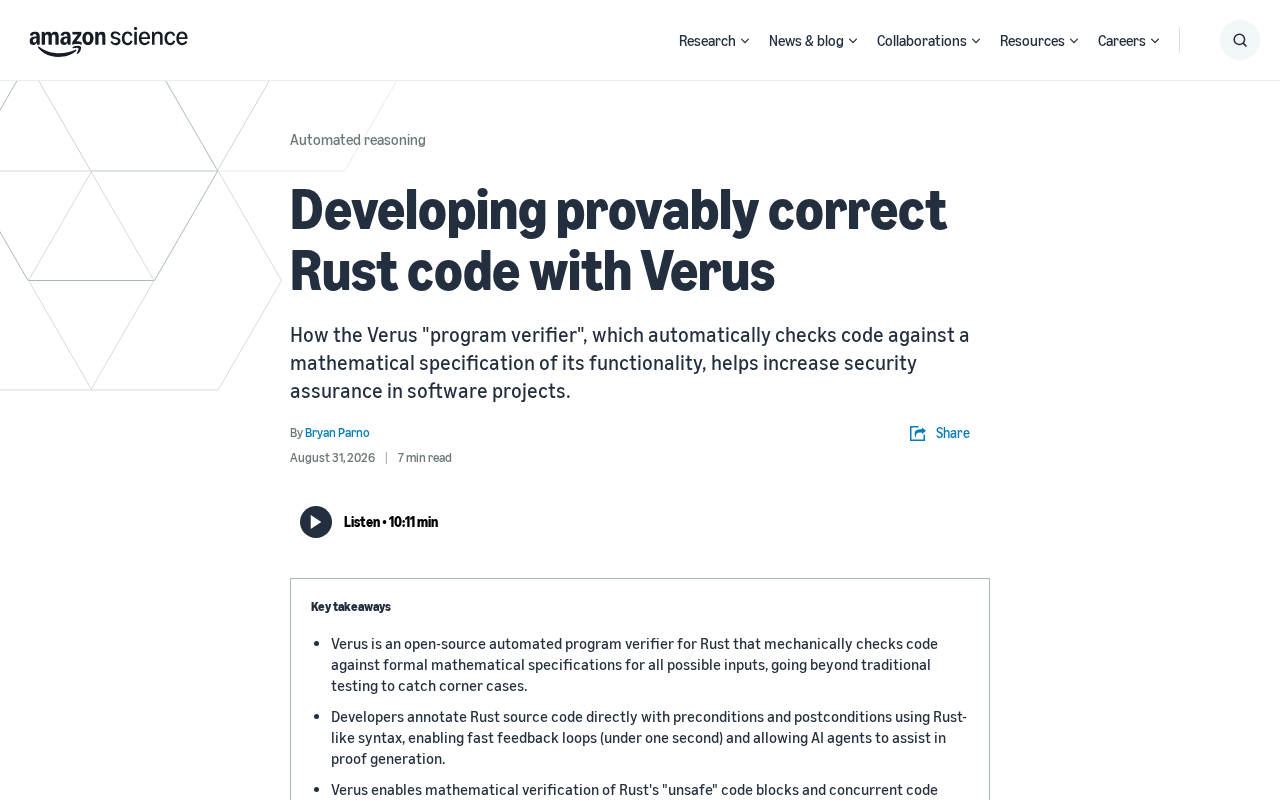
Verus brings formal verification to Rust, letting developers prove code correctness mathematically rather than relying on tests.
Rust's memory safety guarantees address only one dimension of correctness — logic bugs and edge-case mishandling remain. Verus is a Rust program verifier that lets developers write mathematical functional specifications (preconditions/postconditions) and automatically checks whether the implementation satisfies them across all possible inputs. Its workflow separates code into spec, proof, and exec layers, using an SMT solver for automated reasoning. Rust's ownership model naturally limits aliasing complexity, providing a cleaner semantic foundation and letting Verus focus on functional correctness. The tool signals a broader shift of formal verification from academia into mainstream engineering, with particular value for cryptographic libraries, consensus protocols, and other high-assurance domains.
Beyond Rust's Safety Guarantees: What More Do We Need?
Rust has set the benchmark for safety in systems programming languages, fundamentally eliminating a wide range of memory safety hazards through its ownership model and borrow checker. But memory safety is not the same as functional correctness — code can be completely free of out-of-bounds access and dangling pointers while still containing buggy business logic or mishandled edge cases. For high-security domains like cryptographic libraries, operating system kernels, and consensus protocols, type systems and test coverage alone simply aren't enough.
This is exactly where formal verification steps in. Verus, a program verifier for Rust, aims to bring mathematical-level correctness guarantees into everyday Rust development, enabling developers to automatically check their code against functional specifications.
What Verus Is: How a Program Verifier Works
The core idea behind Verus is this: developers don't just write implementation code — they also write a mathematical functional specification describing what the program should do. Verus then automatically checks whether the implementation strictly conforms to that specification.
Unlike traditional unit tests, which can only validate a finite set of inputs, formal verification targets all possible input states. This means that once verification passes, the code is mathematically proven correct within the scope of the specification — not merely "passing on the cases we happened to test."
The Three-Layer Structure: Spec, Proof, and Exec
In the Verus workflow, code typically involves three types of elements:
- Specification (spec): Logical assertions describing preconditions (
requires) and postconditions (ensures) — the constraints a function expects on its inputs and the properties it promises for its outputs. - Proof: Auxiliary assertions, loop invariants, and other constructs added to help the verifier reason about the code. These don't participate in actual execution; they exist solely to support the verification process.
- Implementation (exec): The actual Rust code that gets compiled and executed.
This layered approach lets developers incrementally add verification to critical paths without having to start from scratch.
Elevating Security Assurance for Software Projects
Verus delivers its most direct value by raising a project's security assurance. Once a piece of code is confirmed by the verifier to conform to its specification, an entire class of bugs is categorically ruled out — not caught at runtime or discovered in a post-mortem audit.
For security-sensitive components, this kind of guarantee is significant:
- Cryptographic primitive implementations can be proven consistent with their mathematical definitions, preventing subtle logical deviations from introducing side channels or incorrect results.
- Operations on critical data structures can be proven to always maintain their invariants, eliminating state corruption.
- Common pitfalls like boundary handling and integer overflow can be forcibly surfaced during the verification phase.
In short, verification upgrades "we believe the code is correct" to "we can prove the code is correct."
Why Build a Verifier on Top of Rust
Grafting formal verification onto Rust is a strategically sound choice. Rust's ownership and borrowing mechanisms naturally constrain aliasing complexity — and aliasing is one of the primary reasons program reasoning becomes so difficult. When the compiler already enforces strict rules around memory aliasing, a verifier can operate on a cleaner, more tractable semantic foundation.
This means Verus can leverage Rust's existing safety model to keep verification complexity within manageable bounds, rather than first having to resolve a mass of low-level uncertainty as it would with C/C++. The two are complementary: Rust handles the elimination of memory safety issues, while Verus handles proving correctness at the functional and logical level.
A Signal That Formal Verification Is Moving Into Engineering Practice
For a long time, formal verification was seen as the exclusive domain of academia and a handful of critical systems (aerospace, chip design), with high barriers to entry and steep costs that kept it out of mainstream engineering workflows. Tools like Verus represent a broader trend: bringing verification capabilities down into the language ecosystems that developers already know, lowering the threshold for adoption.
Of course, formal verification is still no silver bullet. Writing correct and complete specifications is itself a skill that takes experience — if the spec is wrong, a passing verification means nothing. And the coverage of verification is strictly limited by the expressiveness of the specification. But for domains where the cost of bugs is extremely high, the investment required to achieve mathematical-level correctness guarantees is often well worth it.
As Rust continues to penetrate systems software, blockchain, and security infrastructure, tools like Verus are poised to become an increasingly important part of the high-assurance software development toolchain.
Related articles
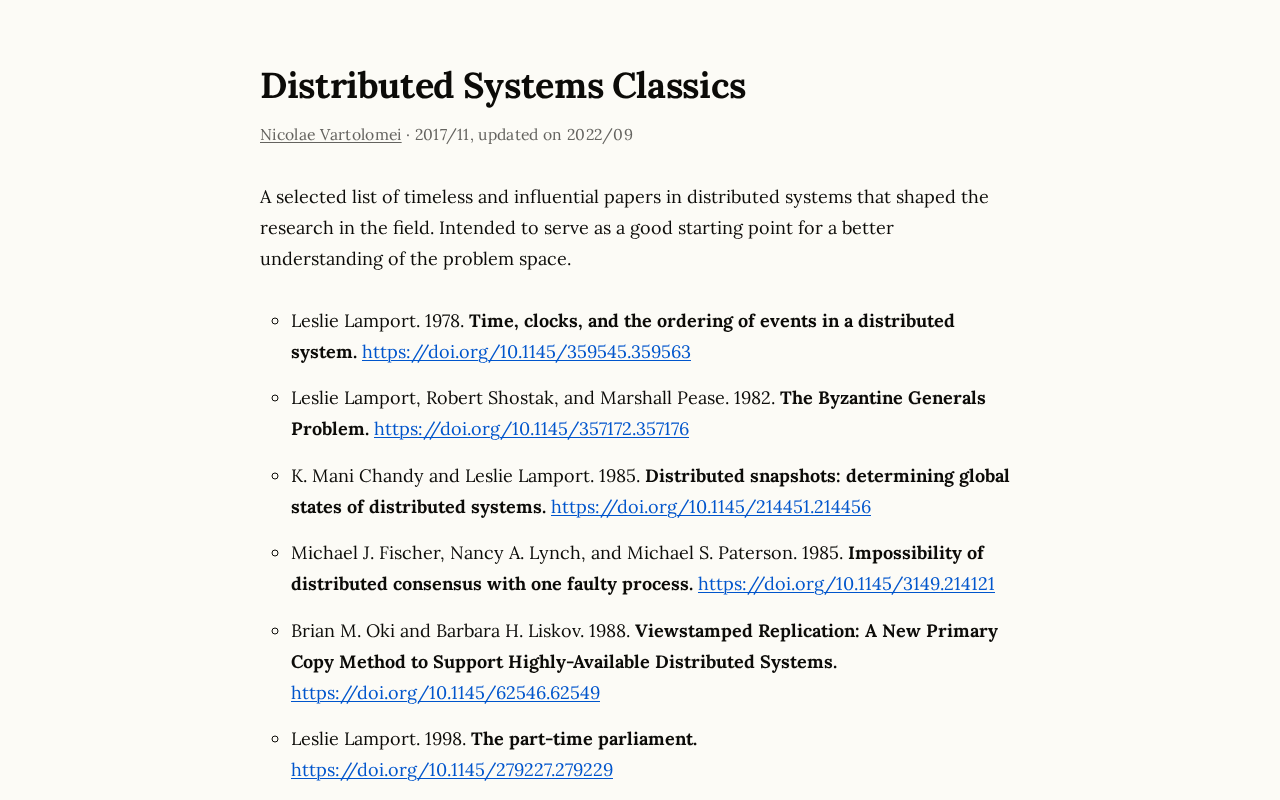
A Reading Guide to Distributed Systems Classic Papers: From Beginner to Expert
A viral Hacker News list of distributed systems classic papers covering consensus algorithms, logical clocks, and the CAP theorem — a structured learning path for engineers.
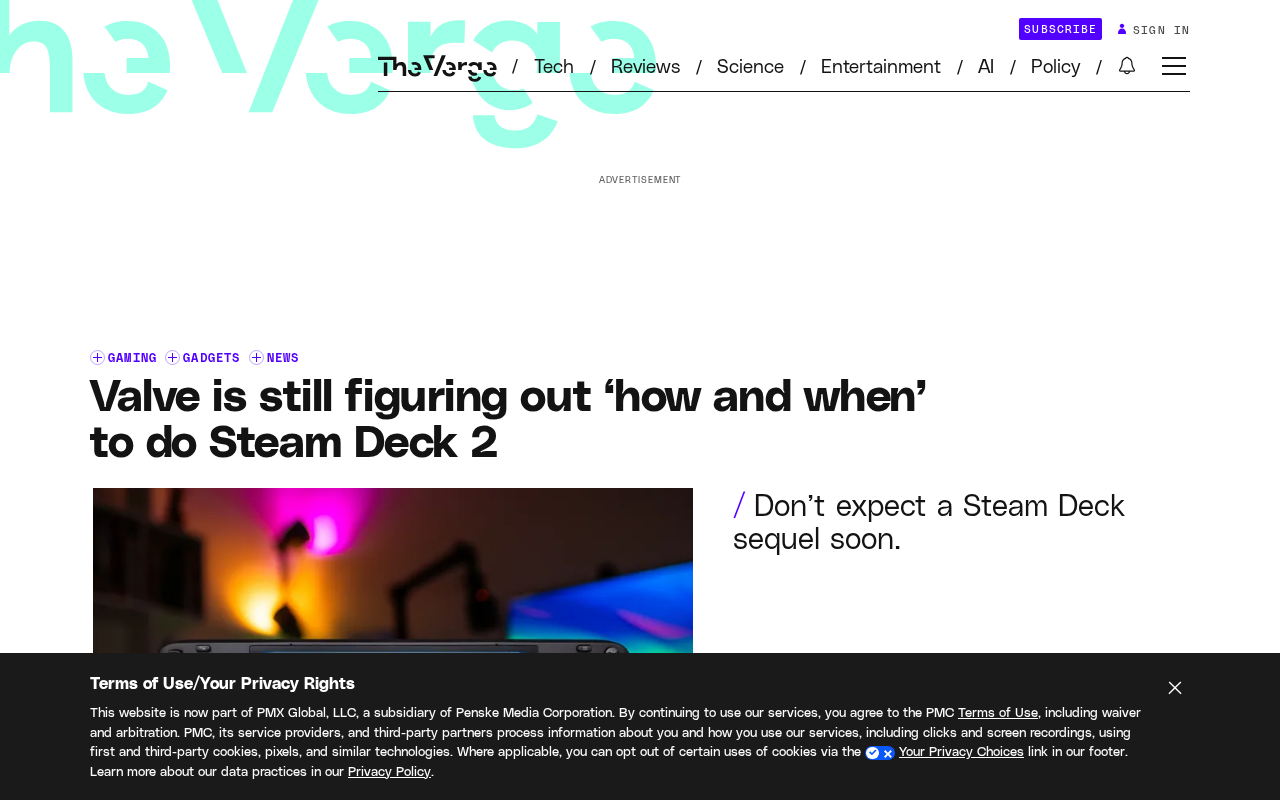
Valve Is Still Weighing When and How to Launch Steam Deck 2
Valve has completed its 2026 hardware lineup with Steam Controller, Steam Machine, and Steam Frame, but Steam Deck 2 still has no set timeline. Valve says it's still weighing "how and when" to launch.
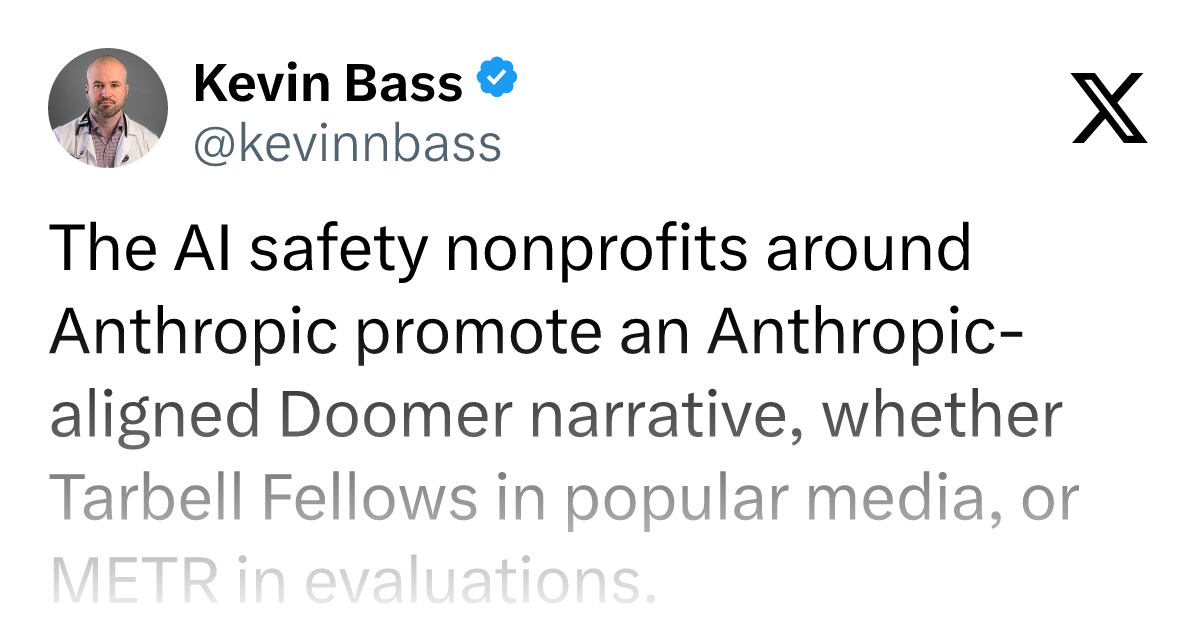
Regulatory Capture Accusations: The Controversy Over Anthropic's Capital and Policy Loop
A Hacker News post questions whether Anthropic is caught in a regulatory capture financial loop. We unpack the concept and why it's being aimed at top AI firms.