Viktor Code: An AI Coding Agent That Understands Your Business
Viktor Code aims to extend coding agents from understanding codebases to understanding company business and decision logic.
Viktor Code is a "business outcome-driven" coding agent that earned 69 votes and ranked #13 on Product Hunt. Its differentiator is understanding not only code repositories but also the company's customers, business metrics, and decision logic. Users provide business goals instead of tickets, and the agent decomposes them into technical and non-technical tasks, creating Pull Requests on GitHub, GitLab, or Bitbucket for human review. It natively integrates with Slack, Teams, and Discord, with projects owned by teams rather than individuals, and offers free-to-start credits up to $100. The article also notes that its underlying model and depth of business context understanding remain undisclosed.
From Code Repository to Business Panorama
Most AI coding tools focus on a single goal: understanding your codebase. They can complete functions, fix bugs, and generate tests, but their vision stops at the technical level. Viktor Code takes a completely different approach—it doesn't just aim to understand your repository, but to understand your company: your customers, your business metrics, and the decision-making logic behind every piece of work.
This product, which earned 69 votes and ranked #13 on Product Hunt, positions itself as a "business outcome-driven" coding agent. Instead of giving it a ticket, you give it a business goal. It automatically decomposes the goal into technical and non-technical tasks, creates a Pull Request on GitHub, GitLab, or Bitbucket, and hands it back to you for review.
Why "Understanding the Company" Matters More Than "Understanding the Code"
The traditional working model of coding agents is: you describe a technical requirement, and it generates code. This model carries an implicit assumption—that the person making the request has already completed the translation from business problem to technical solution. But in reality, this translation process is often the most valuable and most easily overlooked part.
Viktor Code attempts to automate this translation step as well. According to its official description, when you provide a business outcome (such as "improve the efficiency of a certain conversion step"), it can decompose it into technical and non-technical tasks. This means it may not only modify code, but also generate configuration changes, documentation updates, or collaboration plans. This "business-to-technology" mapping capability extends its positioning beyond a simple coding assistant—it's more like a project-level execution agent.
"Business-to-technology translation" corresponds to the core of Requirements Engineering in software engineering: transforming stakeholders' business goals into executable, verifiable technical specifications. Traditionally, this step is handled by product managers, business analysts, or senior engineers, relying on interviews, documentation, and domain knowledge. An AI agent attempting to automate this process is essentially performing "goal decomposition" and "task planning," requiring both an understanding of business semantics and the ability to model the technology stack. This is also the most critical capability dividing line as current coding agents evolve from "code completion" to "project-level execution."
Team Collaboration First, Not a Personal Toy
One notable design choice: Viktor Code projects belong to the entire team, not individual developers. It natively integrates with Slack, Microsoft Teams, and Discord, allowing team members to interact directly with the agent and view progress within these collaboration platforms.
This choice suggests the product team's understanding of workflows—code output is not isolated; it needs to be tightly coupled with requirement discussions, progress updates, and review feedback. Embedding the agent into the team's existing communication channels rather than building a separate interface lowers the barrier to entry and allows non-technical members to participate. The official slogan "Anyone can code now" may be somewhat exaggerated, but it does point to a trend: AI agents are blurring the boundaries between technical and non-technical roles.
Multi-Platform Code Hosting Support
Viktor Code supports the three major code hosting platforms—GitHub, GitLab, and Bitbucket—covering the choices of the vast majority of development teams. It works by creating Pull Requests rather than pushing code directly, which preserves the human review step and allows teams to continue using their existing code review processes.
From a product design perspective, this is a pragmatic strategy. Directly pushing code would raise trust and risk issues, while the PR model allows teams to evaluate AI output within familiar toolchains and gradually build trust. Notably, the official materials do not disclose its underlying model, context window size, or specific technical implementation details, so we cannot assess how far its "business understanding" capability actually goes.
The Pull Request (PR) model is widely adopted by AI coding tools because it naturally offers several engineering governance advantages: changes are submitted on separate branches without directly affecting the mainline; every change has a traceable diff record; and reviews, comments, and CI pipelines can be reused on the PR. For AI-generated code, the PR also provides a "human-in-the-loop" safety valve—teams can review line by line according to existing standards without having to design a separate trust mechanism for AI. GitHub, GitLab, and Bitbucket are largely aligned in their PR/Merge Request concepts, which is also the prerequisite for tools to unify workflows across platforms.
Free to Start with a Commercialization Path
Viktor Code adopts a free-to-start model with credits up to $100. This lowers the cost of trial and error, making it suitable for teams to evaluate whether the product fits their business processes without committing to payment.
Judging from Product Hunt data, 69 votes and 10 comments ranked it #13 among products of the day, indicating moderate popularity. For a developer tool targeting team workflows, this data shows it has attracted some attention but has not yet generated large-scale community discussion. Considering the inherent complexity of the "business-aware coding agent" concept, whether the actual product experience can deliver on its promises still needs more user feedback to verify.
Common Challenges Facing Such Products
"Making AI understand business context" is a highly attractive vision, but the barrier to implementation is also high. Acquiring business knowledge typically depends on deep integration with internal documents, communication records, and metrics systems, and the structuring and permission management of this data are challenges in themselves.
Viktor Code's demonstrated capabilities are currently concentrated mainly on code hosting and team collaboration. Whether it can truly incorporate customer feedback, business metrics, and decision records into its context is not specifically explained in the official materials. This may be a direction that needs to be gradually verified through use. For interested teams, it's advisable to start with small, well-defined business goals, observe the reasonableness of the agent's task decomposition, and then decide whether to expand usage.
Business context is typically scattered across CRMs, ticketing systems, metrics dashboards, meeting notes, and instant messaging records, with heterogeneous formats and complex permission boundaries. For an AI agent to truly "understand the company," it needs to solve a series of problems including context injection, retrieval-augmented generation (RAG), data anonymization, and access control—not just connecting to code repositories. In addition, business goals are often vague and change over time, and whether the tasks decomposed by the agent are reasonable is difficult to automatically verify like unit tests, which adds extra difficulty to evaluation and iteration.
One-line Summary
Viktor Code attempts to extend coding agents from understanding codebases to understanding company business and decision logic.
Paragraph Summary
Viktor Code is a "business outcome-driven" coding agent that earned 69 votes and ranked #13 on Product Hunt. Its differentiator is that it not only understands code repositories but also attempts to understand the company's customers, business metrics, and decision logic. Users provide business goals rather than tickets, and the agent decomposes them into technical and non-technical tasks, creating Pull Requests on GitHub, GitLab, or Bitbucket for human review. The product natively integrates with Slack, Teams, and Discord, with projects belonging to teams rather than individuals, and offers free-to-start credits up to $100. The article also notes that its underlying model and depth of business context understanding have not been disclosed, and whether it can deliver on its promises still requires user verification.
Related articles

GLM-5.4 Coding Test 4.6x Slower? Unpacking the Loop Transformer Architecture
GLM-5.4 coding test took 431 minutes vs. competitor's 109, 4.6x more steps. We analyze its Loop Transformer architecture, KingBench4 score of 55.3, Max tier's 1.04M token cost, and tier selection advice.

Zhipu GLM-5.4 Quietly Released: A Debut for Loop Transformer Architecture
Zhipu GLM-5.4 quietly lands in coding plans: first Loop Transformer flagship with 750B params, 1M token context, AIM math up from 19.2 to 30.4, and native vision for coding from screenshots.
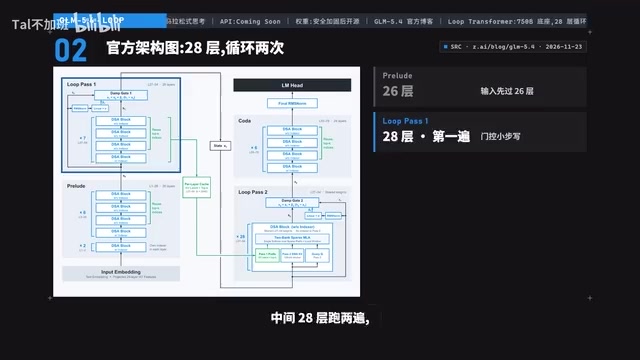
GLM-5.4 Releases 750B Model: Recurrent Transformer Architecture and the 30B Benchmark Controversy
GLM-5.4 releases a 750B model with a recurrent Transformer architecture that runs the same layers twice, claimed to match 2T–3T scale. But the benchmark table tests a 30B small model, not the main model. We break down the architecture changes, benchmark data, four demos, and open-source timeline.