VINC: A Full-Pipeline AI Filmmaking Tool, From Script to Final Cut in One Place

VINC integrates script, storyboard, shot generation, editing, and audio into a single AI video workflow.
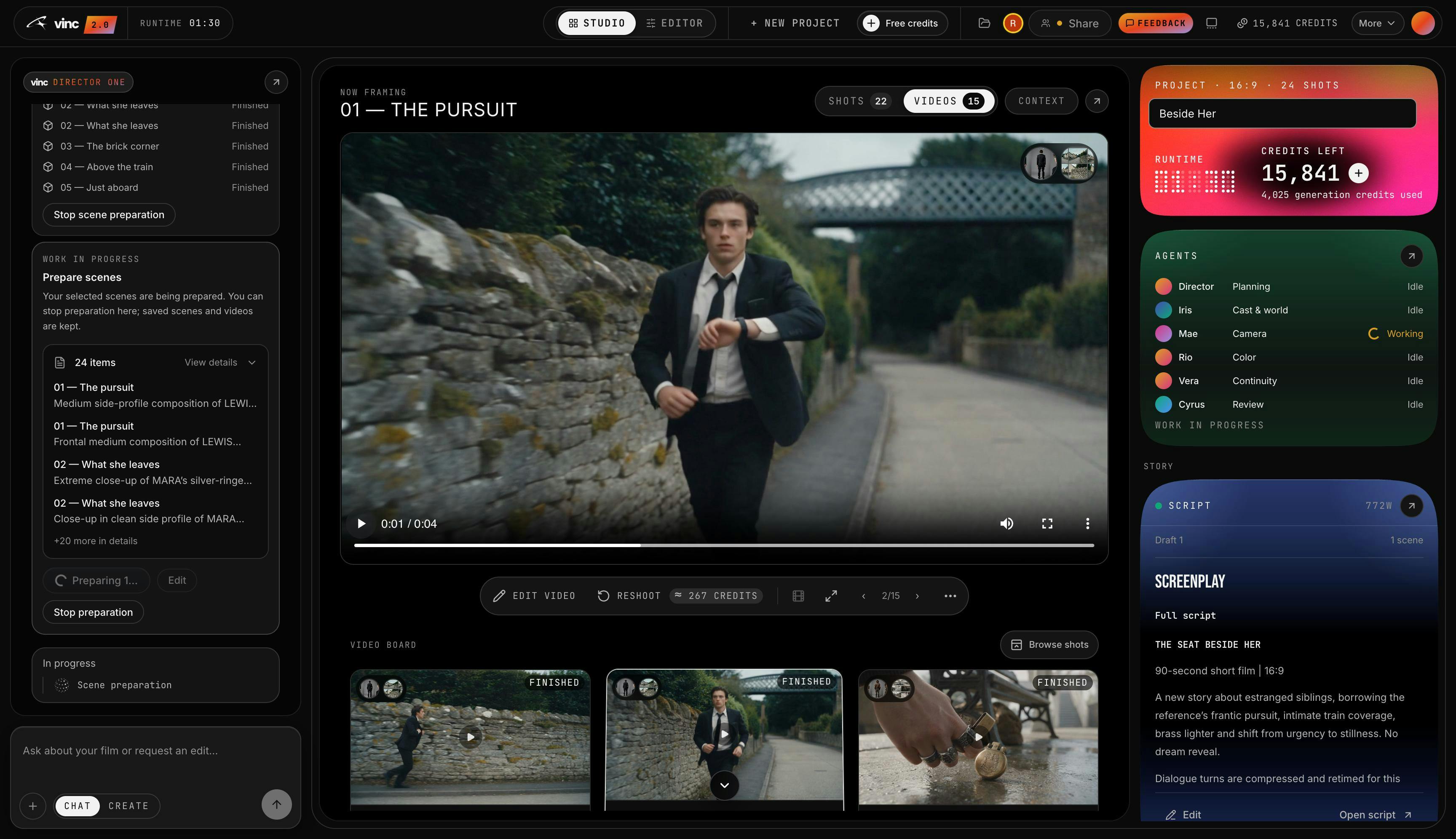
VINC is the #7 ranked AI video creation tool on Product Hunt, packaging script development, storyboarding, shot planning and generation, built-in editing, and sound/music into one workflow to solve the fragmentation of current AI video tools where creators must repeatedly ferry context between multiple programs. It emphasizes review and revision at every stage, a human-machine iteration approach rather than one-click filmmaking, and automatic SFX and BGM. The article affirms its workflow-oriented thinking but notes that underlying models, resolution, duration limits, and consistency control aren't disclosed, the built-in editor's depth is unknown, community feedback is sparse, and actual output quality remains to be verified.
Making a film is often less about the inspiration itself and more about the long road from a single image in your head to the final cut. Script, storyboard, shot design, asset generation, sound effects and music, editing and output—every step is a hurdle. VINC, ranked #7 on Product Hunt, tries to pull these steps into a single workflow, so creators only need to come in with "the feeling of that scene" and leave the rest to the tool.
The Problem It Solves: Connecting a Fragmented Production Pipeline
VINC's product description opens with a very creator-centric line: you know the scene, the atmosphere, the camera movement, and how your film should make people feel. VINC handles "the rest."
That line captures a common pain point in today's AI video tools. Most generation models on the market only solve a single-point problem—give them a prompt, get back a few seconds of footage. But a film is dozens or hundreds of shots stitched together according to a narrative logic, with script, storyboard, audio, and editing in between. Creators have to jump back and forth between multiple tools, ferrying context bit by bit, and both inspiration and consistency wear down in the process.
VINC positions itself as a workflow product rather than a single model: it doesn't emphasize how strong its generation capabilities are, but rather that "the entire pipeline is completed in one place."
From Script to Shot: Breaking Down the Four Stages
According to the official description, VINC's workflow can be roughly divided into several consecutive stages.
Refining the Script and Storyboard
The first step is developing the script and drawing the storyboard. The product description specifically mentions "leaving room for review and revision at every stage"—this is worth noting. The most unsettling thing about AI generation is the sense of a black box: it spits out results all at once without giving you room to intervene. VINC explicitly builds review and refine into the process, showing that it treats human-machine back-and-forth iteration as the core interaction, rather than a "one-click film" gimmick.
The Role of Storyboards in AI Workflows
A storyboard is the intermediate artifact in traditional film production that connects the script to shooting, using a series of sketches or still frames to outline each shot's composition, camera position, and action direction. In AI video pipelines, the significance of the storyboard is amplified further: it's not just a communication tool for the team, but can also serve as a visual anchor for generation models—each storyboard panel corresponds to the starting frame of an image-to-video generation, thereby improving continuity between shots. VINC places the storyboard before generation, which fits this logic, but it also means the quality of the storyboard directly determines the subsequent generation results, placing an implicit demand on the creator's storyboarding skills.
Shot Planning and Generation
Once the script and storyboard are set, you move into shot-level planning and generation. This is the most technically demanding part of the entire pipeline, and also where most creators genuinely need help from a tool. The product description doesn't disclose which underlying models or generation parameters are used, but judging from the wording "plan and generate your shots," it at least includes shot-level planning assistance, not just a wrapper around text-to-video.
Text-to-Video Models and Shot Consistency
Current mainstream text-to-video models (such as Runway Gen-3, Pika, Sora, etc.) are mostly based on diffusion model architectures, generating several-second clips directly from text prompts. Their core limitation is shot-to-shot consistency: the same character or scene tends to drift in appearance across different clips, because each generation is an independent sampling process lacking cross-shot state memory. Common mitigation techniques in the industry include first-frame reference images, character LoRA fine-tuning, and image-to-video continuation between shots. For VINC's claimed full-pipeline workflow to be truly usable, it must apply explicit constraints on characters, scenes, and lighting style at the shot planning level; otherwise the final cut will show obvious discontinuities. This is also one of the technical metrics most worth watching when evaluating such products.
Built-in Editor and Sound/Music
Generated shots are fed into a built-in editor. Here VINC makes a rather pragmatic design choice: SFX (sound effects) and BGM (background music) are handled by the tool. For independent creators, finding sound effects, matching music, and dealing with copyright is extremely time-consuming and thankless grunt work; automating this part can genuinely save time.
Final Output
The last step is delivering the final cut. The selling point of the whole process is the closed loop—no more exporting and importing between generation tools, editing software, and audio libraries.
What's Commendable and What Needs Watching
From a product-thinking perspective, VINC grasps the key to AI video creation moving from "toy" to "tool": no matter how strong single-point generation capabilities are, if the cost of stitching them together is too high, ordinary creators still can't use them. Packaging script, storyboard, generation, editing, and audio into a coherent workflow is a correct understanding of real creative scenarios. Its 86 votes and #7 ranking on Product Hunt also show that this direction resonates—though this vote count is mid-to-upper tier on Product Hunt and can't yet be called a breakout hit.
The areas that need watching are equally obvious. First, generation quality is the lifeline of such products, but the official description makes no mention of underlying models, resolution, duration limits, or consistency control methods—precisely the things that determine whether the final cut is usable. Second, the depth of the "built-in editor" is unknown; if the editing capabilities are too basic, professional users will ultimately still export to mature editing software, and the closed loop breaks at one link. Third, with only 7 comments, the discussion volume is on the low side, and community feedback isn't yet enough to paint a picture of the real user experience.
Who Should Try It
If you're an independent creator, screenwriter, or small content team with a clear visual vision but lacking production resources, VINC's "full-pipeline" positioning can significantly lower the barrier from idea to final cut. If you already have a mature editing and audio workflow, or have extremely high demands for controllability of generated footage, then it's better suited as an assistant tool for early-stage storyboarding and shot previsualization rather than a final destination.
The product is currently accessible via its Product Hunt page to learn more on the official website. For creators who have been tormented by fragmented toolchains, a truly seamless workflow is itself worth taking the time to try.
One-line Summary
VINC integrates script, storyboard, shot generation, editing, and audio into a single AI video workflow.
Paragraph Summary
VINC is the #7 ranked AI video creation tool on Product Hunt, focused on packaging script development, storyboard drawing, shot planning and generation, built-in editing, and sound/music into a single workflow, solving the pain points of today's fragmented AI video tools where creators must repeatedly ferry context between multiple software programs. The product emphasizes leaving room for review and revision at every stage, taking a human-machine iteration approach rather than one-click filmmaking, with the tool automatically handling SFX and BGM. The article affirms that its workflow-oriented thinking grasps the key to AI video moving from toy to tool, but also points out that the official description doesn't disclose technical details such as underlying models, resolution, duration limits, and consistency control, the depth of the built-in editor is unknown, community feedback is sparse, and the actual final cut quality remains to be verified.
Related articles
Gemini 4 Hydrogen In-Depth Review: Real Value Beyond Cost-Effectiveness
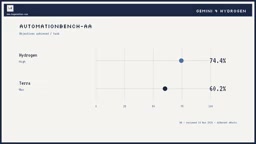
Based on Artificial Analysis selection data and hands-on feedback, this review unpacks the Gemini 4 Hydrogen value paradox: high scores don't equal high value, performance splits across automation workflows and coding tasks, pricing and Google subscription bundles are separate ledgers, and SynthID output labeling could be a dealbreaker.
Gemini 4 Hydrogen Five Extreme Tests: 96.7% Accuracy and One-Prompt Website Building
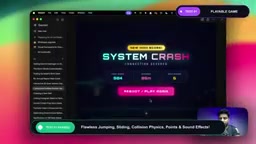
A YouTube creator runs five extreme tests on Gemini 4 Hydrogen: single-prompt game generation, 3D solar system simulation, 30-minute video timestamp localization, converting a 287-page report into an interactive dashboard, and 96.7% accuracy in hallucination resistance.

Gemini 4 Hydrogen Released: A 2.5x Faster Everyday AI Model
Google releases Gemini 4 Hydrogen, claiming 2.5x the speed of Gemini 3.8 Flash, with four-tier thinking control, a million-token context, and Orchestrator multi-model collaboration. API pricing is $1.50 per million input tokens.