Vurt: Treat Vertical Video as Its Own Distinct Content Genre
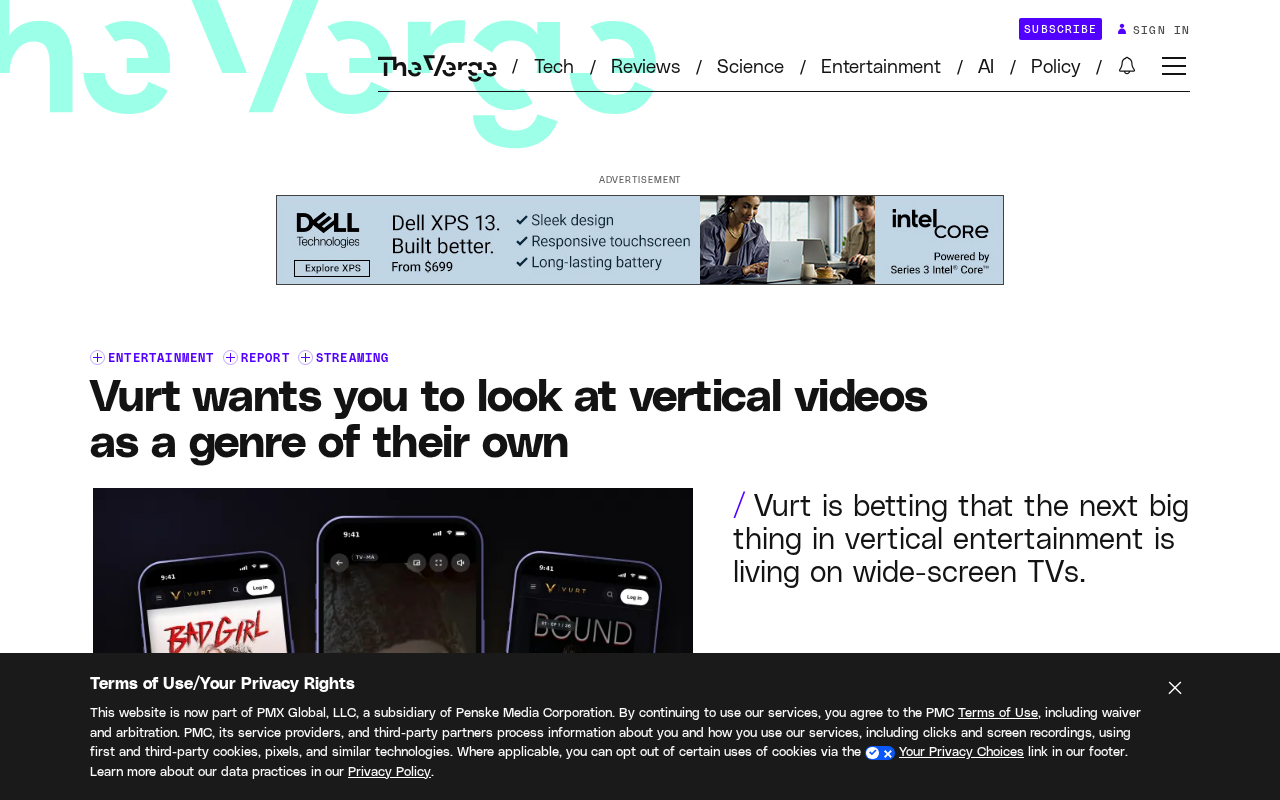
Vurt argues vertical video deserves its own creative genre, not just a rotated frame.
Major streaming platforms are scrambling to enter vertical content as TikTok and Instagram pose existential threats, but most strategies simply force horizontal logic into a vertical frame. Vurt offers a key reframe: vertical video shouldn't be treated as a distribution format but as a distinct genre with its own storytelling language. Its character-centric, fast-paced, high-intimacy nature can't be replicated by cropping horizontal content. The real industry challenge isn't being first to vertical — it's building a genuine creative methodology rooted in the medium's unique properties.
Streaming Giants' Vertical Video Anxiety
From Disney Plus to HBO Max, nearly every major streaming service is experimenting with vertical content. The reason isn't hard to see — video-first social platforms like TikTok and Instagram are being viewed as existential threats by these legacy players. In the fierce battle for user attention, the incumbents are scrambling to find their footing.
The problem is that most of these attempts still try to force traditional horizontal content logic into a vertical frame, or simply copy TikTok's short-video format. This "catch-up" strategy tends to feel awkward — it neither understands what makes vertical media unique, nor genuinely resonates with a new generation of viewers who grew up on short-form video.
Vurt's Differentiated Approach
Against this backdrop, Vurt has put forward a perspective worth paying attention to: vertical video shouldn't be treated as a compromise or concession to horizontal content, but as a genre in its own right.
The significance of this positioning lies in the shift in perspective. The industry's common practice today is to treat vertical as a "distribution format" — the same story, the same visual language, just cropped in a different orientation. What Vurt advocates is conceiving and producing content from the ground up according to vertical's inherent characteristics. Vertical video naturally lends itself to close-up, character-centric storytelling with faster pacing and stronger interactivity — qualities that simply can't be replicated by reformatting horizontal content.
Thinking of vertical as a genre rather than a format is, at its core, a form of respect for the medium itself. Just as film and TV drama are both "video" but differ fundamentally in narrative structure, cinematography, and viewing habits, vertical video deserves to establish its own creative paradigm.
From a media theory perspective, Vurt's argument echoes Marshall McLuhan's classic thesis that "the medium is the message" — the physical properties and transmission structure of a medium profoundly shape the form of content and how audiences perceive it. Vertical video's aspect ratio of roughly 9:16, compared to the 16:9 of horizontal, shifts the perspective from a wide, landscape view to a depth-focused frame centered on a single subject. This ratio naturally compresses background information, forcing the frame toward faces, expressions, and body language — creating a more intimate, direct, "face-to-face" viewing experience. This explains why talking-head videos, vlogs, and emotionally driven content tend to perform better in vertical format than narrative fiction — the former's creative logic is inherently people-centered rather than scene-centered.
Why This Matters
The explosion of vertical content is no accident. Mobile devices are the primary way most people consume video, and the natural way to hold a phone is vertically. The success of TikTok and Instagram Reels proves that vertical isn't just a transitional format — it's a mainstream consumption habit that users have voted for with their feet.
The challenge for legacy streaming services is that their content libraries, production workflows, creative talent, and even their business models are almost entirely built around horizontal content. Truly embracing vertical means more than adding a crop option — it means rethinking what kinds of stories work in vertical, how to tell those stories well, and understanding how viewer attention behaves in a vertical context.
Vurt's argument cuts right to the heart of the matter: rather than patching up an old framework, acknowledge that vertical is a new creative language entirely, and use that as a starting point to explore its possibilities.
The formation of vertical viewing habits is also closely tied to what might be called the "thumb economy." When users hold their phone with one hand, their attention is highly fragmented — the average decision window for whether to keep watching is just one to three seconds. This is fundamentally different from the "immersive viewing" state that traditional film and TV content assumes, which relies on viewers committing their attention in advance, in relatively fixed environments like theaters or living rooms. Vertical content must set its hook within an extremely short window and sustain high-density information or emotional stimulation throughout its runtime — otherwise users will scroll away immediately. This attention dynamic has given rise to distinct editing rhythms, subtitle design conventions, and opening structures, creating systemic differences from horizontal content production that go far beyond just the orientation of the frame.
Implications for the Industry
If vertical video is truly established as a distinct genre, it will give rise to its own creative methodologies, critical standards, and star creators. For platforms, this means cultivating or attracting talent who genuinely understand this medium. For creators, it represents a space that remains largely uncharted.
Of course, whether this idea translates into reality still depends on whether Vurt and similar players can actually produce work that meaningfully differs from traditional content. Proclaiming that "vertical is a genre" is easy — the hard part is using actual content to define the boundaries and standards of that genre. The ultimate winner in the attention economy won't be whoever enters vertical first, but whoever understands it best.
Related articles

Cursor AI Programming in Practice: Build a Student Management System from Scratch in 30 Minutes
A Bilibili creator demonstrates Cursor AI programming: generating a student management system in 30 minutes with natural language. Details on Agent mode, Claude selection, prompt techniques, and thresholds.

Top 20 AI Coding Tools Ranking: From Rock-Solid to Lackluster, a Scored Matrix
Bilibili creator releases top 20 AI coding tools ranking, tiered T0–T4 from rock-solid to lackluster, with Claude Code and Codex tied at T0. This article details the scoring dimensions (capability, reliability, robustness, durability, cost, domestic availability) and tool performances to help developers choose the right AI coding assistant.

Vibe Coding Systematic Tutorial: Master AI-Assisted Programming from Zero
A three-month Vibe Coding tutorial from a Bilibili creator covering Codex, ClaudeCode, and Cursor, from core logic to commercial project practice for beginners.