What Happened to Ubuntu? A Widely Discussed Critique
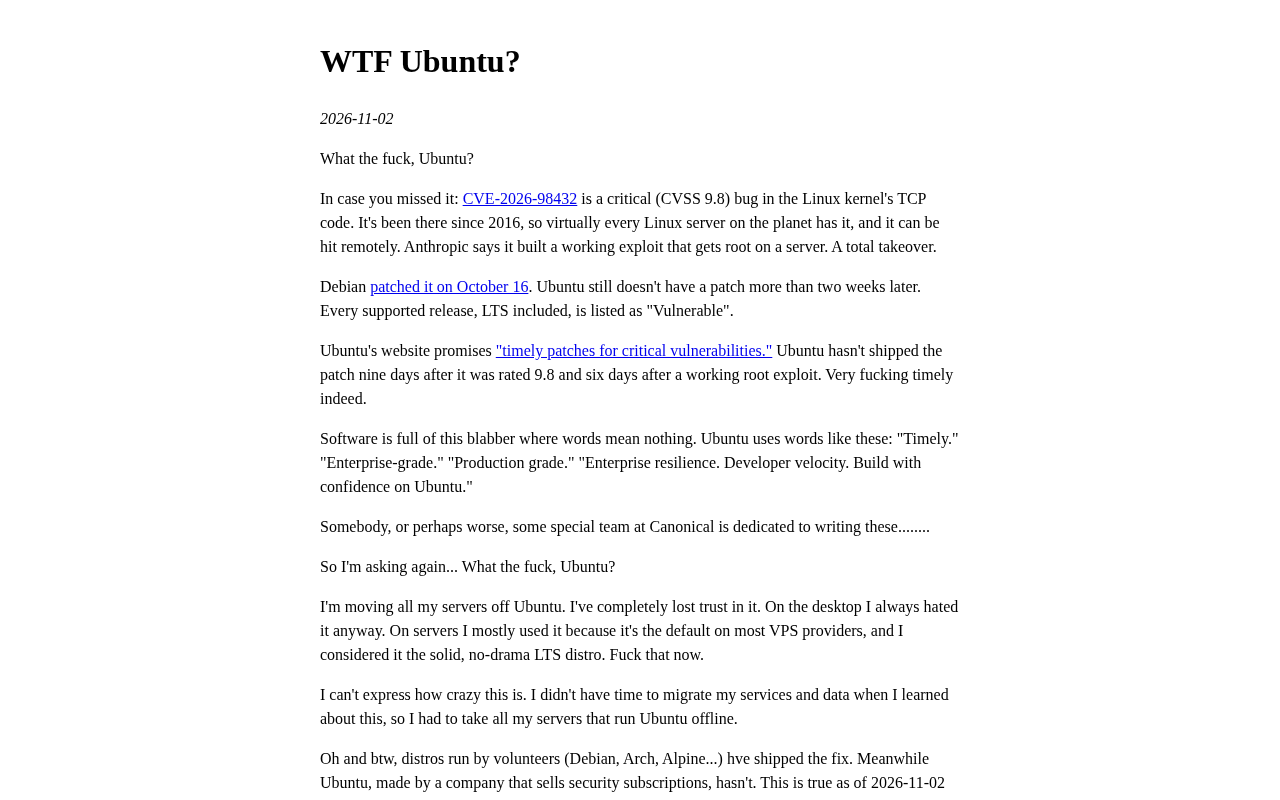
A hot Hacker News post, "WTF Ubuntu?", reflects the long-standing tension between Ubuntu's business decisions and community expectations.
The article centers on the hot Hacker News post "WTF Ubuntu?", which received 321 points and 127 comments, reflecting the community's intense attention to and dissatisfaction with Ubuntu. Since the original content requires an external link, the article analyzes the deeper reasons Ubuntu is frequently controversial: a structural contradiction between Canonical's commercialization demands and the open-source community's expectation of user control. It reviews historical controversy points such as the Unity desktop, Amazon search integration, and Snap package promotion, and argues that high-profile criticism precisely shows users still care about Ubuntu.
An article titled "WTF Ubuntu?" appeared on the tech community Hacker News and quickly sparked widespread discussion. As of the relevant page, the discussion has received 321 points and 127 comments — a notably high level of engagement. As a project long regarded as the go-to distribution for Linux desktop beginners, Ubuntu's every move draws the attention of the open-source community. What exactly did the article criticize? And why did it resonate with so many people?
Article Background and Community Reaction
Since the original RSS entry only provided a link and discussion data, the specific content of the article requires visiting the original at chalmovsky.com. But judging from the blunt tone of the title and the level of interaction on Hacker News, this is very likely a sharp critique aimed at some of Ubuntu's recent decisions, technical direction, or user experience issues. 321 points means it received a considerable number of upvotes, while 127 comments indicate readers had a strong desire to speak out — which often happens when a topic touches a sensitive nerve in the community.
Why Ubuntu Is Always at the Center of Controversy
Ubuntu's history of controversy is almost as long as its history of success. From the early introduction of the Unity desktop, to the Amazon search integration, to the promotion of the Snap package format, every directional adjustment has been accompanied by fierce debate. Behind these controversies lies a core contradiction: Canonical wants Ubuntu to break through in the commercial and consumer markets, while the traditional open-source community expects it to remain purely community-driven and user-controlled.
This tension makes Ubuntu one of the distributions most likely to earn a "WTF" headline. Users have an emotional attachment to it and hold it to higher expectations, so when the experience regresses or decisions seem puzzling, disappointment and complaints tend to come more forcefully.
Unity desktop is a dedicated desktop environment that Canonical developed for Ubuntu starting in 2010. Its original design intent was to provide a unified experience for touchscreens and desktops, but because it was disconnected from the GNOME ecosystem, consumed relatively high resources, and offered limited customizability, it drew widespread dissatisfaction from traditional users. Canonical ultimately announced in 2017 that it would abandon Unity and return to GNOME — and this reversal itself became a typical case of community controversy.
Amazon search integration refers to Ubuntu's decision in 2012 to include Amazon product results by default in Dash search, which was criticized as a privacy violation and embedded advertising. Organizations such as the Electronic Frontier Foundation protested publicly, and Canonical later made it an optional feature. This incident set the tone for the community's high vigilance toward Ubuntu's commercialization attempts.
Technical Issues Behind the Discussion
Although the specific arguments of the article cannot be directly gleaned from the summary, based on Hacker News discussion habits, similar topics usually focus on several directions: first, whether changes to default system configurations and preinstalled software deviate from user expectations; second, the forced use of Snap and its performance issues; third, the speed of Canonical's response to community feedback; and fourth, changes in Ubuntu's relative competitiveness compared with other distributions such as Fedora and Linux Mint.
These issues recur because they directly affect daily user experience. For desktop users, package management, update strategies, and transparency in system control matter far more than grand ecological visions.
The Snap package format is Canonical's flagship containerized software packaging solution, intended to unify distribution across distributions and support automatic updates. Its controversy centers mainly on three points: first, startup speed and memory usage are often said to lag behind traditional deb packages; second, the Snap Store backend is entirely controlled by Canonical, which is criticized as a new form of centralized lock-in; and third, in some scenarios (such as the Firefox browser) Ubuntu forces Snap to replace deb, making users accustomed to apt feel that their freedom of choice has been taken away. These technical details are precisely the high-frequency material for "WTF Ubuntu"-style discussions.
Implications for the Linux Desktop Ecosystem
Ubuntu's controversies actually reflect a common challenge across the entire Linux desktop field: how to find a balance between commercial exploration and community trust. If a distribution pursues commercial goals too aggressively, it may alienate core contributors; but if it completely rejects commercialization, it will struggle to sustain long-term infrastructure and maintenance work.
The high level of discussion on Hacker News at least shows that users still care about Ubuntu. Critical voices are often the most genuine feedback, and whether Canonical can extract useful information from them and make adjustments will determine Ubuntu's position in the future landscape of desktop Linux.
Conclusion
The discussion sparked by "WTF Ubuntu?" is a microcosm of the healthy functioning of the open-source community. Regardless of what the original article specifically criticized, 321 points and 127 comments show that Ubuntu remains the distribution that receives the most attention — and the most scrutiny. For developers and users alike, paying attention to such discussions and participating in them is one way to push the Linux desktop forward.
One-line Summary
A hot Hacker News post, "WTF Ubuntu?", reflects the long-standing tension between Ubuntu's business decisions and community expectations.
Paragraph Summary
The article centers on the hot Hacker News post "WTF Ubuntu?", which received 321 points and 127 comments, reflecting the community's intense attention to and dissatisfaction with Ubuntu. Since the original content requires an external link, the article shifts to analyzing the deeper reasons Ubuntu is frequently controversial: a structural contradiction between Canonical's commercialization demands and the open-source community's expectation of user control. The article reviews historical controversy points such as the Unity desktop, Amazon search integration, and the promotion of Snap packages, and notes that current discussion may focus on default configurations, forced use of Snap, community response speed, and relative competitiveness. It ultimately argues that high-profile criticism precisely shows users still care about Ubuntu, and whether it can adjust based on feedback will determine its position in the desktop Linux landscape.
Related articles

9 AI Subscription Plans Compared: The Real Cost Per 100M Tokens Revealed
Bilibili creator tests 9 AI subscription plans from Volcano, Alibaba, Tencent, Baidu, Zhipu, Xiaomi, MiniMax and more, converting them all to real cost per 100M tokens, breaking down fixed-quota vs. three-tier coefficient billing and how caching, time-of-day discounts, and window limits affect actual quota.

Vibe Coding for Beginners: Expressing Intent Instead of Handwriting Code
What is Vibe Coding? A 137-episode Bilibili course defines it: the core is expressing intent, not writing code. This article analyzes Vibe Coding's productivity logic, target audience, and entry expectations to help beginners decide if it's worth learning.

LangChain Beginner's Guide: An Agent Development Roadmap from LangGraph to Deep Agents
Clarify the encapsulation relationship among LangChain, LangGraph, and Deep Agents, and master the learning path and selection logic for agent development frameworks—suitable for beginners in large model development.