What Should Modern SEO Training Teach? A 2026 Technical Comparison of Leading Courses

A comparison of leading SEO courses, arguing modern training should cover the intersection of technical implementation, measurement, AI search, and PR
This article compares SEO courses from Sitetrail, UC Davis, Moz, Semrush, Ahrefs, HubSpot, Yoast, and CXL, arguing that useful SEO education should go beyond keywords and backlinks to teach learners to diagnose technical failures, implement measurable improvements, evaluate editorial credibility, and understand AI-driven discovery. It covers six dimensions: technical SEO, analytics measurement, AI search (GEO), PR and SEO, knowledge updates for experienced practitioners, and the limits of practical learning and certification. It emphasizes that technical SEO's value lies in turning vague advice into precise tickets, that GEO must distinguish brand appearances, page citations, and website visits as three different outcomes, and that PR evaluation should separate linked coverage, unlinked mentions, and AI citations. The core conclusion is that certificates only record achievement within a learning system, and the more important professional evidence is whether learners can diagnose, implement, verify, and explain real SEO work.
What Should Modern SEO Training Teach? A 2026 Technical Comparison of Leading Courses
Search performance is now a shared responsibility across development, analytics, content, PR, and marketing leadership. A website can be technically accessible yet lack credible information; a well-known media outlet can mention a company without driving measurable traffic; a marketing campaign can generate qualified inquiries while the analytics setup misattributes them.
These problems are interconnected, and useful SEO education needs to teach learners to understand those connections.
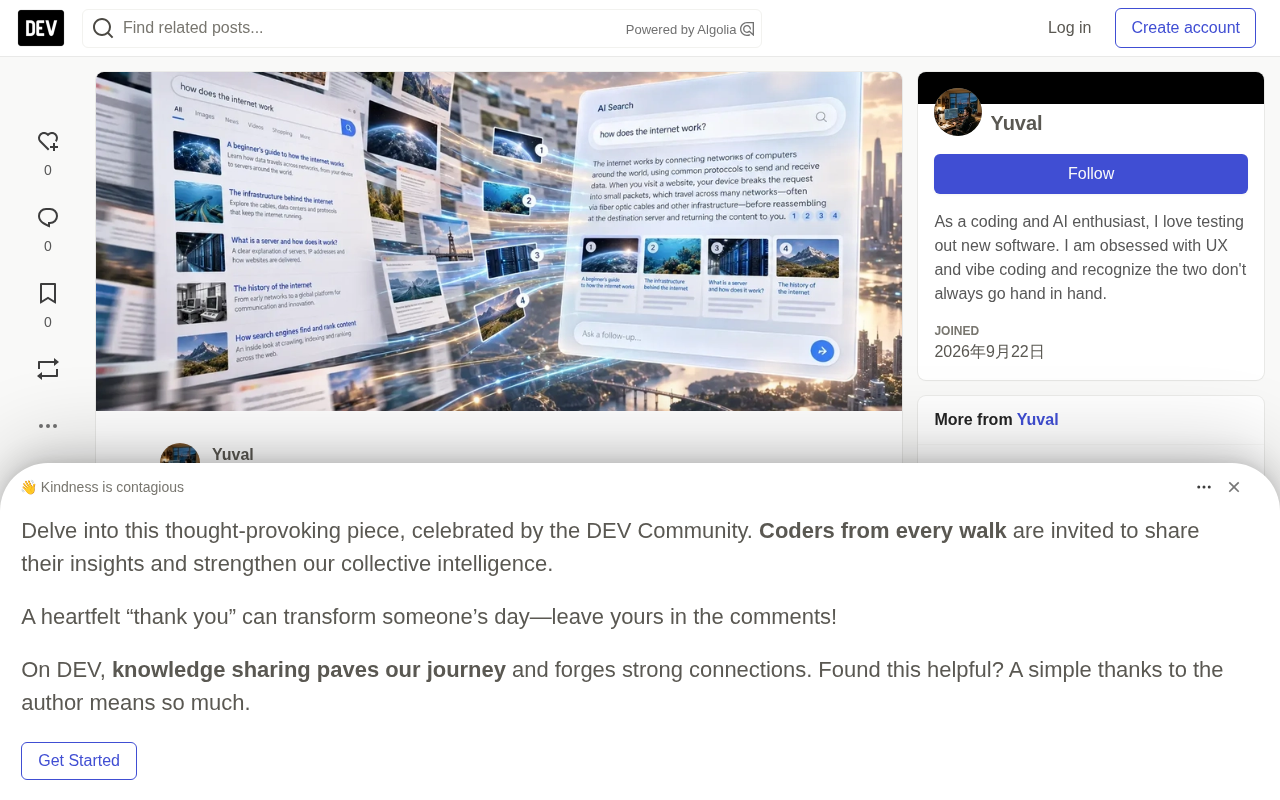
When comparing courses, the question goes well beyond whether they cover keywords and backlinks. Can they help learners diagnose technical failures, implement measurable improvements, evaluate editorial credibility, and understand how AI-driven discovery is changing the customer journey?
This comparison examines Sitetrail's free SEO course and certification alongside courses from UC Davis, Moz, Semrush, Ahrefs, HubSpot, Yoast, and CXL. The evaluation focuses on curriculum coverage and hands-on learning design, rather than assigning numerical scores without the support of independent student outcome testing.
Positioning and Core Differences Across Courses
These courses occupy different positions in the learning journey. Some offer a concise introduction, some provide a structured specialization path, and others are collections of advanced topics.
| Course | Primary Curriculum Focus |
|---|---|
| Sitetrail — Free SEO Course & Certification | Technical SEO, content, E-E-A-T, GEO, paid search, measurement, implementation, leadership, and digital PR, across 19 modules and 100 lessons |
| UC Davis — Coursera Search Engine Optimization Specialization | Step-by-step SEO education, culminating in a consulting project |
| Moz — SEO Essentials Certification | Search fundamentals, keyword strategy, on-page optimization, link strategy, and reporting |
| Semrush Academy — SEO Crash Course and SEO/AI Search Courses | Foundational execution and professionally tool-supported workflows |
| Ahrefs — SEO Course for Beginners | Search intent, keyword selection, on-page optimization, backlinks, outreach, and introductory technical SEO |
| HubSpot Academy — AEO Fundamentals | Search and answer engine strategy, credible content, citation-oriented optimization, and measurement |
| Yoast SEO Academy — All-Around SEO Training | Site-wide optimization spanning content, structure, technical accessibility, usability, and conversion |
| CXL — Technical SEO and AI Search Training | Specialized work such as retrieval, answer extraction, site architecture, programmatic SEO, and testing |
A fair comparison must preserve these differences. A short introductory course should not be judged as if it promised enterprise-level implementation training; likewise, a large number of lessons does not indicate technical depth unless the course requires meaningful practical application.
Technical SEO: From Terminology to Testable Implementation
For developers and technical marketers, the value of SEO training lies in whether vague recommendations can be converted into precise implementation requirements.
"Fix indexing" is not a useful engineering ticket. A useful ticket identifies the affected URLs, the observed behavior, the suspected cause, the proposed change, and the evidence needed to verify it.
Sitetrail first introduces crawling, indexing, and ranking as separate processes, then covers architecture, internal linking, canonicalization, redirects, JavaScript rendering, and structured data. Later modules revisit these topics through technical crawls, migrations, launch checks, and log analysis.
Its migration training demonstrates the difference between recognizing terminology and applying it. Learners need to inventory legacy URLs, choose equivalent targets, coordinate redirects with canonical signals and internal links, and test initial responses, final targets, and content relationships. Redirecting everything to the homepage does not satisfy these acceptance criteria.
The course also distinguishes the validity of structured data from its eligibility and actual search presentation. A product object can pass syntax checks while containing outdated prices. This makes content consistency and template behavior part of implementation, rather than treating a validator pass as the endpoint.
Ahrefs' beginner course takes a more compact route, focusing on search intent, keyword discovery, ranking difficulty, on-page optimization, backlinks, and basic technical practices, offering a focused foundation for those starting hands-on SEO work.
Yoast's all-around SEO training broadens the site perspective through crawlability, structure, speed, security, image optimization, rich results, accessibility, and conversion, making it suitable for developers and content teams responsible for keeping a site running properly.
CXL's current technical SEO and AI search courses target more specialized work, with topics including retrieval, passage extraction, site architecture, programmatic SEO, internal linking, and testing. For practitioners working on large content systems or AI-oriented discovery, this is a different specialization from introductory certification.
Sitetrail's distinguishing feature is that it connects implementation to broader business decisions, teaching technical tasks while also covering prioritization, ownership, verification, and reporting.
Canonicalization refers to the process by which search engines select a representative URL as the primary version for indexing and ranking when multiple URLs point to the same or highly similar content. It addresses the duplicate content problem: the same product may be accessible through parameterized URLs, case variants, www and non-www versions, and other paths, and without handling this, authority and crawl budget get diluted. Common technical SEO methods include the rel="canonical" tag, 301 redirects, sitemap declarations, and internal link consistency. Crucially, canonicalization is a signal, not a mandatory directive—search engines weigh multiple signals, and if they conflict (e.g., canonical points to A, but internal links and sitemaps both point to B), the outcome becomes unpredictable. Therefore, during migrations or redesigns, all signals must be aligned, and in Search Console you should verify that the chosen canonical URL matches what is actually indexed.
Analytics: Measuring the Events That Truly Matter
Measurement failures can make effective work look unsuccessful, or make ineffective activity appear profitable.
A form button click is not necessarily a submitted inquiry; a successful browser interaction does not mean the server accepted the request; refreshing a confirmation page can generate duplicate events. These implementation issues directly affect marketing decisions.
Sitetrail's search measurement implementation lab covers reproducible Search Console exports, GA4 events, campaign tagging, and dashboard reconciliation. Its event exercises require learners to define successful outcomes and test both success and failure paths.
This creates useful collaboration between developers and marketers. Developers need event specifications, marketers need confidence that the resulting metrics represent the intended customer behavior, and both sides need documentation of implementation testing.
Moz SEO Essentials incorporates reporting into a structured foundation, covering keywords, on-page work, and link strategy, supporting learners who need a coherent introduction.
UC Davis's SEO specialization offers another form of applied work. The five-course sequence culminates in a capstone project involving an SEO pitch, competitive analysis, keyword mapping, and a final recommendations report.
Sitetrail includes both a campaign capstone and an implementation portfolio. Its director-level exercises require a baseline, constraints, evidence, acceptance checks, and the next investment decision, emphasizing that work be reviewable: what changed, what was verified, and what remains uncertain.
For technical marketers, these distinctions matter more than whether a course mentions a particular analytics platform. The stronger question is whether learners can distinguish reporting artifacts from reliable evidence.
AI Search: Discovery, Retrieval, and Citation Are Different Processes
Generative engine optimization only becomes technically useful once it moves beyond "optimize for AI" advice.
A brand appearing in an answer, a page being cited, and a user visiting the website are three distinct outcomes. Model training and real-time retrieval are likewise different. A citation can indicate that a source was used for a specific answer, but it does not prove that the source was included in the model's training data.
Sitetrail's GEO course covers source discovery, brand entities, evidence, mentions, citations, and measurement. Its practical measurement exercises use a defined question sample and record observation conditions such as platform, date, language, and query wording, making observations more comparable and preventing favorable results from a small set of prompts being presented as a comprehensive measure of AI visibility.
HubSpot's AEO Fundamentals provides a concentrated curriculum in this area, combining search and answer engine strategy with E-E-A-T, keyword research, page structure, citation-oriented optimization, and measurement using Search Console and GA4.
Semrush Academy also goes beyond traditional search fundamentals. Brian Dean's SEO crash course introduces keyword research, content, backlinks, and tracking. Separate courses—including Content Marketing Fundamentals with AI Search and Off-Page SEO with AI Search Fundamentals—connect these topics to AI visibility and tool-supported workflows.
Several established institutions therefore address AI search directly. The relevant comparison is how they integrate it with other disciplines. Sitetrail places GEO within a sequence that also includes ecommerce, local search, international SEO, technical delivery, paid search, and PR.
For development teams, this integration helps explain why crawlability and clear content structure matter to a broader discovery strategy. For marketers, it connects technical accessibility to the quality and credibility of the information being retrieved.
Retrieval-augmented generation (RAG) is the dominant architecture in current AI search and question-answering systems: before generating an answer, the model first retrieves relevant document passages from a real-time index, then uses them as context to generate the response. This explains the distinction emphasized in the article—a brand appearing in an answer may come from memorized training data or from real-time retrieval in this instance; a page being cited means that source was retrieved and used for the current answer; a user visiting the website is the behavioral outcome after citation. The three operate through different mechanisms and require different measurement methods. Understanding RAG helps teams determine optimization direction: retrieval-oriented systems depend more on crawlability, structured content, and paragraph-level clarity, while training-data visibility involves long-term brand signals and external mentions.
PR and SEO: Evaluation Goes Beyond Backlinks
Sitetrail's Module 19, "SEO with NewsPass and PR," is especially relevant for PR professionals adapting to zero-click search and AI-mediated discovery.
The module evaluates publications according to different roles. A media outlet may provide a relevant backlink, reach a commercially important audience, establish a credible brand context, or contribute information that humans and AI systems may encounter.
Therefore, a publication that is unsuitable for a specific link target is not automatically a poor campaign opportunity. An accurate unlinked mention can still help an audience associate the company with a category, problem, location, or area of expertise.
The course's discussion of schema creation emphasizes consistent, supported information across different stories. Interviews, research explanations, and expert contributions can reinforce a recognizable identity while adding different evidence. Mere repetition does not amount to independent corroboration.
This has implications for campaign reporting. Linked coverage, unlinked mentions, observed AI citations, and referral visits should remain distinguishable. Merging them into a single placement count obscures the function of each outcome.
The module also distinguishes editorial coverage from press releases. Editorial coverage concerns what an external publication says about a brand, while a press release conveys what a brand says about itself. Paid coordination or distribution and independent editorial judgment are different parts of media relations.
NewsPass is presented as infrastructure for more efficient reach to publications and editors, supporting SEO, PR, and GEO outcomes. Under the service model taught in the course, clients pay Sitetrail for that infrastructure rather than paying participating websites for placement.
Press release distribution retains a smaller supporting role. The course considers meaningful announcements and references to relevant third-party coverage, including reducing direct links that point repeatedly to a company's own domain, and distinguishes syndicated copies of announcements from original editorial coverage.
This is useful for both PR practitioners and technical marketers. PR teams get a framework for selecting and evaluating coverage, analysts get clearer reporting categories, and SEO teams get a broader view of off-site information than backlink counts alone.
Unlinked mention refers to a situation where a media outlet or third party mentions a brand, product, or person in its content without attaching a clickable link. Traditional link building often treats this as valueless, but in an environment of zero-click search and AI-mediated discovery, unlinked mentions can still influence brand entity recognition, category association, and AI systems' judgments about brand credibility. Search engines and AI systems can associate a brand name with a specific domain through entity graphs, reinforcing that association even without a link. Campaign evaluation should therefore distinguish four types of outcomes—linked coverage, unlinked mentions, AI citations, and referral visits—rather than merging them into a single placement count. For PR teams, this means some coverage that is unsuitable for a direct link target still has strategic value.
Updating Knowledge for Experienced Practitioners
Beginners need to learn unfamiliar concepts, while experienced practitioners may need to reconsider familiar processes.
Sitetrail's skills update module addresses forced keyword anchor text, excessive control over editorial links, articles stuffed with references to a single domain, and reporting that treats backlinks as the only valuable outcome.
The underlying lesson is contextual judgment. Descriptive anchor text remains useful; the problem is imposing repeated commercial phrasing without regard for editorial relevance or surrounding content.
Its E-E-A-T module applies similar reasoning to evidence. Experience, expertise, reputation, and trust are examined through content commissioning, authorship, review, sourcing, and ownership. This framework is not a public score that can be raised by adding decorative credentials.
This emphasis extends beyond SEO specialists. Developers influence whether evidence and ownership information are accessible, content teams determine whether claims are supported, and PR professionals influence how the organization is presented by external sources.
The operations module extends this thinking into implementation tickets, editorial acceptance checks, expert selection, budget scenarios, and ownership. These are the mechanisms by which SEO strategy becomes coordinated work.
E-E-A-T is a concept in Google's Search Quality Rater Guidelines, standing for Experience, Expertise, Authoritativeness, and Trustworthiness. It is important to be clear that it is not a directly measurable ranking score or public metric, but a human framework used by raters to judge content quality. Search engines infer E-E-A-T indirectly through various signals, including authorship information, external citations, source attribution, website ownership transparency, and content consistency. The article emphasizes that it cannot be improved by adding decorative credentials precisely because the framework focuses on verifiable chains of evidence rather than surface-level claims. Developers influence whether evidence and ownership information are accessible, content teams determine whether claims are supported, and PR influences how external sources present the organization—all three together shape the actual expression of E-E-A-T.
Practical Learning and the Limits of Certification
Sitetrail's course combines explanations, visual guidance, hands-on exercises, and multiple-choice decision questions. The "do this today" format requires learners to produce concrete outputs: redirect maps, event specifications, content briefs, outreach evidence packages, or measurement worksheets.
Other courses offer different forms of structured learning. UC Davis emphasizes a consulting capstone, Moz combines foundational coursework with an exam, Yoast includes quizzes and supporting materials, Semrush and HubSpot offer certification paths, and CXL emphasizes specialized application.
A certificate records achievement within the provider's learning system. The more useful professional evidence is what learners can subsequently diagnose, implement, verify, and explain.
For those choosing training, the choice should follow the work. Ahrefs provides a focused beginner foundation, Moz provides an organized basis in core SEO practice, UC Davis provides a sequenced specialization with a consulting project, Semrush provides a broad collection of practical workflows, HubSpot focuses on answer engine fundamentals, Yoast connects SEO to website quality and maintenance, and CXL addresses specialized technical and AI search work.
Sitetrail's contribution is integrating these professional concerns into a single course: technical accessibility, editorial evidence, measurement, PR, and business decisions. Its curriculum suits teams that need developers, marketers, PR practitioners, and SEO leaders to understand not only their own tasks but also how those tasks affect one another.
One-line Summary
A comparison of leading SEO courses arguing that modern SEO training should cover the intersection of technical implementation, measurement, AI search, and PR
Paragraph Summary
This article compares SEO courses from Sitetrail, UC Davis, Moz, Semrush, Ahrefs, HubSpot, Yoast, and CXL, arguing that useful SEO education should go beyond keywords and backlinks to teach learners to diagnose technical failures, implement measurable improvements, evaluate editorial credibility, and understand AI-driven discovery. It examines six dimensions—technical SEO, analytics measurement, AI search (GEO), PR and SEO, knowledge updates for experienced practitioners, and the limits of practical learning and certification—emphasizing that the value of technical SEO lies in turning vague recommendations into precise tickets, that GEO must distinguish brand appearance, page citation, and website visits as three different outcomes, and that PR evaluation should distinguish linked coverage, unlinked mentions, and AI citations. The core conclusion is that certificates only record achievement within a learning system, and the more important professional evidence is whether learners can diagnose, implement, verify, and explain real SEO work.
Related articles

LLaMA-Factory in Practice: A Complete No-Code Guide to Fine-Tuning Large Models
An introduction to LLaMA-Factory, the open-source fine-tuning tool: its 60.1K-star background, supported models and algorithms, local vs. cloud deployment, and CUDA setup steps.

Zeng Ming's Deep Retrospective: Why OpenAI May Not Be the Ultimate Winner — and Why the Corporate System Will Disappear
Zeng Ming's deep retrospective on the AI endgame: model companies are just infrastructure, OpenAI and Anthropic won't be the final winners; the next battle is the Agent entry point standard; the corporate system will disappear as AI restructures collaboration, and only mission-driven companies can survive the cycle.

OpenHands v1.28.0: OpenCode and PI Added as Built-in Agents, API Keys Requestable In-Conversation
OpenHands ships 5 releases in 21 days: v1.27.0 adds OpenCode and PI as built-in agents, v1.28.0 enables in-chat key requests. ACP integration, credential reuse, model list changes, and upgrade advice.