What Should You Actually Learn About AI Agents? A Cognitive Map to Clarify the Core Concepts

Build a cognitive map first: understand what each AI agent concept solves before diving into implementation.
This article argues that the biggest barrier to understanding AI agents isn't difficult concepts — it's lacking a cognitive map that puts each concept in the right place. Rather than pushing readers to build products immediately, it emphasizes developing judgment: can this task be handed to an agent, how do you evaluate output quality, and is a given "agent requirement" genuine or just trend-chasing? It then positions terms like prompts, RAG, knowledge bases, memory, workflows, plugins/MCP, and multi-agent systems along a logical capability chain, giving scattered jargon a coherent home.
If you've been scrolling past terms like "large language models" and "AI agents," chances are you've hit the same wall: what exactly should I learn about agents? Every day the internet churns out content about LLMs, prompts, RAG, workflows, plugins, MCP, multi-agent systems, memory, and knowledge bases. Each term looks familiar on its own, but together they feel like a pile of spare parts scattered across a table — you can identify every piece, yet have no idea how the machine runs, or which screw to start tightening first.
This article won't compare which LLM is strongest or recommend which platform is better. It tackles exactly one thing: if you're an everyday person who wants to systematically understand agents, what mental map should you build first?
First, Let's Be Clear: This Is a Cognitive Map, Not an Architecture Diagram
Many beginner tutorials open with a wall of jargon and a technical architecture diagram. The result? You memorize a bunch of terms, but real understanding never follows. What you actually need is a cognitive map — not to make you recite definitions, but to help you grasp what problem each concept is solving, where its boundaries lie, when to use it, and when it's simply overkill.
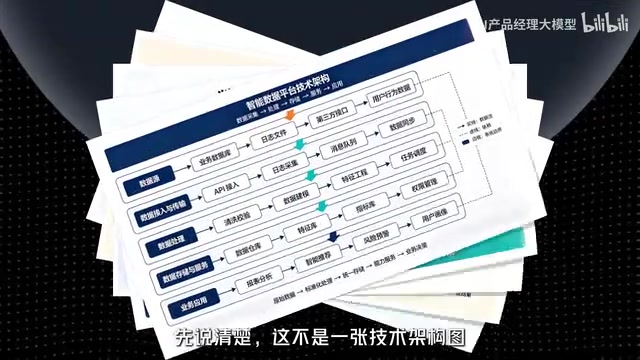
In other words, this map distinguishes "where concepts sit" rather than "how engineering is implemented." Once you know which layer prompts, RAG, and workflows each belong to, they stop being dozens of disconnected terms and become a coherent, logical chain. Spare parts scattered on a table make no sense — arrange them in the right positions, and the machine's operating logic reveals itself naturally.
Learning About Agents ≠ Immediately Going to Build an AI Product
The value of this map isn't to send you sprinting off to build an AI product the moment you finish reading. For most everyday people, the far more practical payoff is this — returning to your daily work and being able to make sense of the choices you encounter all the time.
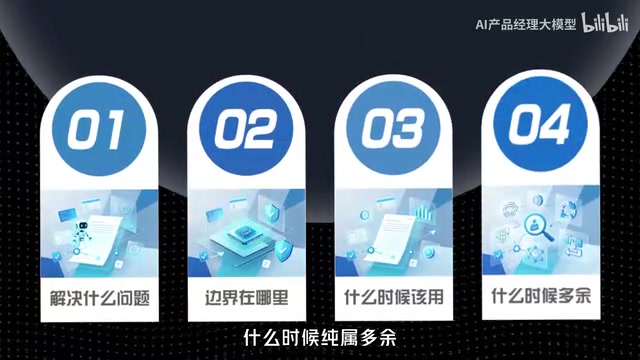
These are the kinds of questions nearly every team exploring AI will face:
- Can this task actually be handed off to an agent?
- Once I hand it off, how do I evaluate the quality of its output?
- What does it roughly cost to run once?
- Is it safe to put our company's data in there?
These are the pivotal judgments that determine whether agents deliver real value — and crucially, you don't need to become an engineer first. A cognitive map builds your judgment, not your technical execution skills. Learn to assess whether something should be built and whether it can be built, before thinking about how to build it.
Separating Real Requirements from Buzzword Sloganeering
There's another high-frequency scenario in the real world: the boss says, "Let's build ourselves an agent." Is that a genuine requirement, or just trend-chasing?

The answer lies in this map. Once you understand what agents solve at each layer — and where the pitfalls come from — you can work backwards to assess whether a requirement actually holds up: Is the task clearly structured? Is the data controllable? Is the output verifiable? If none of those line up, the so-called "agent" is probably just a slogan.
With this kind of judgment framework, you won't be swept along by jargon into making poor decisions, or pour significant resources into a vague expectation.
The Concept Chain: From Terms to Capabilities
Once you've built the map, going back to terms like prompts, RAG, workflows, plugins, MCP, multi-agent systems, memory, and knowledge bases feels completely different.
They're no longer scattered nouns — they each correspond to a different stage of agent capability:
- Prompts: How to clearly communicate a task to a model;
- RAG and knowledge bases: How to ground model responses in reliable external information, rather than generating from thin air;
- Memory: How to give an agent continuity across multi-turn interactions;
- Workflows: How to break complex tasks into controllable steps;
- Plugins and MCP: How to let an agent call external tools and connect to the real world;
- Multi-agent systems: How to have multiple agents collaborate on tasks that a single agent can't handle alone.
Knowing where each concept sits, what problem it solves, and where the traps are hidden — that's what lets you decide how deep to go as a non-engineer, rather than being endlessly pushed forward by a stream of new terms.
RAG (Retrieval-Augmented Generation) refers to a mechanism where, before a large model generates a response, relevant passages are retrieved from an external knowledge base and fed to the model alongside the original question — giving it something concrete to reference rather than relying purely on knowledge baked in during training. This directly addresses two of the most common LLM problems: knowledge cutoffs that make information stale, and the model's tendency to confidently fabricate answers when uncertain (hallucination). A knowledge base is the data foundation that RAG draws from — it can be company documents, product manuals, policy texts, and so on, processed into vector embeddings for retrieval. Understanding the relationship between RAG and knowledge bases helps you assess the reliability ceiling of any agent application: if the underlying knowledge base is low quality or incomplete, RAG won't save the output.
MCP (Model Context Protocol) is an open protocol proposed by Anthropic and increasingly adopted across the industry, designed to standardize how large models connect to external tools and data sources. Think of it as a USB interface: any tool that implements the MCP protocol can be called by an agent in a uniform way, eliminating the need to build custom adapters for each tool. This shifts "plugins" from proprietary extension mechanisms locked to specific platforms toward a more interoperable ecosystem. For everyday users, MCP means the barrier to connecting agents with real-world tools is getting lower. When evaluating an agent solution's capability boundaries, checking whether it supports standard protocols is also a practical way to assess extensibility.
Wrapping Up
The biggest obstacle to getting started with agents usually isn't that the concepts are too hard — it's the lack of a map that puts each concept in its proper place. This map distinguishes cognition from engineering, judgment from implementation, genuine requirements from empty slogans. Build it first, and those terms flooding your feed every day will shift from "I recognize these words but don't get it" to "I understand what problem this is solving."
For everyday people, the first step in learning about agents isn't tightening screws — it's understanding how the whole machine runs.
Related articles

Letting AI Build AI Tools: A 7-Day, 31-Commit Bootstrapping Post-Mortem
An engineer ran a fully autonomous AI-builds-AI pipeline for 7 days, 31 commits, with a 1-in-6 success rate. This post-mortem covers 5 failure types, 11 structural rules, and how every mistake became a permanent immunity gate.
Building an AI-Powered E-Commerce Business from Scratch: A Real-World Account of Multi-Agent Architecture for Print-on-Demand
A blogger builds a print-on-demand e-commerce company from scratch using AI agents — documenting specialized Agent profiles, GPT-5.6 vs Claude Fable multi-model orchestration, and reusable skill accumulation.

AI Agent Earns $10K in One Week: 3 Key Upgrades Explained
A blogger shares how he earned $10K in a week with an AI Agent — not by adding more skills, but through verification, approval gates, and subagents to raise trust and enable true automation.