WhatsApp Launches Guest Calls: Receive Calls Without an Account

WhatsApp launches Guest Calls, letting users invite account-less guests to join calls via a link, lowering barriers and opening a new acquisition path.
WhatsApp has launched Guest Calls, allowing users to invite anyone to join a voice or video call via a call link, with no need for the recipient to register an account or install the app. The feature works in tandem with WhatsApp Web's calling capability, letting guests join calls directly from a browser. This design decouples "using WhatsApp" from "calling through WhatsApp," making calls independent of the account system and significantly lowering the barrier for reaching new contacts. For Meta, every guest call is a product experience and a potential acquisition conversion path. Currently, specific limits such as call duration, participant caps, and link validity periods remain unclear, and the privacy risks of forwarding call links still need further verification.
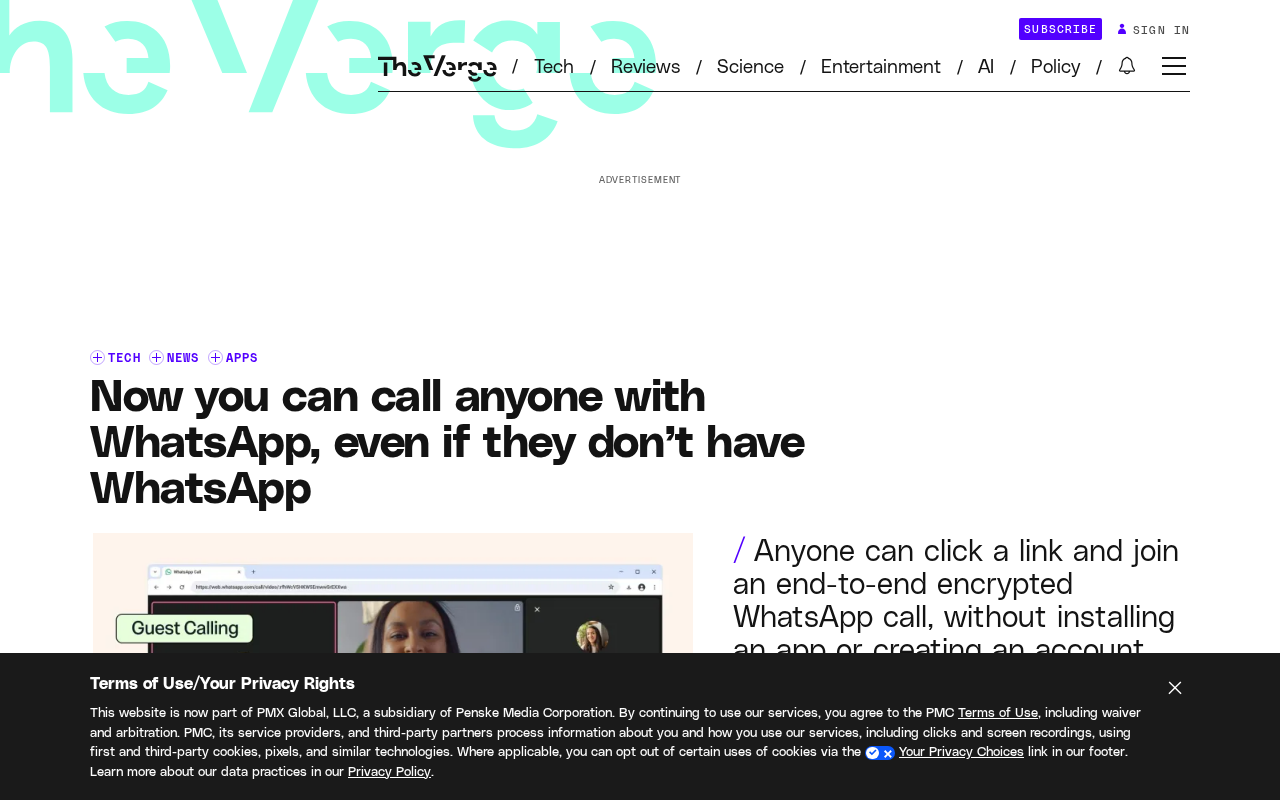
WhatsApp is breaking down one of its most fundamental boundaries—user identity. Meta's newly launched Guest Calls feature allows users to invite anyone to join a voice or video call directly via a call link, with no need for the other party to register a WhatsApp account or even install the app.
What Problem Does Guest Calls Actually Solve
WhatsApp's usage logic has always been rigid: both you and the other person must be registered users with the app installed before a call can be established. This barrier is not a problem in close-circle social scenarios, but it trips people up in many real-world situations.
For example, you want to have a quick voice meeting with a colleague who doesn't use WhatsApp, or video call an elderly family member who can't be bothered to register an account, or reach someone abroad who only uses email. In the past, you had to switch platforms. Now WhatsApp wants you to solve the problem without leaving.
The core mechanism of Guest Calls is simple: the initiator generates a call link, sends it through any channel, and the recipient clicks to join. The entire process requires no app download, no phone number, and no registration flow.
WhatsApp's account system is based on phone number registration, which is a strong identity-binding model among messaging apps. Similar to apps like Telegram and Signal that also anchor on phone numbers, WhatsApp's core design assumption is that both parties in a call have verifiable identity markers. Guest Calls breaks this assumption: it switches the call's access credential from "account" to "link," essentially replacing persistent identity with a temporary token. This model is not new in the video conferencing space—Zoom, Google Meet, and similar products have long supported inviting unregistered users to meetings via links. But in a social app whose primary business is instant messaging, decoupling calling capability from the account system is still a relatively radical architectural adjustment, because it means call signaling, media negotiation, and security verification must all be completed independently without relying on user accounts.
Working in Tandem with Web-Based Calling
Guest Calls is not an isolated feature. Earlier this year, Meta already added calling support to WhatsApp Web, meaning guests can participate in calls through a browser even without installing the desktop or mobile app.
The combined experience is: you send a link, the other person opens it in their computer browser, and enters the call interface directly. In this chain, there's no app store, no installation wait, no account verification. For temporary, one-off communication needs, friction is minimized.
From a product design perspective, this is WhatsApp moving toward a "lightweight communication entry point." It no longer requires every participant to be a platform user, but instead treats the call itself as an independently shareable capability unit.
WhatsApp Web itself is not a standalone app, but uses WebRTC technology to establish a mirrored connection between the browser and the phone, and early versions even required the phone to stay online. Meta's addition of calling support to Web this year means the web client now has independent audio/video capture, encoding, and transmission capabilities, no longer fully dependent on phone-side relay. The technical key to combining Guest Calls with Web capabilities lies in decoupling at the signaling layer: when a guest joins a call, the system needs to complete room allocation, media negotiation, and permission verification without going through account authentication. This mechanism is fundamentally different from the traditional "log in and call a contact" flow, and is closer to the conference control architecture of video conferencing systems.
What It Means for Users and the Platform
For ordinary users, the most direct change is that the range of people you can communicate with has expanded. You no longer need to first convince someone to register for WhatsApp before you can call them. The invitation threshold has dropped from "register + install" to "click a link."
For Meta, the value of this feature lies in user acquisition and engagement. Although guests don't need an account to receive a call, every guest call is a product experience. If a guest finds the call quality acceptable and the interface easy to use, registration conversion becomes a natural next step. This is a shorter path than running ads to acquire users.
For the competitive landscape, WhatsApp's move further blurs the line between messaging apps and general-purpose calling tools. When calling no longer presupposes an account, WhatsApp is effectively competing with a broader range of video conferencing tools—and even built-in system calling features—for the same scenarios.
From a growth model perspective, Guest Calls is a classic Product-Led Growth (PLG) strategy. Traditional messaging apps rely on network effects for user acquisition—everyone around you uses it, so you have to use it too. Guest Calls adds an "experiential conversion" path on top of the existing network effect: guests don't need to first understand WhatsApp's product value, but instead experience the call quality itself first, then get guided toward registration. This path shortens the conversion chain from "first contact" to "completed registration." However, whether this strategy works depends on whether the guest call experience is good enough to make guests think "I want to use this too," rather than just "as long as this call connects."
Limitations to Note
Information about Guest Calls is still fairly limited. The original report does not specify whether guest calls have time limits, participant caps, or how long links remain valid. These details will directly affect the feature's usability in practice.
Additionally, the way call links are shared itself raises certain privacy considerations. If a link is forwarded to a public channel, theoretically anyone who obtains the link could potentially join the call. The specific security mechanisms will require more hands-on testing to assess.
Summary
What WhatsApp Guest Calls does is separate "using WhatsApp" from "making a call through WhatsApp." The former still requires an account; the latter no longer does. This separation looks minor, but it changes the product's degree of dependence on user identity. For a messaging app built on an account system, the direction of this step is worth watching.
One-line Summary
WhatsApp launches Guest Calls, letting users invite account-less guests to join calls via a link, lowering barriers and opening a new acquisition path.
Paragraph Summary
WhatsApp has launched Guest Calls, allowing users to invite anyone to join a voice or video call via a call link, with no need for the recipient to register an account or install the app. The feature works in tandem with WhatsApp Web's calling capability, letting guests join calls directly from a browser. This design decouples "using WhatsApp" from "calling through WhatsApp," making calls independent of the account system and significantly lowering the barrier for reaching new contacts. For Meta, every guest call is a product experience and a potential acquisition conversion path. Currently, specific limits such as call duration, participant caps, and link validity periods remain unclear, and the privacy risks of forwarding call links still need further verification.
Related articles

AI Compute Is the New Oil, But the Market Mechanism Has Yet to Take Shape
Hacker News compares AI compute to the new oil, noting the lack of price discovery, concentrated supply, and no hedging tools. The article analyzes structural issues in compute trading and explores a possible three-tier market of spot, contracts, and derivatives, plus the real impact on AI practitioners' cost management.

Running Full iOS 16.5 Firmware on Android Devices: Technical Demo or Marketing Gimmick?
A Hacker News post claims full iOS 16.5 firmware can run on Android, with 315 upvotes. This analysis argues it is more likely a web UI simulation than a true firmware port, and explores the value and risks of such projects.

Etsy Cracks Down on AI Slop: Addressing Buyer and Seller Anxieties
Etsy introduces stricter rules limiting AI-generated content in listings, addressing buyer confusion over AI products and seller fears of original work being diluted by AI slop.