When AI Writes Code, Where Is the Engineer's Value?

The cheaper code generation becomes, the more expensive verification gets; engineer value shifts from writing code to judgment and verification.
Starting from a not-particularly-popular Hacker News discussion post, the article connects local cloud simulation tools like AWS Emulator with the question of what's left for engineers once AI agents write code. The author points out that AWS Emulator's core value lies not in the number of features but in shortening the feedback loop and improving adherence to real service semantics; the spread of agents shifts the engineer's focus from "writing" to "judging": judging whether the problem is right, whether the code holds up in a real environment, and which changes should not be handed to agents. This leads to a counterintuitive conclusion—the cheaper code generation becomes, the more expensive verification gets, and local repeatable environments will become the bottleneck resource in agent workflows. Finally, it suggests individuals deepen their understanding of systems' real behavioral boundaries, and teams make verification cheap and trustworthy.
A Real Question Raised by an AWS Emulator
A discussion recently appeared on Hacker News titled "AWS Emulator and the engineer's job when agents write the code." The post itself has only 23 points and 0 comments—not particularly popular—but it twists together two topics that were originally separate: local simulation tools like AWS Emulator, and what's left of the engineer's job once AI agents start writing code.
These two topics appearing side by side is no coincidence. AWS Emulator represents the effort to "make the development environment more controllable and more repeatable"; agents writing code represents the trend of "making code production itself cheaper." As the latter becomes more widespread, the significance of the former is actually amplified—because the value of verification and boundaries is now surpassing the value of typing.
What Kind of Problem Does AWS Emulator Solve
Cloud development has long had a friction point: you write a piece of code and want to verify whether it's correct, and the most direct way is to deploy it to a real AWS environment and run it. This process is slow, expensive, and easily dirties your test resources. AWS Emulator's approach is to reproduce the behavior of AWS services locally, letting developers complete most verification before committing.
The positioning of such tools is not to replace real cloud environments, but to shorten the feedback loop. Logic errors that can be caught locally don't need a wasted deployment; configuration issues that can be exposed locally don't need to wait until production to be discovered.
A detail worth mentioning: the value of a simulator depends heavily on "whether it simulates realistically enough." Once the simulated behavior deviates from the real service, developers fall into a worse state: all green locally, all red in production. So the core competitiveness of such tools has never been the number of features, but how closely they adhere to real service semantics.
Tools like AWS Emulator technically fall under the category of "service simulation" or "local cloud emulation," and are fundamentally different from traditional mock frameworks. Mocks generally only replace a single function or HTTP interface and return preset fixed responses; cloud emulators need to reproduce authentication and authorization, resource lifecycles, asynchronous events (such as SQS delivery, S3 event notifications), pagination, error codes, and even rate limiting—a whole set of behavioral semantics. There are three common implementation paths: one is protocol interception and local reimplementation (like LocalStack), another is running trimmed-down versions of real services in containers, and the third is recording and replaying real calls. Each makes different trade-offs on "fidelity," which in turn determines how much responsibility they can bear in an agent's verification workflow.
Another easily overlooked point is state consistency. Cloud services rely heavily on eventual consistency and asynchronous convergence. If local simulation simplifies these timings into synchronous returns, it will mask the typical race conditions in real environments. Therefore, when evaluating such tools, beyond looking at which APIs are covered, it's more important to see whether they preserve those "imperfect" behavioral characteristics of distributed systems.
When Agents Write Code, the Engineer's Role Shifts
The other half of the discussion is more worth expanding on. When AI agents can autonomously generate code, modify files, and even initiate commits, the engineer's focus naturally shifts from "writing" to "judging." This is not a consoling statement, but a shift with concrete content.
First, judge whether the code solves the right problem. Agents are very good at producing implementations given a goal, but they lack stable judgment about "whether the goal itself is reasonable." Requirement boundaries, business constraints, long-term maintenance costs—these still need human oversight.
Second, judge whether the code holds up in a real environment. This is precisely why tools like AWS Emulator become important again. Agent-generated code needs to be verified, and verification needs a reliable, repeatable, low-cost environment. A simulator provides exactly such a sandbox.
Third, judge what should not be handed to agents. Changes involving permissions, data boundaries, and external interfaces have a completely different risk structure from small-scale refactoring. The engineer's value is reflected in drawing this line, not in firefighting afterward.
The key difference between AI coding agents and earlier code completion tools is their "multi-step autonomous execution" capability: they can read codebases, plan modifications, invoke terminals and tests, and self-correct based on errors. This closed loop lets them complete tasks that previously required back-and-forth human operation, but it also introduces new failure modes—goal drift (drifting further from the original requirement), overconfidence (claiming completion without verification), and local optima (changes that satisfy tests but break the design).
This explains why the engineer's "judgment" cannot be simply replaced. Judgment fundamentally depends on understanding system history, organizational constraints, and implicit contracts, and most of this information isn't in the code but in human experience and context. The more autonomous the agent, the more it needs a role that can recognize "it did it right but did the wrong thing"—and that role is still human.
The More Automated the Tools, the More Critical Verification
Looking at these two threads together reveals a counterintuitive conclusion: the cheaper code generation becomes, the more expensive verification gets. When agents can produce large amounts of code in a short time, the burden of human review rises in tandem rather than falling. At this point, an environment that can quickly run and quickly falsify locally becomes the bottleneck resource.
Tools like AWS Emulator thus have a new positioning. They are no longer just a convenience facility that "saves a deployment," but a verification layer in the agent workflow. An ideal process is: the agent produces changes, the local simulation environment runs verification, and humans only handle verification results and exception branches. Human attention is concentrated on what truly needs judgment.
"Verification cost" is a long-underestimated variable in software engineering. The common goal of methodologies like the test pyramid, continuous integration, and contract testing is to move verification earlier and amortize it across every commit. When code production speed increases by an order of magnitude, if verification still grows at the linear speed of human review, it will immediately become the throughput bottleneck of the entire process.
This also explains why "repeatable environments" and "rapid falsification" capabilities suddenly become sought after. Repeatable means the same input必然必然 yields the same result, eliminating environmental noise; rapid falsification means confirming a change is problematic at the minute level rather than the hour level. Only when the two are combined can the agent's high output truly translate into effective delivery, rather than piling up technical debt at a faster rate.
Implications for Engineers
Although this discussion is limited in information, the direction is clear. An engineer's competitiveness is shifting from "how much code you can write" to "how quickly you can judge whether the code is right." The toolchain built around this judgment—local simulation, repeatable environments, automated verification—will become increasingly important.
For individuals, the direction worth investing in is understanding the real behavioral boundaries of systems, rather than staying at the API invocation level. For teams, what's worth investing in is making verification cheap and trustworthy. As agents take on more and more production work, the returns on these two things will only grow higher.
Note: The original material is a short discussion post on Hacker News, which provides no body details beyond the title and score. This article expands on the two themes involved in the title and does not cite specific data that doesn't exist in the material.
One-line Summary
The cheaper code generation becomes, the more expensive verification gets; the engineer's value shifts from writing code to judgment and verification.
Paragraph Summary
Starting from a not-particularly-popular Hacker News discussion post, the article connects local cloud simulation tools like AWS Emulator with the question "what's left for engineers once AI agents write code." The author points out that AWS Emulator's core value lies not in the number of features but in shortening the feedback loop and improving adherence to real service semantics; meanwhile, the spread of agents shifts the engineer's focus from "writing" to "judging": judging whether the problem is right, whether the code holds up in a real environment, and which changes should not be handed to agents. From this comes a counterintuitive conclusion—the cheaper code generation becomes, the more expensive verification gets, and local repeatable environments will become the bottleneck resource in agent workflows. Finally, the article suggests that individuals should deepen their understanding of systems' real behavioral boundaries, and teams should make verification cheap and trustworthy.
Related articles
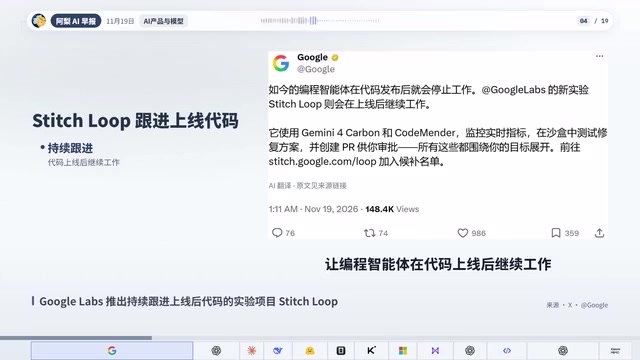
Gemini 4 Neon Released: Tops Coding Benchmarks, Gemini 4 World Model Opens Up
Google releases Gemini 4 Neon, topping the coding agent index with million-token context; Gemini 4 world model opens Project Genie; DeepSeek web search goes free; Microsoft unveils an on-device Windows small model; the White House discusses requiring US companies to disclose whether they use Chinese open-source models.
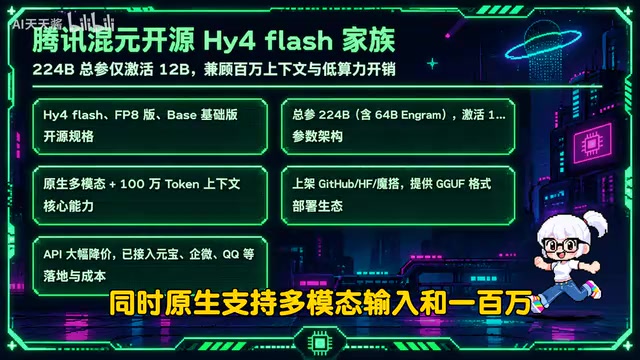
Google Gemini 4 Neon Released: Just $3 per Million Tokens as the AI Price War Escalates
Google releases Gemini 4 Neon at just $3 per million input tokens; Tencent open-sources Hy4 Flash; DeepSeek scraps search-crawling fees; Microsoft unveils new image and voice models; NVIDIA halts H200 shipments to China; Citi says no reimbursement for AI-agent fraud losses. Today's hardcore AI news in one read.

DeepSeek Quota Wall Pre-embedded in Code: The 48 Hours of Open-Source Migration Tools and Chat Restrictions
DeepSeek pre-embedded quota limits in frontend code two days early; old chats expire after 72 hours of inactivity on Nov 15, while APIs and client code go open-source the same week. This analysis examines the VRAM pressure and three-way resource contention behind rapid quota depletion, and the user dilemma of "not unwilling to pay, but unable to find where to pay."