Who Dropped the First Swear Word on the Moon? NASA Recordings Reveal All

A YouTube creator traced every swear word spoken on the Moon by comparing NASA transcripts with raw mission audio.
A YouTube creator read every word ever spoken on the lunar surface and discovered that the Apollo 11 crew was remarkably clean-mouthed. Profanity began with Apollo 12, where Alan Bean and Pete Conrad contributed the D-word and H-word respectively. Apollo 14's Alan Shepard added the S-word and B-word out of equipment frustration. The most dramatic find came from Apollo 16: NASA's official transcript sanitized a John Young quote, but the raw audio clearly preserved his F-bomb — revealing that historical transcripts and original recordings can diverge in meaningful ways.
A Niche But Fascinating Question in Space History
Everyone knows the first words spoken on the Moon — Armstrong's "one small step" is etched into collective memory. But far fewer people have ever thought to ask: who dropped the first swear word on the Moon?
One YouTube creator set out to answer exactly that question by reading every single word ever spoken by a human being on the lunar surface. The conclusion is fittingly dramatic: it depends on how you define "swear word." But one thing is certain — it was absolutely not the Apollo 11 crew.
Neil Armstrong and Buzz Aldrin come across as remarkably clean-spoken in the recordings. The creator combed through the transcripts and couldn't find so much as a "damn" or a "hell." That near-perfect linguistic restraint actually serves as the baseline for everything that follows.
Apollo 12: The First Profanity on Record
Apollo 12, by contrast, is affectionately dubbed "Apollo Potty Mouth" by the creator.
According to the records, at 13:10 UTC on November 19, 1969, Lunar Module Pilot Alan Bean became the first person to say a word beginning with "D" on the Moon. The following day, Commander Charles "Pete" Conrad became the first to say an "H-word" on the lunar surface.

By today's standards, these words barely register as profanity — but in the rigorous context of a NASA mission, they still marked a genuine "first" in the linguistic history of spaceflight.
Apollo 12 launched in November 1969 and was humanity's second successful Moon landing. Commander Pete Conrad and Lunar Module Pilot Alan Bean spent approximately 31.5 hours on the surface, completing two extravehicular activities (EVAs). Unlike the cautious, high-stakes atmosphere of Apollo 11, Apollo 12 had a more relaxed pace. The crew had more time for scientific experiments and equipment deployment. That relatively comfortable rhythm — combined with the longer surface stay — may well explain why more "everyday language" found its way into the record. The astronauts were no longer operating under the extreme tension of a first-ever landing, so the occasional slip into natural speech patterns isn't surprising. NASA recorded mission communications in near real-time throughout, preserving every exchange between the astronauts and Mission Control — which is precisely what makes this kind of word-by-word reconstruction possible.
Apollo 14: Frustration Raises the Bar
Apollo 13 never reached the Moon, but Apollo 14 contributed several new "firsts."
Commander Alan Shepard grew increasingly frustrated trying to reach a valve behind Edgar D. Mitchell. At 19:34 UTC on February 5, 1971, he became the first human to say an "S-word" on the Moon.
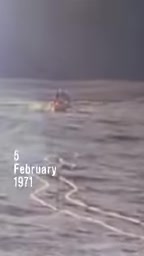
During the second moonwalk, Shepard's patience was again tested — this time by a special environmental container bag — earning him the additional distinction of delivering the first "B-word" on the lunar surface. These moments share a common thread: the real profanity almost always came from equipment-related frustration rather than emotional outbursts. In a way, that's a very accurate portrait of a highly trained professional.
Apollo 16: The "F-Bomb" Hidden in the Official Transcript
The most contentious — and most informationally rich — part of the video concerns the heaviest word of all, the one beginning with "F."
The creator openly acknowledges that this video was a correction of a version published the day before. A commenter had pointed out that Apollo 16's John Young may have dropped the F-word while complaining about his stomach and citrus fruit. The creator initially wasn't convinced — the NASA official transcript contained no such word.
Out of curiosity, the creator pulled the complete Apollo 16 mission audio and went through it segment by segment. What they heard was unmistakable: John Young saying, "I haven't eaten this much citrus fruit in 20 years, I'll tell you. And I'm going to be so f***ing glad when we're done with these 12 days."
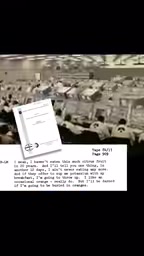
The official transcript had sanitized the line, but the raw audio couldn't hide it. The creator's conclusion: at 02:45 UTC on April 22, 1972, America dropped its first F-bomb on the Moon.
NASA mission transcripts are written documents compiled after a mission by having specialists transcribe the audio recordings. Long published as the primary reference material for Apollo research, these transcripts are broadly faithful — but as this case reveals, individual lines were occasionally sanitized, whether for public relations reasons or at the transcriber's own discretion. The raw mission audio (commonly referred to as "air-to-ground" or "onboard" recordings) has always been publicly available, but its sheer volume and high barrier to casual listening meant it sat in a state of "accessible but rarely systematically reviewed" for decades. The John Young case demonstrates that the gap between transcript and audio is itself a valuable historical archive — one that reflects the deliberate image management of astronauts in a particular era.
Why This Quirky Deep-Dive Actually Matters
What looks like a frivolous question turns out to touch on a few genuinely interesting points.
The discrepancy between official transcripts and raw audio is a reminder that any curated historical text may have been processed — and that primary sources are almost always the most reliable. The creator didn't stop at the official transcript; they went back to the original audio to verify. That instinct to cross-check is the core method of good historical research.
At the same time, these moments make the distant and almost mythological Moon landings feel profoundly human. Astronauts were not emotionless machines. They swore when they couldn't reach a valve. They reached a breaking point after too many days of citrus. It's precisely these details — scrubbed from the official record — that bring the people on the Moon back to life as real, flesh-and-blood human beings.
Related articles

Big Tech AI Engineering Interview: Full-Chain Observability from Frontend Monitoring to Agents
From PerformanceObserver metrics collection and onerror/unhandledrejection exception capture, to RAG pipeline reranking and context compression for token cost control, to designing a full-site AI full-chain observability system benchmarked against LangSmith and Sentry—breaking down the three progressive layers of big tech AI engineering interviews.

WorkBuddy Step-by-Step Guide: Build Your Own AI Agent Work Assistant
WorkBuddy step-by-step guide: starting from the limits of chat models like Doubao, learn to build your own AI Agent work assistant for batch local file processing and automation—no programming required.

Building a Local Knowledge Base with LangChain-Chatchat + DeepSeek on Windows
This article, based on a Bilibili tutorial, details the full workflow of building a local knowledge base on Windows using LangChain-Chatchat and DeepSeek, including Anaconda environment setup, Ollama model management, mirror acceleration, and common error solutions, helping you quickly implement RAG Q&A.