Who's Actually Making Money in AI Startups? The Harsh Truth About Wealth Distribution

AI startup wealth flows to VCs, funds, and insiders — not ordinary participants.
The AI startup boom promises life-changing wealth, but the reality is starkly different. VCs and institutional investors leverage structural advantages like liquidation preferences and anti-dilution clauses to secure returns, while insiders benefit from stock options. Ordinary participants — retail investors and outsiders — often end up as bag holders. Understanding your true position in the value chain is the key to navigating this unequal landscape.
A Tweet That Sparked a Conversation
Recently, a short but piercing tweet ignited widespread discussion across the tech world. The author lamented: "Could have used this to escape the underclass, yet the ones who actually made money were the VCs, funds, other institutions, and employees."
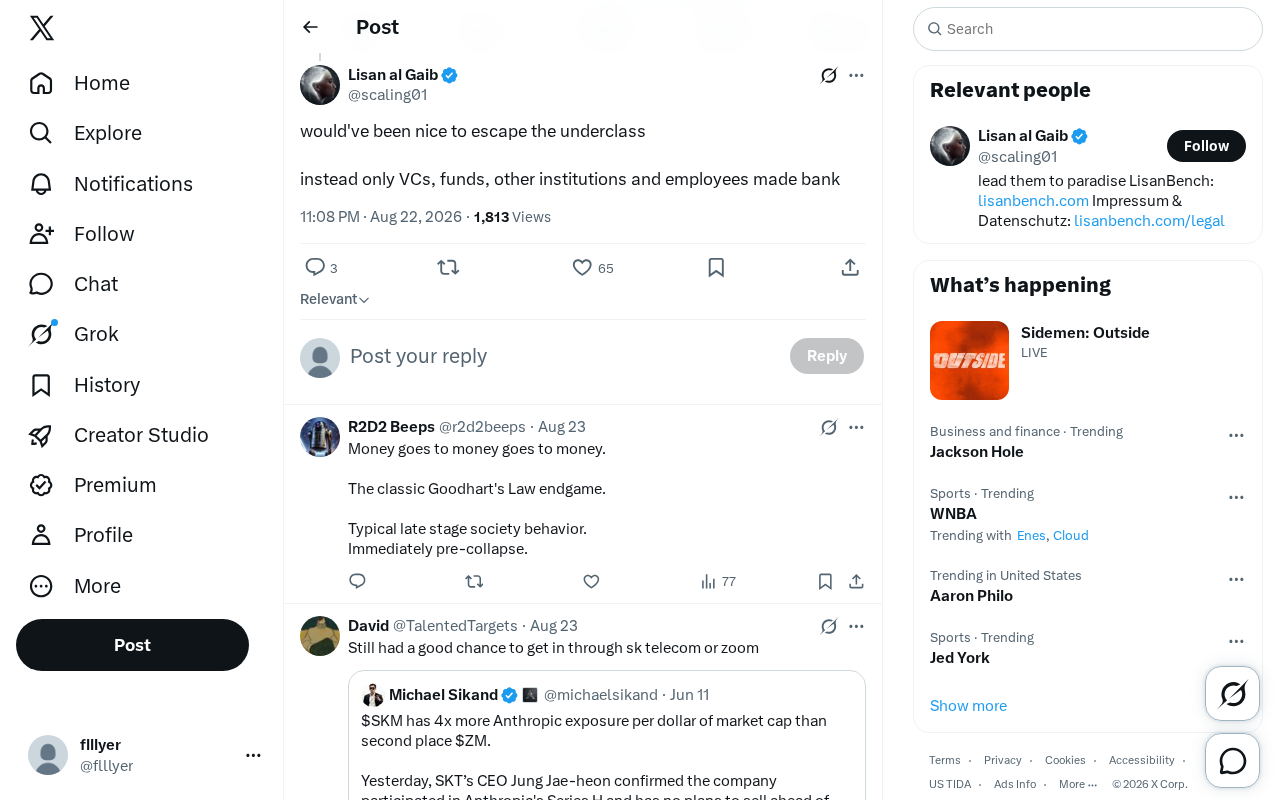
What might seem like an emotional outburst actually touches on an extremely core yet often overlooked issue in today's AI and tech startup wave: Where does the wealth actually flow? In this grand technological revolution, the distribution of gains among founders, early participants, ordinary workers, and capital holders is becoming increasingly imbalanced.
The Structural Imbalance of Wealth Distribution in AI Startups
Capital's Inherent Advantage in Tech Entrepreneurship
In the value chain of tech startups, venture capital (VC) firms, private equity funds, and large institutions almost always hold a structural advantage. They don't just have the power of capital — they control the terms of the deal. Liquidation preferences, anti-dilution provisions, board seats — these seemingly technical arrangements essentially guarantee that no matter how a company ends up, capital providers get paid first.
Specifically, liquidation preference means that when a company is acquired or liquidated, preferred shareholders — the investors — can reclaim their investment before common stockholders (typically founders and employees), often at 1–3x the original investment amount. Anti-dilution provisions protect investors from equity dilution in subsequent down rounds, usually through conversion price adjustments using either the full ratchet or weighted average method. These clauses ensure that even if a company exits at a valuation far below its last funding round, investors can still recover their principal or even turn a profit, while founders and employees may walk away with next to nothing.
When a company successfully exits or goes public, institutional investors are typically the first — and largest — beneficiaries. Meanwhile, the equity held by founders and early contributors may have been significantly diluted through multiple funding rounds. Consider a typical funding trajectory: a founder might hold 70%–80% after the seed round, drop to 50%–60% after Series A, retain only 30%–40% after Series B, and by IPO, founder ownership might fall below 15%. If the company's valuation doesn't grow fast enough, or if it goes through a down round, the founder's actual wealth growth falls far short of the headline numbers. In more extreme cases, due to the stacking effect of liquidation preferences, founders may discover at exit that their common shares are virtually worthless.
The Wealth Divide Between "Insiders" and "Outsiders"
Interestingly, the original tweet specifically mentions that "employees" are also among those who made money. This reflects a subtle reality: even within the same startup wave, being inside versus outside the organization is the decisive factor.
Stock options and restricted stock units (RSUs) granted to employees by tech companies are one of the core wealth-creation mechanisms in Silicon Valley. Options give employees the right to purchase company shares at a predetermined strike price in the future. If the company's valuation surges, employees can acquire shares at a cost far below market value, achieving substantial wealth accumulation. However, this mechanism is not without risk: employees typically face a four-year vesting schedule with a one-year cliff, meaning anyone who leaves within the first year gets nothing. At private companies, options have extremely low liquidity — employees may hold significant "paper wealth" they can't actually cash out. Exercising options also involves complex tax implications — in the U.S., ISOs (Incentive Stock Options) and NSOs (Non-Statutory Stock Options) have entirely different tax treatments, and mishandling can result in massive tax bills.
Nevertheless, compared to those entirely outside the organization, core employees with options still enjoy an enormous structural advantage, sharing in the upside of company growth. Meanwhile, ordinary people hoping to "get on board" through investing, token purchases, or peripheral participation are typically disadvantaged in terms of information, timing, and resources — ultimately becoming the bag holders rather than the beneficiaries.
The Gap Between AI-Era Wealth Narratives and Reality
The Promise of Technological Revolution vs. Harsh Reality
Every technological revolution comes with grand narratives about "changing your destiny." From the internet to mobile, and now artificial intelligence, people are always told this is a historic opportunity for "class mobility."
But reality tends to be far harsher. The enormous value created by technological revolutions tends to concentrate toward those who already control capital and resources. This is especially pronounced in AI — the compute costs required to train large models, data resources, and top-tier talent all create extremely high barriers to entry. According to public information, the computational cost of training GPT-4 is estimated to have exceeded $100 million, and next-generation models may cost hundreds of millions or even billions of dollars to train. These costs primarily come from renting or purchasing specialized chips like GPUs/TPUs — take the NVIDIA H100 GPU as an example, with a unit price of roughly $25,000–$40,000, and training a top-tier model may require tens of thousands of such chips clustered together running for months. Beyond compute, acquiring and cleaning high-quality training data represents another major barrier. Large tech companies hold a natural advantage through years of accumulated user data and content ecosystems, while startups must rely on public datasets or obtain training materials through expensive data licensing agreements. This capital-intensive nature means those who can truly participate in the core of value creation remain the few players with deep pockets.
The Retail Investor Trap in Crypto and AI Investing
The context of this tweet also calls to mind a script that has played out repeatedly in recent years across cryptocurrency and AI token projects: project teams and early investors cash out at the top, while retail investors who pile in later bear the cost of the bubble bursting.
This predicament has clear structural causes. In typical token distribution models, project teams and early investors receive token allocations at extremely low prices — sometimes just 1/10 or even 1/100 of the public sale price — with accompanying vesting periods. However, these vesting periods typically expire 6–18 months after the project launches, flooding the market with low-cost tokens and creating massive sell pressure. Retail investors are often driven by FOMO (Fear of Missing Out) to enter when the narrative is hottest and prices are highest, becoming the exact counterparties for early holders looking to cash out. Cases like FTX and Luna/UST have repeatedly demonstrated the destructive power of this pattern.
The beautiful vision of "escaping the underclass" ultimately devolves into yet another cycle of wealth transfer from the many to the few. This isn't an isolated incident — it's a structural phenomenon: in high-risk markets lacking institutional protections, retail investors are inherently at the bottom of the food chain.
Is the Democratization of Technology Just an Illusion?
The Mismatch Between Idealistic Slogans and Incentive Structures
The tech industry has long rallied behind slogans of "democratization" and "participation for all," but incentive structures are often designed in direct contradiction. The concept of technology democratization traces back to the personal computer revolution. Apple co-founder Steve Wozniak envisioned the personal computer as a tool that would give individuals the same computing power as large institutions. Since then, the proliferation of the internet, smartphones, and cloud computing has indeed lowered barriers to technology use and entrepreneurship — cloud services like AWS enable entrepreneurs to launch businesses without building their own data centers.
However, each wave of technology democratization contains a paradox: while the barrier to using technology decreases, the power to control technological infrastructure and platforms becomes further concentrated. For example, while anyone can publish an app on the App Store, Apple holds the power of life and death through its 30% commission and review mechanisms. This paradox is even sharper in the AI era: the emergence of open-source models (such as Meta's LLaMA series, Mistral, etc.) has indeed made AI capabilities accessible to more people, but the power to train frontier models and define the direction of technology remains firmly in the hands of a few giants.
When a project's success primarily benefits capital holders and insiders, so-called "open participation" is more of a marketing pitch. The real question worth asking is: Can the wealth created by technological progress be distributed more equitably? Or does the profit-seeking nature of capital inevitably lead every wave to the same conclusion?
How Ordinary Participants Can Make Rational Choices
For ordinary workers and investors, this tweet offers a wake-up call: Before participating in any tech hype cycle, you must clearly understand your true position in the value chain.
Are you a core creator, or a peripheral bag holder? Are you on the side with information asymmetry working in your favor, or a follower swept up by narrative? The answers to these questions often determine the final outcome. Understanding the underlying logic of wealth distribution is far more important than chasing short-term get-rich-quick fantasies. Specifically, ordinary participants need to examine several key dimensions: Do you have asymmetric information advantages? Are you in the core of value creation rather than the periphery? Does the cost and risk of participation match the potential return? In the AI era, this might mean that instead of blindly investing in AI concept stocks or tokens, it's better to invest in upgrading your own professional skills in AI application, becoming an irreplaceable value creator within an organization.
Conclusion
This brief tweet resonated so widely precisely because it punctured a cruel truth beneath the glamour of tech entrepreneurship: The value created by technological revolutions doesn't automatically flow to all participants. VCs, funds, institutions, and insiders rake in the profits, while outsiders dreaming of "changing their destiny" are often left empty-handed.
As the AI wave surges today, this reminder is especially timely. We should embrace the opportunities that technological progress brings, but we also need to soberly recognize that the distribution of opportunity has never been equal. Only by understanding the rules and seeing your true position can you avoid being the last one left holding the bill in this game of wealth redistribution.
Related articles

Semantica: Graph-Native Context Infrastructure That Gives AI Agents True Contextual Understanding
Deep dive into Semantica, an open-source graph-native AI context infrastructure. Learn how knowledge graphs replace traditional RAG to improve agent context understanding and decision traceability.

AI Learning Roadmap for Everyday Programmers: From Math Fundamentals to Hands-On Agent Development
An AI learning roadmap for everyday programmers covering math basics, deep learning, Transformers, LLM fine-tuning, RAG, and Agent development across five stages.

Deep Analysis of the Manchester Airport 80GB Data Breach and Defensive Takeaways
FulcrumSec ransomware group claims 80GB stolen from Manchester Airports Group. Deep analysis of security gaps, Zero Trust, behavioral detection, and defense strategies for critical infrastructure.