Why a Fields Medalist Refused to Sign an Open Letter: One Mathematician's Independent Thinking
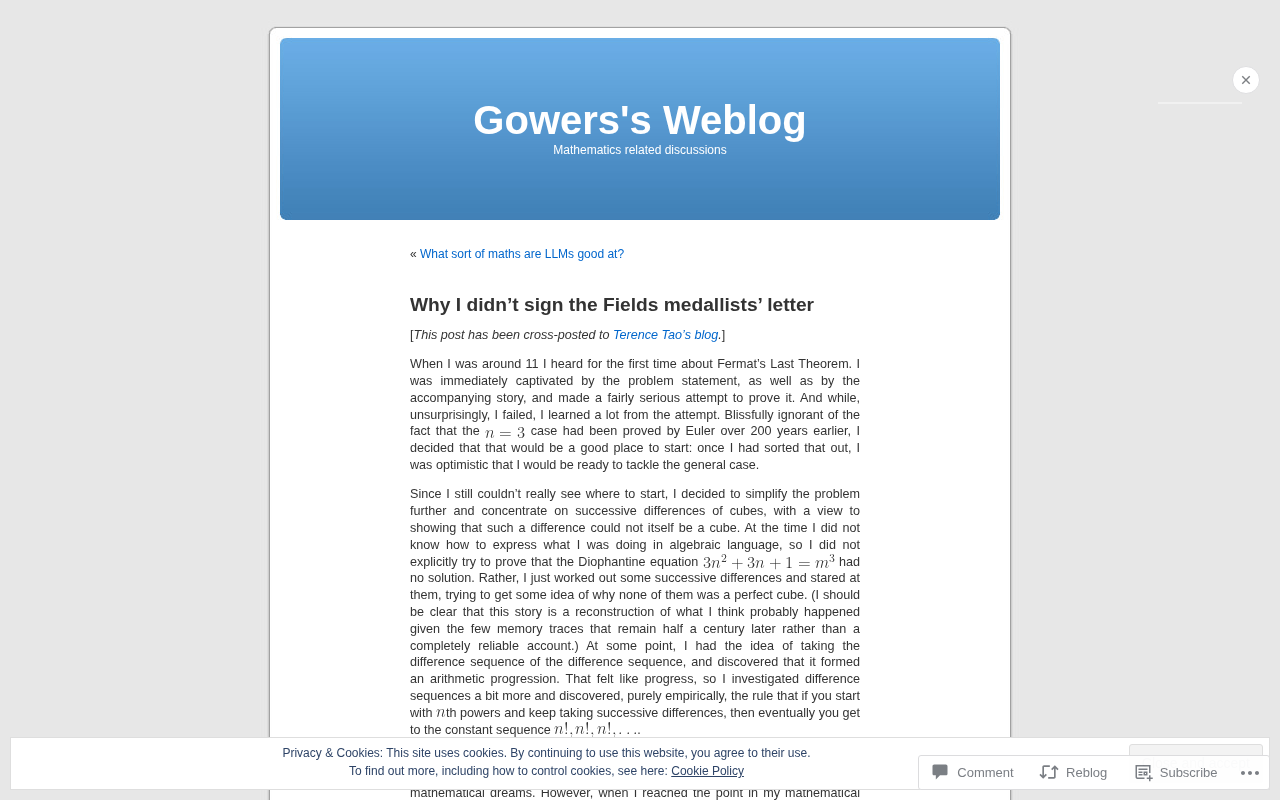
Fields Medalist Gowers refused to co-sign an open letter, arguing professional prestige shouldn't endorse issues outside one's expertise.
Fields Medalist Timothy Gowers publicly explained on his blog why he declined to sign a co-authored open letter from peers, sparking broad debate about scientists' public statements. His core argument: mathematical prestige should not be used to endorse positions one hasn't independently verified, since collective signatures create "credibility laundering" that leads the public to conflate mathematical authority with expertise on unrelated issues. He also emphasized that refusing to sign is not the same as opposing the letter's content — it is a commitment to the boundary between partial agreement and full endorsement. The discussion drew 363 comments on Hacker News and holds clear implications for the wave of co-signed AI open letters in the tech world today.
The Fields Medal is considered one of the highest honors in mathematics. When a group of Fields Medalists jointly sign an open letter, it tends to attract widespread attention from the academic community and the public alike. Yet renowned mathematician and Fields Medalist Timothy Gowers publicly wrote an essay explaining why he chose not to sign one such letter. Published on his personal blog, the post received 254 upvotes and 363 comments on Hacker News, sparking a lively debate about the tension between scientists' public statements, collective endorsements, and individual positions.
An Open Letter That Sparked Reflection
In academic circles, co-signed open letters are a common way to express a collective stance. When multiple highly esteemed scholars sign together, the letter itself takes on an authority and influence that transcends any individual. A joint signature from Fields Medalists would undoubtedly give a letter enormous media coverage and rhetorical weight.
Yet it was precisely this power of collective authority that gave Gowers pause. As a mathematician renowned for logical rigor, his essay was not a simple rejection of the letter's position — rather, it was a deep and honest self-examination of whether he should participate in the act of signing at all. This candid public reflection is the core reason the piece resonated so widely.
The Tension Between Independent Judgment and Collective Endorsement
Gowers's central concern was this: should a person's professional reputation be used to lend credibility to issues outside their area of expertise? The Fields Medal represents outstanding achievement in mathematics, but when its recipients co-sign a statement on a social or political issue, the public can easily misread their mathematical authority as professional expertise on that issue.
This distinction is critical. Scientists and mathematicians, as citizens, absolutely have the right to express personal opinions. But when they sign collectively under the banner of "Fields Medalists," they are effectively borrowing professional credibility to add persuasive weight to a position. Gowers was wary of this kind of "credibility laundering" — he preferred to speak out only on matters where he genuinely had professional standing, or where he had reached confident independent conclusions through careful thought, rather than going along with the crowd out of social pressure or emotional solidarity.
Credibility laundering is a key concept in discussions of scientists' public statements. It refers to the implicit transfer of authority accumulated in one field to an entirely different domain, lending the latter a degree of trustworthiness it has not earned. This phenomenon has a long history in science — when Nobel laureates issue joint statements on nuclear disarmament, climate policy, or genetically modified foods, the public often struggles to distinguish "a scientist's scientific judgment" from "a scientist's policy preference." Psychological research shows that high-prestige sources trigger a "halo effect," leading audiences to generalize an expert's competence in one area to all their public statements. For this reason, some science ethicists argue that scholars speaking publicly should explicitly distinguish between "my professional judgment is" and "as a citizen, I believe" — in order to preserve the epistemic quality of public discourse.
The Responsibility Behind the Act of Signing
It is worth reflecting on the fact that refusing to sign is not the same as opposing the letter's content or position. Gowers's stance reflects a more nuanced ethics of responsibility: signing means being accountable for the entirety of a document — its line of argument, its wording, and even the ways it might be used or misused.
For a scholar accustomed to the standard of mathematics, where every step of a proof must be airtight, adding one's name to a collective document whose argumentative details one cannot fully control represents a form of intellectual compromise. This insistence on the boundary between "partial agreement" and "full endorsement" reflects the extension of rigorous thinking habits into public life.
The Limits of the Scholar's Public Role
This discussion touches on a broader question: what role should scientists play in the public sphere? In the Hacker News comment section, many readers debated this very issue. Some praised Gowers for maintaining his independence, arguing that scholars should not be swept up in collective posturing. Others countered that on certain major issues, influential scholars have a responsibility to take a public stand.
This divide itself reflects a dilemma faced by contemporary intellectuals. On one hand, professional reputation grants them greater voice; on the other, once that voice is deployed outside their area of expertise, it risks misleading or being exploited. Gowers's choice offers a middle path: neither surrendering his right to speak as a citizen, nor casually spending down his credibility as an expert.
Implications for the Age of Technology and AI
In today's era of rapid advances in artificial intelligence and technology, Gowers's reflections carry relevance far beyond the mathematics community. As more and more tech leaders and AI researchers co-sign public statements on topics like technological risk and regulatory policy, the same dangers of professional credibility being misused or misread are very much present.
When prominent AI scientists co-sign an open letter, is it based on rigorous technical judgment — or is it colored by group sentiment and tribal alignment? How can the public distinguish between an expert's "professional opinion" and their "personal view"? The questions Gowers raises serve as a mirror for all technical experts who find themselves on the public stage: before joining a collective statement, first clarify what exactly you are taking responsibility for, and where your reputation is being put to use.
This kind of independent, cautious, self-aware relationship with one's own influence may well be the rarest quality of all in an era of information overload and polarized opinion.
In recent years, the AI field has seen several co-signed open letters that sparked widespread controversy. Among the most notable: the 2023 letter initiated by the Future of Life Institute — signed by Elon Musk and others — calling for a pause on large-scale AI training, and a statement that same year signed by multiple AI safety researchers warning of AI extinction risk. These letters drew criticism precisely because their signatories were so varied — top researchers alongside tech entrepreneurs and policy advocates — making it nearly impossible to tell whether the signatures reflected genuine technical consensus or a mix of commercial interests, ideology, and social pressure. Some researchers later admitted they had committed to signing before the final wording was settled, or had signed along because they feared that silence would be misread as opposition. This maps closely onto the group-pressure dynamics Gowers describes, and has made the public's interpretation of such collective declarations increasingly difficult.
Related articles
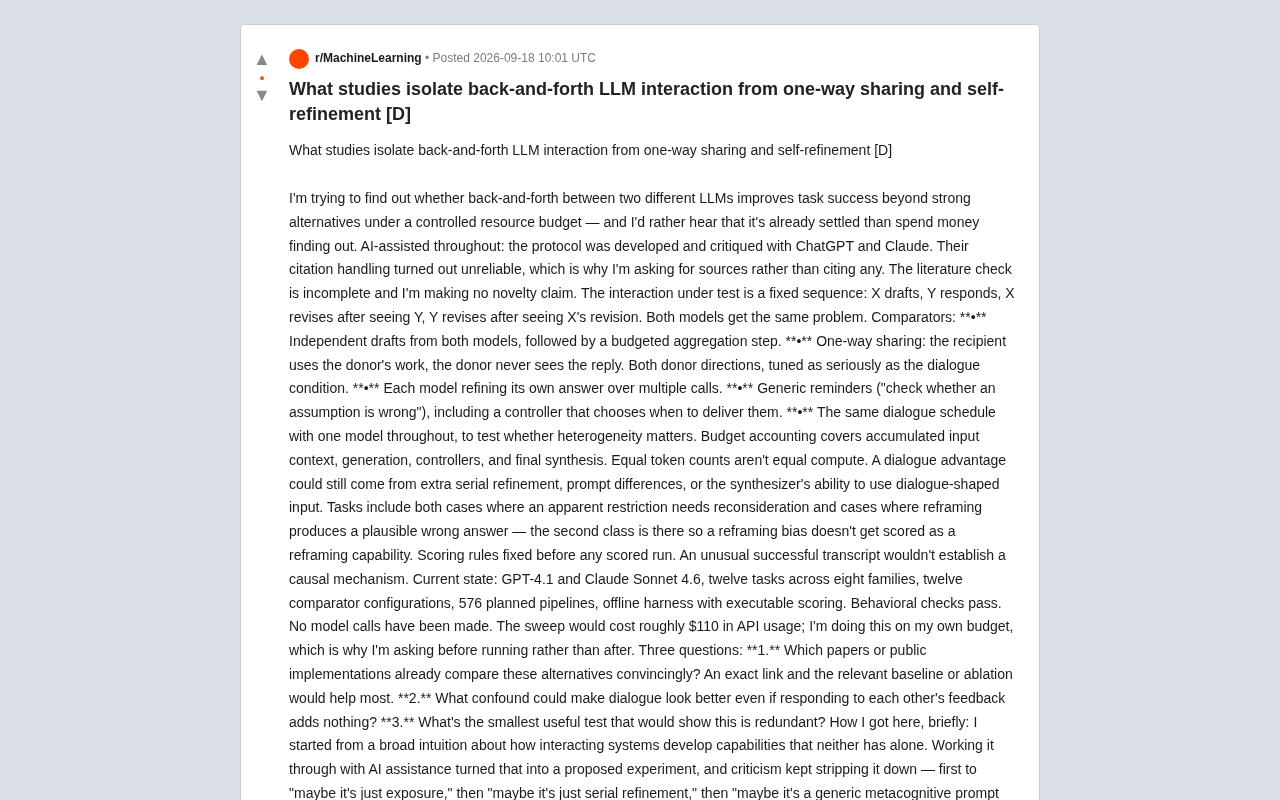
Can Multi-LLM Dialogue Really Improve Task Performance? Lessons from a Rigorous Experimental Design
A researcher designed rigorous controlled experiments to isolate whether multi-LLM back-and-forth dialogue genuinely outperforms simpler baselines like self-refinement and one-way sharing.

Which $10 AI Coding Plan Should You Choose? Go vs. Code Credit Breakdown
After DeepSeek's price hike, should you pick Go or Code for your $10 AI coding plan? We break down credit allocations for Mimo, Qwen, DeepSeek V4, Kimi, and more.
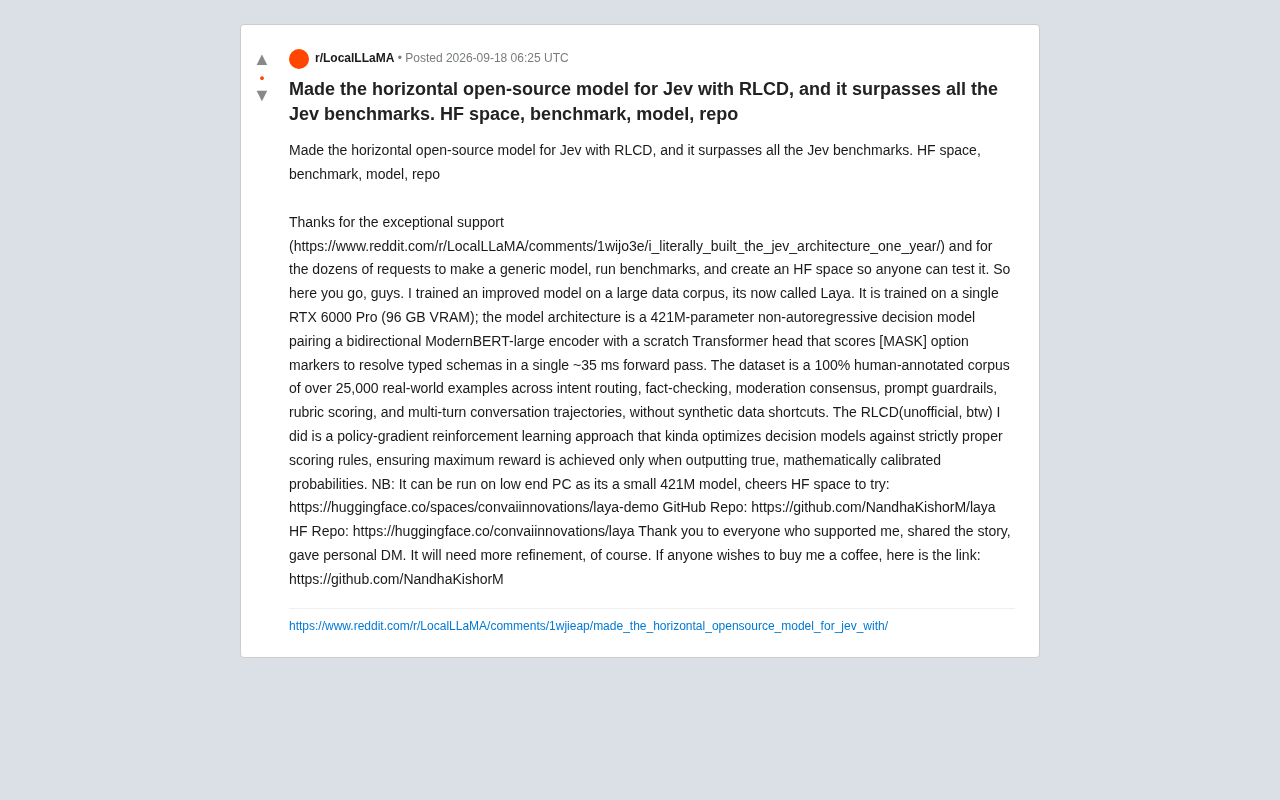
Laya Open-Source Decision Model: How 421M Parameters Beat Jev Benchmarks
Laya is an open-source 421M-parameter non-autoregressive decision model built on the Jev architecture, trained with RLCD on 25,000 human-annotated samples using a single GPU, running in ~35ms on low-end PCs.