Why Did Ancient Egyptians Abandon the Pyramids? Archaeology Unravels a Millennia-Old Mystery
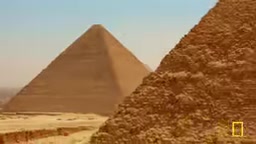
A documentary traces the rise and fall of Egypt's pyramids, exposing how royal power, economics, and beliefs about the afterlife drove their abandonment.
National Geographic's Lost Treasures of Egypt follows multiple archaeological teams from Saqqara to the Valley of the Kings, charting the nearly 3,000-year arc of the ancient Egyptian pyramid. Beginning with Djoser's step pyramid around 2650 BCE and peaking at Giza, the tradition collapsed under political, economic, and ideological pressures: the growing wealth of southern governors eroded the pharaoh's monopoly on the afterlife, the breakdown of copper-mining expeditions destroyed the material basis for monumental construction, and the Old Kingdom ultimately fell to famine and unrest. Seven centuries later, New Kingdom pharaohs replaced pyramids with rock-cut tombs in the Valley of the Kings and maintained their legacy through separate mortuary temples — yet neither approach proved immune to robbers or time.
The pyramid is the most dazzling symbol of ancient Egyptian civilization — yet a fact that has long puzzled archaeologists is this: over a nearly 3,000-year history, pharaohs built these colossal tombs for only a few of those centuries, then abandoned the practice entirely. The National Geographic documentary Lost Treasures of Egypt follows multiple archaeological teams from Giza to Aswan, from the Red Sea coast to the Valley of the Kings, piecing together the truth behind this "death of the pyramid."
The Origin of the Pyramid: An Architectural Revolution at Saqqara
When people think of pyramids, the Great Pyramid of Khufu at Giza usually comes to mind. But Egyptologist Chris Naunton points out that the true starting point lies ten miles south of Giza, at Saqqara.
Built around 2650 BCE, the Step Pyramid of Djoser was Egypt's first pyramid — and the world's first monumental structure built entirely of stone. This 200-foot-tall tomb is composed of six massive limestone platforms, engineered with precision to distribute the weight of the rock and prevent collapse. Deep within its core is a giant shaft 26 feet wide and 82 feet deep, at the bottom of which lay the pharaoh Djoser's final resting place.
To house the pharaoh's mummy, craftsmen slid enormous granite blocks down into the shaft and stacked them layer by layer, forming a colossal stone sarcophagus measuring 19 feet long and 11 feet high. "These stones are absolutely massive," archaeologists remarked on site. Djoser's six-tiered structure was not merely a tomb — more crucially, it ensured the king would be remembered by the living, a belief central to ancient Egyptian ideas about success in the afterlife.
Over the following century, Egyptian kings continued developing this concept along the west bank of the Nile, constructing the first geometrically true pyramid — the Red Pyramid — as well as the oddly shaped "Bent Pyramid" as an experimental work, before culminating in the pinnacle achievement of the Giza pyramid complex.
The designer of Djoser's Step Pyramid is believed to be Imhotep, the most celebrated architect and vizier in ancient Egyptian history. His significance in architectural history cannot be overstated. Before him, royal tombs in Egypt were primarily mastabas — low, rectangular mud-brick platforms. Imhotep stacked multiple mastabas on top of one another and replaced mud brick with limestone, giving rise to the stepped pyramid form. This was a monumental technological leap: stone was far more durable than mud brick, but the structural challenges posed by its weight were far greater, necessitating precise engineering calculations. Notably, the later Bent Pyramid (circa 2600 BCE) reflects the structural difficulties builders encountered as they attempted to achieve a true smooth-sided form — midway through construction, the angle of inclination had to be reduced from 54° to 43° to prevent collapse. It was through these "failed experiments" that the Egyptians ultimately mastered the technique for building the standard four-sided pyramid, reaching their peak at Giza.
The Balance of Power: The Rise of the Southern Nobility
At their core, pyramids were symbols of power — separating the king from the rest of society and granting him privileged access to the afterlife. But the documentary reveals a critical shift in that power.
Some 400 miles south of the pyramids, at Aswan, Professor Alejandro Jimenez Serrano has spent 11 archaeological seasons excavating the tombs of wealthy local governors at Qubbet el Hawa. He believes these southern elites were among the key forces behind the pyramid's decline.
While pharaohs in the north were building pyramids, the governors of the south were growing increasingly wealthy and making their own arrangements for eternal life — carving ever more elaborate tomb chambers deep into the cliffs. Alejandro found that just as Pharaoh Pepi II was constructing the last great pyramid, the scale of the Qubbet el Hawa governors' tombs had expanded fivefold during Pepi's reign.
This sent a revolutionary message: the afterlife was no longer the pharaoh's exclusive domain, and the pyramid was no longer the only gateway to immortality. As central royal power declined and local governors — effectively the "third most powerful figures" in the national power structure — grew in wealth and ambition, the symbolic meaning of the pyramid as an expression of absolute royal authority began to crumble.
During the current excavation season, the team followed trails of termite damage through wooden coffins and discovered a tomb door that no one had laid eyes on in over 4,000 years. "We may be the first people to see this door in over 4,000 years," Alejandro said, barely containing his excitement.
Copper and Economics: The Lifeblood of the Pyramid's Rise and Fall
The decline of the pyramid was, at its root, an economic problem — a point demonstrated at the site of Ain Sukhna on the Red Sea coast.
French archaeologist Claire Sommaglino has been excavating here for nine years. She discovered that this was not a permanent settlement, but a temporary camp — comprising only dwellings, workshops, and cooking areas — used by expeditionary forces for two or three months at a time. Ancient inscriptions carved into the rock face reveal that this site served as a waystation in a supply chain, transporting the resource most indispensable to the pharaoh's pyramid construction: copper.
Copper was the essential metal of ancient stone-carving — a strategic resource for building pyramids, sphinxes, and large-scale monuments. When a pharaoh needed more copper, he would dispatch expeditions of thousands of men across the Red Sea to the mines of the Sinai Peninsula, extracting hundreds of pounds of copper ore to be carried back to the Nile Valley.

The critical evidence appeared in the stratigraphic profile of the camp. A sediment diagram compiled by archaeologist Adeline Batts clearly shows a thick layer of mud — accumulated over decades through wind erosion and flooding — lying above the ash layers from the Old Kingdom period. "From the stratigraphy, you can see very clearly that this site was abandoned at this point," she noted. This indicated that the site had gone unvisited for a century or more — the pharaohs had abandoned their copper-mining expeditions.
The exhaustion of wealth meant they could no longer afford to build colossal pyramids. Inside Pepi II's tomb, nearly every inch of wall surface is covered with spells designed to help the pharaoh safely navigate the underworld — a stark contrast to the bare chambers of Khufu's Great Pyramid. Hieroglyphics specialist Christelle Alvarez points out that this obsession with "filling every available surface with text" actually reflects a desperate intensification of belief in the pyramid's power, just as royal authority was on the verge of collapse.
During the Old Kingdom, the primary sources of copper were the mining sites of Wadi Maghara and Serabit el-Khadim on the Sinai Peninsula. Before the Iron Age, copper was the most important industrial metal in the ancient world. Copper chisels used for stone carving, no matter how sharp, quickly dulled against hard granite — meaning a major pyramid construction project consumed tons of copper in continually replacing tools. Organizing cross-sea expeditions of this scale required a powerful state apparatus: fleets, logistical supply chains, and the coordination of large labor forces — all underpinned by a stable and abundant national treasury. The abandoned sediment layers at Ain Sukhna are thus not merely geographical evidence, but direct proof of the decline in state mobilization capacity: when the central government could no longer sustain the copper supply chain, the material foundation of pyramid construction completely collapsed.
From Pyramids to the Valley of the Kings: A Hidden Strategy
Pepi II's reign was beset by drought, famine, and internal strife. He died without an heir, triggering a power struggle that brought the Old Kingdom to its end. Over the following century, weak and short-lived kings lacked the wealth and resources to build, and the pyramid tradition that had defined an entire civilization "effectively went extinct."
Seven hundred years later, the pharaohs of the New Kingdom re-established Egypt's supreme royal authority and moved the capital south to Thebes (modern-day Luxor). These wealthy rulers could easily have afforded a monument as grand as Khufu's Great Pyramid, but they chose an entirely different path.
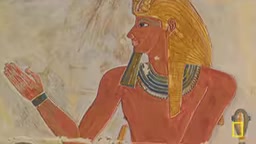
In the chaos following the collapse of the Old Kingdom, the ancient pyramids had been looted, the mummies of pharaohs stolen or destroyed, and the dream of eternal life shattered. To avoid the same fate, the groundbreaking New Kingdom pharaoh Thutmose I launched a revolution in royal tomb construction — following the example of the southern governors by cutting his tomb deep into the rock. His strategy for protecting his mummy was simple: "hide it."
He selected a valley west of Thebes and carved a shaft more than 600 feet deep into the mountainside. Over the following nearly 500 years, almost every pharaoh cut their own tomb in this location, eventually forming the world-famous Valley of the Kings.
The tomb of Ramesses III is one of the best-preserved in the valley, its walls covered in hieroglyphic inscriptions and large-scale images of the king. Craftsmen also designed steep shafts to deter tomb robbers. Yet the pharaoh still faced an inescapable challenge: to endure through eternity, a king needed not only to preserve his physical body, but to be remembered by the living.
The Valley of the Kings (Valley of the Kings) lies in the limestone hills on the west bank of the Nile, opposite Thebes — geologically suited for deep excavation and relatively secluded. After Thutmose I (circa 1504 BCE) established the precedent, throughout the New Kingdom period (circa 1550–1070 BCE), at least 64 known tombs were carved here, housing most of the pharaohs of the 18th through 20th Dynasties, along with some queens and nobles. Unlike pyramids, which publicly advertised the location of the tomb, the strategy in the Valley of the Kings was to completely sever the connection between the tomb site and the surface memorial complex. The tombs themselves were buried deep underground, while the mortuary temples where the pharaoh's name and memory were commemorated were built separately on the Nile bank outside the valley. This dual-track arrangement — "hide the body, publicize the name" — represents an important evolution in the practical application of ancient Egyptian beliefs about immortality: the preservation of the physical body and the perpetuation of spiritual memory were deliberately separated and protected independently.
The Immortality of Memory: Temples and Ritual Offerings
The pyramids themselves were accompanied by monuments and temples where priests celebrated the departed pharaohs. Ramesses was unwilling to advertise his remains and wealth with a pyramid, yet he still needed a monument to carry his name through the ages.
So he erected an 80-foot-high gateway on the west bank of the Nile, carved with colossal images of himself defeating his enemies, with a mortuary temple behind it — two colonnaded courtyards leading to a series of small chapels and a "false door" where priests made offerings and repeatedly intoned his name. He even constructed mud-brick walls 30 feet thick, stretching half a mile, turning the temple into a "fortress of worship."
At the nearby "Temple of Millions of Years" of Thutmose III, a team led by Dr. Miriam Seko Alvarez has been recovering the site from "a sand dune" since 2008. The team traced the temple's history through votive offerings including beer jars — inscribed with the names of later pharaohs such as Thutmose IV and Tutankhamun — proving that successive Egyptian rulers made offerings here over hundreds of years, keeping the name of Thutmose III alive.

The team excavated more than 125 human remains around the temple, some preserved in near-perfect condition. Dental expert Dr. Roger Siler used X-ray scanning on one fully wrapped mummy to determine it was a young woman between 18 and 25 years of age. This body, from "Tomb 22," dates to nearly 1,000 years after the temple itself — suggesting the site was still regarded as sacred for a millennium after the death of Thutmose III. As long as he was remembered, his afterlife remained secure.
Conclusion: A Fate Impossible to Escape
The New Kingdom pharaohs believed that rock-cut tombs would protect their mummies and make up for the failure of the pyramids. Yet in the Valley of the Kings, Chris visits the most famous tomb of all — that of Tutankhamun, discovered by Howard Carter in 1922 in a discovery that shocked the world. Even this tomb had, in fact, been robbed — it was only because a flash flood had sealed the entrance solid as cement, causing its location to be forgotten, that its treasures survived.
Every tomb discovered in the Valley of the Kings to date was looted in antiquity; they offered no better protection than the pyramids they replaced. At Qubbet el Hawa, Alejandro's newly discovered tomb chamber had also been entirely consumed by termites — "the carefully laid plans for the afterlife, thwarted."
Neither pyramids nor rock-cut tombs could escape the ravages of tomb robbers and time. Yet the pharaohs achieved immortality in another way — those breathtaking pyramids still stand in the desert today, serving as eternal symbols of the greatest civilization the ancient world has ever known.
Related articles

Jev Hands-On Review: What Makes This Ultra-Fast Judgment AI Agent Stand Out?
Jev is a System 1-style AI Agent for fast structured judgment. This hands-on review tests customer service routing, negation detection, prompt injection resistance, and document extraction.

3-Month LLM Learning Roadmap: From Zero to Agent Development, Fully Broken Down
A 3-stage LLM learning roadmap for beginners: master prompts and APIs, build RAG-powered knowledge bases, then develop Agents with ReAct and multi-agent collaboration.

Compiled AI Agent Architecture: Why We Chose Fixed Pipelines Over Runtime Decision-Making
A developer shares how they compile natural language instructions into fixed pipelines instead of letting models decide at runtime — and why it matters for file ops.