Why Do Diet Sodas Carry a Phenylalanine Warning? The Chemistry Behind Aspartame

Diet sodas warn about phenylalanine because their sweetener, aspartame, breaks down into it during digestion.
Diet soda labels warn "Contains Phenylalanine," yet no free phenylalanine molecules exist in the can. The explanation lies in aspartame, a sweetener roughly 200 times sweeter than sugar: during digestion, it is hydrolyzed into aspartic acid, methanol, and phenylalanine. For the approximately one in 12,000 people with phenylketonuria (PKU), who lack the enzyme to metabolize phenylalanine, this accumulation can cause serious neurological harm. The US label says "contains phenylalanine" while the UK opts for "a source of phenylalanine" — a small wording difference that reflects the tension between regulatory clarity and scientific accuracy.
A Warning Label That Seems to Contradict Itself
If you've ever looked closely at a can of diet soda sold in the United States, you've almost certainly spotted a small line of text: "Phenylketonurics: Contains Phenylalanine." At first glance, it seems unremarkable — but there's a fascinating truth hiding in plain sight. If you were to isolate every single molecule in that can of soda, the number of free phenylalanine molecules you'd find is exactly zero.
In other words, diet soda doesn't actually contain phenylalanine. So why does the label say it does? The answer isn't in the drink — it's in the body of the person who drinks it.
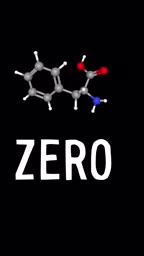
Interestingly, the UK's labeling convention offers a clue. A can of Diet Coke purchased in London reads "Contains a source of phenylalanine" — one small word, "source," that shifts the question from "what it is" to "what it becomes."
Why Phenylalanine Warrants a Warning
Phenylalanine is an essential amino acid — the body needs it to function, but cannot synthesize it on its own. It must be obtained through diet, primarily from protein-containing foods. For the vast majority of people, it's a harmless and indeed necessary nutrient.
The problem lies with a small subset of the population. Roughly one in every 12,000 people is born with phenylketonuria (PKU), a condition in which the body lacks the ability to metabolize phenylalanine. When people with PKU consume phenylalanine, they cannot convert it into the neurotransmitters the brain requires. The resulting buildup can cause abnormal brain development, seizures, and impairments to mood, memory, and attention.

Managing PKU requires special nutritional supplements and rigorous dietary control of phenylalanine intake. This is why labeling phenylalanine content on food products provides genuinely meaningful protection for this group — provided, of course, that the product actually contains it. Diet soda doesn't, which is precisely where the tension between label and reality arises.
The root cause of PKU is a mutation in the gene encoding phenylalanine hydroxylase (PAH). Under normal circumstances, this enzyme converts phenylalanine into tyrosine — the precursor for catecholamine neurotransmitters like dopamine and epinephrine. When PAH is deficient, phenylalanine cannot take this pathway and instead accumulates, being shunted through alternative routes into toxic metabolites such as phenylpyruvate, which interfere with myelination and brain development. Because PKU can be detected at birth via a heel-prick blood test, many countries have incorporated it into routine newborn screening programs. Early diagnosis combined with a strict low-phenylalanine diet can allow patients to maintain largely normal neurodevelopment — but cognitive damage that occurs before treatment is often irreversible. This is why that small line of text on a food label carries outsized real-world significance for PKU families.
The Real Culprit: Aspartame
Diet sodas achieve their sweetness without sugar through a compound called aspartame. Gram for gram, aspartame contains roughly the same number of calories as sucrose or high-fructose corn syrup — but it is approximately 200 times sweeter.
That 200-fold difference in sweetness translates into a dramatic difference in the amount needed. A regular can of soda requires around 39 grams of sugar, or roughly 36 grams of high-fructose corn syrup, to achieve its characteristic sweetness. A can of diet soda needs only about 0.2 grams of aspartame to match it. Such a tiny quantity makes these beverages effectively calorie-free.

In other words, the phenylalanine warning on the label is really pointing to aspartame. To understand the connection between the two, you have to look at what aspartame does inside the human body.
Aspartame (chemical name: N-(L-α-aspartyl)-L-phenylalanine methyl ester) was accidentally discovered in 1965 by American chemist James Schlatter while researching anti-ulcer drugs, and was approved by the US FDA for use in food in 1981. Its structure consists of two amino acids — aspartic acid and phenylalanine — joined by a peptide bond, with the carboxyl end of the phenylalanine capped as a methyl ester. This particular molecular configuration allows it to bind to the tongue's sweet taste receptors (the T1R2/T1R3 heterodimer) far more strongly than sucrose, triggering an intense sweet sensation at very low concentrations. Because so little is needed (just 1/200th the quantity of sugar), its caloric contribution in a single drink is negligible, making it widely used in "zero-calorie" and "low-sugar" products. In 2023, the International Agency for Research on Cancer (IARC), a body under the World Health Organization, classified aspartame as a Group 2B "possibly carcinogenic to humans" substance. However, the joint WHO/FAO Expert Committee on Food Additives (JECFA) simultaneously maintained its acceptable daily intake (ADI) at 40 mg/kg body weight, concluding that evidence of safety at typical consumption levels remains robust.
Hydrolysis: From Aspartame to Phenylalanine
When you drink a beverage containing aspartame, enzymes in your body trigger a process called hydrolysis — a reaction that, as the name suggests, involves water molecules.
In this reaction, a specific chemical bond in the aspartame molecule is broken, with a water molecule donating its components to produce aspartic acid. Elsewhere in the molecule, another bond is cleaved, another water molecule participates, and the products are methanol and a third compound.
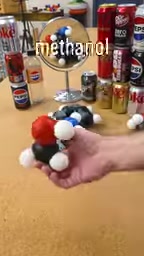
That third compound is phenylalanine.
So the diet soda you buy contains no free phenylalanine — it contains aspartame. Only when your body's enzymes act like microscopic chisels, breaking apart the aspartame "marble," is phenylalanine released. For someone with PKU, that released phenylalanine is just as neurotoxic as if it had been consumed directly.
Hydrolysis is a class of reaction in which chemical bonds are cleaved using water molecules — "hydro-" from the Greek for "water," "-lysis" meaning "to break apart." In the digestive system, this process is catalyzed by specific hydrolases: proteases cleave peptide bonds, while esterases cleave ester bonds. Aspartame contains both types of chemical bonds, so it is broken down in the intestine in stages — esterases first cleave the methyl ester bond to release methanol, then peptidases cleave the peptide bond to separately release aspartic acid and phenylalanine. The methanol released amounts to roughly 10–20 milligrams per can of soda, well below the methanol content found in natural fruit juice (a glass of orange juice contains approximately 140 milligrams), and poses no toxicity risk within normal metabolic parameters. This hydrolysis is essentially complete and irreversible in the human body, meaning that consuming aspartame and consuming an equivalent amount of free phenylalanine place identical metabolic burdens on a PKU patient — which is the biochemical basis for the warning label's existence.
A Philosophical Puzzle About "Containing"
This raises a genuinely interesting question: does a can of soda "contain" phenylalanine?
US and Brazilian regulations require products containing aspartame to declare that they "contain phenylalanine." Taken literally, this is not entirely accurate — the product contains no free phenylalanine molecules. The UK's formulation, "contains a source of phenylalanine," is arguably more precise: what's in the can isn't the end product, but a precursor that will be converted into phenylalanine inside the body.
This difference in wording may seem like splitting hairs, but it reflects a genuine trade-off in regulatory language between scientific precision and public comprehensibility. For the average consumer, "contains phenylalanine" is direct and clear enough to communicate the risk. For a rigorous chemical description, "a source of" is what accurately captures the molecular reality. Regardless of which phrasing is used, for the roughly one-in-ten-thousand people with PKU, that small line of text is a genuinely important health signal.
Related articles

Cursor AI Programming in Practice: Build a Student Management System from Scratch in 30 Minutes
A Bilibili creator demonstrates Cursor AI programming: generating a student management system in 30 minutes with natural language. Details on Agent mode, Claude selection, prompt techniques, and thresholds.

Top 20 AI Coding Tools Ranking: From Rock-Solid to Lackluster, a Scored Matrix
Bilibili creator releases top 20 AI coding tools ranking, tiered T0–T4 from rock-solid to lackluster, with Claude Code and Codex tied at T0. This article details the scoring dimensions (capability, reliability, robustness, durability, cost, domestic availability) and tool performances to help developers choose the right AI coding assistant.

Vibe Coding Systematic Tutorial: Master AI-Assisted Programming from Zero
A three-month Vibe Coding tutorial from a Bilibili creator covering Codex, ClaudeCode, and Cursor, from core logic to commercial project practice for beginners.