Why Do Enterprise AI Pilots Stall at the Demo Stage?

AI project failure rates above 80% stem from organizational traps rather than technology, and success starts with clear ownership on day one.
Most enterprise AI pilots stall between demo and production because of organizational issues, not model capability. RAND data shows AI failure rates above 80%, versus about 40% for enterprise IT. The three predictable traps are missing ownership, no accuracy conversation or human baseline, and underestimated data integration. Only 12% of initiatives reach trusted production use. Successful companies choose fault-tolerant scenarios, embed AI into existing workflows, measure baselines first, and assign ownership on day one.
Most enterprise AI pilots die on the road from demo to production. The problem isn't technology—it's organizational. Missing ownership, an absent accuracy conversation, and broken data pipelines form three nearly predictable traps.
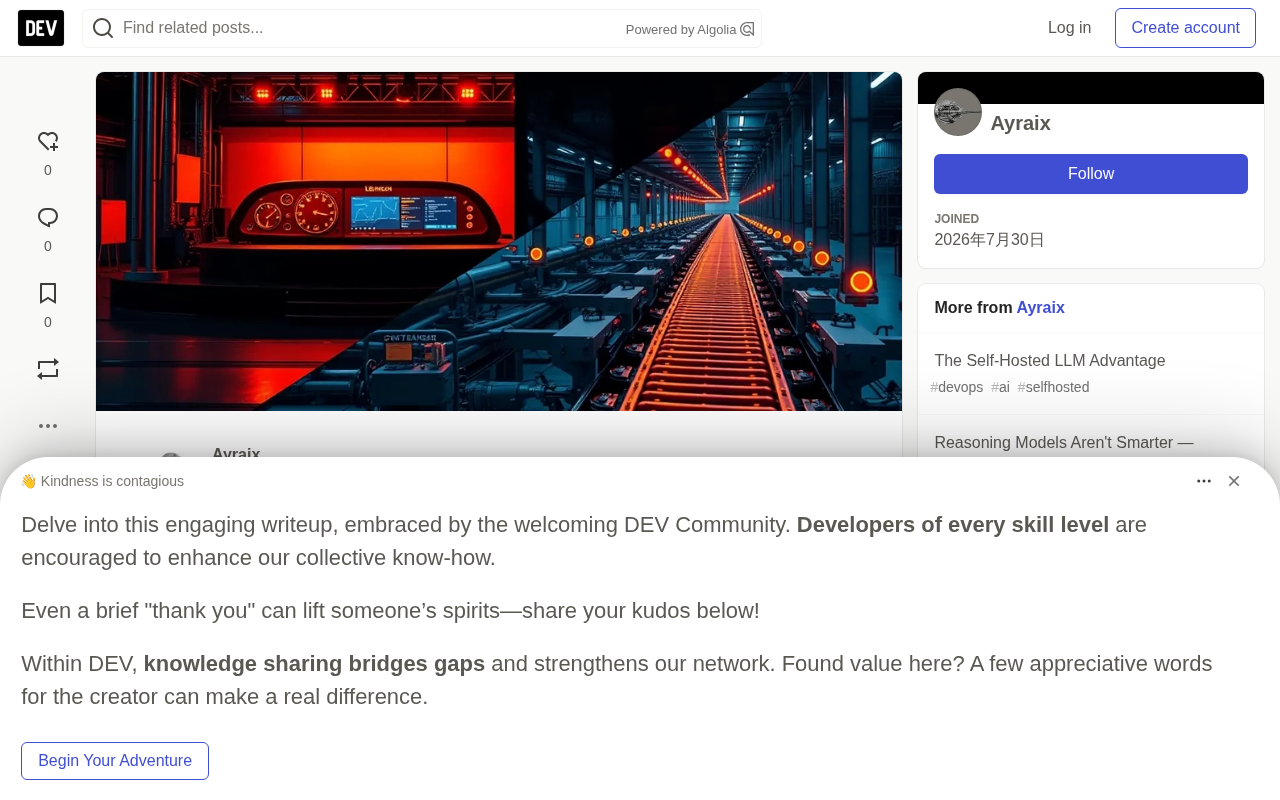
A Story That Keeps Repeating
David is the director of innovation at a Fortune 500 manufacturing company. Within eighteen months, he secured approval for his third AI pilot. The first two never made it to production. The demos looked great, the POC ran fine on carefully curated data, and the 12-page business case was airtight. Eighteen months and $2.3 million later, he was still explaining to the CFO why AI transformation is a multi-year journey.
The model was never the problem.
The Data Doesn't Lie
| Metric | Value | Source |
|---|---|---|
| Share of Gen AI projects abandoned after PoC (end of 2025) | 30%+ | Gartner, 2024 |
| AI project failure rate | 80%+ | RAND Corporation, 2024 |
| Typical enterprise IT project failure rate | ~40% | Industry baseline |
The contrast is brutal: while conventional enterprise IT projects fail about 40% of the time, AI projects fail more than 80% of the time. Even counting only Gen AI abandonment after PoC, the rate exceeds 30%. The problem isn't that models aren't good enough—given a modern foundation model, a competent team can build a convincing demo for almost any scenario in two weeks. What matters is what happens after the demo.
The Gap Between POC (Proof of Concept) and Post-PoC
A POC (Proof of Concept) is a short-term project that validates technical feasibility under controlled conditions, typically lasting several weeks, with the goal of proving "can this be done?" Its essential difference from production deployment is this: the success criterion for a POC is "the demo passes," while the success criterion for a production system is "business metrics improve." Gartner's "post-PoC abandonment rate" is worth paying attention to because it doesn't measure projects that never started—it measures companies that, after already investing time and budget and having proven technical feasibility, still choose to stop. Such abandonment often doesn't show up in failure-rate statistics, because the project is "shelved indefinitely" rather than declared terminated. Only by understanding the scope of this metric can you make sense of the difference between an 80% failure rate and a 30% abandonment rate: the former includes technical failure, while the latter is purely a product of organizational friction.
Failure Is Organizational, Not Technical
Trap One: Missing Ownership
A demo needs a builder; a production system needs an owner—someone whose next quarter's work depends on whether it runs properly. Most AI pilots are owned by innovation teams, whose success metric is that the pilot exists, not that the business process improves.
When a pilot needs to connect to the order-to-cash process, the innovation team has no authority there, and the process owner has no incentive to take on risk for someone else's project. This ownership mismatch is the first predictable stalling point.
The Structural Tension Between Innovation Teams and Process Owners
In mature enterprises, process owners (such as the head of accounts payable or the supply chain director) are responsible for the stability of existing systems, and their performance metrics are usually tied to compliance, accuracy, and cost control—not "introducing new tools." Innovation teams are the opposite, with KPIs often centered on "number of explorations" and "proof-of-concept deliveries." When an AI pilot needs to be embedded in a real business process, it must draw on the process owner's budget, manpower, and change windows, yet the process owner does not directly benefit from the pilot's success—while bearing its risk. This "misalignment of benefit and risk" is the root cause of missing ownership and the most common failure mode in enterprise internal innovation, unrelated to AI technology itself.
Trap Two: The Accuracy Conversation No One Wants to Have in Advance
Every AI system makes mistakes at some rate. In a demo, wrong answers get edited out. In production, someone has to decide what error rate is acceptable, who reviews the output, and who is responsible when the system gets it wrong.
Companies that never have this conversation end up demanding a standard no system can meet—including their current human process, whose error rate no one has ever measured. This is a hidden trap: using a standard AI was never allowed to reach as grounds to reject AI.
Human Baselines and Automation Bias
Companies rarely measure the error rates of existing manual processes, so when asked "how accurate does AI need to be to be acceptable," managers often give an intuitive standard close to 100%. But audit studies show that human data-entry error rates typically range from 0.5% to 4%, and error rates are even higher for complex judgment tasks. Without establishing a human baseline, you get a double standard: human mistakes are treated as normal variance, while AI mistakes are treated as system defects. The point of measuring the baseline first isn't to prove AI is more accurate, but to reframe "AI will make mistakes" as a comparable, manageable operational issue rather than grounds for a veto.
Trap Three: The Organizational Negotiation Behind Data Pipelines
The demo runs on a clean data extract that someone prepared by hand. Production requires real-time data flows from various systems, and the owners of those systems have change freezes, security reviews, and their own backlogs.
This is rarely six weeks of work; it is usually six months of organizational negotiation disguised as an integration task.
The Funnel: Where Plans Leak Out
| Stage | Survival Rate |
|---|---|
| Demo completed | 100% |
| Pilot approved | 55% |
| Still running after 6 months | 30% |
| Trusted in production | 12% |
From demo to production, only 12% of AI initiatives ultimately earn enough trust to be used for real work. The leakage happens in ownership and data integration, not in the model itself.
What Companies That Successfully Deliver Do Differently
Companies that actually put AI into production are surprisingly consistent in their approach:
Choose a process where mistakes are cheap and review is the norm—drafting, classification, tagging, summarization before human decisions. These scenarios are inherently fault-tolerant, and review processes already exist.
Put AI into existing workflows rather than building a new destination for people to visit. This is the key difference for adoption. People don't need to remember to use AI—AI shows up where they already work.
Measure the human baseline first. That turns "AI will make mistakes" into a comparison rather than a veto.
Most importantly: hand the system to the process owner on day one. The team managing accounts payable owns the invoice-matching assistant, with the engineering team providing support—not the other way around. Adoption is no longer a change-management campaign, because the people feeling the pain are the ones holding the tool.
A pilot that cannot say who will own it in production is not a pilot. It is a demo on a budget line.
Stalled Pilots vs. Delivered Systems
| Dimension | Stalled Pilot | Delivered System |
|---|---|---|
| Owner | Innovation team | Process owner |
| Error rate | Never discussed | Defined threshold + review path |
| Data flow | Manual extract | Real-time integration |
| Success metric | Pilot still exists | Business KPI moves |
An Uncomfortable but Necessary Question
Before approving your next AI initiative, ask one question: if it succeeds, which existing system or step does it replace? Who signs off on that replacement?
If the answer is—a new dashboard no one asked for, running in parallel with all existing systems—then the initiative will stall. Not because the model is weak, but because nothing was ever set up to change.
The technology is ready. Organizations mostly are not. The good news is that the fix is boring, known, and free—it just requires deciding who owns it when it becomes real, before the applause from the demo fades.
FAQ
What mainly causes enterprise AI pilots to fail?
According to RAND Corporation and Gartner data, AI project failure rates exceed 80%. The core reason is not technology, but organizational issues: missing ownership, undefined accuracy standards, and underestimated data integration.
How can you avoid having AI pilots stall at the demo stage?
Three key actions: choose scenarios that are fault-tolerant and already have review processes; embed AI into existing workflows instead of building a new platform; and hand ownership of the system to the process owner on day one.
What is the "accuracy conversation" in AI projects?
It means clearly answering: what error rate is acceptable? Who reviews the output? Who is responsible when something goes wrong? If these questions are not answered before the project starts, the team will eventually demand impossible standards from AI, causing the project to be rejected.
One-line Summary
AI project failure rates above 80% stem from organizational traps rather than technology, and the key to success is clarifying ownership on day one.
Paragraph Summary
The article argues that most enterprise AI pilots stall on the road from demo to production, and the root cause is organizational problems rather than model capability. RAND data shows AI project failure rates exceed 80%, far above the roughly 40% baseline for enterprise IT projects. The author identifies three predictable stalling traps: missing ownership, where innovation teams own pilots but process owners should own production systems; the absence of an accuracy conversation, because companies never define acceptable error rates or measure human baselines; and underestimated data pipelines, where what looks like six weeks of integration is actually six months of organizational negotiation. From demo to production, only 12% of initiatives ultimately earn enough trust to be used for real work. Companies that successfully deliver are consistent: choose fault-tolerant scenarios, embed into existing workflows, measure the human baseline first, and give ownership to the process owner on day one. The core test is: if the project succeeds, which existing system does it replace, and who signs off?
Related articles

Free Unlimited Claude Code Solution: Agnes AI + CC Switch Setup Guide
No paid subscription needed — pair the free AI platform Agnes AI with the open-source tool CC Switch to provide a backend for Claude Code, enabling unlimited free calls to text, image, and video models. This guide covers the full setup, test results, and usage boundaries.

A Complete Zero-Cost Guide to Getting Started with Claude Code for Beginners in China
A beginner's guide to Claude Code for users in China: two installation methods (command line and IDE plugin), full configuration steps for replacing the official API with the free domestic LongCat model, and a hands-on demo of building a small tool with natural language, plus tips.

When the NSA Gets Involved: The AI Supply Chain Crisis Behind Open-Source CVEs and API Key Hijacking
Multiple open-source projects disclosed severe CVEs in one day, PHP flaws alarmed the FBI, and Railway and OpenCode were breached with API keys stolen. This article breaks down the vulnerability window, AI-accelerated exploitation, and the AI supply chain crisis behind the API key black market, with a developer defense checklist.