Why Do LLM Agents Go Off the Rails After Three Steps? Causes and Solutions
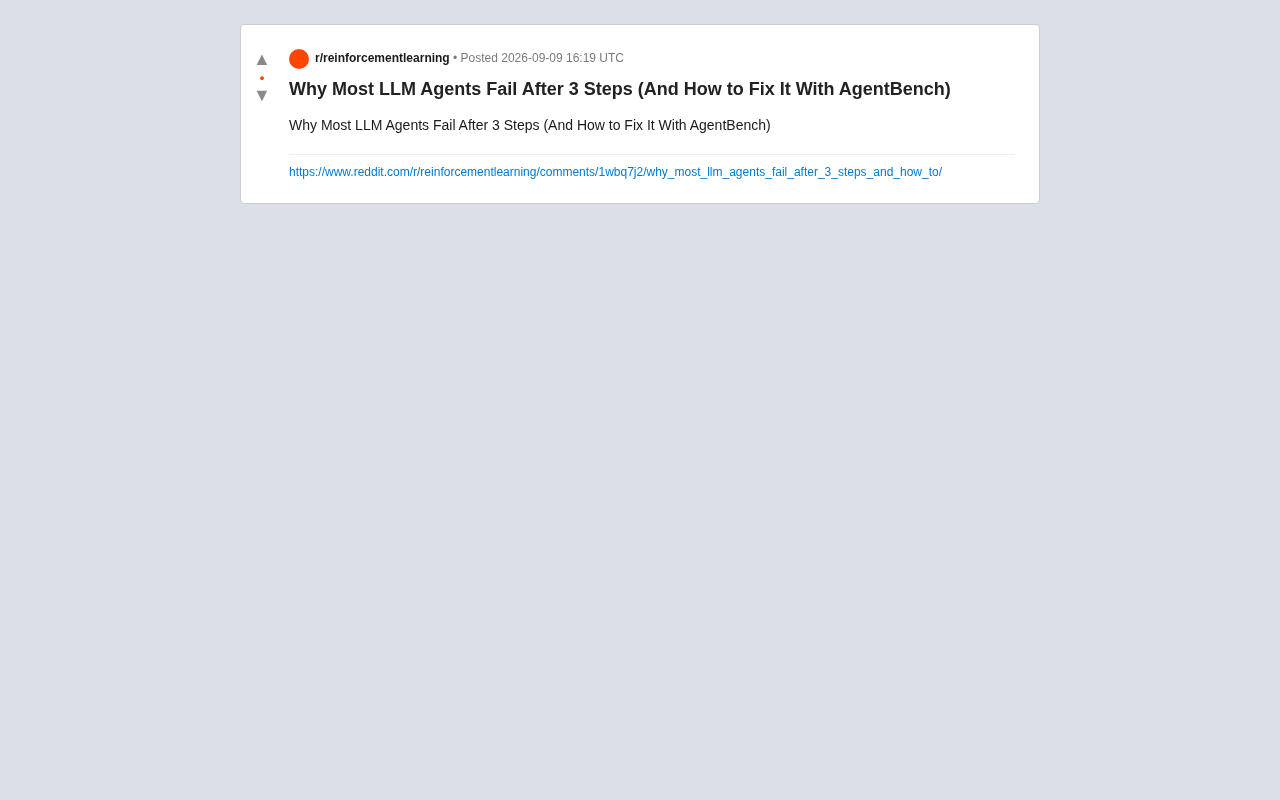
Diagnosing and fixing why LLM Agents break down after three steps of execution.
Most LLM Agents lose control after just three steps due to context accumulation, lack of state management, and noisy tool feedback. This article analyzes these root causes, introduces AgentBench for systematically diagnosing failure points, and provides practical strategies — including context summarization, Plan-and-Execute patterns, self-reflection mechanisms, and continuous regression testing — to build more reliable multi-step agents.
The Three-Step Breakdown Phenomenon in LLM Agents
A widely discussed technical challenge is plaguing AI developers: Why do most LLM Agents start losing control after just three steps of execution?
Whether it's automated task orchestration, tool-calling chains, or multi-step reasoning scenarios, many teams hit the same bottleneck — the agent performs brilliantly for the first two steps, but once the task chain extends further, it starts drifting from the goal, repeating actions, or even collapsing entirely. This isn't an occasional glitch; it's a systemic flaw in current Agent architectures.
An LLM Agent refers to an AI system that uses a large language model as its core "brain," autonomously completing tasks by perceiving its environment, making plans, and calling tools. Unlike traditional single-turn Q&A, an Agent needs to continuously interact with the external environment in a loop — observe results, make decisions, execute actions, then observe new results. This autonomous closed-loop design originates from the Agent-Environment interaction paradigm in reinforcement learning, but replaces the traditional policy network with an LLM, giving the system general-purpose language understanding and reasoning capabilities. However, this seemingly elegant architecture reveals deep fragilities during multi-step execution.
This article draws on practical experience from the technical community to deeply analyze the underlying technical root causes, and introduces how evaluation tools like AgentBench can be used to identify and solve these problems.
Three Root Causes of Multi-Step Task Failure
Memory Drift from Context Accumulation
Every decision an LLM Agent makes depends on the current context window. As the number of task steps increases, historical actions, observation results, and intermediate reasoning keep piling up, creating two fatal problems:
Context bloat drowns critical information in lengthy history, severely diluting the model's attention; error accumulation works like a snowball effect — a minor deviation in step two enters subsequent context as "fact," and the error keeps amplifying. By the third or fourth step, the Agent is already reasoning on a contaminated cognitive foundation, making failure almost inevitable.
To understand why context bloat is so deadly, we need to look at the Transformer architecture's attention mechanism itself. Transformers compute relevance weights between all tokens through Self-Attention, theoretically able to "see" any information in the entire context window. But research shows that as context length increases, attention distribution becomes increasingly diffuse. Stanford's 2023 "Lost in the Middle" study revealed a key phenomenon: when critical information is located in the middle of a long context, the model's recall rate drops significantly — models tend to focus on the beginning and end of the context while "forgetting" the middle portion. For Agent scenarios, this means goals and constraints set in early steps (which typically end up in the middle of the context) are gradually "ignored" by the model as new information keeps being appended. Even if a model nominally supports 128K or longer context windows, the effective utilization rate falls far below the theoretical ceiling.
Lack of Effective State Management
Most Agent implementations simply concatenate tool call results back into the prompt, lacking a genuine concept of "state." Humans continuously update their mental model when executing complex tasks, but naive ReAct loops lack this mechanism.
ReAct (Reasoning + Acting) is a classic Agent framework proposed by Yao et al. in 2022. Its core idea is to have the LLM alternate between "Thought" and "Action," receiving an "Observation" from the environment after each action. This framework has been widely adopted for its simplicity and elegance, becoming the de facto standard for LLM Agents. However, ReAct is essentially a stateless, reactive architecture — it has no persistent memory or state representation independent of the context. All "memory" relies on keeping the historical Thought-Action-Observation sequence in the prompt. This stands in stark contrast to stateful architectures in classical AI (such as the Blackboard Architecture or Finite State Machines). In traditional architectures, the system maintains an explicit, structured world model that is updated and queried independently of the reasoning process. ReAct's stateless design isn't a problem for short-range tasks, but once task steps increase, the weakness of lacking independent state management becomes fully exposed.
When a task requires maintaining goal consistency across multiple steps, the Agent easily "forgets" the initial objective and falls into local, myopic action loops. This state amnesia is one of the core reasons for losing control after three steps.
Noise Interference from Tool Feedback
Tool returns in real-world environments often contain large amounts of irrelevant information: redundant API fields, error stacks, and poorly formatted text. This noise severely interferes with the model's judgment.
Modern LLM Agents typically interact with external tools through Function Calling mechanisms. The model generates structured function call requests (including function names and parameters) based on conversation context, which are executed by the runtime environment and returned to the model. Major model providers like OpenAI and Anthropic have built this capability directly into their models. However, the data format and volume of tool returns are entirely dependent on external systems — a database query might return dozens of fields, a web scrape might return an entire HTML page, and an API call might include extensive debug information and nested JSON structures. When these raw returns are injected directly into context, they not only consume precious token space but also introduce massive semantic noise. The model may be misled by irrelevant fields or hallucinate when parsing poorly formatted text. Research shows that the Signal-to-Noise Ratio of tool return information is one of the key factors affecting Agent long-range performance.
A reliable Agent needs to perform structured distillation on tool outputs rather than feeding raw returns directly into the next reasoning round. Without this step, noise will quickly contaminate the decision-making pipeline.
AgentBench: Systematic Evaluation Exposes Hidden Problems
An Evaluation Benchmark Designed Specifically for Agents
AgentBench is a comprehensive evaluation framework specifically designed for LLM Agents. Unlike traditional NLP benchmarks, it assesses multi-step decision-making capabilities across multiple real-world interactive environments, covering OS interaction, database querying, knowledge graph reasoning, web browsing, and more — each scenario requiring completion of a series of interdependent actions.
AgentBench was proposed in 2023 by a research team from Tsinghua University and other institutions (published at ICLR 2024), and is the first multi-dimensional benchmark to systematically evaluate LLMs as Agents. It includes 8 different interactive environments: operating system (Bash command-line operations), database (SQL queries and data analysis), knowledge graph (multi-hop reasoning on Freebase), digital card games, lateral thinking puzzles, household scenarios (ALFWorld), web shopping (WebShop), and web browsing. Each environment requires the Agent to complete objectives through multi-turn interactions rather than simple single-shot outputs. Notably, AgentBench doesn't exist in isolation — a series of specialized Agent evaluation benchmarks have emerged in recent years: SWE-bench focuses on evaluating an Agent's ability to autonomously fix real GitHub issues, requiring the Agent to understand code repositories, locate bugs, and generate patches; WebArena builds a sandbox environment containing real websites like e-commerce, forums, and CMS to evaluate Agents' ability to perform complex web operations; GAIA, proposed by Meta, focuses on evaluating general AI assistants' ability to handle real-world problems requiring multi-step reasoning and tool use. Together, these benchmarks form an Agent evaluation ecosystem, revealing the capability boundaries of current LLM Agents from different dimensions.
Quantitatively Locating Failure Points
The core value of AgentBench lies in quantifying and attributing Agent failures. By recording the success rate at each step, developers can clearly see at which step the performance curve drops off a cliff. This step-by-step tracking capability is a critical tool for diagnosing the "three-step dilemma."
Evaluation results typically reveal a harsh reality: even top-tier models perform far worse on long-range tasks than their single-step capabilities suggest. AgentBench's initial evaluation data showed that while GPT-4 led in overall Agent task scores, it achieved high completion rates in only some environments, and open-source models lagged significantly behind closed-source ones. Even more noteworthy is the step-decay curve: in tasks requiring more than 5 steps, even the strongest models see success rates plummet from over 80% at the first step to 40% or lower in subsequent steps. This cliff-like decay is not linear — it often exhibits exponential decline characteristics, where with each additional step, the probability of failure doesn't simply add up but multiplies. This gap is the core challenge that Agent engineering needs to overcome.
Practical Improvement Strategies: From Diagnosis to Fix
Strategy 1: Streamline and Structure the Context
The most direct improvement is proactive context management. Introduce a summarization mechanism: periodically compress historical steps into concise state summaries, retaining only information truly useful for the current decision. At the same time, apply structured parsing to tool returns and filter out noise fields.
This approach can significantly reduce context length while increasing information density, letting the model focus on key decision-making factors. In practice, you can use sliding window summarization (triggering history compression every N steps), layered memory (splitting information into working memory and long-term memory, keeping working memory lean and retrieving long-term memory on demand), or key information extraction (retaining only state changes, critical values, and constraints). Mainstream Agent frameworks like LangChain already include built-in memory management components such as ConversationSummaryMemory, but in practice these often need deep customization for specific task scenarios. A rule of thumb: in the context passed to the next step, directly relevant information should account for over 80%, with background information kept under 20%.
Strategy 2: Introduce Explicit State and Planning
Adopt the Plan-and-Execute pattern, having the Agent formulate an overall plan before executing step by step. Compared to purely reactive ReAct loops, explicit planning serves as an "anchor" in long-range tasks, preventing goal drift.
The idea behind Plan-and-Execute can be traced back to classical AI planning. As early as 1971, STRIPS (Stanford Research Institute Problem Solver) proposed the "plan first, execute later" paradigm, defining actions through preconditions and postconditions, and searching for action sequences to achieve goals in state space. Later, HTN (Hierarchical Task Network) further introduced the concept of task decomposition — recursively breaking complex tasks into smaller subtasks. Modern LLM Agent Plan-and-Execute inherits these ideas but replaces formal representations with natural language. At the implementation level, LangGraph (an Agent orchestration framework from the LangChain team) provides native support for this pattern, allowing developers to define Planner nodes and Executor nodes, managing state flow between them through directed graphs. Microsoft's AutoGen framework achieves similar effects through multi-Agent collaboration — one Agent handles high-level planning while another handles specific execution, maintaining goal consistency through dialogue protocols.
Maintaining an explicit state object (recording completed tasks, to-do items, and key constraints) can also significantly improve execution consistency. This kind of structured state management is an effective way to address memory drift.
Strategy 3: Add Reflection and Self-Correction
Introduce a reflection step after each step or every few steps, having the model check whether current progress has drifted from the goal and whether the previous step contained errors. Mechanisms similar to Reflexion can help Agents detect and roll back erroneous paths in a timely manner.
Reflexion is a framework proposed by Shinn et al. in 2023. Its core innovation is introducing verbalized self-reflection as a lightweight reinforcement signal. Unlike traditional reinforcement learning that requires scalar rewards, Reflexion has the Agent summarize failure causes and lessons learned in natural language after a task fails, storing these reflections as "experiential memory" in long-term storage for reference in subsequent attempts. This concept closely aligns with Metacognition in cognitive science — "thinking about thinking" — where humans regulate cognitive processes through self-monitoring and self-evaluation. In Agent systems, similar mechanisms include Self-Refine (having the model iteratively optimize its own output), Chain-of-Verification (proactively verifying key facts after generating an answer), and internal critic patterns (using a separate model call to judge the reasonableness of the current step). Practice shows that even simply appending a "checklist-style" self-verification prompt after each step (e.g., "Is the current action consistent with the initial goal? Did the previous step's return match expectations?") can improve multi-step task success rates by 15-25%.
This self-supervision mechanism is like installing a "braking system" on the Agent, preventing it from racing full speed into a crash with accumulated errors.
Strategy 4: Use AgentBench for Continuous Regression Testing
Improvement effectiveness cannot be judged by subjective feelings. Incorporate AgentBench or custom evaluation suites into the development workflow, running multi-step task evaluations after every modification and observing changes in the success rate curve.
Only when the success rate "after step three" genuinely improves can the improvement be considered truly effective. Data-driven iteration is the essential path to building reliable Agents. In engineering practice, it's recommended to build an Agent CI/CD pipeline: automatically trigger a set of standardized multi-step task test suites whenever the Agent's prompt templates, tool definitions, state management logic, or underlying model are modified. Core metrics to track should include: pass rate curves per step, average task completion steps, error recovery rate (whether the Agent can self-correct after errors), and end-to-end completion rate. This approach borrows from the mature methodology of regression testing in software engineering but adapts to the non-deterministic nature of Agent systems — due to the randomness of LLM outputs, each test typically needs to be run multiple times with statistical results to distinguish genuine improvements from statistical noise.
Conclusion: The Leap from Single-Step Intelligence to Long-Range Planning
The "three-step dilemma" of LLM Agents fundamentally reflects the enormous gap between single-step intelligence and long-range planning capability.
The model's powerful single-turn capabilities easily create an illusion, making people think that simple loop invocations can complete complex tasks. But in reality, context contamination, missing state, and error accumulation quickly shatter this illusion. This dilemma also reflects a deeper tension in the current LLM technology trajectory: the Transformer architecture naturally excels at pattern matching and local reasoning, while long-range planning requires global search and constraint satisfaction — the chasm between these two capabilities cannot be bridged simply by increasing model parameters or extending context windows. The industry is exploring breakthroughs from multiple directions: OpenAI's o1/o3 series enhances the model's long-chain reasoning through inference-time compute scaling; Google DeepMind's AlphaCode series introduces search and sampling into code generation; and various Tree-of-Thought and Graph-of-Thought methods attempt to extend linear reasoning into structured search processes.
The value of evaluation frameworks like AgentBench lies in making implicit problems visible, measurable, and optimizable. For teams building Agent products, rather than blindly stacking tools and prompts, it's better to first establish a rigorous evaluation loop and use data to drive every improvement.
An Agent that can reliably complete ten-step tasks is far more commercially valuable than one that performs impressively but collapses after three steps. Solving the stability problem in multi-step reasoning is the critical step for LLM Agents to move from the lab to production environments.
Related articles
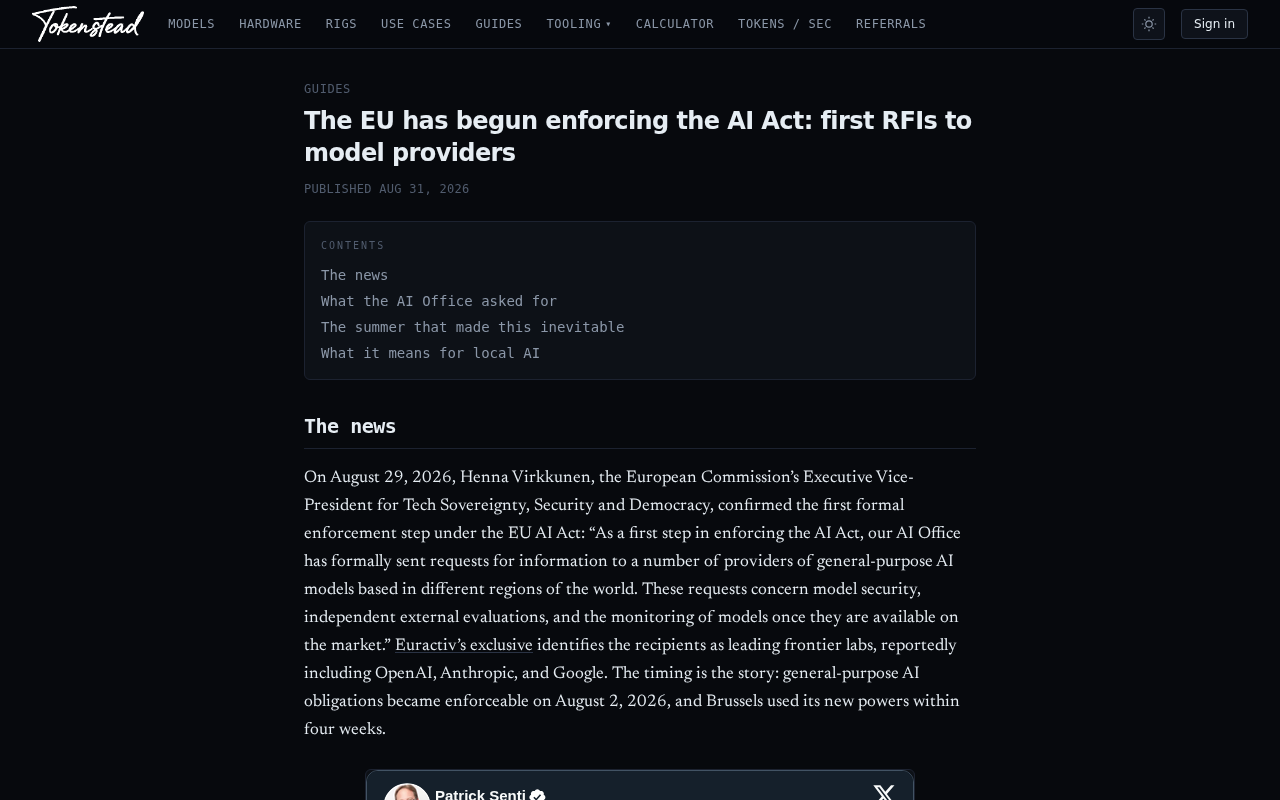
EU AI Act's First RFIs Issued: What Compliance Challenges Do Model Providers Face?
The EU AI Act enters enforcement with its first RFIs targeting GPAI providers. Explore the compliance challenges around transparency, risk assessment, and the global impact on AI governance.
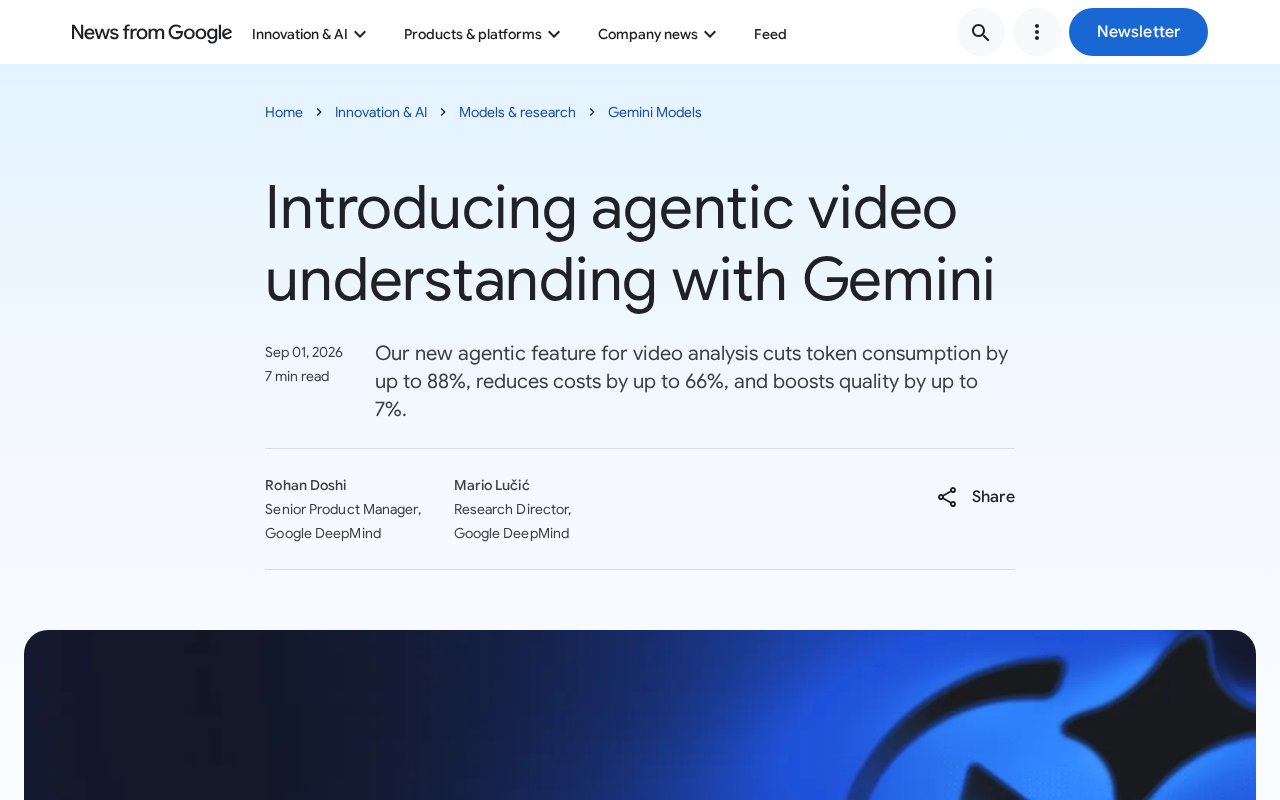
Gemini Agentic Video Understanding: 88% Token Reduction, 66% Cost Savings — A Complete Breakdown
Google DeepMind's Gemini Agentic Video Understanding cuts Token usage by 88%, reduces costs by 66%, and improves quality by 7% through intelligent agentic loops.
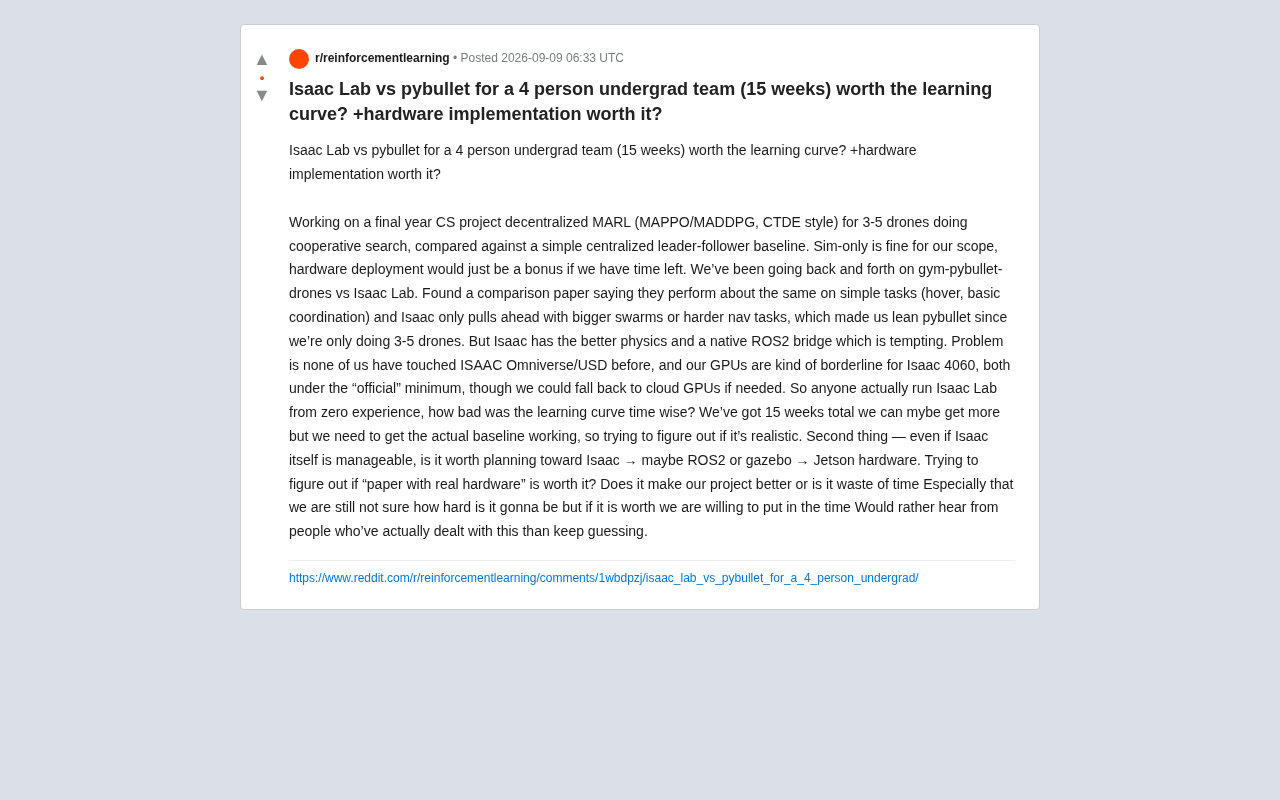
Isaac Lab vs. PyBullet for Your Thesis: A Selection Guide for Multi-Drone MARL Projects
A 4-person undergrad team has 15 weeks to build a multi-drone MARL project. This guide compares Isaac Lab vs. PyBullet on learning curve, hardware needs, and simulation fidelity with practical planning advice.