Why Double-Blind Review Fails: A Fairness Crisis Exposed from Inside Academia
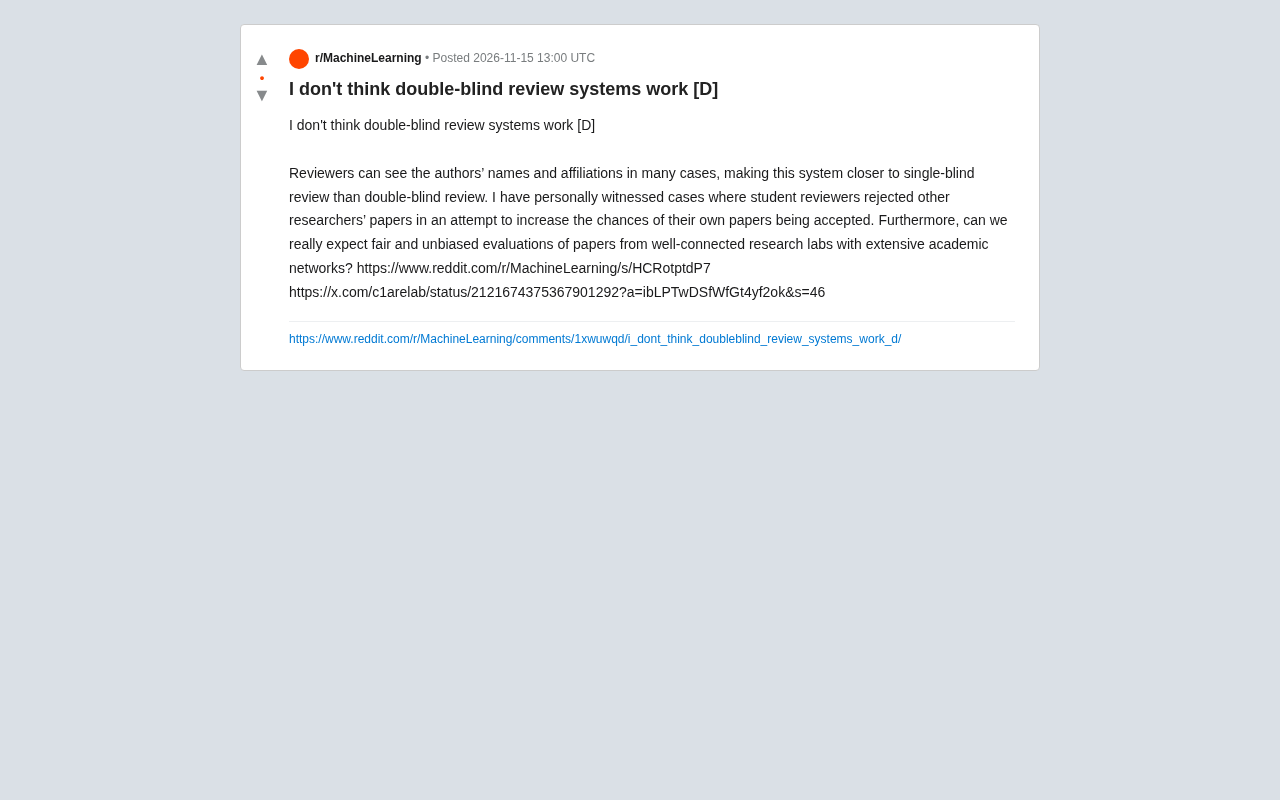
Double-blind review is rendered ineffective by identity leakage, conflicts of interest, and academic network influence, urgently requiring systemic reform.
Drawing on a Reddit machine learning community post, this article examines the failure of double-blind review in practice. While double-blind review is meant to ensure fairness by concealing author and reviewer identities, reviewers can often learn authors' names and affiliations, reducing it to single-blind review. The spread of preprint platforms further exacerbates identity leakage. Additionally, student reviewers may maliciously lower others' scores to boost their own acceptance chances, and academic networks and institutional reputation pose challenges to review fairness. The article identifies the root cause as incentive distortion when anonymity cannot be guaranteed, discusses possible improvements such as open review and technical detection, and calls for deeper reflection and reform in academia.
The Ideal and Reality of Double-Blind Review
Double-blind review is regarded by academia as the cornerstone of ensuring fairness in paper review. Its core idea is to conceal the identities of both authors and reviewers to avoid bias. However, a recent post that sparked discussion in the Reddit machine learning community bluntly states "I don't think double-blind review systems work," pointing out that in practice, reviewers can often learn the authors' names and institutional affiliations, rendering double-blind review merely nominal. This view stems from the community user's own observations and is accompanied by links to related discussions on social media.
Based on personal experience, the post's author raises two key concerns: first, reviewers can see author information, causing double-blind review to degenerate into single-blind review; second, there exists a phenomenon where student reviewers deliberately lower the scores of others' papers to improve their own chances of acceptance.
Double-blind review is an anonymous review system in academic publishing that requires reviewers not to know the identities of paper authors, and authors not to know the identities of reviewers. In contrast, single-blind review means reviewers know the authors' identities but authors do not know the reviewers'; and open review means both parties' identities are public. The theoretical basis of double-blind review is that anonymization can reduce bias based on factors such as author reputation, institutional ranking, gender, and nationality, allowing review to focus more on the quality of the paper itself. This system is widely adopted in fields such as computer science and machine learning, but the strictness of enforcement varies greatly across conferences and journals—some require authors to remove identifying information at submission, while others only make verbal requests without technical blocking.
Identity Leakage: Slipping from Double-Blind to Single-Blind
Double-blind review requires reviewers not to know author identities and authors not to know reviewer identities. But in reality, the review processes of many conferences and journals have loopholes. The post's author claims that in many cases, reviewers can see authors' names and institutional information. Once identities are exposed, reviewers may be influenced by author reputation, institutional ranking, or personal relationships, greatly compromising review fairness.
This identity leakage is not an isolated case. In fast-developing fields such as machine learning, the widespread use of preprint platforms (such as arXiv) makes author information nearly impossible to hide. Reviewers can easily find the preprint version and author information with a simple search of the paper title. Therefore, even if a conference claims to use double-blind review, it is in practice close to single-blind review.
Preprint platforms (such as arXiv, bioRxiv, SSRN, etc.) are online repositories where authors publicly post paper manuscripts before formal peer review. In the machine learning field, arXiv has become the de facto first-release platform, with a large number of papers uploaded before conference submission. This poses a structural challenge to double-blind review: reviewers can find the preprint version within seconds by searching the paper title or abstract keywords, which contains author names, affiliations, and even acknowledgments. Some conferences attempt to mitigate this by prohibiting reviewers from searching, but such rules are difficult to enforce and verify. The tension between preprint culture and double-blind review is one of the focal points of debate in academic publishing today.
Conflicts of Interest and Malicious Reviewing
Another serious problem mentioned in the post is that student reviewers may review maliciously out of self-interest. The author claims to have witnessed student reviewers rejecting other researchers' papers to increase their own chances of acceptance. Such behavior not only violates academic ethics but also exposes flaws in the incentive design of the double-blind system.
Reviewers are usually active researchers who also submit their own papers. When reviewers are simultaneously competitors, conflicts of interest are difficult to avoid. Double-blind review originally sought to eliminate such conflicts through anonymization, but if anonymity cannot be guaranteed, reviewers may exploit their power for personal gain.
The Influence of Academic Networks
The post's author also questions whether we can truly expect fair and unbiased review for research laboratories with extensive academic networks and close relationships. The "Matthew Effect" in academia is no secret: researchers at prestigious institutions more easily gain attention and recognition, while authors from non-top-tier institutions may face invisible discrimination.
When double-blind review fails, reviewers may be more inclined to accept papers from familiar institutions or well-known scholars and be more tolerant of their flaws; conversely, they may be harsher on papers from unfamiliar institutions or unknown authors. This bias may be conscious or unconscious, but either way it undermines the fairness of review.
The Matthew Effect was proposed by sociologist Robert Merton, originally referring to the phenomenon in the scientific community where renowned scholars receive increasing recognition and resources while unknown researchers become increasingly marginalized. In the context of academic review, the Matthew Effect manifests as: researchers from top institutions or with extensive collaborative networks find their papers more likely to receive positive evaluations and citations; while authors from less-known institutions, even with comparable work quality, may be disadvantaged due to lack of visibility. One of the original purposes of double-blind review design was to weaken this cumulative advantage, but when anonymity is broken, the Matthew Effect may instead be exacerbated as reviewers "recognize" well-known authors.
Multi-Source Corroboration and Community Resonance
This Reddit post is not an isolated view. The post cites a discussion on the social media platform X (linking to a tweet by @c1arelab), indicating that this issue resonates within academic circles. Community users' discussions further corroborate the challenges of double-blind review in practice. Although the specific content of each comment cannot be confirmed, the post's popularity reflects widespread concern in academia about review fairness.
Possible Directions for Improvement
Faced with the failure of double-blind review, academia needs to explore more effective mechanisms. Some conferences have attempted to adopt open review, post-publication review, or introduce third-party oversight. However, any review system faces the challenge of incentive compatibility. The key lies in designing a system that both protects anonymity and effectively punishes malicious reviewing behavior.
In addition, technical means may provide assistance. For example, platform design could restrict reviewers from searching for author information, or algorithms could be used to detect anomalous patterns in reviews. But whether these measures can fundamentally solve the problem still requires practical testing.
Conclusion
The original intent of double-blind review is good, but enforcement loopholes in reality greatly diminish its effectiveness. From identity leakage to conflicts of interest to the influence of academic networks, these problems collectively erode the fairness of review. The post author's personal experiences and observations serve as a wake-up call: if these flaws are not addressed, double-blind review may be nothing more than formal fairness. Academia needs deeper reflection and more substantive reform to rebuild the credibility of review.
Related articles
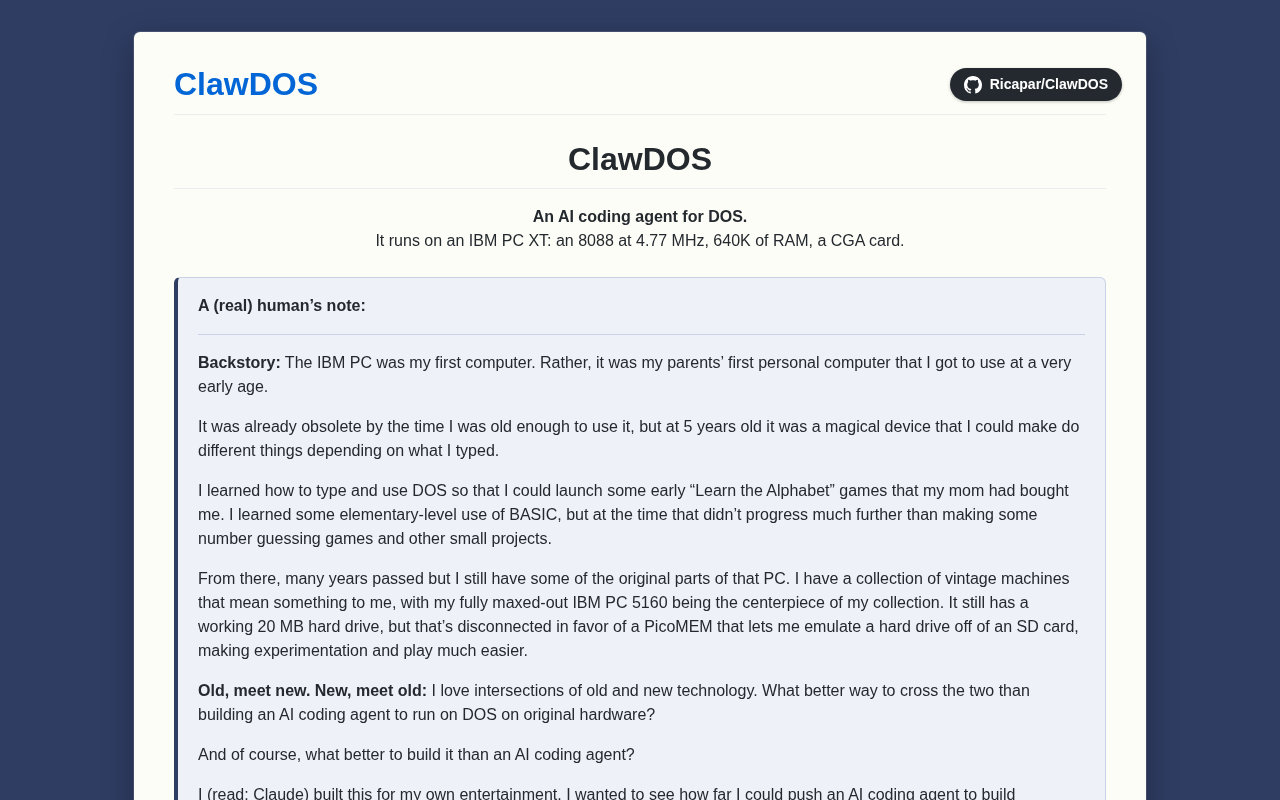
ClawDOS: Bringing AI Coding Capabilities to DOS
ClawDOS is an AI coding agent project for DOS, exploring the possibility of bringing AI coding assistance into resource-constrained retro computing environments. This article analyzes its positioning, use cases, and community response.

Baseten Releases Bison-1 and Groundhog-1, Topping the Decision Model Leaderboard
Baseten releases open-weight decision models bison-1 and groundhog-1 built on Gemma 4; bison-1 scores 76 on the AA Decision Index v2.1 to top the leaderboard. Both support 128k context and image input—here we analyze their capability combination, benchmark significance, and selection advice for developers.

Cline CLI v3.0.75 Released: Yolo Mode Now Default for One-Shot Runs
Cline CLI v3.0.75: one-shot runs now default to yolo mode, --timeout and Ctrl+C can interrupt the first round, read_files is no longer truncated to 8k chars, plus reasoning parameter fixes and 94 new providers.