Why Has Politics Become the New Religion for Young People?

Contemporary young people internalize political identity as their core self to fill the void left by traditional meaning anchors like religion and family.
The article argues that young people's investment in politics now approaches religious devotion: politics is not just a stance but a core identity shaping how they think and live. This stems from a dual squeeze — the cultural narrative of "you can become anyone" creates freedom but also an urgent need to answer "who am I," while traditional roles like marriage and parenthood have faded, leaving a void in meaning. Political identity fills this gap by offering belonging, moral coordinates, and purpose, but also carries risks as policy disagreements become personal attacks.
From Religion to Politics: A New Kind of Identity
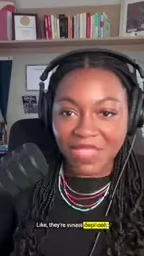
In a recently discussed interview, an observer raised a phenomenon worth pondering: the way contemporary young people approach politics is no longer just about voting or debating policy — it's about embracing a political identity and political beliefs with an intensity almost equivalent to religious devotion.
"They are deeply involved; politics shapes how they think, how they live." This is not merely an expression of political stance — it is more like the vehicle for an entire worldview. Unlike past generations who viewed politics as a civic duty, this generation has internalized political identity as a core part of their self-concept.
Behind this shift lies a deeper structural change in society. As traditional identity anchors — religion, family, community — gradually loosen, politics fills the void.
Political identity is a core concept at the intersection of social psychology and political science, referring to the degree to which an individual internalizes a particular political stance, party, or ideology as part of their self-concept. Social Identity Theory (proposed by Tajfel & Turner) holds that people derive self-esteem and a sense of meaning through group belonging, and political identity is an extension of this mechanism into the public sphere. When political identity is highly internalized, it is no longer just "I support a certain policy" but "this is who I am." Researchers have found that strong political identity activates neural and psychological responses similar to religious belief: loyalty to group symbols, moralized judgment of dissenters, and reinforcement of belonging through ritualistic participation (rallies, sharing, slogans). This explains why contemporary political expression often carries a quasi-religious flavor.
Politics as a Vessel for Self-Expression
To understand this phenomenon, we need to first look at the cultural environment in which this generation grew up. One core belief they were instilled with from childhood is: you can become anyone you want to be, you can do anything, you can achieve any goal.
This narrative permeates media content, parenting strategies, and indeed the entire social discourse. It grants individuals an immense sense of freedom, but it also comes with a hidden cost: when "you can become anything" becomes the default premise, you actually need a concrete answer even more urgently to respond to "then who exactly am I?"

Politics happens to offer a seemingly clear answer to this question. A set of political stances naturally comes with a set of values, a community to belong to, and a moral coordinate system. For young people feeling lost amid infinite choices, this certainty is enormously attractive.

Identity anchor refers to the stable reference points individuals use to answer the fundamental question "who am I," with common sources including religion, family, occupation, geography, and marital roles. Sociologists argue that modernity has brought about the "de-traditionalization of identity": identities once determined at birth are gradually replaced by chosen, self-constructed ones. Giddens calls this process "reflexive project of the self," meaning individuals must continuously choose and narrate their own identity. While freedom increases, it also brings "choice overload" and a loss of "ontological security." When lacking stable anchors, individuals seek alternative systems that can simultaneously provide certainty, belonging, and moral direction — and political ideology satisfies all three needs.
The Missing Traditional Anchors
One key contrast in the interview is worth noting: this generation's parents did not, as the previous generation did, repeatedly emphasize the importance of marriage and parenthood within the family. These social and personal obligations that once constituted the structural meaning of life have notably receded from contemporary parenting discourse.
Marriage once provided a clear identity — spouse; raising children provided another — parent. These roles came with built-in responsibilities, rhythms, and a sense of meaning. When these traditional paths are no longer emphasized or even questioned, young people are liberated, but they also lose a ready-made framework of meaning.
Political identity then plays the role of a substitute. It likewise provides group belonging, moral purpose, direction for action, and even a sense of mission. From this perspective, young people's enthusiasm for politics is less about concern for policy details and more about seeking a vessel in which to place themselves and express their individuality.

Marriage and childbearing as "structures of meaning" in traditional societies were not merely private choices but functional roles embedded in social reproduction: they prescribed temporal rhythms (stages of forming a family and raising children), objects of responsibility (spouse, children), and social positions (head of household, parent). French sociologist Durkheim once pointed out that social roles bind individuals to the collective through "obligation," thereby warding off anomie. When parenting discourse no longer emphasizes these roles, young people gain freedom from coercive constraints, but they also lose the sense of meaning and daily order automatically conferred by these roles. Political identity can serve as a substitute precisely because it likewise provides a feeling of "being needed," clear boundaries between friend and foe, and a collective cause to devote oneself to.
What This Shift Means
Equating political identity with the level of investment found in religious belief has both positive aspects and risks. On the positive side, it fosters higher political participation and stronger community bonds. Young people are willing to invest time, energy, and emotion in their beliefs, which has driven real change on many issues.
The risk is that when politics becomes the core of self-identity, policy disagreements are easily perceived as attacks on personal worth. The space for rational debate may be compressed, because you are not challenging my viewpoint — you are negating who I am.
Understanding the sociological and psychological mechanisms behind this may help us view intergenerational political divisions more rationally, rather than simply attributing them to one generation being "too sensitive" or "too extreme."
One-line Summary
Contemporary young people internalize political identity as their core self to fill the void left by traditional meaning anchors such as religion and family.
Paragraph Summary
The article points out that contemporary young people's investment in politics has approached religious devotion: politics is not just an expression of stance but a core identity shaping how they think and live. This phenomenon stems from a two-pronged squeeze of cultural environment and traditional structure. On one hand, the narrative of "you can become anyone" brings the freedom of self-construction while also creating a more urgent need for a concrete answer to "who am I"; on the other hand, traditional life roles such as marriage and childbearing have receded from contemporary parenting discourse, leaving a void in the structure of meaning. Political identity, because it can simultaneously provide belonging, moral coordinates, and a sense of mission, becomes an ideal substitute anchor. The author cautions that this shift both elevates political participation and carries risks: when politics equals the self, policy disagreements are easily perceived as personal attacks, and the space for rational discussion is thereby compressed.
Related articles

Cursor AI Programming in Practice: Build a Student Management System from Scratch in 30 Minutes
A Bilibili creator demonstrates Cursor AI programming: generating a student management system in 30 minutes with natural language. Details on Agent mode, Claude selection, prompt techniques, and thresholds.

Top 20 AI Coding Tools Ranking: From Rock-Solid to Lackluster, a Scored Matrix
Bilibili creator releases top 20 AI coding tools ranking, tiered T0–T4 from rock-solid to lackluster, with Claude Code and Codex tied at T0. This article details the scoring dimensions (capability, reliability, robustness, durability, cost, domestic availability) and tool performances to help developers choose the right AI coding assistant.

Vibe Coding Systematic Tutorial: Master AI-Assisted Programming from Zero
A three-month Vibe Coding tutorial from a Bilibili creator covering Codex, ClaudeCode, and Cursor, from core logic to commercial project practice for beginners.