Why High Tariffs Can't Break China's Manufacturing Supply Chain: Lessons from a Few Screws

Tariffs are just the tip of the iceberg — China's real manufacturing edge is three decades of supply chain collaboration.
U.S. tariff hikes pushed many companies to launch "China plus one" strategies, shifting capacity to Southeast Asia or India — but two years on, many orders have returned to China. Vietnamese factories halt production waiting for screws and molds from China; Indian factories cancel orders after hitting technical bottlenecks; a Polish firm still keeps 80% of its capacity in Shenzhen. The root cause: tariffs are the most visible cost, but freight, downtime, and management overhead easily offset the rate advantage. Baldwin's globalization theory shows that coordination costs peak when a supply chain is only half-relocated, and Southeast Asia's low-cost edge itself partly depends on connections to Chinese supply chains. Companies are responding with a dual-track approach — keeping core production in China while retaining small Southeast Asian assembly capacity to hedge policy risk. What's truly hard to move isn't machines; it's the collaborative network built around them over thirty years.
After tariff barriers rose, many multinational companies shifted production capacity to Southeast Asia. Two years later, some factories have sent orders back to China. When a Vietnamese workshop runs short of specific screws or a usable mold set, production grinds to a halt while waiting for shipments from China. An Indian factory gets stuck on a technical bottleneck and ultimately cancels the order. Polish packaging company DST PACK keeps 80% of its capacity in Shenzhen. On paper, tariffs can save up to 14 percentage points — so why do total costs go up instead of down? The answer lies in the least glamorous corner of Chinese manufacturing: the small supply chain clusters that have grown up around factories over decades.
Tariffs Are Just the Most Visible Line Item
Over the past few years, tariffs have been widely seen as the decisive variable in reshaping global manufacturing. The effective U.S. tariff rate on Chinese goods hovered around 20%, compared to just 6.1% for Vietnam, 4.5% for Thailand, and 13.4% for Indonesia. Looking at rates alone, moving production lines from China to Southeast Asia seemed like a profitable trade-off, and more and more companies launched "China plus one" strategies accordingly.
But once factories actually opened, companies discovered that tariffs are just the most visible line item on the cost sheet. A manufacturing system that runs reliably is far more than buildings, machines, and low-wage workers. As soon as an overseas factory is missing one or two supporting elements, the tariff savings are quickly consumed by freight costs, production stoppages, and management overhead.
According to sources familiar with the matter, U.S. retailer Target has redirected some orders back to Chinese suppliers after encountering supply chain disruptions and capacity constraints abroad; fast-fashion e-commerce company SHEIN has also scaled back parts of its Vietnam operations. Large companies' adjustments tend to show up as a single line in earnings reports, but the experiences of smaller businesses tell a more revealing story.
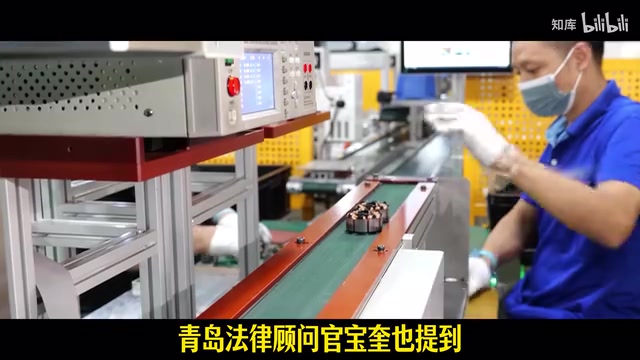
Jin Chaofeng, a Hangzhou-based outdoor furniture exporter, traveled to Ho Chi Minh City in 2024 planning to use Vietnamese production to sidestep high tariffs. Two years later, he decided to shut down the workshop and move production back to China. Locally, he couldn't source the specific hardware screws and cup-holder molds needed for production — they had to be imported from China. Once cross-border freight, wait times, and overseas management costs were factored in, the total cost of producing in Vietnam was nearly identical to producing in China. Dandong's Dawang Metal encountered a similar situation: an American agricultural machinery client once shifted orders to India, but the local factory couldn't resolve a production bottleneck and ultimately sent the work back to Dandong.
Why Factories Still Tend to Cluster Together
With logistics and information flow as advanced as they are today, why do overseas factories still get held up by a few screws or a single mold set? This question can be answered through the globalization theory of Richard Baldwin, professor at the Graduate Institute of International and Development Studies in Geneva.
In The Great Convergence, Baldwin frames globalization as a gradual process of separating production from consumption across geography — a process constrained by three types of costs: the cost of moving goods, the cost of transmitting knowledge, and the cost of moving people and communicating face-to-face. In the early 19th century, steam engines, railways, and ocean steamships lowered transportation costs, triggering the first wave of globalization's unbundling. But industrial production didn't spread evenly; it concentrated in a handful of industrialized nations — because transmitting knowledge and moving people remained expensive.

From roughly 1990 onward, information and communications technology lowered the cost of transmitting knowledge. Multinationals could send blueprints and management instructions remotely, shifting labor-intensive operations to lower-wage countries — what Baldwin calls the "Great Convergence." But the world didn't flatten as a result: the third category of costs persisted. People can't arrive on-site instantly the way data can. Video calls can convey standardized instructions, but they can't replace an engineer standing beside a machine to adjust mold tolerances.
China's manufacturing advantage lives inside this kind of network. Over the past 30 years, the Pearl River Delta and Yangtze River Delta have accumulated vast numbers of component suppliers, mold makers, electronics manufacturers, and skilled workers. They're close, they respond fast — a wrong screw can be swapped the same day, an engineer can rush to the site when a mold goes off-spec. Many of the coordination tasks that are slow and expensive in cross-border production have become routine here.
Baldwin's theory has an earlier academic precedent worth noting: economic geographer Paul Krugman introduced "New Economic Geography" in the 1990s, using "centripetal forces" and "centrifugal forces" to explain why industries spontaneously cluster. When suppliers, workers, and customers all gather in one place, each new firm that joins lowers its own procurement and hiring costs — a positive feedback loop that causes clusters to snowball. Krugman won the 2008 Nobel Prize in Economics for this work. The formation of the Pearl River Delta and Yangtze River Delta is a textbook example of this mechanism: low wages in the early reform era attracted the first wave of factories, those factories drew in supporting suppliers, and the density of suppliers attracted still more factories. Three decades of accumulation produced a manufacturing ecosystem that is today nearly impossible to replicate. Understanding this helps explain why high tariffs can redirect trade flows but cannot simply "transplant" a highly internalized industrial cluster.
Coordination Costs Peak When a Supply Chain Is Only Half-Relocated
When companies move only some of their operations overseas, why does cross-border coordination suddenly become so complex? It comes down to the number of coordination relationships created when a supply chain is split.
Baldwin illustrates this with a model containing six production stages: if only one stage moves overseas and the other five remain domestic, five sets of cross-border coordination relationships must be maintained. Move two stages, and the number climbs to eight. When three stages are on each side, it peaks at nine. Only when even more stages are moved overseas does the number of cross-border relationships start to decline. This "rise then fall" curve means that coordination costs are often highest when a supply chain is only halfway relocated.
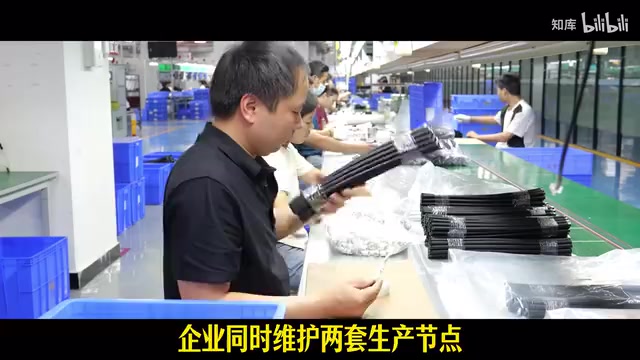
The reality is that many parts of Southeast Asia and India still lack sufficiently deep second- and third-tier supplier networks. Jin Chaofeng produces in Vietnam but imports screws and molds from China; Dawang Metal's client in India runs into technical bottlenecks and still turns to China for help — the production line moved, but the dependency didn't. This "half-relocated, half-dependent" state is the most problematic configuration: companies must simultaneously maintain two sets of production nodes while handling cross-border logistics, technical support, and management communication. Power outages, shipping delays, and insufficient skilled workers amplify every coordination failure. Costs don't rise gradually — they can suddenly spike beyond what a company can absorb.
When a Middle East oil crisis in April 2026 drove plastic raw material prices up 15%, DST PACK still kept 80% of its capacity in Shenzhen. CEO Stanislaw Krikun noted that per-unit costs at backup factories in the U.S. and Europe are two to three times higher than in Shenzhen, and he had watched partners in Vietnam struggle simultaneously with production, export, and power supply problems. Qingdao legal advisor Guan Baokui also mentioned that frequent power outages in parts of Vietnam and Indonesia directly increase losses from production downtime.
Comparative Advantage Is Being "De-nationalized"
Traditional comparative advantage theory starts from a country's factor endowments — if Southeast Asian wages are lower and tariffs smaller, it would seem to follow that the region can replace China. But Baldwin argues that modern manufacturing rarely relies on any single country working independently. Comparative advantage is being "de-nationalized"; the unit of competition has shifted from individual countries to cross-border production networks.

Part of the low-cost advantage of Southeast Asian factories derives from their connection to Chinese supply chains: China provides molds, components, equipment, and technical support, while local operations handle partial assembly. This is an extended advantage, not a fully independent comparative advantage. When the connection is smooth, both sides benefit; once policy demands that the connection be severed, the weak points are exposed. Baldwin calls this phenomenon — where factories and exports appear to thrive while core technology remains in the hands of an external network — the "hollowed-out city syndrome."
In the mid-20th century, South Korea and Taiwan pursued a "build the supply chain" approach, establishing relatively complete industrial systems through import substitution and long-term supplier development. After the 1990s, many Southeast Asian countries chose to "join the supply chain," starting from single assembly operations. The approach delivers quick results, but without sufficiently deep local supplier networks, growth becomes heavily dependent on external inputs.
Dual-Track Positioning: Neither Full Reshoring Nor Complete Relocation
The return of orders is not a full reversal. Ningbo export agent Ms. Hu says market competition remains intense; vending machine exporter Yu Yangxian hasn't pulled out of Vietnam entirely, maintaining roughly one-eighth of her capacity in Ho Chi Minh City as a hedge against tariff changes.
Multinationals are revising the relocation strategies of recent years: rather than searching for a single low-tariff region that can fully replace China, they are allocating capacity based on total cost — keeping primary production and supply chain nodes in China while retaining a small assembly footprint in Southeast Asia to spread policy risk. This is a more pragmatic "dual-track positioning."
Historically, conflicts between tariff policy and existing production structures are nothing new. The U.S. Smoot-Hawley Tariff Act of 1930 used high tariffs to protect domestic industries; other countries retaliated, international trade contracted further, and the hardship of the Great Depression was compounded. Today's situation is more complex: modern products are typically completed across multiple countries and multiple stages. Tariffs can change a particular trade route but cannot instantly replicate another set of suppliers, technicians, and infrastructure.
High tariffs have indeed accelerated the "China plus one" strategy and will continue to redirect some order flows — but relying on a tariff differential alone is unlikely to dismantle China's manufacturing supply chain clusters. The harder-to-replicate elements of the advantage China has built over the past 30 years are supplier density, infrastructure, a skilled workforce, and the collaborative relationships they have refined over many years working together. A few screws and a mold set, when the full accounting is done, are not small matters. What's truly hard to move in manufacturing has never been the machines — it's the invisible network of collaboration surrounding them.
The Smoot-Hawley Tariff Act was passed by the U.S. Congress in 1930, sharply raising tariffs on more than 20,000 imported goods and pushing the average rate to roughly 45%. The act was intended to protect domestic agricultural and manufacturing jobs during the early Great Depression, but Europe's major trading partners immediately imposed retaliatory tariffs, and global trade volume shrank by about 66% between 1929 and 1932. Most economic historians conclude that this tariff war deepened and prolonged the Depression, and it is also cited as a key historical lesson that helped motivate the construction of the multilateral trading system (GATT, the forerunner of today's WTO). Unlike the 1930s, today's global supply chains are deeply intertwined — a single consumer product often crosses five to seven countries during production. Tariffs affect not only the price of the final product but also cascade through the supply chain at every stage, making their impact far more complex than trade statistics alone can convey.
Background Notes
The concept of the "hollowed-out city syndrome" comes from observations of certain export-oriented economies in Southeast Asia: cities display the outward appearance of thriving factories, ports, and export figures, but key equipment depends on imports, core components come from outside, and technical talent is provided by multinational expatriates, while local companies remain confined to low-value-added assembly. Once foreign capital withdraws or an external supply chain is disrupted, local manufacturing capacity often proves unable to sustain itself independently. This contrasts with the development paths of South Korea and Taiwan — both of which, while absorbing foreign investment, used policy to support domestic supplier development and local engineering talent, gradually internalizing technology. Baldwin argues that "joining the supply chain" and "building the supply chain" represent two fundamentally different industrialization strategies: the former yields fast results but is fragile; the latter takes longer but accumulates genuine comparative advantage. In current discussions about whether Southeast Asia can replace Chinese manufacturing, this structural difference is frequently obscured by simple comparisons of wages and tariff rates.
Related articles

LLaMA-Factory in Practice: A Complete No-Code Guide to Fine-Tuning Large Models
An introduction to LLaMA-Factory, the open-source fine-tuning tool: its 60.1K-star background, supported models and algorithms, local vs. cloud deployment, and CUDA setup steps.

Zeng Ming's Deep Retrospective: Why OpenAI May Not Be the Ultimate Winner — and Why the Corporate System Will Disappear
Zeng Ming's deep retrospective on the AI endgame: model companies are just infrastructure, OpenAI and Anthropic won't be the final winners; the next battle is the Agent entry point standard; the corporate system will disappear as AI restructures collaboration, and only mission-driven companies can survive the cycle.

OpenHands v1.28.0: OpenCode and PI Added as Built-in Agents, API Keys Requestable In-Conversation
OpenHands ships 5 releases in 21 days: v1.27.0 adds OpenCode and PI as built-in agents, v1.28.0 enables in-chat key requests. ACP integration, credential reuse, model list changes, and upgrade advice.