Why Is NVIDIA Scrambling for Interns? A Deep Dive into the AI Talent War

NVIDIA's intern message reveals the fierce AI talent war and what it means for young engineers.
NVIDIA's social media message to summer interns spotlights the AI chip giant's intense hunger for top talent. As the company powering over 80% of global AI training, NVIDIA leverages its internship program as a critical talent pipeline. With tech giants offering multi-million-dollar packages for AI researchers and a severe supply-demand imbalance in skilled engineers, the competition for talent has never been fiercer. For young engineers, this era presents historic opportunities — but also calls for building strong CS fundamentals to weather inevitable industry cycles.
The Industry Signal Behind a Single Post
Recently, NVIDIA posted a message on social media addressed to its summer interns, sparking widespread attention across the tech world. What appeared to be a simple farewell and recruitment message — "This is an incredible time to be in technology. Glad to have you join us this summer. Come back and do your life's work at NVIDIA" — actually reflects the AI hardware giant's intense hunger for top talent, and the historic inflection point the entire industry finds itself at.

The phrase "This is an incredible time to be in technology" is far more than marketing speak. Against the backdrop of the generative AI explosion and exponentially growing compute demand, NVIDIA has transformed from a graphics card company into the core supplier of AI infrastructure, with its market cap briefly reaching the top of the global rankings. This transformation stands as one of the most successful strategic pivots in tech history. Founded in 1993 with a focus on PC gaming graphics, NVIDIA began opening up GPU applications in scientific computing and deep learning after launching the CUDA general-purpose computing platform in 2006. In 2012, AlexNet's breakthrough performance in the ImageNet competition using GPU-based training marked the official dawn of GPU-accelerated deep learning. Over the following decade-plus, NVIDIA built comprehensive AI training and inference infrastructure capabilities by continuously iterating on GPU architectures (from Kepler to Hopper to Blackwell), constructing a complete software ecosystem (cuDNN, TensorRT, Triton, etc.), and acquiring Mellanox for high-speed interconnect technology. By 2024, over 80% of global AI training workloads run on NVIDIA GPUs, and the company's market cap surpassed $3 trillion. For young engineers and researchers about to embark on their careers, joining a company riding the crest of such a technological wave truly represents a unique opportunity.
Talent as a Moat: Why NVIDIA Values Interns So Highly
Scarce Talent Shapes the AI Competitive Landscape
As AI chip competition reaches a fever pitch, top talent in hardware design, the CUDA ecosystem, systems software, and AI model optimization is extremely scarce. NVIDIA understands that its true moat lies not only in its GPU architecture and CUDA software stack, but in its ability to continuously attract and retain the people who will define the next computing paradigm.
The CUDA ecosystem itself is a core embodiment of this moat. CUDA is not just a programming model — it's a massive software ecosystem. Since its launch in 2006, over 4 million developers worldwide have used CUDA for parallel computing, accumulating tens of thousands of optimized libraries, framework integrations, and application use cases. Major deep learning frameworks (PyTorch, TensorFlow, JAX) have all been deeply adapted for CUDA, and the experimental code in thousands of academic papers is written on CUDA by default. This network effect means that even as AMD's ROCm or Intel's oneAPI gradually close the hardware performance gap, the cost of developer migration remains extremely high. Engineers who are proficient in CUDA optimization and GPU system architecture have therefore become prime targets in the talent wars among major AI companies.
Meanwhile, the competitive pressure on NVIDIA is intensifying. Google's in-house TPU has iterated to its fifth generation, optimized specifically for large-scale Transformer model training. AMD's MI300 series GPUs offer differentiated competition through memory bandwidth and capacity advantages. Startups like Cerebras, Groq, and SambaNova are entering the market with wafer-scale chips or deterministic inference architectures. More notably, major AI customers such as Microsoft, Amazon, and Meta have all launched custom chip programs (Microsoft's Maia, Amazon's Trainium, Meta's MTIA), attempting to reduce their dependence on NVIDIA. Under pressure from all sides, NVIDIA must maintain its lead across three dimensions — architectural innovation, interconnect technology, and software ecosystem — and breakthroughs in all of these areas are highly dependent on a continuous influx of top engineering talent.
The phrase "Come back and do your life's work at NVIDIA" elevates an internship experience to the level of a career calling. This narrative approach is increasingly common in recruiting at top Silicon Valley companies — they no longer merely offer a job, but promise a platform where you can help change the world.
Internship Programs: A Critical Stage in the Talent Funnel
For companies like NVIDIA, Google, and OpenAI, summer internships have long been a core talent pipeline strategy. Summer internship programs at top tech companies have evolved into highly structured talent screening systems. Applications typically open in the fall of the previous year, and after resume screening, multiple rounds of technical interviews, and team matching, thousands of interns are admitted each year. During the internship (usually 10–12 weeks), interns are assigned to specific project teams, participate in real engineering or research work, and are paired with dedicated mentors.
Through months of deep engagement, companies can closely evaluate interns' technical abilities and cultural fit, while interns gain firsthand experience of the company's work environment and technical depth. At the end of the program, top performers receive a Return Offer (a full-time employment invitation), with conversion rates at top companies typically reaching 70–90%. For companies, this amounts to an extended "trial period" that significantly reduces hiring risk. For students, the internship experience means not only generous compensation (monthly intern pay at top AI companies can reach $10,000–$15,000) but also a ticket into the inner circle. This two-way screening mechanism makes internships one of the highest-conversion, lowest-cost channels in full-time recruiting.
The AI-Era Talent War: Who Will Win the Best People?
White-Hot Competition Among Tech Giants
The competition for AI talent has reached unprecedented intensity. Companies like OpenAI, Anthropic, Meta, Google, and NVIDIA routinely offer compensation packages worth millions of dollars for top researchers. According to industry reports, PhD graduates with publications at top conferences (NeurIPS, ICML, ICLR, etc.) can command total compensation packages (base salary, equity grants, and signing bonuses) of $800,000 to $1.5 million per year. For senior researchers with outstanding achievements in areas like large model training, RLHF (Reinforcement Learning from Human Feedback), or systems optimization, total compensation can exceed $5 million. Behind this compensation inflation is a very real supply-demand imbalance: the total number of engineers worldwide with genuine large model training experience may number only in the thousands, while virtually every company with AI ambitions is competing for this talent pool.
In this environment, being able to lock in exceptional talent at the internship stage is critical to a company's long-term competitiveness.
NVIDIA's unique advantage lies in being both the "pickaxe seller" of the AI gold rush — controlling the compute infrastructure that nearly every AI company depends on — and a deep participant in cutting-edge research. As the "pickaxe supplier," it can offer employees access to the most advanced hardware and the largest-scale compute clusters, which holds unique appeal for technically driven talent. This positioning that spans hardware and software, infrastructure and applications, provides technical talent with extraordinarily broad growth opportunities — from chip microarchitecture design to distributed training systems, from compiler optimization to AI application frameworks, covering virtually every frontier of computational science.
Opportunities and Rational Choices for Young Engineers
For young people studying computer science, electrical engineering, mathematics, and related fields, this is indeed an era full of possibilities. The proliferation of AI has not only created a massive number of technical positions but has also redefined the threshold for "changing the world." Code written by an intern today could end up running in data centers that power AI applications worldwide.
However, beneath the opportunity lies room for rational reflection. The rapid growth of the tech industry comes with cyclical volatility, and whether the AI boom is sustainable — and whether one's skills might be made obsolete by rapid iteration — are questions every practitioner must carefully consider. Historically, from the dot-com bubble to the mobile internet cycle, every technological wave has gone through phases of frenzy, bubble, shakeout, and long-term growth. For young people, building a solid foundation in computer science fundamentals (algorithms, systems, mathematics) while pursuing hot trends may be the most robust strategy for weathering cyclical fluctuations.
Conclusion: A Snapshot of an Era
The reason NVIDIA's brief message to its interns captured so much attention is precisely that it captured the zeitgeist of today's tech industry — technology is reshaping the world at an astonishing pace, and talent is the core driving force behind it all.
For companies, how they attract, develop, and retain the people who will define the future will determine their ultimate standing in the AI race. For individuals, how to find one's place in this "incredible time" and accomplish one's "life's work" is a question worth serious contemplation. One thing is certain: we are living through a pivotal moment when technology can reshape individual destinies and industry landscapes alike.
Related articles
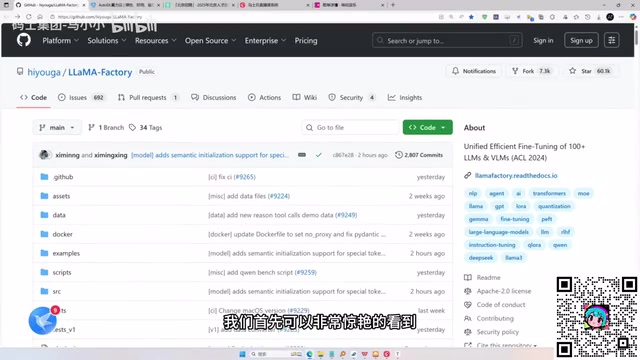
LLaMA-Factory in Practice: A Complete No-Code Guide to Fine-Tuning Large Models
An introduction to LLaMA-Factory, the open-source fine-tuning tool: its 60.1K-star background, supported models and algorithms, local vs. cloud deployment, and CUDA setup steps.

Zeng Ming's Deep Retrospective: Why OpenAI May Not Be the Ultimate Winner — and Why the Corporate System Will Disappear
Zeng Ming's deep retrospective on the AI endgame: model companies are just infrastructure, OpenAI and Anthropic won't be the final winners; the next battle is the Agent entry point standard; the corporate system will disappear as AI restructures collaboration, and only mission-driven companies can survive the cycle.

OpenHands v1.28.0: OpenCode and PI Added as Built-in Agents, API Keys Requestable In-Conversation
OpenHands ships 5 releases in 21 days: v1.27.0 adds OpenCode and PI as built-in agents, v1.28.0 enables in-chat key requests. ACP integration, credential reuse, model list changes, and upgrade advice.