Why Long-Term Thinking Is a Startup's Rarest Moat: Eight Years of Lessons from Runway
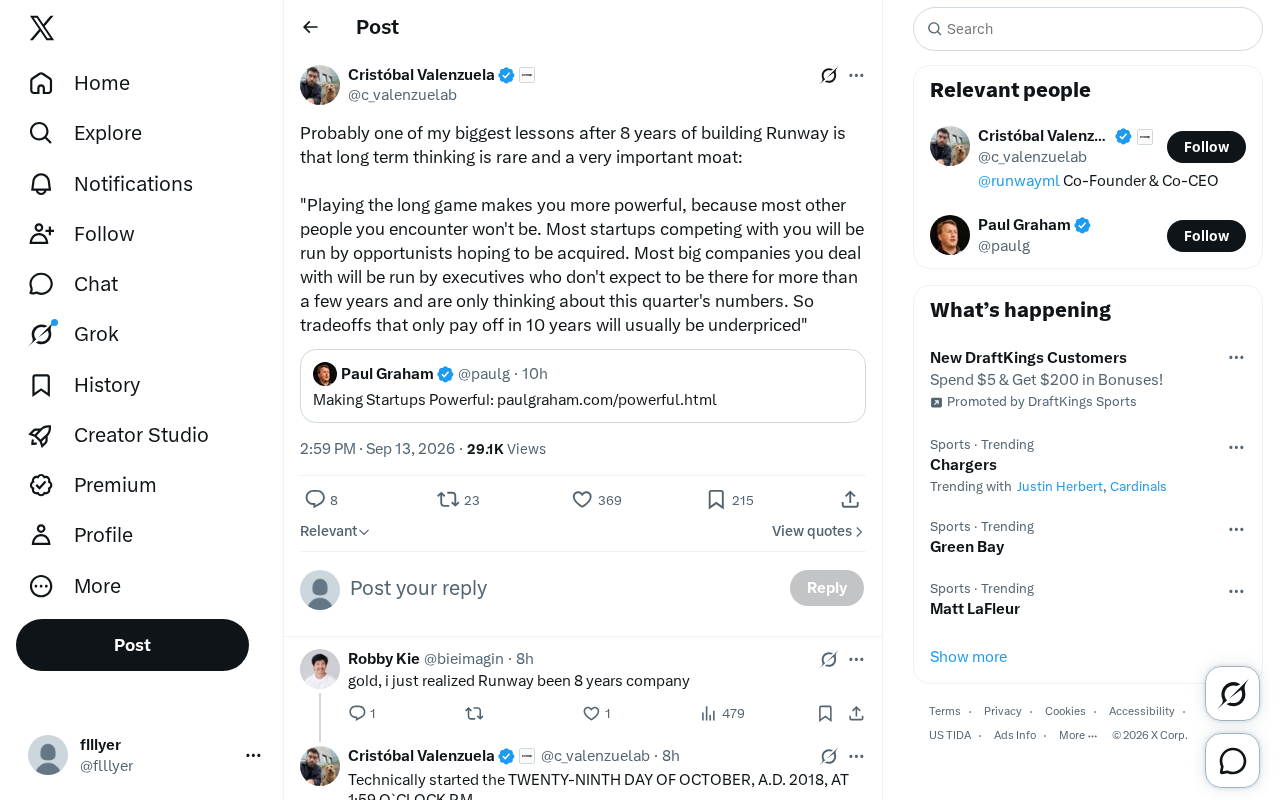
Runway's founder argues that long-term thinking is the rarest and most powerful moat any startup can build.
On Runway's eighth anniversary, its founder shared a key insight: long-term thinking is a severely underrated competitive advantage. Most competitors — whether opportunistic startups chasing acquisitions or executives driven by quarterly KPIs — are playing a short game. This makes strategic tradeoffs that only pay off a decade out systematically underpriced, creating a structural opportunity for long-term thinkers. In today's AI boom, teams willing to invest in foundational work rather than chase quick funding rounds are a rare minority. A moat doesn't always come from technology — sometimes it comes from the simple willingness to wait.
An Underrated Truth About Building a Startup
On the occasion of Runway's eighth anniversary, its founder shared what he considers the single most important lesson from the journey: long-term thinking is not only rare — it's a genuine moat. The idea sounds simple, but it cuts to the heart of a structural trap that most founders and companies struggle to escape.
His core argument: "Playing the long game makes you more powerful, because most other people you encounter won't be." In an environment driven by short-term incentives, the willingness to make a bet that won't pay off for a decade is, by itself, a competitive advantage.
Why Most Competitors Are Playing a Short Game
The most insightful part of the post is how it deconstructs the real motivations of competitors. The founder points out that many of the startups you compete against are run by opportunists — people whose goal isn't to build something great, but to get acquired and cash out.
The same dynamic plays out with large companies. Executives at these organizations often have tenures of just a few years. Their real concern is this quarter's numbers, not what the industry looks like a decade from now. This institutional short-sightedness floods the market with an obsessive focus on near-term returns.
The conclusion follows naturally: tradeoffs that only pay off ten years from now are almost always underpriced in the present. That means if you're willing to bet on long-term value, you're effectively buying at a discount — picking up opportunities that everyone else is too busy to notice.
How Long-Term Thinking Translates Into Competitive Advantage
This lesson takes on particular weight when viewed against today's AI industry. Generative AI is at a peak of capital and hype, with waves of teams rushing in — many of them chasing quick fundraising rounds or acquisition by a tech giant. In this environment, teams that commit to foundational research, relentless product refinement, and building technical depth that's hard to replicate have actually become the minority.
The advantages of long-term thinking show up across several dimensions:
- Decision quality: Free from the tyranny of quarterly metrics, you can make genuinely valuable tradeoffs in R&D and product direction.
- Talent and trust: A long-term orientation attracts team members and partners who share those values — people who are themselves in it for the long run.
- Compounding: Technology, brand, and user relationships all take time to accumulate. These are precisely the things short-term players can't manufacture in a compressed timeline.
In other words, a moat doesn't always come from a patent or an algorithm. Sometimes it comes from the simple willingness to wait.
What This Means for Founders Today
The real value of this lesson is the counterintuitive lens it offers: the market's short-sightedness isn't an obstacle to overcome — it's a structural opportunity to exploit. When everyone is racing for short-term gains, the space for long-term positioning gets quietly vacated.
That said, long-term thinking isn't the same as stubbornly grinding without direction. It requires founders to have a clear conviction about the future — and the willingness to absorb near-term uncertainty in service of that conviction. The real challenge is finding the balance between staying alive (short-term survival) and winning decisively (long-term value creation). Runway's eight years is itself a proof of that balance in practice.
For anyone navigating the current AI wave, this reflection from a founder in the trenches may be more worth holding onto than any industry forecast.
Related articles
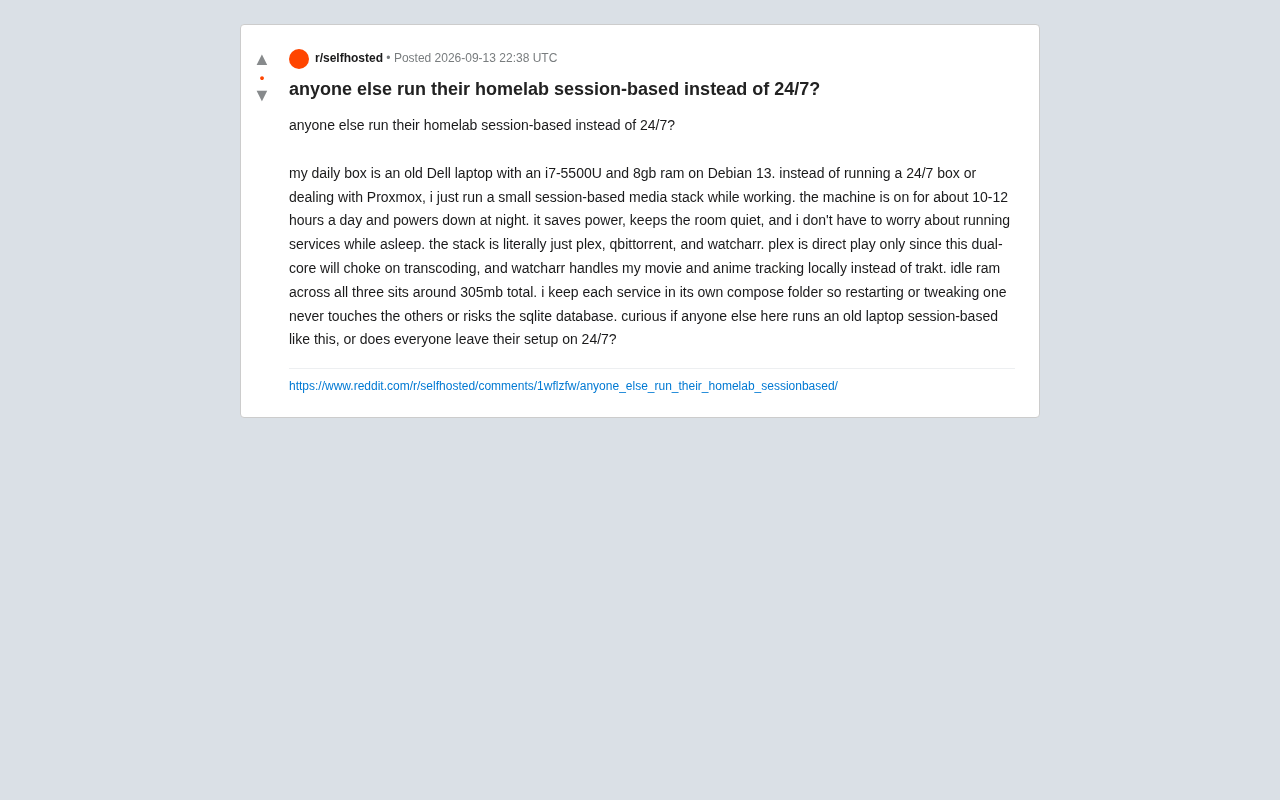
Session-Based Home Server: Running a Low-Power Homelab on an Old Laptop
A Reddit user runs Plex, qBittorrent, and Watcharr on a 10-year-old laptop for just 10–12 hrs/day, using only 305MB RAM idle. Exploring session-based vs. 24/7 Homelab trade-offs.

OpenAI Launches ChatGPT for Financial Services: Built-in Financial Data + GPT-6 Reasoning
OpenAI launches ChatGPT for Financial Services, combining built-in financial data with GPT-6 Astra reasoning to support research, financial modeling, and client materials for financial institutions.

When AI Controls Your Credit Card: The Hidden Risks of Autonomous Payments
When AI agents gain credit card access, hidden dangers emerge: vague authorization, prompt injection attacks, and unclear liability. Learn the real risks and how to stay protected.