Why Startup ARR Is Becoming Fragile in the AI Era — And How to Fight Back
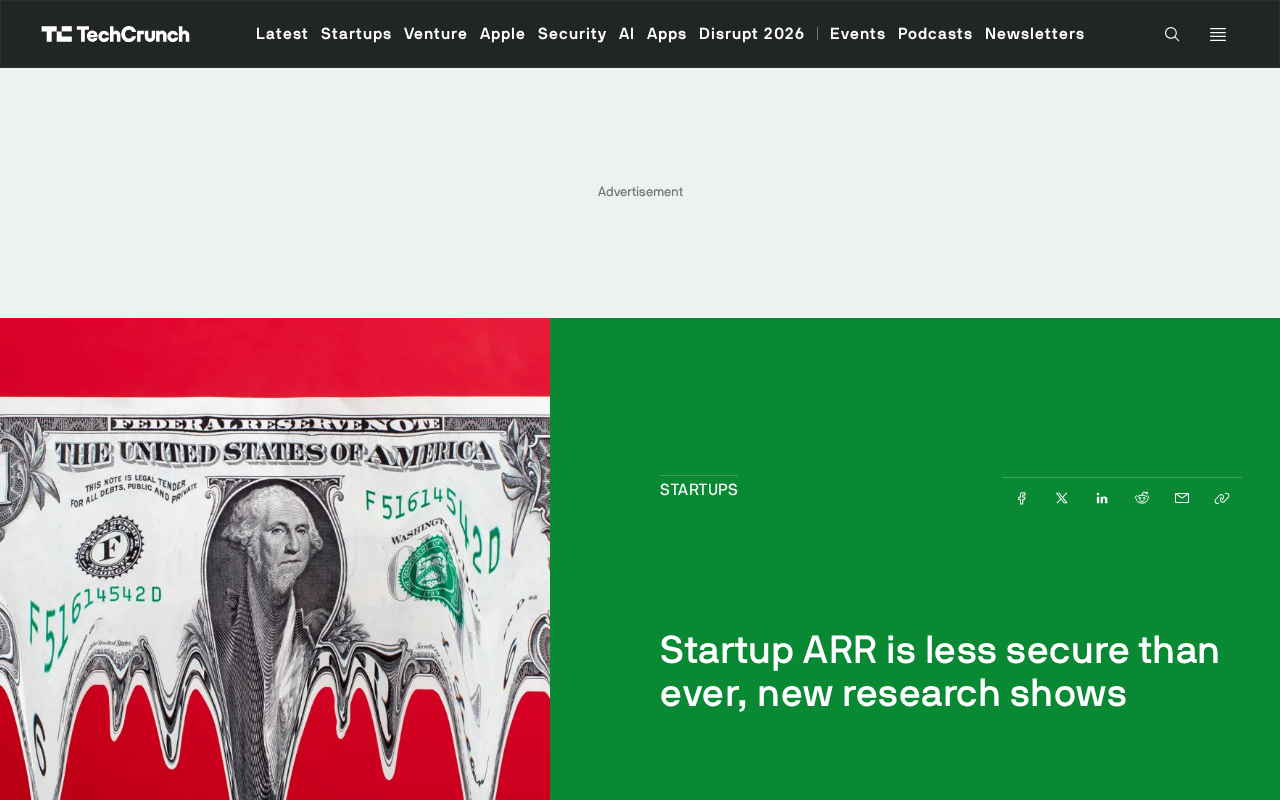
AI is undermining startup ARR stability — here's why and how to adapt.
The AI era is reshaping enterprise procurement, making startup ARR more fragile than ever. Shorter buying cycles, lower switching costs, and rapid erosion of technical moats are weakening revenue predictability. This article explores why traditional ARR stability is declining, how investor valuation logic is shifting toward metrics like NRR, and offers practical strategies — from building proprietary data moats to implementing revenue quality scoring — to help startups survive and thrive.
The AI Wave Is Reshaping Enterprise Procurement Logic
A recent study has revealed an alarming trend: startup Annual Recurring Revenue (ARR) is becoming more fragile than ever before. The arrival of the AI era has fundamentally disrupted traditional enterprise software procurement models, and most startups have yet to find a way to respond.
During the golden age of SaaS (Software as a Service), ARR was considered the core metric for measuring startup health. It represented predictable, stable subscription revenue and served as the key basis for investor valuations, fundraising negotiations, and even IPO pricing. As one of the most critical financial metrics in the SaaS industry, ARR is calculated by multiplying Monthly Recurring Revenue (MRR) by 12. This metric was given such prominence because it perfectly reflects the fundamental advantage of subscription-based business models — revenue predictability. In the traditional software era, companies generated revenue through one-time license sales, which led to high volatility and unpredictability. The SaaS model of monthly or annual subscriptions made revenue smooth and controllable. Investors typically valued SaaS companies at multiples of ARR, with growth-stage companies commanding valuation multiples of 10–30x ARR or even higher, meaning every increase in ARR translated directly into amplified company valuation. However, the explosive growth of AI is shaking this foundation.
Why ARR Is No Longer Rock-Solid: Two Fundamental Shifts
Deep Changes in Procurement Cycles and Decision-Making
In the past, enterprise software procurement followed a long-term lock-in logic: once a contract was signed, customers would remain for extended periods due to high migration costs and complex integrations, providing startups with stable revenue expectations. During the golden decade of SaaS from 2010 to 2020, these high switching costs formed a natural customer retention barrier. These costs included the technical complexity of data migration, deep integration with existing IT systems (such as ERP and CRM), the time cost of employee retraining, and the risk of business disruption. For example, once a company deeply embedded Salesforce into its sales processes, replacing it might require a 6–12 month transition period and millions of dollars in implementation costs. This "stickiness" kept annual customer churn rates for SaaS companies typically below 5–10%, providing a solid foundation for stable ARR growth.
However, in the AI era, this logic is being upended. AI tools iterate at extreme speed, with new products and capabilities emerging constantly. Enterprise customers are no longer willing to be locked into long-term contracts. Instead, they prefer to maintain flexibility, ready to switch to newer solutions with better performance and lower costs at any time. Many AI products have far less integration depth than traditional SaaS, often connecting through API calls or lightweight plugins, which dramatically reduces migration costs. This "replaceable at any time" procurement mindset directly undermines the predictability and stability of ARR.
Rapid Erosion of Technical Moats
In the AI space, today's technological advantage can be wiped out within months by updates to foundational large models. This touches on the widely discussed "Platform Risk" issue in the AI industry. Every time foundational model providers like OpenAI, Google, and Anthropic upgrade their models, they may directly incorporate functionality that previously belonged to third-party application layers. For example, many early startups focused on GPT-based document summarization, but when ChatGPT itself rolled out advanced data analysis and document processing capabilities, the standalone value of these applications was significantly diminished. This phenomenon is similar to how Apple and Google integrated third-party app features into their operating systems during the mobile internet era (such as flashlight apps being replaced by built-in system features), but in the AI space, this "absorption" is happening at a far greater speed and scale.
Many startups that built products on specific models or specific use cases face enormous risk of their core capabilities being casually replicated by platform providers. When a product's core value can be easily replaced, customer renewal willingness naturally drops sharply.
This means that even if a company currently boasts impressive ARR figures, the "quality" of revenue and customer "stickiness" behind those numbers may be far weaker than before. The apparent stability of revenue on paper is seriously decoupling from actual business solidity.
Core Challenges Facing Startups
A Complete Overhaul of Valuation Logic
For startups that rely on ARR metrics for fundraising, this trend delivers a direct blow. Investors are beginning to re-examine the substance behind ARR, no longer simply applying revenue multiples for valuation. Instead, they are digging deeper into several dimensions:
- Net Revenue Retention (NRR): Are customers continuously expanding their usage? NRR (Net Revenue Retention) measures the change in revenue contributed by the existing customer base over one year, factoring in Expansion revenue, Contraction revenue, and Churn. A healthy SaaS company typically has an NRR of 110–130% or above, meaning that even without acquiring any new customers, revenue from existing customers alone would naturally grow by 10–30%. Top companies like Snowflake have achieved NRR exceeding 170%. In the AI era, NRR has become a more convincing metric than ARR because it directly reflects whether a product's core value is continuously recognized by customers, rather than merely reflecting the sales team's deal-closing ability.
- Customer Concentration: Is revenue overly dependent on a small number of large customers?
- Sustainability of Technical Barriers: Can the product's value be quickly replaced?
In other words, the same ARR figure may correspond to a lower valuation multiple in the AI era. Startups need to prove not just "how much money I'm making," but "how long this money will keep coming in."
Customer Retention Becomes the New Core Battleground
When customer acquisition no longer implies long-term lock-in, startups must shift their operational focus from "closing deals" to "retention." This requires teams to continuously deliver value that exceeds competitors, rapidly respond to customer needs, and keep up with — or even outpace — the industry's product iteration speed.
For resource-constrained startup teams, this is an exhausting war of attrition — higher R&D investment, faster product cadence, and heavy investment in Customer Success infrastructure are all indispensable. Customer Success is an operational methodology and organizational framework that matured in the SaaS industry during the 2010s. Unlike traditional post-sales support, the Customer Success team's responsibility is to proactively help customers achieve their business goals — the very goals that drove their purchase — thereby driving renewals and expansion purchases. This system typically includes customer health scoring (based on usage frequency, feature adoption rates, support tickets, and other data), regular business reviews (QBRs), and tiered service strategies (high-value customers get dedicated Customer Success Managers, while long-tail customers are served through automated outreach). Against the backdrop of heightened customer mobility in the AI era, a mature Customer Success system has evolved from a "nice-to-have" into a "survival necessity."
How to Address ARR Fragility: Practical Strategies
Build Truly Differentiated Moats
Facing the rapid democratization of AI capabilities, startups need to answer one fundamental question: What value cannot be easily replicated by foundational models?
The answer typically lies in the following directions:
- Proprietary Data Assets: Unique industry data or user behavior data
- Deep Industry Know-how: Specialized knowledge and best practices accumulated in vertical domains
- Complex Workflow Integration: Deep embedding in customer business processes that raises switching costs
- Network Effects: A positive feedback loop where the product becomes more valuable as the user base grows. In AI products, network effects typically manifest as "data network effects" — more users generate more data, which can be used to improve models and product experiences, attracting even more users and creating a virtuous flywheel. For example, Grammarly continuously optimizes its language models through billions of user editing behaviors; Scale AI has accumulated massive labeled datasets and annotation methodologies by serving an ever-growing roster of clients. However, it's important to note that not all AI products naturally possess network effects — startups need to intentionally design their product architecture and data strategy to build this moat.
Pure "wrapper" applications — those that add a thin layer of packaging on top of general-purpose large models — are finding it increasingly difficult to sustain long-term revenue. "Wrapper App" is a popular term in the AI startup space, referring to products that build a thin user interface layer on top of APIs from companies like OpenAI and Anthropic without owning core model capabilities or unique data assets. After the ChatGPT explosion in 2023, a flood of such applications emerged, spanning AI writing assistants, AI coding tools, AI customer service bots, and more. The fundamental problem with these products is that their core value depends entirely on the underlying API's capabilities. Once the model provider launches a similar end-user product (such as ChatGPT's plugin ecosystem or Claude's Artifacts feature), or another startup builds a better interface using the same API, users face zero switching costs. According to Y Combinator data, over 40% of projects in recent application batches involve AI, but a significant proportion face this exact dilemma. True moats must be built on assets that others cannot quickly replicate.
Redefine and Scrutinize Revenue Quality
Startups also need to take a more discerning look at their revenue structure, clearly distinguishing:
- Which revenue has genuine stickiness, with low probability of customer departure?
- Which revenue is speculative, with customers only experimenting short-term?
- Which customers are core strategic assets worthy of focused attention?
- Which customers are just "tire-kickers" with low retention probability?
A clear revenue profile not only aids internal resource allocation and strategic decision-making but also builds deeper trust in communications with investors. In practice, an increasing number of startups are adopting "revenue quality scoring" systems, weighting each contract based on dimensions such as customer usage depth, contract duration, and expansion potential. This helps distinguish "high-quality ARR" from "fragile ARR," giving both management and investors visibility into the true health behind revenue figures.
Conclusion: ARR Still Matters, But the Sense of Security Needs Rebuilding
The core message from this research is crystal clear: in the AI era, ARR remains an important financial metric, but the "sense of security" it once represented has been significantly diminished. Profound changes in enterprise procurement models are forcing startups to re-examine their business models and growth logic.
For entrepreneurs navigating this transformation, rather than obsessing over surface-level ARR growth, it's better to channel energy into building truly sustainable product value and customer stickiness. In an era where everyone can quickly access AI capabilities, only companies that deliver irreplaceable value will weather the cycles and build a genuinely solid revenue foundation. It's worth noting that every major technology paradigm shift in history — from on-premise deployment to cloud computing, from PC to mobile internet — triggered similar valuation logic overhauls and business model anxiety. The companies that were first to find new anchors amid the turbulence often became the winners of the next era. This ARR restructuring in the AI era is essentially an accelerated process of survival of the fittest.
Related articles

Is the Agent Harness Dead? Cursor's Early Engineer Breaks Down the Real Architecture of AI Coding Agents
Cursor early engineer Jediah breaks down the real architecture of the agent harness: why "the harness is dead" is only half right, how the data flywheel lets the harness obsolete itself, and how Grokbot, software factories, and primitive design open new frontiers for agents.

Python Visitor Pattern and Better Alternatives Explained
A deep dive into Python's visitor pattern and four alternatives: method pattern, pattern matching, dictionary mapping, and functools.singledispatch. Choose the best decoupling design by change frequency.

357 Days of Deep Experience: Why Omarchy Made Me Stop Distro-Hopping
A 357-day deep dive into Omarchy: 59-second install, out-of-the-box audio and GPU support, the Quattro QuickShell rewrite migration pains, and why Arch users should try it.