Zhipu Open-Sources GLM-5.3-Flash 320B Model as Alibaba's Qwen4 Architecture Preview Launches Same Day
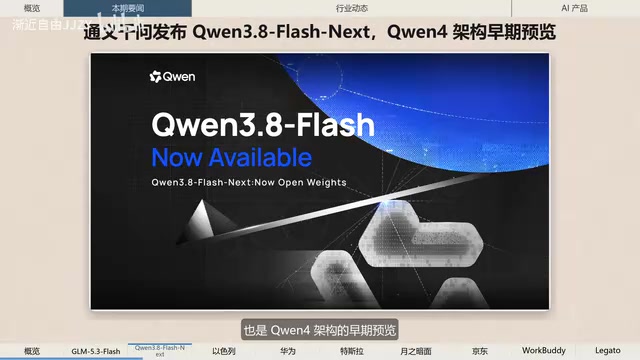
Zhipu and Alibaba release sparse MoE models achieving top performance with minimal active parameters.
Zhipu open-sourced GLM-5.3-Flash, a 320B-parameter native multimodal model with only 18B active parameters that matches Claude Opus 4.8 on benchmarks. The same day, Alibaba released Qwen3.8-Flash-Next as a Qwen4 architecture preview, using 512 experts with just 6B active parameters to surpass Claude Opus 4.6 Max. Both leverage highly sparse MoE architectures, signaling a new efficiency paradigm for Chinese AI models.
Major Updates for Chinese AI Models
On August 27, the AI industry saw the release of two heavyweight Chinese models: Zhipu open-sourced GLM-5.3-Flash, the first native multimodal model in the GLM-5 series, while Alibaba's Tongyi Qwen launched Qwen3.8-Flash-Next—not just a multimodal MoE model, but officially positioned as an early preview of the Qwen4 architecture. Both achieved significant breakthroughs in parameter efficiency, multimodal capabilities, and cost control, marking a new phase in the technical trajectory of Chinese AI models.
Notably, both models adopt highly sparse mixture architectures, achieving top-tier performance by activating only a fraction of their parameters. This trend is redefining efficiency standards for large models. "Sparse activation" means that although a model has a massive total parameter count, it only engages a small subset for computation when processing each input, while the rest remain dormant. The core advantage of this design is that total parameters determine the model's knowledge capacity and capability ceiling, while activated parameters determine actual inference cost. By decoupling the two, models can strike an optimal balance between "knowledge richness" and "computational economy."
GLM-5.3-Flash: A 320B Native Multimodal Open-Source Model
GLM-5.3-Flash is the first native multimodal model in the GLM-5 series, boasting 320B total parameters with only 18B activated. This sparse activation design dramatically reduces inference costs while maintaining powerful capabilities. The model is open-sourced under the MIT license and supports multimodal inputs including images and tokens. "Native multimodal" means the model was jointly trained on text, images, and other modalities from the pre-training stage, rather than bolting a vision encoder onto a text-only model for alignment fine-tuning. This native multimodal architecture enables more unified and deeper understanding of different modalities and stronger cross-modal reasoning.
On the authoritative Artificial Analysis composite intelligence index, GLM-5.3-Flash scored 57, on par with Claude Opus 4.8, with closely comparable coding ability. Artificial Analysis is an independent AI model evaluation platform whose composite intelligence index comprehensively assesses general intelligence by aggregating scores across multiple mainstream benchmarks spanning knowledge Q&A, reasoning, coding, math, multilingual understanding, and more. Compared to single benchmarks, this composite evaluation better reflects a model's overall real-world performance. For an open-source model with only 18B activated parameters to match top-tier closed-source commercial models, this result represents exceptional cost-effectiveness.
The model previously previewed on the OpenRouter platform under codenames like "Oxalpha," processing over 20 trillion tokens in just 6 days—making it the highest-volume model in OpenRouter's history, thoroughly validating its performance and practicality.
GLM-5.3-Flash's Cost Advantage
In terms of cost, GLM-5.3-Flash is priced at just one-tenth of GLM-5.3, with actual discounted prices as low as one-twentieth—equivalent to roughly one-fortieth the price of Claude Opus 4.8. More importantly, the model runs entirely on domestic Chinese AI chip clusters and employs a hybrid architecture combining sparse attention and linear attention, demonstrating the maturity of China's integrated hardware-software ecosystem.
Standard Transformer self-attention has O(n²) computational complexity, meaning compute grows quadratically with input sequence length—the core bottleneck for long-context processing. Sparse attention dramatically reduces this complexity by limiting each token to attending only to selected key positions rather than all positions. Linear attention further simplifies attention operations to linear complexity O(n) through kernel approximations or feature mappings. GLM-5.3-Flash's hybrid architecture combines both, leveraging sparse attention's ability to precisely capture key information alongside linear attention's computational efficiency on ultra-long sequences. This is the key technical foundation enabling the model to handle complex multimodal tasks with just 18B activated parameters.
Qwen3.8-Flash-Next: A Technical Preview of the Qwen4 Architecture
Qwen3.8-Flash-Next from Alibaba's Tongyi Qwen has also attracted significant attention. As a multimodal MoE model explicitly positioned as an early preview of the Qwen4 architecture, its weights are now publicly available.
MoE (Mixture of Experts) is a model architecture that achieves efficient inference through conditional computation. Its core idea is to split the feed-forward network layers into multiple independent "expert" sub-networks, with a learnable "router" activating only a few experts for each inference pass while the rest remain dormant. This allows models to have enormous total parameter counts representing knowledge capacity while keeping the actual computation per token small. Google's Switch Transformer and Mistral AI's Mixtral are early successful implementations of this architecture.
The model uses a highly sparse MoE architecture with a hybrid attention mechanism combining GDN and QSA. GDN (Gated Delta Network) is an efficient sequence modeling method that combines gating mechanisms with incremental updates, using gating signals to control selective information updates and reduce redundant computation. QSA (Query-based Sparse Attention) is a query-based sparse attention variant that dynamically determines which positions to attend to based on query vectors, rather than using fixed sparsity patterns. Their combined use enables the model to flexibly switch computation strategies across different layers—using QSA for parts requiring fine-grained global reasoning to ensure quality, and GDN for local pattern modeling to boost efficiency.
Total parameters are 125B plus 51B in N-gram embeddings, but only about 6B parameters are activated per token. N-gram embeddings encode information about combinations of multiple consecutive tokens into embedding vectors, allowing the model to capture local contextual collocations and phrase-level semantics at the input layer. These 51B parameters are essentially a massive lookup table that can be queried with minimal floating-point overhead during inference, yet significantly expand the model's knowledge capacity. Combined with asynchronous prefetching, these embeddings can be loaded from memory while the GPU computes other layers, further eliminating latency overhead. The native context window reaches 262K tokens and can extend to 1 million tokens.
Qwen3.8-Flash-Next's Architectural Innovations
Qwen3.8-Flash-Next's MoE layers use 512 experts with Top-10 routing (selecting 10 out of 512 experts per computation, yielding a 98% sparsity rate). Combined with N-gram embeddings that add virtually no computational cost while expanding model capacity—injectable into memory via asynchronous prefetching—this design achieves efficient capacity scaling while maintaining extremely low activated parameters.
According to official data, the model surpasses Claude Opus 4.6 Max in both text and multimodal domains with just 6B activated parameters, at only one-ninth the training cost of Qwen3.7-Plus, with particularly strong performance on coding and office tasks.
On pricing, the production Qwen3.8-Flash API is priced at $0.16 per million input tokens and $0.47 per million output tokens. It achieved scores of 58.7 and 62.5 on SWE-bench 1.1 and SWE-bench Pro respectively, demonstrating noteworthy coding capabilities. SWE-bench (Software Engineering Benchmark), developed by Princeton University and other institutions, is a software engineering evaluation benchmark that extracts real bug-fixing tasks from actual GitHub open-source projects, requiring AI models to understand codebase context, locate issues, and generate correct patches. Unlike simple code generation tests, SWE-bench evaluates end-to-end problem-solving ability in complex engineering environments, making it one of the industry's most authoritative benchmarks for measuring practical AI coding ability.
AI-Driven Opinion Manipulation: A Covert Information War
Beyond technological progress, the risks of AI misuse have also surfaced. A pro-Israel website operating under the banner of the "Hanover Institute for Public Policy" published 124 reports totaling over 560,000 words in just 9 days, with the goal of optimizing content to steer AI chatbots like ChatGPT toward citing its biased viewpoints.
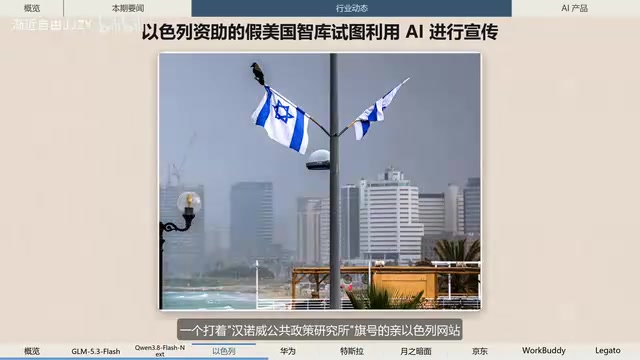
This case reveals a new form of information manipulation in the AI era—GAIO (Generative AI Optimization). Traditional SEO aims to boost webpage rankings in search engines, while GAIO targets AI chatbots as an emerging information gateway. When large language models answer user questions, they cite content from training data and web pages indexed through Retrieval-Augmented Generation (RAG). By publishing large volumes of structured, high-authority articles on specific topics, manipulators can increase the probability of their content being cited by AI models, thereby indirectly influencing the information received by millions of users.
According to disclosures, the website's content was distributed by US company Piro Inc. on behalf of the Israeli government under the Foreign Agents Registration Act, backed by a broader propaganda operation funded by tens of millions of Israeli government dollars and laundered through third parties like Havas Media. This case not only exposes the potential for state-level actors to wage information warfare through AI but also poses serious challenges for AI companies in preventing deliberate contamination of training data and retrieved content—a warning for the entire industry.
Chinese AI's Global Expansion and New Cloud Partnerships
On the international front, several developments are worth noting. Huawei has submitted a bid to the Egyptian government for an AI data center project, proposing to export at least 1,408 Ascend 950-series chips for AI training, plus 600 chips for two inference clusters, with a proposed 12-month timeline for local infrastructure construction. Huawei's Ascend series AI accelerators are currently China's most competitive domestically produced AI training chips, built on Huawei's proprietary Da Vinci architecture, with the Ascend 910 series benchmarked against NVIDIA's A100/H100. Against the backdrop of tightening US chip export controls on China, Ascend chips carry strategic significance for China's AI compute sovereignty. However, Ascend's overseas exports also face complex geopolitical dynamics—the US not only restricts advanced chip exports to China but is also attempting to prevent China from exporting AI chips to third countries to expand its compute influence. If this project materializes, it would be the first publicly confirmed Ascend accelerator export after more than a year of Huawei's export attempts, marking a substantive breakthrough for Chinese AI infrastructure solutions in "Global South" markets. The proposal also involves partnering with iFlytek for bundled applications.
Meanwhile, Moonshot AI is in discussions with Microsoft, Amazon, and Google over revenue-sharing agreements to host its Kimi K3 model on Azure, AWS, and Google Cloud, with the cloud providers charging up to 30% revenue share on K3 services. The cloud revenue-sharing model resembles app store commission structures—AI companies deploy models on cloud platforms, end users access services through the platform's APIs, and cloud providers handle infrastructure operations, billing, and global distribution while taking a percentage of revenue as commission. For AI companies, this means reaching overseas customers without building global inference infrastructure; for cloud providers, it enriches their AI service ecosystem. If completed, this would make Moonshot the first Chinese AI company to sign such an agreement with major US cloud providers, though negotiations remain at an early stage.
Tesla Data Center Controversy and FSD Progress
Tesla China responded to online rumors that its "Shanghai data center had been abandoned," calling the information false and reporting the matter to public security authorities, emphasizing that the data center is operating normally and that hiring for assisted driving roles is accelerating.

However, Tesla's recently updated global availability list for FSD Supervised includes 12 countries or regions, with China notably absent. FSD (Full Self-Driving) Supervised is Tesla's most advanced driver assistance system, based on an end-to-end neural network architecture capable of handling complex urban road scenarios under driver supervision. Its deployment in China faces multiple challenges including data compliance (vehicle driving data involves geographic information security), high-definition map approvals, and local road condition adaptation. Tesla continues to advance FSD Supervised's data compliance and localization for the Chinese market. Its Shanghai data center has achieved full domestic data retention, complying with China's Data Security Law and Personal Information Protection Law. The Lingang AI training center is also operational, providing local compute for model training based on Chinese road data.
AI Hardware Ecosystem Continues to Flourish
The consumer AI hardware space is equally vibrant. JD.com showcased several purchasable AI toys at the 25th International Internet of Things Exhibition (IoTe) in Shenzhen, including the Xiaoji Qiuqiu AI reading pen and Kaimisi AI robot dog, all integrated with JD.com's proprietary "Joyinside" AI system.
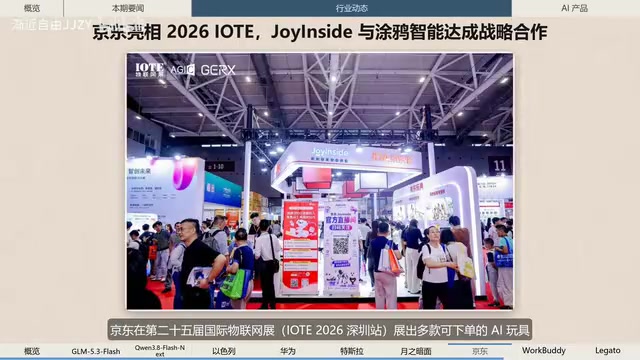
At the event, JD.com's Joyinside and Tuya Smart officially signed an agreement to jointly build channel resources and co-promote AI hardware solutions for brand clients. Tuya Smart is a global leading IoT cloud platform providing one-stop solutions from chip modules to cloud management for smart hardware manufacturers. This partnership with JD.com's Joyinside means AI large model capabilities will rapidly penetrate more consumer smart devices through Tuya's hardware ecosystem, expanding from smart toys to smart home, wearables, and broader product categories.
Additionally, startup Legato secured $12 million in funding and debuted its AI hearing glasses, Legato Frames. The glasses integrate patented hearing assistance technology into the frame, using an AI system to distinguish background noise from human speech and amplify only spoken voice. They are expected to launch later this fall. This selective sound enhancement technology is based on deep learning speech separation models that analyze acoustic scenes in real-time and extract target speakers' voices from complex noise environments—computationally simulating the "cocktail party effect." The product targets people with mild to moderate hearing loss. According to the World Health Organization, approximately 1.5 billion people worldwide are affected by varying degrees of hearing loss, yet traditional hearing aids are expensive (typically thousands to tens of thousands of dollars) and carry social stigma. Legato Frames will be priced well below traditional hearing aids and may be eligible for vision insurance reimbursement when purchased through optometry clinics, demonstrating AI's potential in health assistance applications and representing an important extension of AI hardware from "infotainment" into "essential health" categories.
Key Takeaways
Related articles

NVIDIA and Hugging Face Deepen Partnership: New Opportunities for the Open-Source AI Ecosystem
NVIDIA and Hugging Face deepen their partnership to boost open-source AI through performance optimization, better toolchains, and ecosystem expansion for developers and enterprises.
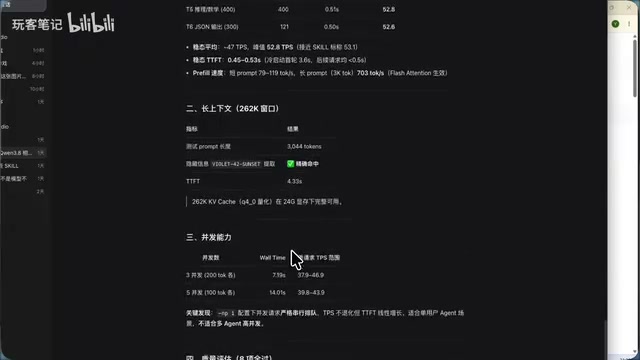
7900XTX Local Deployment of Qwen3 in Practice: 53 TPS Inference Speed Optimization Guide
Complete guide to deploying Qwen3 27B model on AMD RX 7900XTX 24GB: achieve 53 TPS inference through KV Cache Q4 quantization, 262K ultra-long context, and MTP speculative sampling, with installation tutorial and quantization precision comparison.
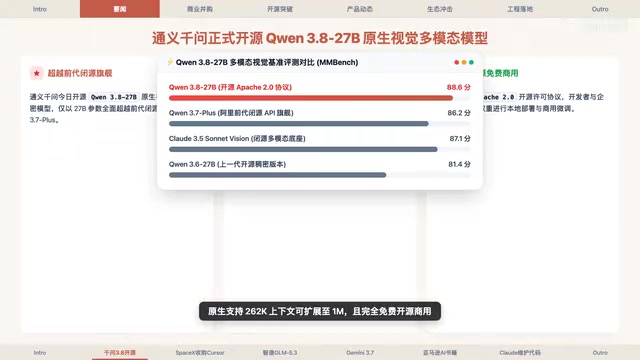
AI Daily Briefing: Alibaba Open-Sources Qwen3.8 Vision Flagship, Zhipu's GLM-5.3 Tops Coding Benchmarks, SpaceX Acquires Cursor
Alibaba open-sources Qwen3.8-27B vision model surpassing its closed-source predecessor; Zhipu GLM-5.3 tops open-source coding with 50% gains; SpaceX acquires Cursor; Google Gemini 3.7 Flash debuts.