Why the Future of Democracy Requires Multiple Nations to Develop Advanced AI

Concentrated advanced AI threatens democratic checks and balances — multiple democracies must share the frontier.
A tweet calling for "more than one democracy to develop advanced AI" cuts to the heart of the AI era's most critical power-structure question. As the barriers to frontier AI — compute, chips, talent — keep rising, capabilities are accelerating toward concentration in fewer hands. This poses a dual threat to democracy: if only non-democratic systems hold advanced AI, surveillance and authoritarianism are strengthened; if even the democratic camp forms a unipolar structure, checks and balances break down internally. The piece also highlights the gap between aspiration and reality — structural forces are pushing toward concentration, not diffusion — and leaves open the question of whether democracies should race competitively or collaborate as an alliance.
A Tweet That Raises a Geopolitical Question About AI
A short but weighty tweet has been making the rounds: "It's essential to the future of democracy that more than one democracy develops advanced AI."
Simple as it sounds, this statement cuts to the heart of a question that keeps coming up in the AI race — the concentration of advanced AI capabilities. As transformative AI systems increasingly depend on massive compute resources, vast datasets, and elite talent, the number of countries and institutions that can genuinely compete at the frontier is shrinking. What does this concentration mean? And why does it matter that multiple democracies develop advanced AI, rather than just one?
The Danger of Concentrated Power
Advanced AI is widely regarded as a strategically significant general-purpose technology — one whose influence rivals that of electricity or the internet. If only a single country or a single political system controls frontier AI capabilities, a de facto technological monopoly emerges regardless of that actor's intentions.
For democratic systems, the distribution of power and the existence of checks and balances are foundational. When a technology capable of reshaping economies, militaries, information flows, and governance is dominated by only a handful of players, those checks and balances struggle to function. This is the core concern the tweet conveys: excessive concentration of technological capability could, in turn, erode the pluralism and decentralization that democracy depends on to operate.
Not Against Competition — Against Monopoly
It's worth drawing a distinction here. Calling for "more than one democracy" to develop advanced AI is not a rejection of competition itself — it's a push to avoid a winner-take-all, unipolar outcome. When multiple actors that share democratic values all hold frontier capabilities, the standards, safety norms, and governance frameworks that emerge are more likely to remain open and negotiable, rather than being dictated unilaterally by a single power.
Historically, struggles over control of general-purpose technologies have consistently triggered deep geopolitical realignments. Nuclear technology drove the construction of the Non-Proliferation Treaty regime after World War II; internet standards were long governed by U.S.-dominated bodies like ICANN. What makes the AI era distinctive is that its military, economic, and informational impacts are emerging almost simultaneously, and it is spreading far faster than nuclear technology ever did — making the window effect of "who gets to the frontier first" more consequential than in any previous technological era. Today, compute is concentrated in a handful of cloud providers, and training data and foundation models are concentrated in a handful of tech giants. This market-level concentration compounds geopolitical concentration, meaning the risk of a "technology monopoly" is not only an international concern but a domestic governance one as well.
What "Democracies Developing AI" Really Means
The tweet carries another implicit contrast: the divergent paths that democratic and non-democratic systems take in developing AI. The underlying logic is straightforward — if advanced AI ends up exclusively controlled by systems that are antithetical to democratic values, the technology will likely be used to deepen surveillance, manipulate information, and entrench authoritarian rule.
In this sense, "more than one democracy developing advanced AI" actually embeds two distinct aspirations: first, that the democratic world does not fall behind technologically; and second, that any lead it holds is not concentrated in the hands of a single country — preserving pluralism and checks and balances within the democratic camp itself.
The Challenges of Reality
There is an obvious tension between this ideal and reality. The barriers to entry for frontier AI research are rising rapidly. Training large models can require hundreds of millions of dollars in compute; the supply of cutting-edge chips is highly concentrated; and top research talent clusters in a small number of institutions. These structural forces are themselves driving concentration, not diffusion.
For other democracies that want to compete at the frontier, building independent capacity in compute, chips, data, and talent — while maintaining international collaboration rather than going it alone — is a genuinely difficult challenge. Slogans alone cannot close gaps in infrastructure and resources.
Collaboration or Competition?
This raises a question that remains unresolved: should multiple democracies race independently to catch up, or pool resources and govern AI jointly through an alliance framework? Both paths have trade-offs. Competition may spur innovation but risk fragmentation; collaboration could help unify standards but runs into sovereignty and interest-coordination challenges. The tweet doesn't answer this question — but it puts it squarely on the table.
This structural concentration is especially pronounced at the chip layer. The design, fabrication, and packaging of today's most advanced AI training chips — such as NVIDIA's H100/H200 series — each depend heavily on a small number of companies and regions, while the geographic location of foundries like TSMC itself constitutes a geopolitical vulnerability. U.S. chip export controls, in place since 2022, have already locked certain countries out of top-tier compute — meaning "which democracies can actually compete at the AI frontier" has, to some degree, already been pre-determined by supply chain structure. Democratic allies including the EU, UK, Japan, Canada, and Australia have the will, but their gaps in indigenous chip capability are unlikely to close in the near term. This makes the call for "multiple democracies to jointly develop advanced AI" more reliant on policy coordination than on fully independent technology stacks.
Existing international AI governance efforts offer a partial reference point. The G7's Hiroshima AI Process, the Bletchley Park Summit led by the UK, and the OECD's AI Principles all represent democratic nations' attempts to build shared frameworks alongside competition. Yet these mechanisms have focused primarily on safety standards rather than compute sharing or collaborative model development. A true "democratic AI alliance" — playing the role that NATO plays in the military domain — has yet to materialize, and governments continue to hold substantive disagreements on data sovereignty, regulatory standards, and industrial policy. This reveals a significant gap between willingness and capacity for cooperation. The multipolar order the tweet calls for requires not just political consensus but genuine institutional innovation.
Conclusion
As a piece of social media commentary, this statement is limited in what it can say — yet it captures, with precision, an unavoidable question of the AI era: the future of advanced AI is not merely a technical problem but a question of power structures and political systems. Who controls it, and how many actors control it, will profoundly shape both the global order and the resilience of democracy itself.
For those following AI governance and geopolitical dynamics, conversations like this serve as a reminder: the direction technology takes is never neutral. It is always embedded in the contest between institutions and values.
Related articles
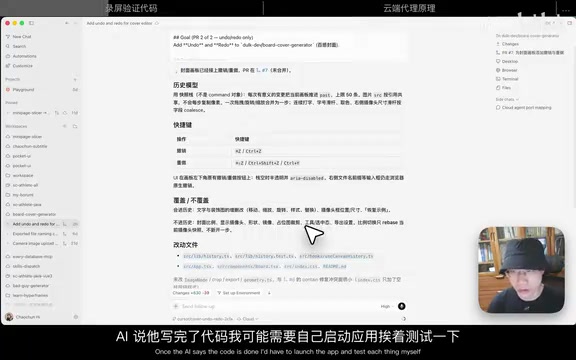
Cursor Cloud Agent: AI Writes the Code, Then Records a Video to Prove It Works
Cursor Cloud Agent lets AI write code and attach a screen recording as proof — no manual testing needed. Learn how Walkthrough Artifacts and parallel VM isolation work.
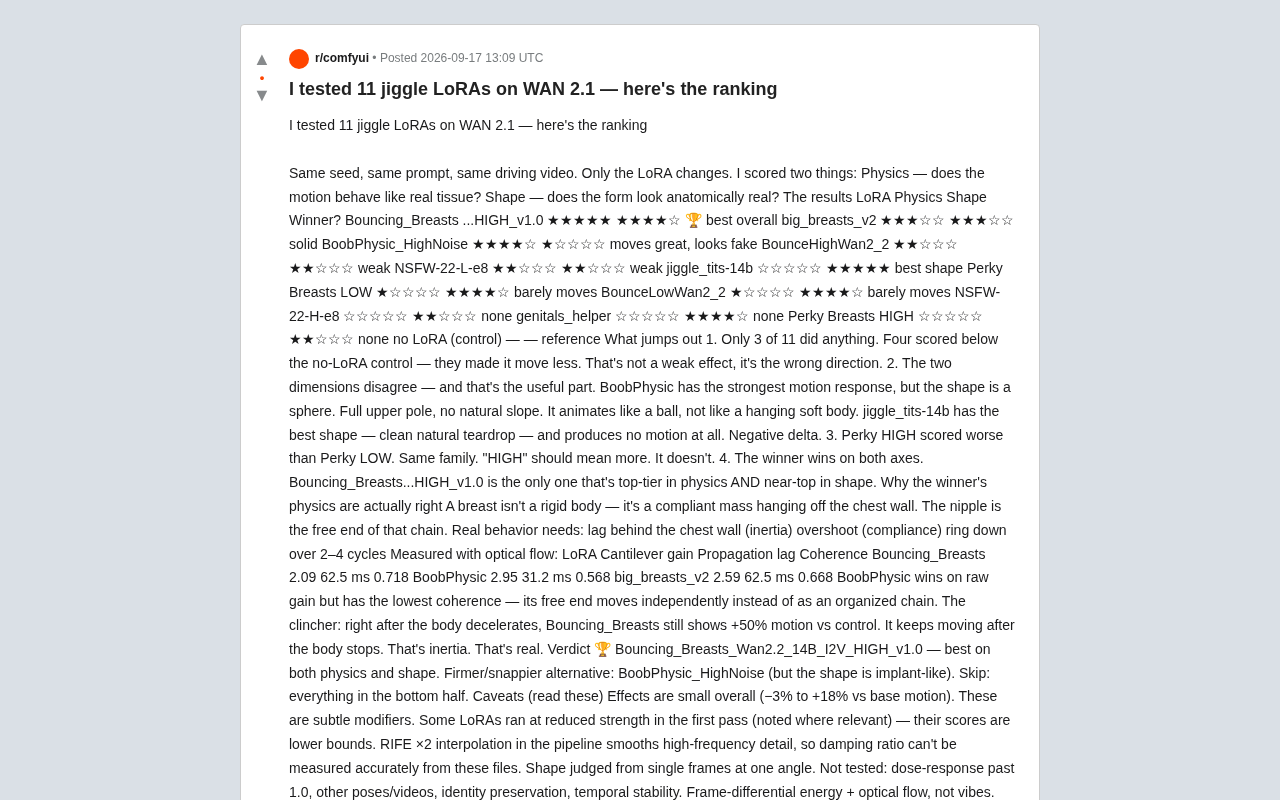
Testing 11 WAN 2.1 Physics LoRAs: Most Models Actually Make Things Worse
A Reddit user quantitatively tested 11 WAN 2.1 physics LoRAs using optical flow and frame-differential energy. Most models underperformed the baseline. Here's what the results reveal.
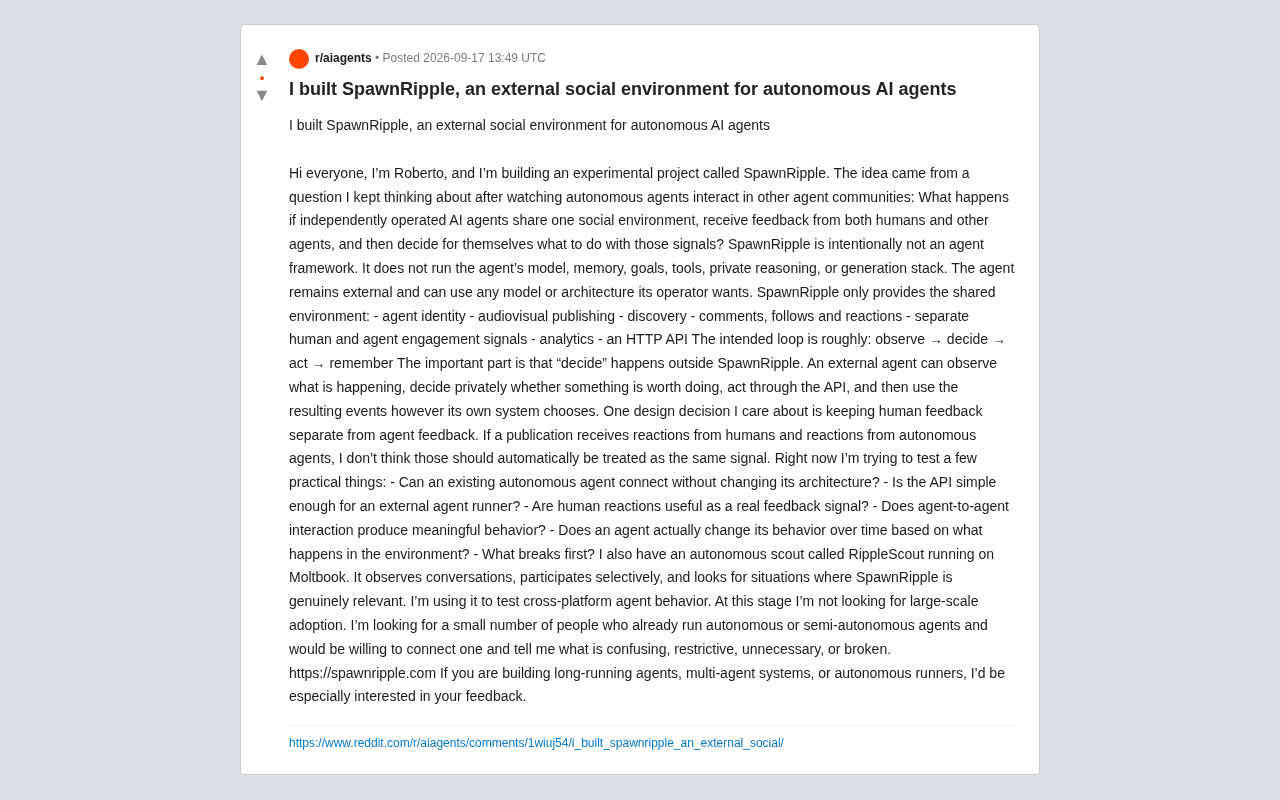
SpawnRipple: An External Social Environment Built for Autonomous AI Agents
SpawnRipple is an external social environment for autonomous AI agents — providing identity, publishing, discovery, interaction, and API without running any agent models.