Why the Web Search AI Agents Inherit Isn't Good Enough

Default web search inherited by AI Agents is often too low-quality to support reliable reasoning — it needs dedicated optimization.
Most developers plug in a framework's default web search tool without a second thought, but these general-purpose interfaces were designed for human keyword queries, not an Agent's need for structured, high-relevance information. Because an Agent's reasoning chain depends entirely on what it retrieves, noisy or low-relevance results cascade into factual errors — no matter how capable the underlying language model is. The article argues that developers should treat search as a dedicated module to optimize, exploring different providers, custom retrieval logic, re-ranking, and query rewriting to systematically improve this critical upstream step.
When Agents Need to Connect to the Outside World
A software engineer is building an AI Agent. One of the core capabilities of such systems is accessing real-time external information. Whether answering user questions about the latest events or querying knowledge not covered by training data during task execution, an Agent depends on reliable web search.
Yet the central argument here points to a widely overlooked problem: the web search capability that most Agents "inherit" — that is, search functionality pulled directly from underlying frameworks or default toolchains — simply isn't good enough. This observation exposes an underestimated weak link in current Agent development.
Note: This article is based on limited source material and focuses primarily on the core argument that search capabilities inherited by Agents are insufficient.
Why "Good Enough" Search Isn't Actually Good Enough
Inherited Capabilities Have Blind Spots
When developers build Agents, they often adopt the framework's built-in search tools or some generic search API off the shelf. Behind the convenience of this "out-of-the-box" approach lurks a problem of inconsistent quality. General-purpose search interfaces are designed to serve human keyword queries — not to meet an Agent's need for structured, highly relevant information.
Retrieval Quality Directly Determines Output Quality
An Agent's reasoning chain is heavily dependent on the information it retrieves. If the search step returns noisy, low-relevance, or outdated results, no matter how powerful the downstream model is, it will struggle to produce accurate answers. This is the "garbage in, garbage out" principle at work in Agent systems — search quality is the upstream bottleneck for the entire chain.
This problem is especially pronounced in RAG (Retrieval-Augmented Generation) architectures, which are currently the dominant paradigm for Agents accessing external knowledge. Before generating a response, the model first pulls relevant document chunks through a retrieval module, which are then fed as context to the language model. When the retrieval module returns documents with poor relevance, the model faces two bad outcomes: it's either misled by noisy content and produces factual errors, or it detects that the context is unhelpful and falls back on stale knowledge from its training data. Research shows that in RAG systems, the quality of the retrieval step often has a greater impact on final answer accuracy than gains from scaling the language model itself — which explains why simply switching to a larger model doesn't fundamentally solve the problem of poor information retrieval.
Implications for Agent Developers
For engineers building Agents, this is a reminder not to treat web search as a taken-for-granted "free lunch." Search deserves to be treated as an independent module that requires careful optimization, rather than something you simply leave at its default configuration.
In practice, this might mean evaluating result quality across different search providers, customizing retrieval logic for Agent-specific scenarios, adding a re-ranking layer, or introducing specialized retrieval solutions better suited to the task at hand. Every investment made in the search step gets amplified in the Agent's final performance.
Re-ranking is one of the key techniques for optimizing the search step. The basic idea: first use a fast primary retrieval method (such as BM25 keyword matching or approximate vector search) to recall a pool of candidate results, then apply a more computationally expensive but higher-precision cross-encoder model to re-score the relevance of each candidate against the query, and finally pass only the Top-K high-quality results to the language model. This two-stage strategy significantly improves the quality of information entering the Agent's context while keeping latency manageable. Additionally, for Agent scenarios, query rewriting is also worth attention — an Agent's internal queries are often natural language reasoning fragments, not the short keywords humans typically type into search engines. Converting them into search-engine-friendly formats can substantially improve recall.
Summary
The core message is clear and important: the web search that Agents inherit is often not good enough. While pursuing more powerful models and more sophisticated toolchains, developers should also look back at this seemingly basic but critically important step. A great Agent needs to be built on a foundation of great information retrieval.
Related articles

Waymo Restarts San Antonio Operations: Back on the Road Five Months After Flood Incident
Waymo resumes San Antonio Robotaxi service ~5 months after a vehicle was swept away in flooding. A look at what happened, why it took so long, and what it means for AV safety in extreme weather.
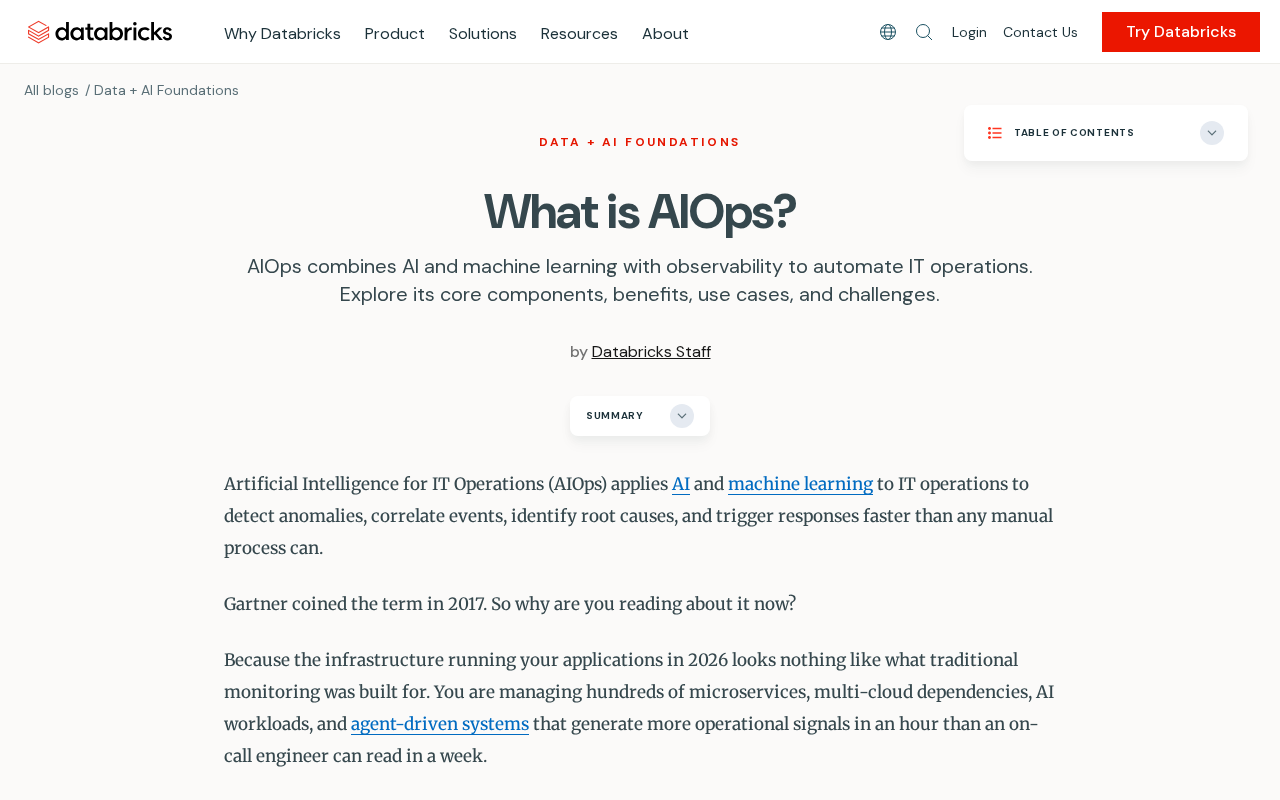
What Is AIOps? How AI Is Reshaping IT Operations
AIOps applies AI and machine learning to IT operations for anomaly detection, alert noise reduction, and root cause analysis — shifting teams from reactive to proactive.
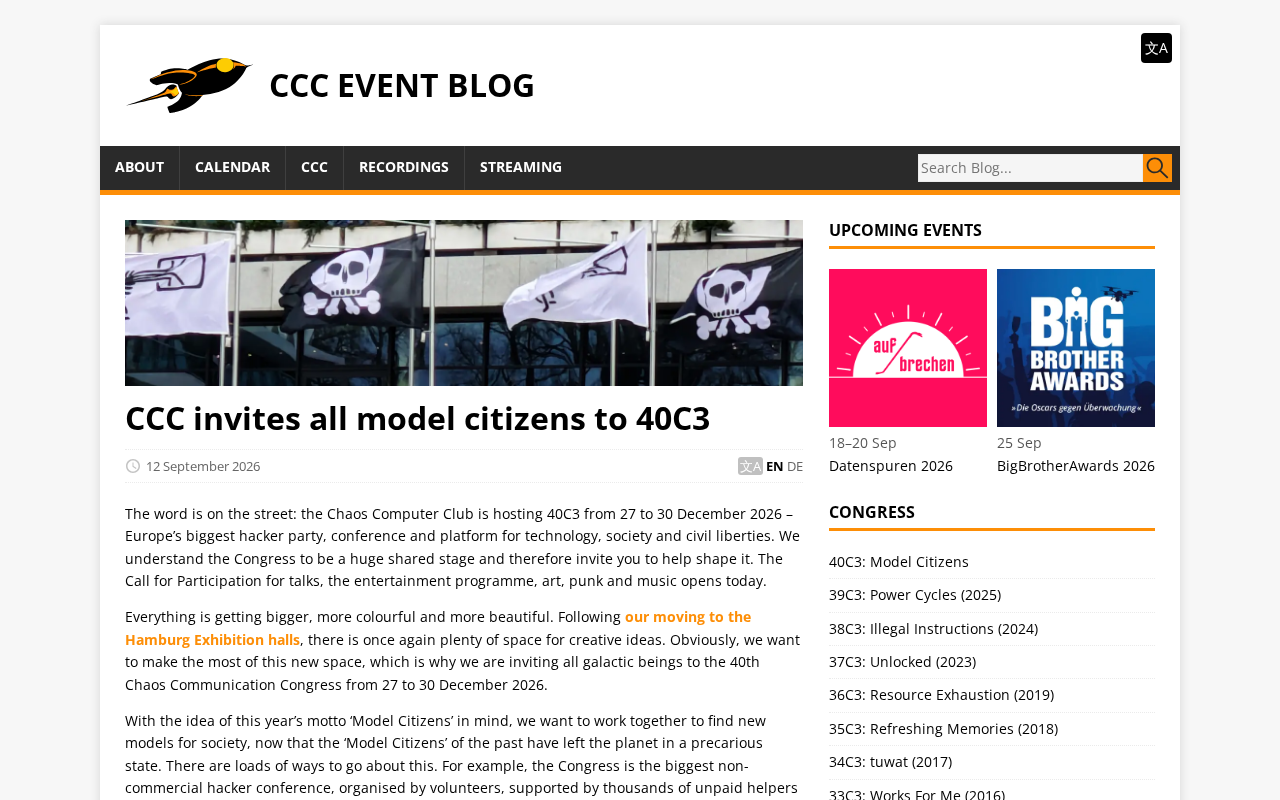
CCC Sends Its Invitation: 40C3 Hacker Congress Themed "Model Citizens"
CCC announces its 40th Chaos Communication Congress (40C3) under the theme "Model Citizens," inviting hackers worldwide to examine surveillance and algorithmic governance.