WILD BILL Saloon Showdown: The Unapologetic Code of the Western Tough Guy
The WILD BILL saloon confrontation uses three escalating lines to build a tough-guy character through efficient short dialogue.
The article analyzes a saloon confrontation from the 1995 film WILD BILL: facing armed men demanding an apology, Wild Bill shuts down all expectations with three escalating negations—"I don't apologize, not to you, not to anybody else, not ever"—then states he's unarmed. It notes the saloon functions as an ad hoc courtroom in Westerns, and the scene's efficiency lies in character-building through short lines and layered refusal rather than gunplay.
A Western Standoff Ignited by "Not Apologizing"
In the clip from WILD BILL (1995) released by Amazon MGM, a classic Western saloon conflict escalates quickly. On screen, a man frantically pleads while staring down a gun barrel: "Don't shoot me now. I ain't done nothing wrong. Don't shoot me, Mr. Wild Bill." Wild Bill's response is calm and direct: "What's this about?"
The cause of the conflict is quickly explained: about a week earlier, he beat up a drunken soldier and threw him in jail. Now the man confronting him is clearly a comrade of that soldier. The other party proposes, "Maybe you ought to apologize." Wild Bill's reply becomes the thesis of the entire scene—"I don't apologize. Not to you or anybody else. Not ever."
What makes this exchange so compelling isn't the gunplay—it's how it establishes a character with remarkably few lines: a man who treats "never backing down" as his principle of survival. In the context of Westerns, an apology often signals weakness, and weakness in a saloon—a space that's half-public, half-lawless—is almost equivalent to surrendering the upper hand.
The Saloon as the Western's "Courtroom"
In Westerns, the saloon is never just a place to drink. It's an information exchange, an ad hoc courtroom, and a gray zone where violence is legitimized. A drunken soldier causes trouble and gets thrown in jail; his comrade comes looking for an explanation—this sequence itself shows that where formal law can't reach or won't bother, saloon confrontations are often more direct than courtrooms.
Wild Bill's approach carries this same "saloon logic": he first asks "What's this about?" rather than immediately drawing his gun. This shows he isn't bloodthirsty—he's demanding that the other party provide a reason. But when the other side offers "apology" as a way out, he immediately cuts off all room for maneuver. The key here is that he isn't refusing a specific person but the act of apologizing itself—"Not to you or anybody else. Not ever."
This absolutist expression is the core formula of the Western tough guy: principle over safety, face over life. It may not be rational, but it's dramatically powerful.
The reason the saloon in Westerns can serve as an ad hoc courtroom is directly tied to the legal vacuum during America's westward expansion. In the mid-to-late 19th century, many frontier towns relied on sheriffs, vigilance committees, or local power brokers to maintain order before formal judicial systems were established. As one of the few public indoor spaces open year-round in a town, the saloon naturally became a venue for dispute mediation, information transfer, and armed confrontation. This became a genre convention of Westerns: saloon confrontations are often unbound by formal law, and whoever dominates in presence and force controls the narrative. Wild Bill throwing the troublemaking soldier in jail while the comrade comes to the saloon demanding an explanation is precisely this "semi-official law enforcement" logic at work.
The Tough Stance Behind "I Ain't Wearing No Pistols"
The clip's final line—"I ain't wearing no pistols"—deserves separate analysis. With the other party potentially armed and tensions running high, voluntarily stating he's unarmed appears on the surface to reduce the sense of threat, but is actually a higher-order provocation: I don't need a gun to back me up; my words alone are hard enough.
This also gives the earlier "I don't apologize" more weight. If a man with a gun says "I don't apologize," that's armed deterrence. If a man explicitly says he's unarmed and still says "I don't apologize," that's pure character assertion. In just a few lines, Wild Bill's character completes the transformation from "the questioned" to "the one controlling the room"—not through the speed of his draw, but through the consistency of his attitude.
In the Western tradition, whether one carries a gun is itself a social signal. Many towns in the 19th-century American West enacted gun-carrying bans (such as the famous 1881 ordinance in Tombstone, Arizona—one of the backdrops for the conflict between Wyatt Earp and the Cowboys). Carrying a gun into town often meant challenging the order. Therefore, when a character voluntarily declares "I'm not carrying" during a tense confrontation, it may be a factual statement or a posture: shifting the moral pressure onto the other party—if they shoot, they're using force against the defenseless. The Western tough guy image often uses this to highlight the trait of "establishing authority through character rather than weapons." Wild Bill's line carries weight precisely because it leverages the Western audience's sensitivity to "armed or not," transforming a potentially bloody conflict into a pure contest of character.
A Lesson in Character Building Through Short Lines
From a screenwriting perspective, this scene is highly efficient. There's no narration explaining backstory, no superfluous action—everything is driven by dialogue: the other party opens with pleading, Wild Bill asks for the reason, the other party demands an apology, and Wild Bill closes with three escalating negations—"Not to you," "Not to anybody else," "Not ever."
This escalation isn't rhetorical padding—it's systematically sealing off the other party's expectations. The first line rejects a specific person; the second expands to everyone; the third locks down the time dimension. After three lines, the other party has no third option but to fight or back down. Western conflicts are often cornered by dialogue in exactly this way.
For audiences familiar with the Western genre, this kind of saloon confrontation is almost standard fare. But the value of this WILD BILL clip lies in how it pulls the "tough guy" back from gunfight mythology to the linguistic level: what truly defines a person isn't whether he shoots, but whether he chooses not to back down when he could.
Why This Old Clip Is Still Worth Watching Today
WILD BILL (1995) isn't the most prominent entry in the Western canon, but clips like this get endlessly reposted on short-video platforms, proving its portrayal of "character presence" still works. Much content today, when crafting tough characters, tends to have them directly declare "I'm strong" through dialogue. This scene does the opposite: the more guns pointed at the character, the slower, shorter, and more uncompromising his speech becomes.
From a content-creation perspective, this offers a transferable narrative technique—using layered refusal instead of emotional display. Wild Bill doesn't shout, doesn't curse, doesn't even raise his voice, but every line narrows the other party's options. This approach imprints a character on the audience's memory more effectively than any action sequence.
The saloon door could be pushed open at any moment; a gun could go off at any second. But before that happens, a single line has already decided who's on top.
One-line Summary
The saloon confrontation in WILD BILL uses three escalating lines to build a tough-guy character, demonstrating efficient storytelling through short dialogue.
Paragraph Summary
The article analyzes a saloon confrontation scene from the 1995 film WILD BILL: when confronted by an armed comrade demanding an apology, Wild Bill seals off all expectations with three escalating negations—"I don't apologize, not to you, not to anybody else, not ever"—and then voluntarily states he's unarmed. The article notes that the saloon serves as an ad hoc courtroom in Westerns, and the scene's narrative efficiency lies in character-building and scene control achieved through short dialogue and layered refusal rather than gunplay. This "principle over safety" tough-guy logic still offers lessons for how to craft strong characters in content creation today.
Related articles
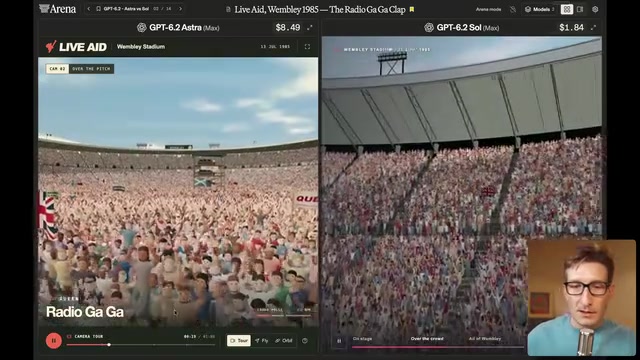
GPT-6.2 Astra vs Sol Hands-On Test: 6x Stronger at 6x the Cost — Which to Use as Your Daily Driver
GPT-6.2 Astra vs Sol hands-on test: Astra wins on detail, depth of field, and data viz but costs ~6x more; Sol beats it on dynamism, camera work, and regular UI. Here's which to use as your daily driver, by scenario.

How the European Commission Rolled Out Matrix to 40,000 Employees
The European Commission rolled out Matrix to over 40,000 employees. Element's blog reviews the phased strategy, digital sovereignty, and open-source adoption lessons.
Why AI Is Going Local: A Deep Dive wit…
Why AI Is Going Local: A Deep Dive with Moonshine Voice Creator Pete Warden
Moonshine Voice creator Pete Warden explores the trend toward local AI, analyzing the four drivers of latency, privacy, cost, and reliability, and what local-first design means for developers and product teams.