Will AI Model Distribution Move Toward a Torrent Model?
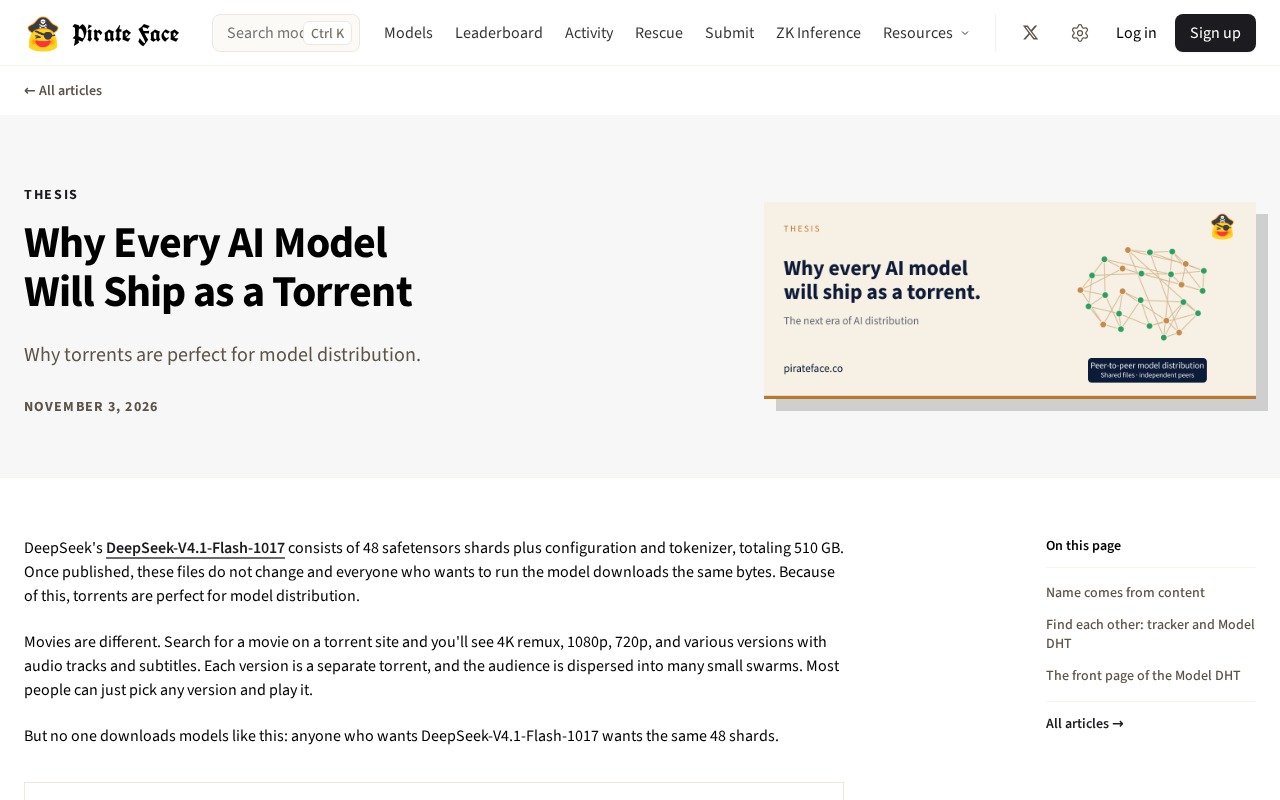
Hacker News predicts AI models will be distributed via Torrent, analyzing its technical fit and practical obstacles.
The article analyzes a Hacker News prediction that "every AI model in the future will be distributed as a Torrent." The author notes that current model distribution relies on centralized cloud storage and CDNs, where large files and high concurrency bring significant bandwidth costs; Torrent's decentralized and chunked transmission naturally suits model distribution, chunk hash verification ensures weight integrity, early downloaders becoming later data sources reduces publishers' marginal costs, and magnet links and DHT can organize multiple version variants. But obstacles remain: version management, access control, and download statistics from centralized platforms require additional middleware, Torrent's usage barrier and seeding incentive culture are key to scaling, and commenters remain skeptical of replacing centralized platforms' usability and compliance advantages. The article concludes that developers may need new skills like magnet link generation, seed operations, and chunk verification, and face governance issues like torrent source credibility.
Why AI Model Distribution Needs a New Approach
A discussion thread on Hacker News made a bold prediction: every AI model in the future will be distributed as a Torrent. Though brief, this viewpoint points to an underappreciated link in the current AI infrastructure—the transmission and sharing of model weights and accompanying resources.
Current mainstream distribution methods rely on centralized cloud storage and CDNs. Model files are often tens of GB or even hundreds of GB, placing direct pressure on download bandwidth and storage costs. The core advantage of the Torrent protocol lies in decentralization and chunked transmission: multiple nodes provide data fragments simultaneously, and downloaders are also uploaders, so overall bandwidth scales with the number of participants. This mechanism naturally suits scenarios involving large files, high concurrency, and multiple replicas.
CDN (Content Delivery Network) is a caching network composed of edge nodes distributed across multiple locations. User requests are routed to the geographically nearest node to reduce latency. In AI model distribution, CDNs cache tens of GB of weight files at the edge to relieve pressure on origin bandwidth. However, its cost structure scales linearly with traffic: every download incurs egress bandwidth costs at edge nodes, and high-concurrency downloads of popular models concentrate bandwidth quota consumption in specific regions. Unlike Torrent's "user mutual aid" model, CDN distribution capacity depends entirely on the provider's infrastructure investment, and publishers cannot leverage downloaders' own uplink bandwidth to share the load—this is one of the fundamental reasons why distribution costs in the large-model era are hard to amortize with scale.
Technical Fit Points of Torrent Distribution
Chunk Verification and Model Integrity
The Torrent protocol has built-in chunk hash verification, and each data chunk can be independently verified. For AI models, the integrity of weight files directly determines whether inference results are trustworthy. Chunk verification provides fine-grained integrity assurance at the transmission layer, reducing retransmission costs caused by interrupted single-point downloads or corrupted files.
DHT (Distributed Hash Table) is the core mechanism behind BitTorrent's decentralized indexing. In the traditional Tracker model, clients must query a central server for other nodes holding a file; DHT instead distributes the information of "who holds which data chunks" across participating nodes network-wide, using algorithms such as Kademlia to achieve O(log N) routing lookups. For model distribution, this means that even if the original seed server goes offline, as long as nodes in the network still hold chunks of the model, the magnet link can still be resolved and the download completed. DHT also allows different variants of the same model to be independently indexed via their own InfoHash, without relying on a single hosting platform's directory service, thereby naturally supporting parallel distribution of multiple versions and sources at the protocol layer.
Decentralization Lowers Distribution Costs
If model publishers use centralized storage, they must pay egress bandwidth fees for every download. In the Torrent model, early downloaders become data sources for later downloaders, and publishers only need to maintain a small number of seed nodes, significantly reducing marginal distribution costs. For open-source model communities, this improvement in cost structure is particularly critical.
Seeding and seed ratio are key concepts for understanding the Torrent economic model. Seeding refers to nodes continuing to retain the complete file after finishing a download and uploading data to others; the seed ratio is the ratio of upload volume to download volume. The BitTorrent community typically relies on private Tracker share-ratio requirements or PT site (Private Tracker) invitation systems to maintain seeding willingness. Insufficient long-term seeding on public Torrent networks leads to "dead torrents," where a magnet link exists but no node provides complete data. AI models are large and update frequently; without incentive designs similar to PT sites or institution-level permanent seed nodes, open-source communities may well face the dilemma of popular models being active only briefly while long-tail models have no seeders. This is also the key prerequisite for whether the cost advantage of decentralized distribution can be realized.
A Natural Distribution Network for Versions and Variants
The same base model often spawns multiple variants—quantized versions, fine-tuned versions, and versions at different precisions. Torrent's magnet links and torrent file system can clearly organize these variants and leverage the DHT network for decentralized indexing, avoiding dependence on a single model hosting platform.
Practical Obstacles to Implementation
Centralized hosting platforms currently provide supporting capabilities such as version management, access control, and download statistics, which the Torrent protocol itself does not cover. If model publishers need to track download counts and control access permissions, they still require an additional middleware layer.
Another obstacle is the usage barrier. Ordinary developers are used to clicking a link to download directly, whereas Torrent requires dedicated clients and a seeding culture. Whether the community can develop sustained seeding incentives is the key variable determining whether this model can scale. Some commenters on Hacker News also expressed reservations about this prediction, arguing that centralized platforms' advantages in usability and compliance will be hard to replace in the short term.
Practical Impact on AI Developers
If Torrent distribution gradually becomes widespread in model communities, the skill points developers need to focus on will change: magnet link generation and verification, seed node operations and maintenance, and chunk integrity verification processes may all become routine operations in model deployment. At the same time, the decentralization of model distribution will bring new governance issues, such as how to verify the credibility of torrent sources and how to prevent malicious nodes from polluting data chunks.
Whether this prediction comes true depends on the joint evolution of community scale, compliance frameworks, and toolchain maturity. But one thing is certain: as model sizes continue to balloon, innovation at the distribution layer is no longer optional but an inevitable direction of infrastructure evolution.
Model weight integrity verification is more complex in decentralized scenarios than in centralized downloads. Centralized platforms typically provide official SHA-256 checksums, and users can compare them against the published value after downloading; Torrent's chunk hashes, however, can only guarantee that "the downloaded data matches what the torrent file declares," not that the torrent file itself was created by a trusted publisher. Malicious nodes could construct torrents containing tampered weights and spread them under similar model names. Therefore, decentralized distribution requires an additional trust layer, such as publishers cryptographically signing torrent files (e.g., using GPG or Sigstore), or recording the binding relationship between InfoHash and publisher via blockchain/content-addressed networks. Such mechanisms have not yet formed a unified standard in the AI community, and this is one link that toolchain maturity needs to fill in.
One-line Summary
Hacker News predicts AI models will be distributed via Torrent, analyzing its technical fit and practical obstacles.
Paragraph Summary
The article analyzes a Hacker News prediction that "every AI model in the future will be distributed as a Torrent." The author points out that current model distribution relies on centralized cloud storage and CDNs, where large files and high concurrency bring significant bandwidth costs; Torrent's decentralized and chunked transmission mechanism naturally suits model distribution, chunk hash verification can ensure weight integrity, early downloaders becoming later data sources can reduce publishers' marginal costs, and magnet links and DHT can also organize multiple version variants. But implementation still faces obstacles: version management, access control, and download statistics provided by centralized platforms require additional middleware, and Torrent's usage barrier and seeding incentive culture are also key to scaling, while commenters still have reservations about centralized platforms' usability and compliance advantages. The article concludes that developers may need to master new skills such as magnet link generation, seed operations, and chunk verification, and face governance issues such as the credibility of torrent sources.
Related articles
Unlock All Claude Models for Free? Developer Mode + Gateway Configuration Tutorial
A YouTube tutorial claims that enabling Claude desktop developer mode and configuring a third-party gateway allows free use of all models, including Opus 5.5. This article breaks down the steps, analyzes the gateway technical principles, and reveals the triple risks of account bans, data privacy, and service stability, as well as the authenticity of model names.
Robinhood's Hybrid AI Reviewer: 60% of Data PRs Auto-Merge
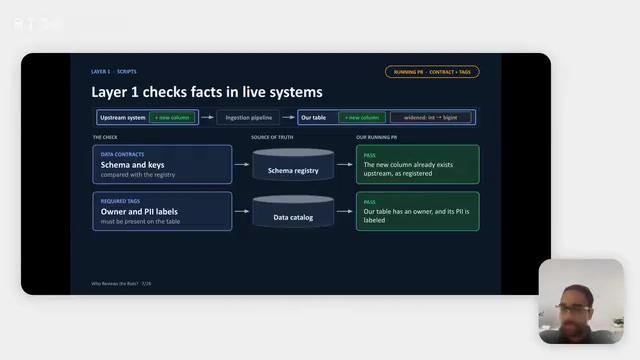
Robinhood's data platform team shares a hybrid AI PR reviewer: deterministic scripts verify facts, AI Agents judge contextual risk, and humans keep key decisions. About 60% of data pipeline PRs merge without human review, cutting review workload ~75%, saving ~132 engineering hours monthly, and reducing related incidents ~30%.

Making Marketing Videos with Claude Code Is More Efficient Than AI Video Generation
Generate marketing videos programmatically with Claude Code—more flexible and cheaper than AI video generators. Reference a style, generate a storyboard, output content as code, and make edits instantly.