Windows XP Itanium Edition: The Complete Story of IA-64's Failure

The story of how Intel's Itanium architecture and its Windows XP version became a cautionary tale in tech history.
Windows XP Itanium Edition (2002) represents one of tech's greatest failures. Intel's IA-64 EPIC architecture bet on compiler intelligence over hardware scheduling, but poor x86 compatibility, underwhelming real-world performance, and a devastating software ecosystem death spiral led to its demise. AMD64's pragmatic backward-compatible approach won the market, offering lasting lessons for today's ARM and RISC-V transitions.
When Windows XP Met the Itanium Processor
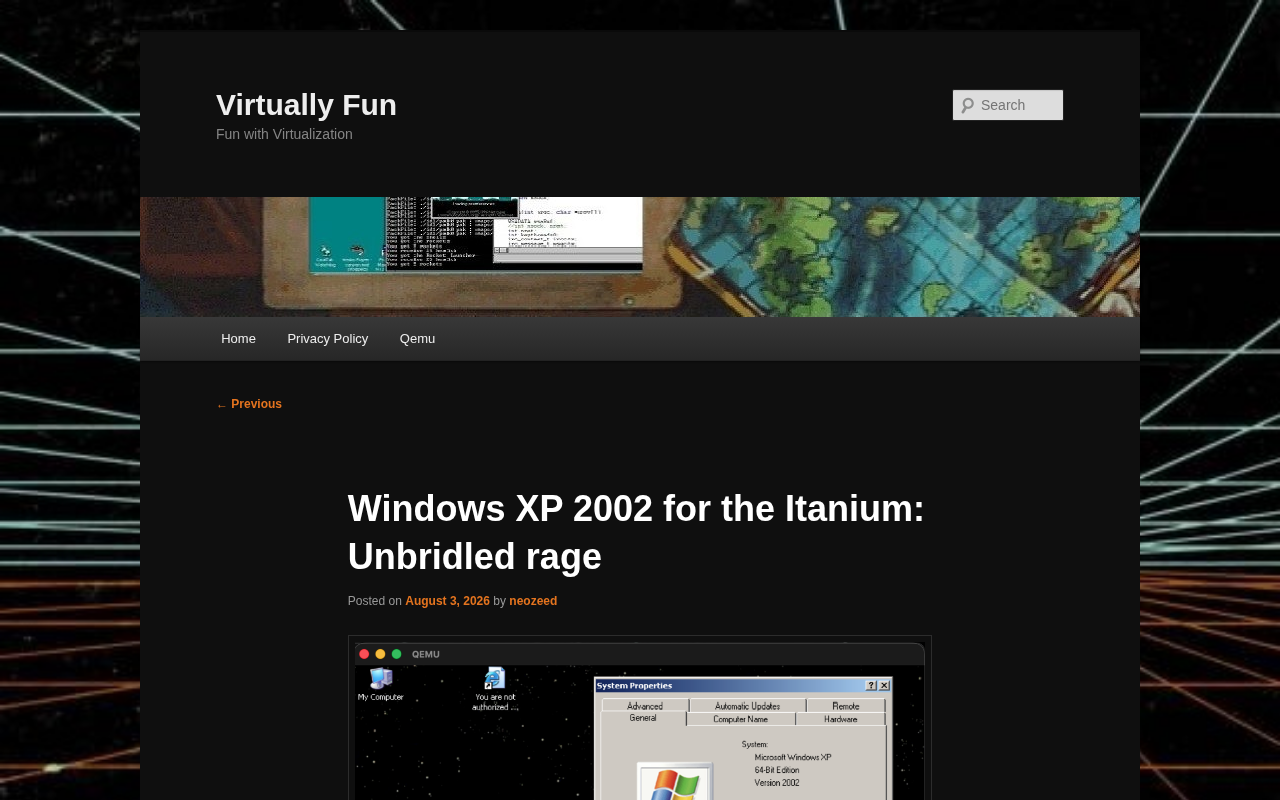
When people think of Windows XP, most picture that iconic green hillside wallpaper and the classic operating system that accompanied an entire generation. But few know that in 2002, Microsoft released a special version of Windows XP for Intel's Itanium processor architecture. The very existence of this version is a microcosm of the collision between technical ambition and market reality.
The Itanium processor was based on the IA-64 architecture (also known as EPIC, Explicitly Parallel Instruction Computing), jointly developed by Intel and HP, and was the industry's great hope for 64-bit computing. EPIC represented a fundamental rethinking of how processors execute instructions. In traditional out-of-order execution processors, hardware is responsible for dynamically analyzing instruction dependencies and scheduling parallel execution in real-time—requiring vast numbers of transistors for scheduling logic, reorder buffers, and branch prediction units. EPIC's core idea was to shift these complex scheduling decisions from runtime to compile time, with compilers explicitly annotating the parallel relationships between instructions. To support this "architecture of the future," Microsoft had to invest resources in developing a corresponding OS version. However, this collaboration ultimately became one of tech history's most famous failures, even earning the industry nickname "Itanic" (a portmanteau suggesting it was destined to sink like the Titanic).
A Gamble on Technical Idealism
The Grand Vision of IA-64
The Itanium architecture's design philosophy was extremely radical. Intel hoped to completely shed x86's historical baggage and, through the entirely new EPIC instruction set, shift instruction-level parallelism scheduling from hardware to the compiler layer. In theory, this approach could simplify processor design while unleashing greater parallel computing power.
Specifically, Itanium used 128-bit-wide instruction bundles, each containing three instructions and a template field that told the processor about dependency relationships and execution unit assignments. Itanium also featured 128 general-purpose registers and 128 floating-point registers—far exceeding the 8 general-purpose registers of contemporary x86 processors—giving compilers ample register resources for aggressive instruction scheduling and software pipelining optimization. The theoretical advantage was that processor hardware could be simpler and more power-efficient, while achieving better parallelism than hardware dynamic scheduling through the compiler's global optimization perspective.
The vision sounded incredibly appealing—a clean, modern, future-oriented 64-bit computing platform. As a core participant in the software ecosystem, Microsoft naturally needed to provide operating system support. Thus, the Itanium version of Windows XP was born, specifically serving the high-end workstation and server markets.
Reality's Cruel Pushback
However, the vision was grand but reality was brutal. Itanium's most fatal problem was its abysmal compatibility with x86 code. Although early Itanium chips included hardware x86 emulation, performance when running traditional 32-bit applications was nothing short of disastrous—often achieving only a fraction of native x86 processor speeds.
This emulation faced fundamental efficiency problems: x86 is a CISC architecture with variable-length instructions (1 to 15 bytes), a limited number of registers, and heavy reliance on implicit state updates through flag registers. Itanium's 128 general-purpose registers and wide VLIW execution model were diametrically opposed to x86's design philosophy. Hardware emulation required real-time translation between these two fundamentally different execution models, dramatically increasing execution latency for each x86 instruction. Tests showed that Itanium running x86 code achieved only about 20%-30% of the performance of a same-frequency Pentium processor, and since Itanium's clock frequency was already far lower than contemporary x86 processors, the actual experience was even worse.
For a world whose software ecosystem was heavily dependent on x86, this was virtually unacceptable. Users who purchased expensive Itanium workstations found that the vast majority of their familiar applications either wouldn't run or ran agonizingly slowly.
Why This History Is Worth Revisiting
The Broken Promise of Compilers
At the heart of Itanium's success or failure was its bet on compiler technology. EPIC's design premise was that compilers could be intelligent enough to complete instruction parallel scheduling at compile time. In practice, however, compiler technology never reached the ideal level, especially when confronting dynamic runtime issues like branch prediction and memory access latency.
Compilers lack dynamic runtime information during static analysis: a program's actual execution path depends on input data, memory access latency depends on cache hit rates, and this information simply cannot be precisely known at compile time. Although Itanium provided mechanisms like speculative loading and predication to partially mitigate these issues, these techniques themselves added compiler complexity and were far less flexible and efficient than hardware dynamic scheduling in modern out-of-order execution processors.
The result was that Itanium processor performance on real workloads fell far short of expectations. In contrast, competitor AMD's x86-64 architecture (later known as AMD64), launched in 2003, took the pragmatic approach of backward compatibility with x86, allowing users to smoothly transition to 64-bit computing while preserving their existing software investments. AMD64's design strategy was to extend the existing x86 instruction set to 64 bits rather than starting from scratch: expanding general-purpose registers from 8 to 16, register width from 32 to 64 bits, introducing the REX prefix to encode extended register access, while maintaining full backward compatibility with 32-bit and 16-bit x86 code. Processors could seamlessly switch between long mode, compatibility mode, and legacy mode, letting 64-bit operating systems run 32-bit applications directly without an emulation layer. The market voted with its feet, choosing compatibility over architectural purity. Intel was ultimately forced to adopt this architecture (under the EM64T/Intel 64 name), marking EPIC's complete failure in mainstream markets.
The Decisive Role of Ecosystems
The story of Windows XP Itanium Edition is essentially a classic case study on the importance of ecosystems. No matter how advanced a hardware architecture may be, without sufficient software support and backward compatibility, it will struggle to gain a foothold in the market. Although Microsoft did its best to provide OS support, when the underlying hardware itself had fundamental adaptation barriers, the operating system's efforts couldn't turn the tide.
Native applications available on the Itanium platform were extremely scarce, and combined with the terrible x86 emulation performance, the entire platform fell into a death spiral: "no software so nobody buys it, nobody buys it so nobody develops software." This negative network effect in platform economics was lethal: independent software vendors (ISVs) would assess potential user base and return on investment when deciding whether to port applications to Itanium, while potential users would evaluate the number of available native applications when deciding whether to purchase an Itanium system. Making matters worse, porting complex applications to IA-64 wasn't simply a matter of recompiling—due to EPIC's heavy dependence on compiler optimization, developers often needed to re-tune code for Itanium's execution model to achieve ideal performance, further raising porting costs and barriers. This negative feedback loop of network effects ultimately sealed the fate of Itanium and its supporting software.
Lessons After the Dust Settled
After years of struggle, Intel announced in 2019 the discontinuation of the last batch of Itanium processors (the Itanium 9700 series, based on the Kittson core), and completely terminated the product line in 2021. Windows support for Itanium had already begun its exit from the historical stage after Windows Server 2008 R2.
Looking back at the Windows XP Itanium Edition episode, it reminds the entire industry of several enduring lessons: elegant technical design does not equal market success; backward compatibility is often more valued than radical innovation in mature markets; and building a software ecosystem is never an overnight endeavor.
For today's industry undergoing architectural transitions—whether ARM's rise in desktop and server domains or RISC-V's gradual adoption—Itanium's lessons remain relevant. Notably, Apple's 2020 transition from Intel x86 to its custom ARM architecture (Apple Silicon) stands as a successful practice informed by Itanium's lessons. Apple's Rosetta 2 translation layer can run x86 applications at near-native performance (typically 70%-80% of native performance), forming a stark contrast with Itanium's x86 emulation disaster. Apple also provided the Universal Binary format, allowing developers to include dual-architecture code in a single application package, greatly reducing transition friction. While RISC-V faces similar ecosystem challenges in its push into desktop and server markets, its open-source ISA's modular design and open licensing model create an entirely different ecosystem-building path compared to the Itanium era—attracting more participants by lowering barriers to entry rather than relying on a single vendor to drive adoption.
Successful architectural transitions require finding a delicate balance between innovation and compatibility, performance and ecosystem. The history of Windows XP Itanium Edition serves as a vivid footnote to this principle.
Related articles

FDE Forward Deployment Engineer: A New Species in the AI Era and Practical Implementation Analysis
What is an FDE Forward Deployment Engineer? This article analyzes FDE's Palantir origins, why it became popular in the AI era, learning paths for fine-tuning and Agent development, and practical pitfalls in enterprise deployment such as verifying fine-tuning value and changing requirements.

OpenCode Complete Beginner's Guide: From Installation to Hands-On Practice
OpenCode complete beginner's guide: detailed walkthrough of desktop, command-line, and WSL installation methods, analysis of its dual role as Agent coding assistant and chat assistant, plus core configuration, model selection, and real user experience review.

FDE Forward Deployed Engineer: A Complete Guide to AI's Hottest New Role
A complete guide to FDE (Forward Deployed Engineer): from Palantir's origins to OpenAI and Anthropic practices, core differences from regular engineers, skill requirements, and career transition advice.