Winning Battles, Losing Wars: Sarah Paine on the True Nature of Strategic Objectives

Sarah Paine shows that winning battles means nothing if strategic objectives aren't achieved.
Military historian Sarah Paine argues that the outcome of a war is determined by whether its original strategic objectives were met — not by battlefield performance. Using Vietnam as a cautionary example and the Russo-Japanese War as a model of success, she shows how tactical dominance can coexist with strategic failure, and how clarity of purpose before a conflict begins is often the decisive variable. The framework applies equally to business, organizations, and personal decision-making.
The Real Measure of War: Objectives, Not Battles
Military historian Sarah Paine offers a counterintuitive yet deeply insightful argument: the success of a war is never determined by how many battles you win, but by whether you achieved the objectives you went to war to accomplish.
This challenges the common understanding of "victory." Popular intuition equates battlefield success with winning the war itself. But Paine draws a sharp distinction between tactical victory and strategic success — two dimensions that can, in fact, work directly against each other.
The Vietnam War: Winning Most Battles, Losing the War
Paine uses the Vietnam War as her primary case study. She notes that the United States won the majority of conventional battles in Vietnam — from a purely military standpoint, U.S. forces held a clear advantage.
Yet history does not record this as an American victory. The reason is straightforward: the United States failed to achieve the political objectives that justified its involvement in the war. Battlefield success could not be converted into the fulfillment of strategic goals, and so brilliant tactical performance ultimately added up to strategic failure.

This is the deeper meaning behind the phrase "winning every battle but losing the war." Military force is always just an instrument for achieving political ends. Once the means become disconnected from the ends, no accumulation of tactical victories can compensate for strategic failure.
The U.S. political objective in Vietnam was to contain the spread of communism in Southeast Asia — the so-called "domino theory" — by preventing South Vietnam from falling under North Vietnamese control and stopping neighboring countries from tilting toward the communist bloc. When Saigon fell in 1975 and Vietnam was unified under communist rule, that objective was completely lost. It is worth noting that U.S. forces did demonstrate overwhelming firepower and technological superiority on the battlefield: the 1968 Tet Offensive ended in major military losses for North Vietnam, yet the U.S. suffered a decisive defeat in the court of public opinion. This contrast illustrates Paine's argument perfectly. When the essence of a war is a contest for political legitimacy and popular support, traditional battlefield outcomes become highly distorted signals — and the disconnect between military means and political ends can systematically transform tactical victories into strategic failures.
The Russo-Japanese War: How Japan Achieved True Strategic Success
In sharp contrast stands the Russo-Japanese War, which Paine uses to illustrate what genuine strategic success looks like.
She explains that Japan's core objective in launching the war was to push Russian influence out of Korea. When the war ended, Japan not only achieved this goal but gained far more than it had originally sought.

Specifically, Japan secured the southern portion of Russia's railway concessions in Manchuria, along with naval bases and a range of other rights. In Paine's words, Japan "got more than it originally wanted." This was a war with a clear objective — one that was exceeded.
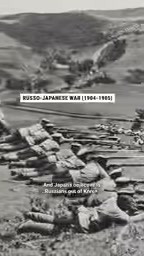
The Russo-Japanese War (1904–1905) was the first modern conflict in which an Asian nation defeated a European great power, and the strategic context is worth elaborating. By the late nineteenth century, Russia had been expanding steadily into the Far East, securing rights to build the Chinese Eastern Railway, leasing Port Arthur, and seeking influence on the Korean Peninsula — all of which placed it in direct conflict with Japanese strategic interests. Before going to war, Japan had already secured diplomatic backing through the 1902 Anglo-Japanese Alliance and seized the initiative with a surprise attack on Port Arthur. The war concluded with the 1905 Treaty of Portsmouth, granting Japan the South Manchuria Railway (the southern branch of the Chinese Eastern Railway), leasehold rights over Port Arthur and Dalian, and protectorate status over Korea — which Japan formally annexed five years later. This outcome validates Paine's analytical framework: Japan had a clear definition of "victory" before the war began, and when it ended, that definition could be checked against results item by item, with the degree of goal achievement immediately apparent.
Russia's Lesson: Better Never to Have Fought
From Russia's perspective, the conclusion is the opposite. Paine is blunt: Russia gained nothing from the war, and "would have been better off not fighting it in the first place."
This observation highlights a frequently overlooked question in strategic decision-making: whether to go to war at all is itself a strategic choice that must be evaluated against ultimate objectives. Russia expended enormous resources, paid the full costs of war, and walked away with nothing to show for it. Whatever the details of the process, such a war is — judged by outcomes — a complete and total failure.
Implications for Modern Strategic Thinking
Paine's analysis draws on military history, but the underlying logic applies far more broadly. The core argument can be distilled as follows:
- Begin with the end in mind: The success or failure of any action should be measured by whether the original objective was achieved, not by wins and losses along the way.
- Means serve ends: Tactical advantages that cannot be made to serve strategic objectives lose most of their value.
- The decision itself is part of the strategy: Whether to enter a contest matters just as much as how you fight it.
This objective-centered evaluative framework applies not only to wars and diplomacy between nations, but transfers readily to business competition, organizational management, and personal decision-making. Many people find themselves "winning every argument but losing the relationship," or "landing every project but drifting from their core strategy" — at root, these are the same mistake: confusing victory in the battle for success in the war.
Truly mature strategic thinking requires us to keep our eyes fixed on the objective level, and to constantly ask: do the things we're winning actually move us toward where we want to go?
Sarah Paine is a professor of history at the U.S. Naval War College, specializing in East Asian military history and grand strategy. She is the author of major works including The Wars for Asia. Her research methodology emphasizes reasoning backward from end-state objectives to strategic logic — an approach known in military academia as "Grand Strategy" analysis, as distinct from military history focused solely on tactics and operations. Grand Strategy requires decision-makers to simultaneously integrate political, economic, diplomatic, and military instruments, always anchored to the state's highest political objectives. Paine's contribution lies in demonstrating through extensive historical cases that "clarity of objective" is itself a core variable in strategic capacity: a side that can precisely define "what counts as winning" before a war begins is often more likely to achieve genuine success than a side with superior military power but ambiguous goals.
Related articles

Cursor AI Programming in Practice: Build a Student Management System from Scratch in 30 Minutes
A Bilibili creator demonstrates Cursor AI programming: generating a student management system in 30 minutes with natural language. Details on Agent mode, Claude selection, prompt techniques, and thresholds.

Top 20 AI Coding Tools Ranking: From Rock-Solid to Lackluster, a Scored Matrix
Bilibili creator releases top 20 AI coding tools ranking, tiered T0–T4 from rock-solid to lackluster, with Claude Code and Codex tied at T0. This article details the scoring dimensions (capability, reliability, robustness, durability, cost, domestic availability) and tool performances to help developers choose the right AI coding assistant.

Vibe Coding Systematic Tutorial: Master AI-Assisted Programming from Zero
A three-month Vibe Coding tutorial from a Bilibili creator covering Codex, ClaudeCode, and Cursor, from core logic to commercial project practice for beginners.